You're viewing free preview questions — 4 questions previewing here — subscribe to unlock 89 more, plus the Full Question Bank, Mock Papers & Worksheets.Upgrade
Composite and Inverse Functions Introductory — Free MYP4 Mathematics (Standard) Practice Questions

1QuestionEvaluating Composite FunctionsAssessment Practice
2 marks~3 minCriterion C
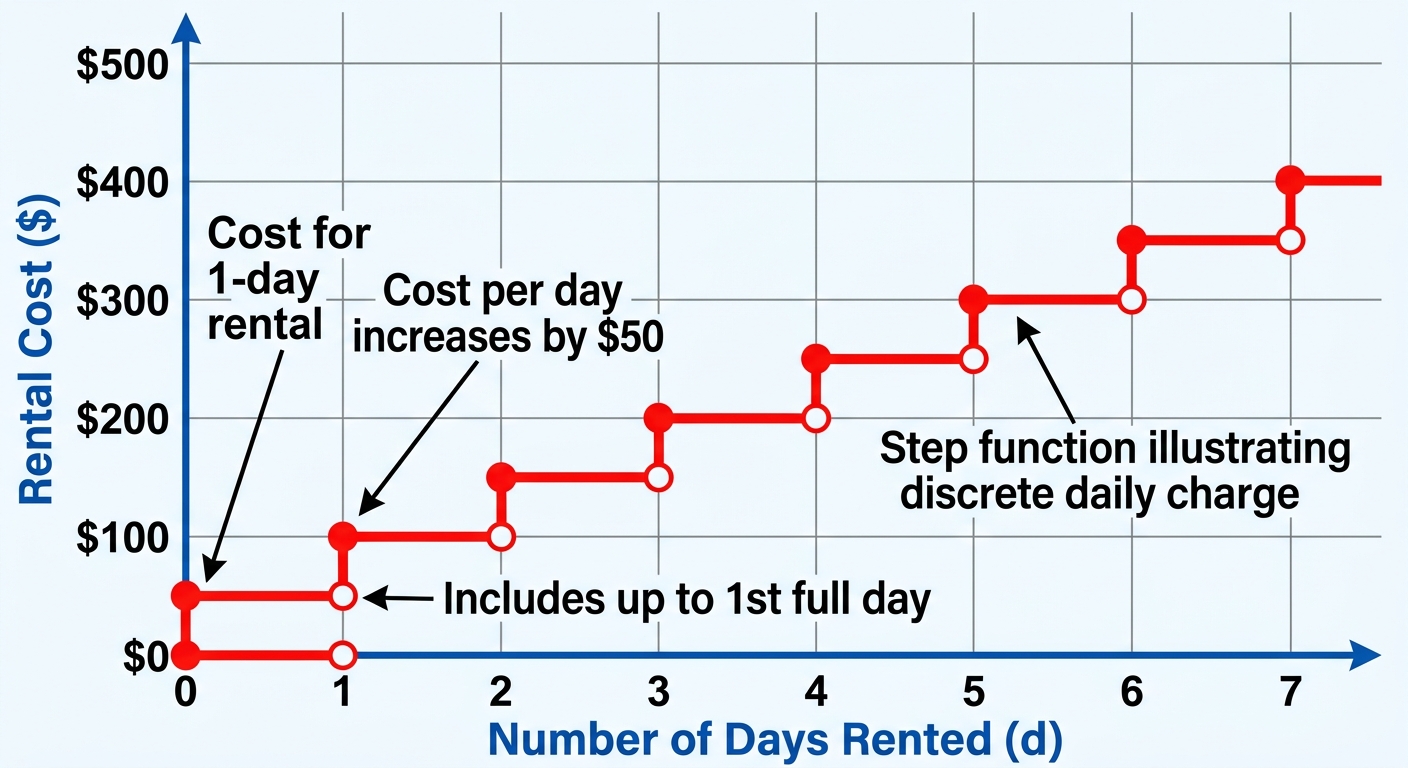
A car rental company charges 50 dollars per day plus 0.20 dollars per kilometre driven. A sales representative drives a fixed route of 180 km each working day.
Let = number of days rented and = total kilometres driven.
The total rental cost is modelled by .
Let = number of days rented and = total kilometres driven.
The total rental cost is modelled by .
a
Explain how represents a composite function in this context. [1]
b
Interpret one limitation of using to predict the representative's actual travel costs. [1]

Solutions
2QuestionEvaluating Composite FunctionsAssessment Practice
2 marks~3 minCriterion A
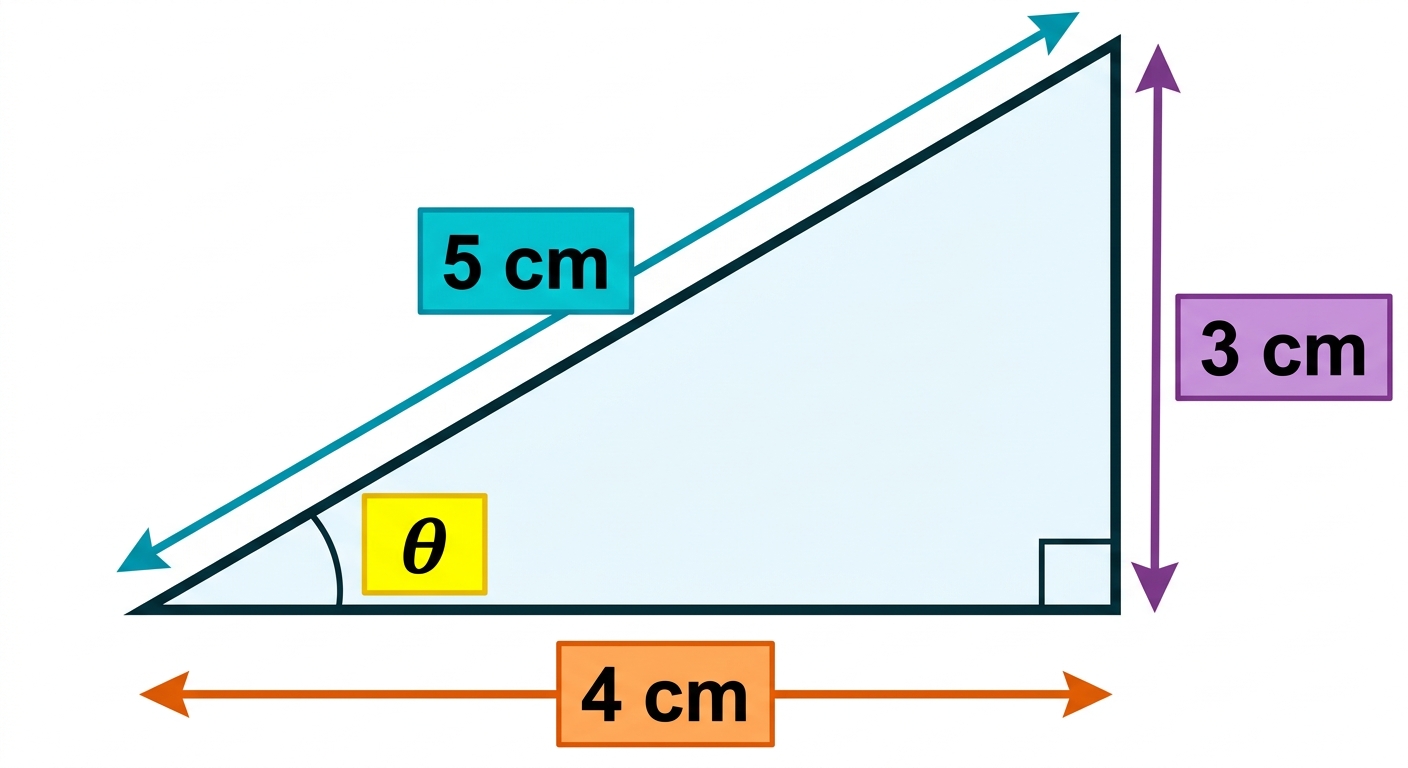
A surveyor uses a 3-4-5 right triangle to set a reference angle , where is the angle opposite the side of length 3.
The functions and model how the surveyor adjusts bearing angles.
Calculate the value of , giving your answer to 3 significant figures. [2]
The functions and model how the surveyor adjusts bearing angles.
Calculate the value of , giving your answer to 3 significant figures. [2]
Solutions
3QuestionUnderstanding Composite Functions NotationAssessment Practice
6 marks~9 minCriterion D
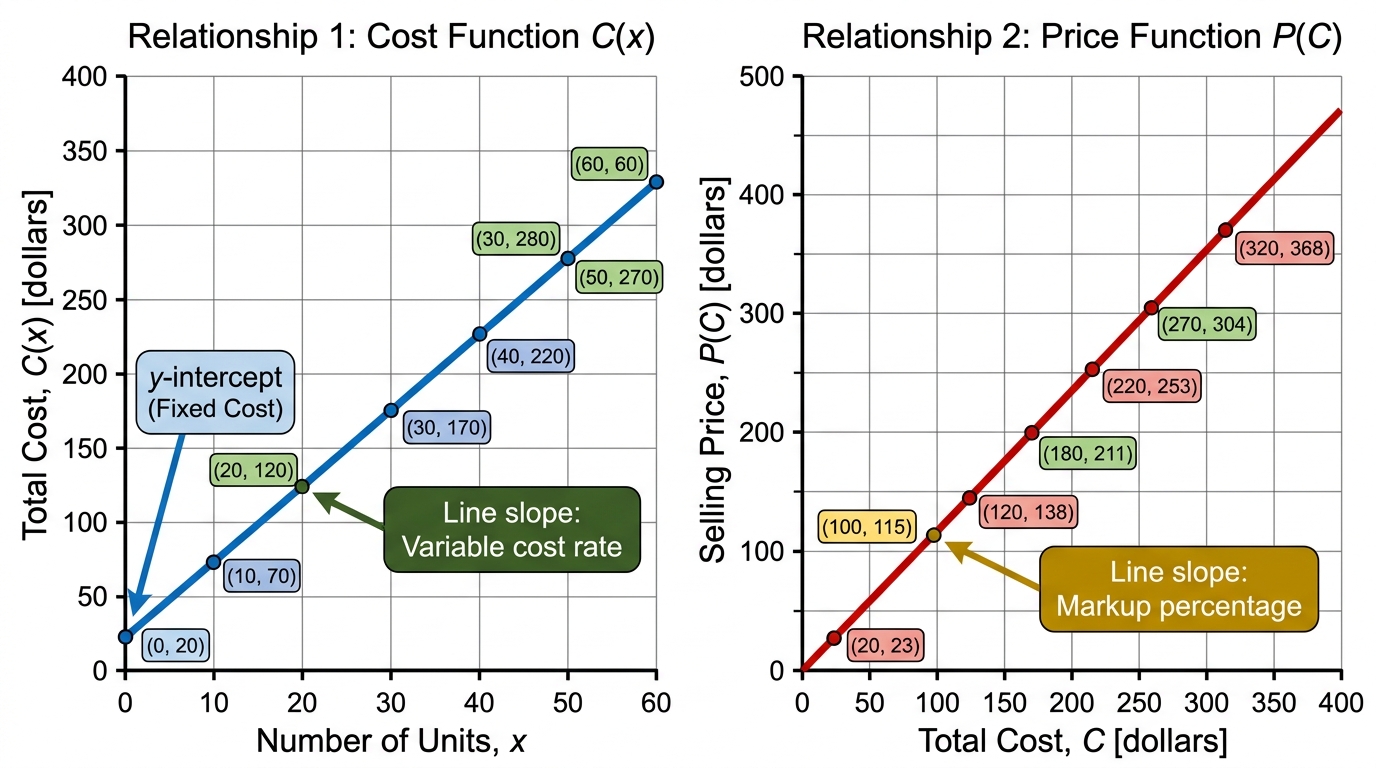
A small business models its pricing using two functions: , where is the production cost in dollars for units, and , which applies a 15% markup to any cost .
a
Write the composite function , expanding your answer fully. [1]
b
Using your composite function, calculate the selling price for a batch of 50 units. Show all working. [2]
c
The business owner is deciding whether to use this model for batches ranging from 10 units to 500 units. Advise the owner whether the model should be applied uniformly across this range, justifying your advice with reference to at least one strength and one limitation of . [3]
Solutions
4QuestionEvaluating Composite FunctionsAssessment Practice
6 marks~9 minCriterion B
A computer simulation models the spread of a digital signal through a network. At each step, the signal passes through two filters in sequence: filter doubles the strength, then filter adds 1 unit. Formally, and , giving composite function . The simulation begins at strength and updates by .
a
Calculate , , , and . [2]
b
Deduce a general formula for in terms of . [2]
c
The network has a maximum capacity of 1000 units. Justify whether this capacity is exceeded within the first 8 steps of the simulation. [2]
Solutions
That's every free question here — 4 of 93.
+89 more questions, plus Mock Papers & Worksheets, are waiting in Premium.