You're viewing free preview questions — 4 questions previewing here — subscribe to unlock 68 more, plus the Full Question Bank, Mock Papers & Worksheets.Upgrade
Solving Triangles with Given Information — Free MYP4 Mathematics (Standard) Practice Questions

1QuestionWorking with Two Sides and Included Angle SASConcept Practice
2 marks~3 minCriterion A
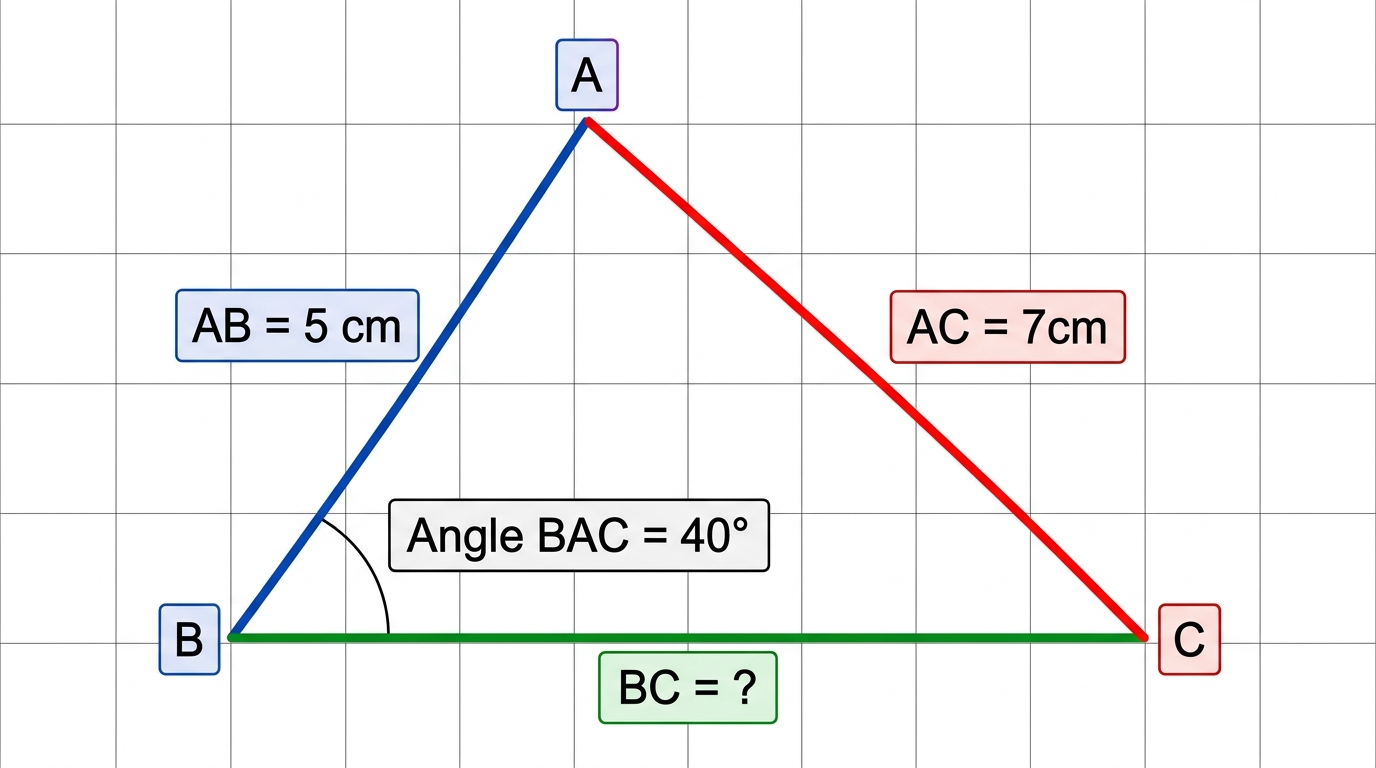
A surveyor measures two boundary lines from a fixed point : one line and another , with the angle between them .
Calculate the length of . [2]
Calculate the length of . [2]

Solutions
2QuestionWorking with Two Sides and Included Angle SASAssessment Practice
4 marks~6 minCriterion D
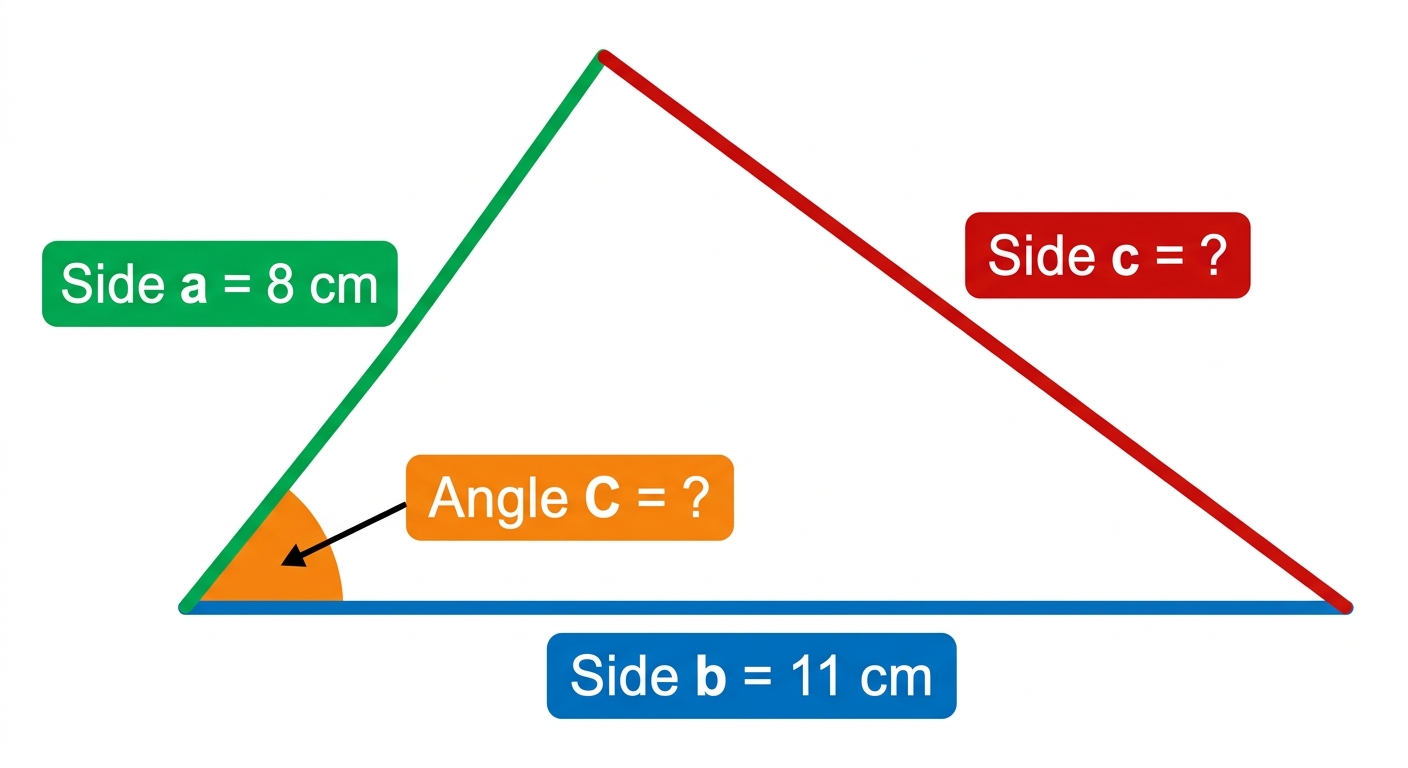
A surveyor is planning a triangular plot of land with two fixed boundary sides m and m and an adjustable included angle . The cosine rule states:
a
Calculate the length of side when and when . [2]
b
Show that when , the cosine rule reduces to Pythagoras' theorem, and calculate . [1]
c
The surveyor needs the third boundary to be at least 15 m to meet a planning regulation. Advise the surveyor whether is sufficient, and justify the minimum whole-number angle (in degrees) that should be used. [1]
Solutions
3QuestionWorking with Two Sides and Included Angle SASAssessment Practice
5 marks~8 minCriterion B
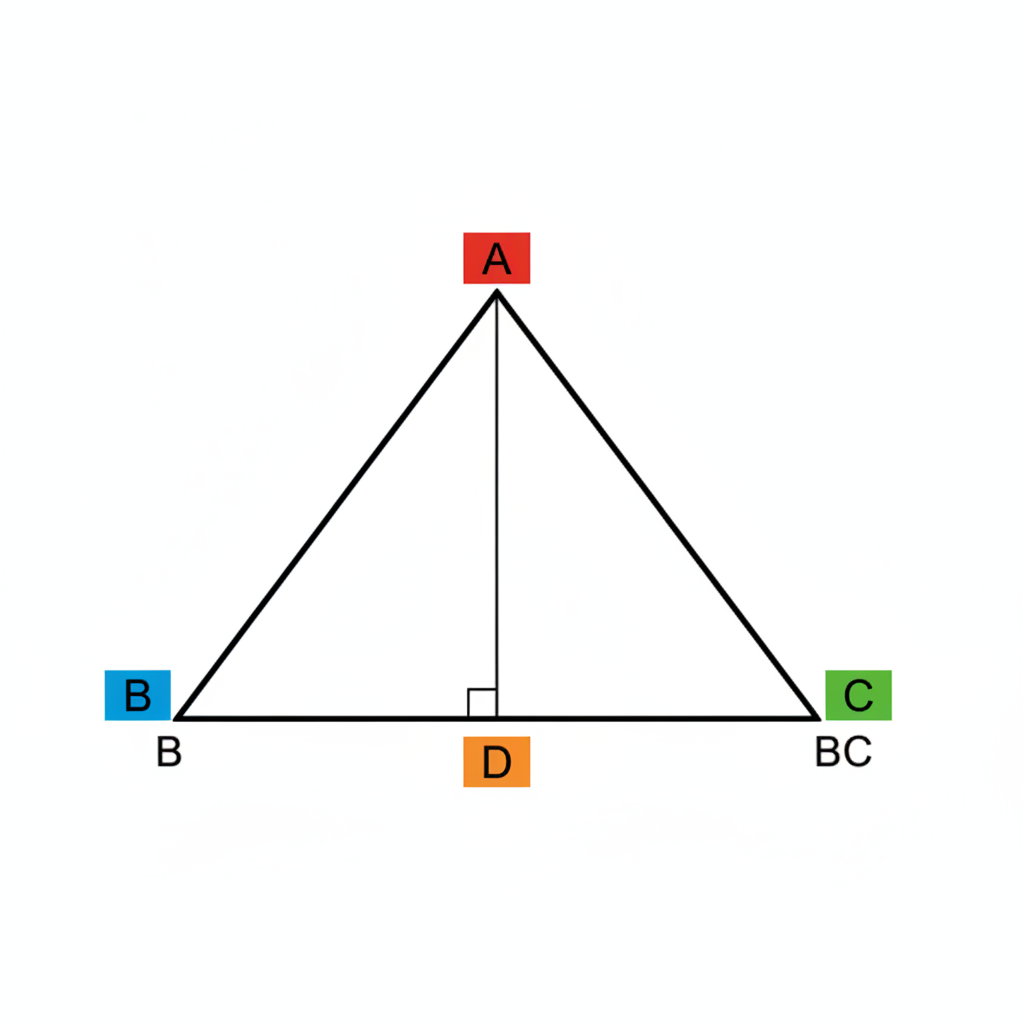
In triangle , let , , , and let .
a
Construct a perpendicular from vertex to side , meeting at point . Label , , and height . Using right triangle , write expressions for and in terms of and . [2]
b
Apply the Pythagorean theorem to right triangle and substitute your expressions from part (a). Expand and simplify fully. [2]
c
Hence prove that , justifying the final algebraic step that reduces the expression. [1]
Solutions
4QuestionWorking with Two Sides and Included Angle SASAssessment Practice
6 marks~9 minCriterion C
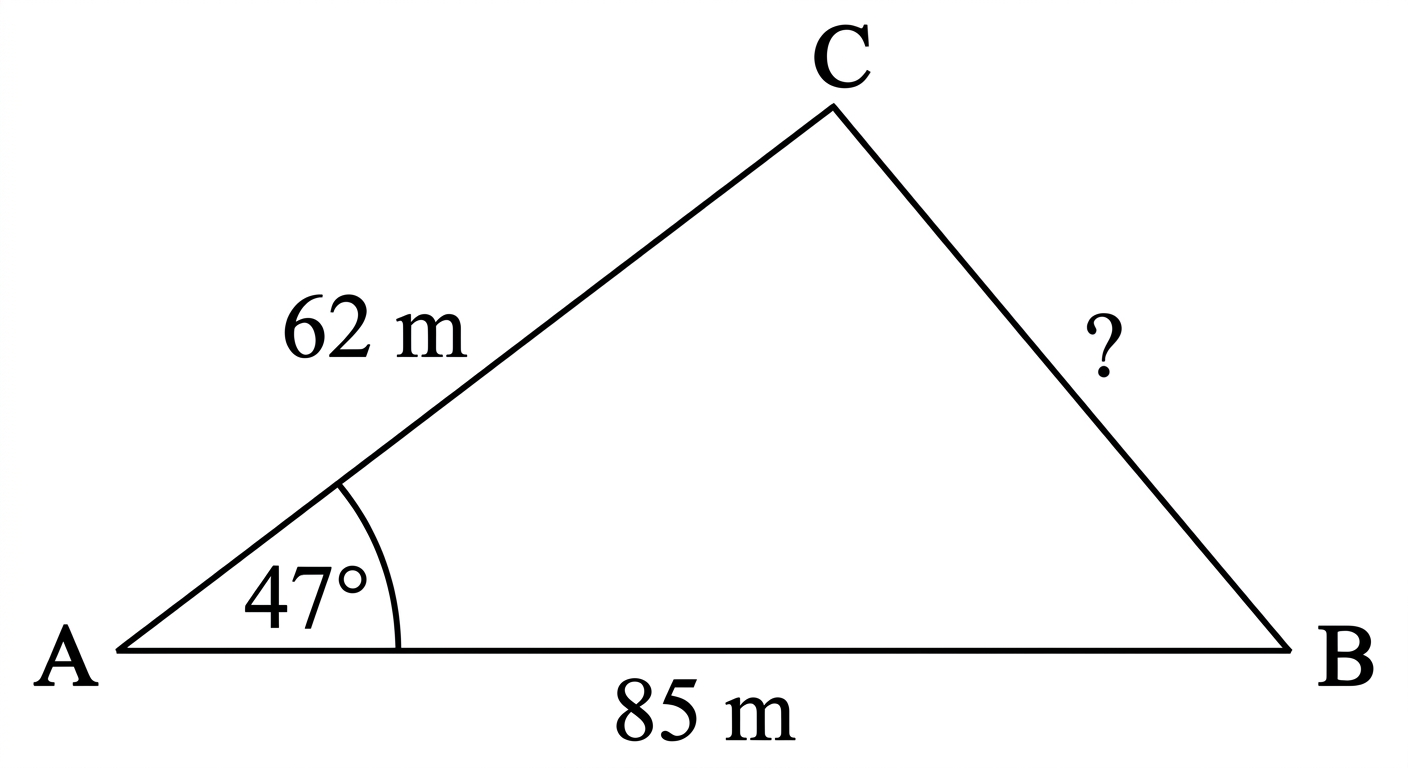
A surveyor measures two sides of a triangular plot as m and m, with an included angle of . The cosine rule states:
a
Calculate the length of the third side, , correct to one decimal place. [2]
b
The surveyor's measurements have possible errors of m in each side length and in the angle. Analyse which of these three measurement errors has the greatest impact on the calculated value of , and justify your reasoning mathematically. [3]
c
The surveyor's client requires the third side to be shorter than 65 m to meet a planning regulation. Advise the surveyor whether the measurement errors identified in part (b) affect the reliability of the conclusion drawn from part (a). [1]
Solutions
That's every free question here — 4 of 72.
+68 more questions, plus Mock Papers & Worksheets, are waiting in Premium.