RevisionPrep
Log inGo Premium

Physics

Free Version

Electricity and Electromagnetism

5 subtopics · 824 exam-style questions

“Pick a subtopic to start practising.”
Static and Current ElectricityCurrent, voltage, resistance and chargeSeries and Parallel CircuitsMagnetism, electromagnetism and inductionMains electricity, power and safety

Sample questions from Electricity and Electromagnetism

  1. Magnetism, electromagnetism and induction[5 marks]
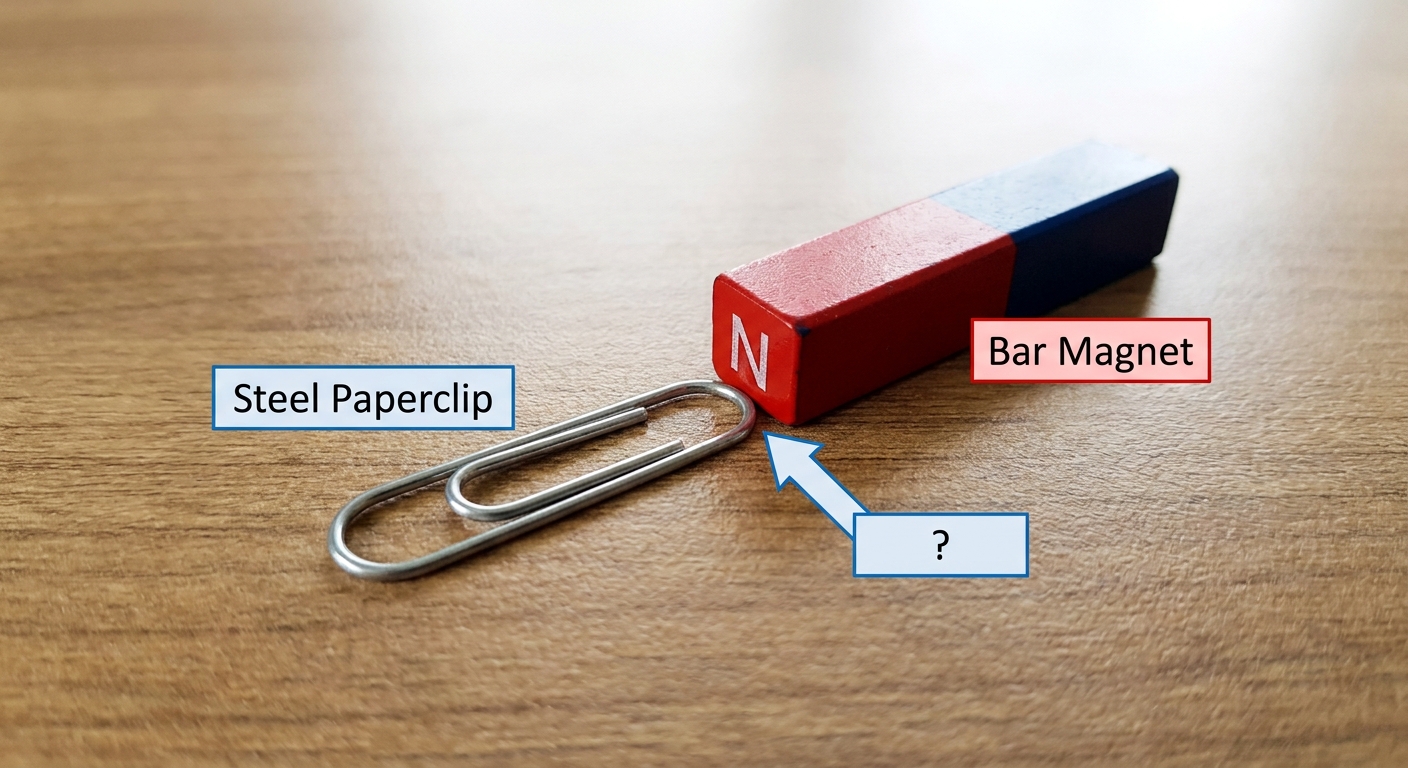
    The photograph shows a steel paperclip touching the north pole of a bar magnet. The arrow labelled ? points to the end of the paperclip that touches the magnet.

    (a) State the magnetic pole induced at the end of the paperclip marked ?. [1]

    (b) Explain, using the idea of magnetic domains, how the paperclip becomes a magnet. [2]

    (c) A second paperclip is hung from the free end of the first one, and it stays there. Explain why. [2]
    Diagram for a Magnetism, electromagnetism and induction practice questionPractise this subtopic
  2. Mains electricity, power and safety[6 marks]
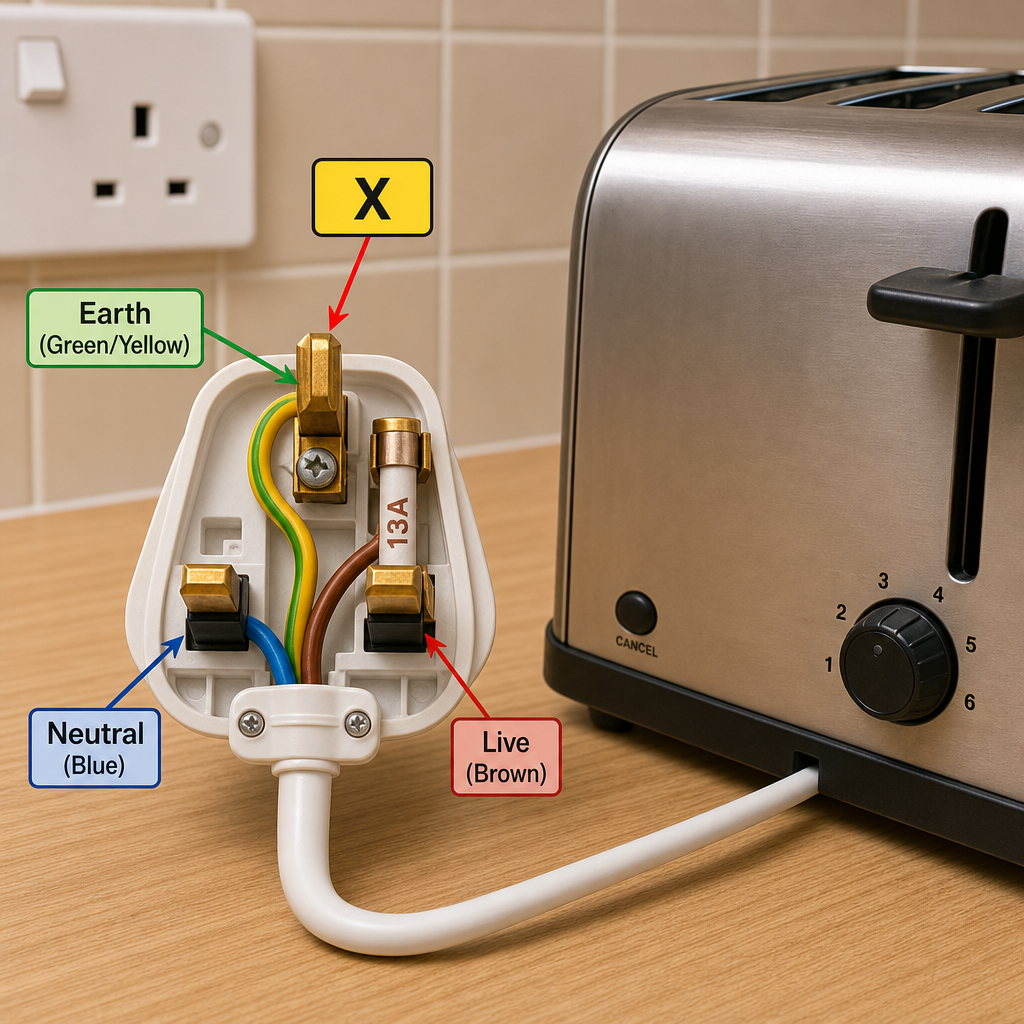
    The image shows the inside of the plug of a metal-cased toaster, with the wires labelled. The toaster is rated at 2.2 kW and is used on a 230 V supply.

    (a) Show that the 13 A fuse is a suitable fuse for this toaster. [2]

    (b) Explain why the toaster needs the wire connected to terminal X, but a hair dryer with a plastic case and the double-insulation symbol does not. [2]

    (c) Someone rewires the plug with the brown and blue wires swapped. Explain why the toaster would still work but would be dangerous if the fuse blew. [2]
    Diagram for a Mains electricity, power and safety practice questionPractise this subtopic
  3. Static and Current Electricity[4 marks]
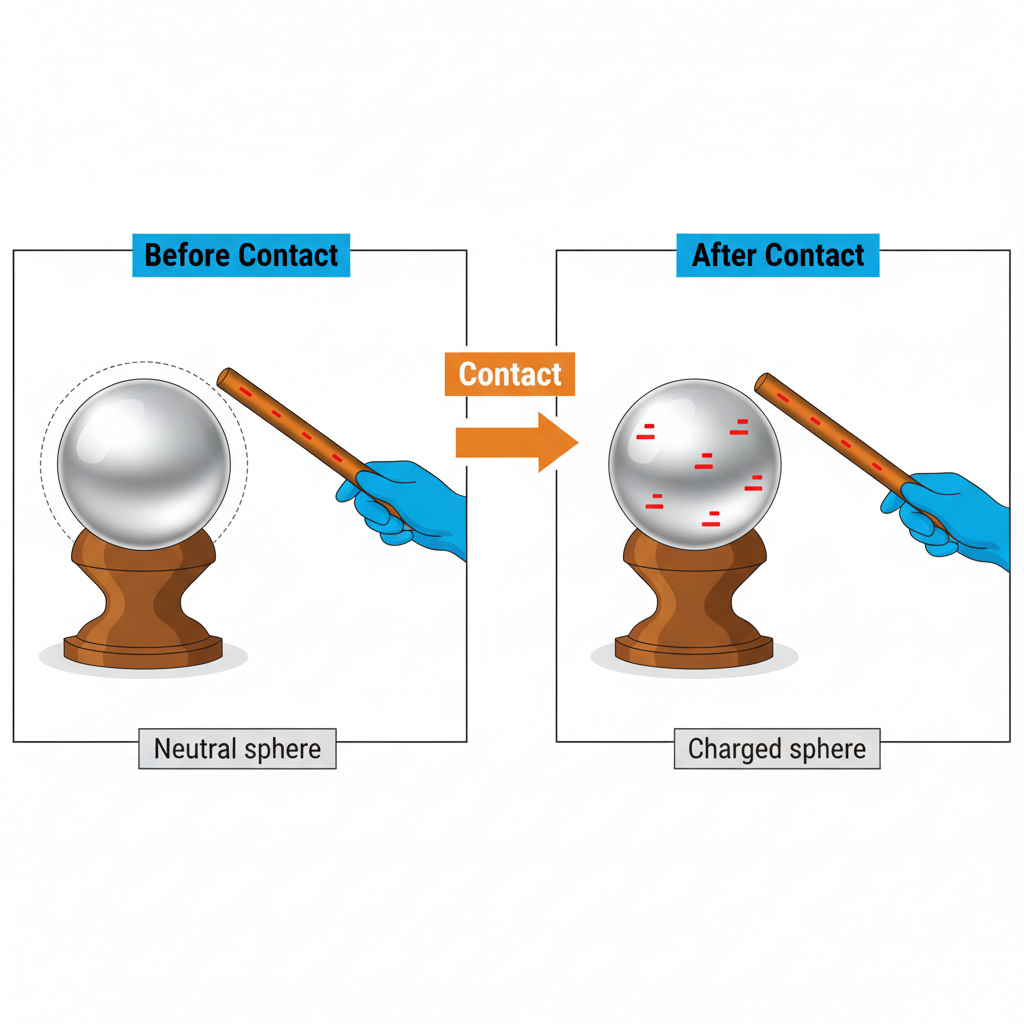
    The diagram shows a negatively charged rod touched against an uncharged metal sphere on a stand, and the sphere after the rod is removed.

    (a) Name this method of charging. [1]

    (b) Describe how the extra electrons arrange themselves on the metal sphere after the rod is removed, and explain why. [2]

    (c) Suggest why the sphere would lose its charge if its stand were made of damp wood. [1]
    Diagram for a Static and Current Electricity practice questionPractise this subtopic
  4. Series and Parallel Circuits[3 marks]
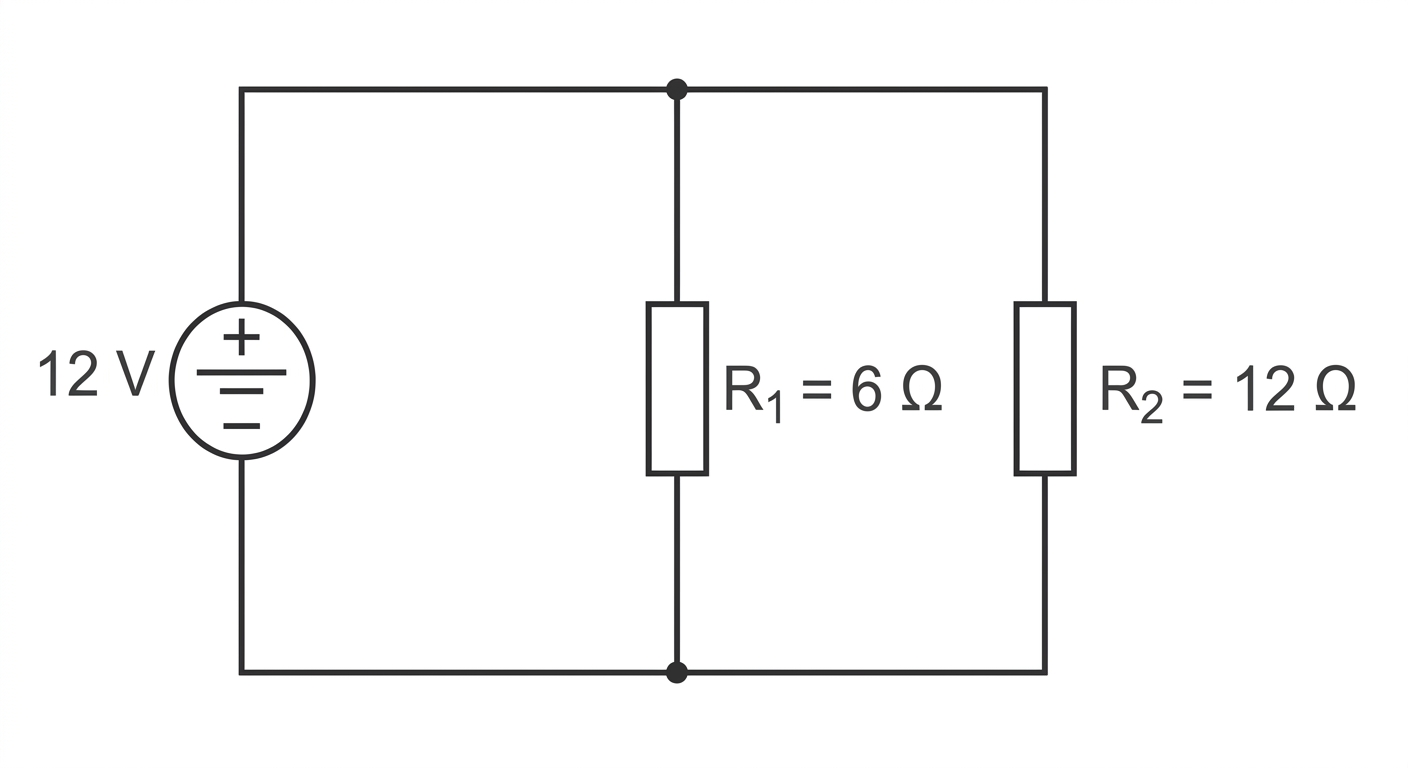
    The diagram shows R₁ = 6 Ω and R₂ = 12 Ω connected in parallel to a 12 V supply. In a hospital lighting circuit, each resistor represents a lamp.

    (a) Determine the current in R₁. [1]

    (b) The lamp R₂ fails, leaving an open circuit. Explain what happens to R₁, and why this matters in a hospital. [2]
    Diagram for a Series and Parallel Circuits practice questionPractise this subtopic
  5. Current, voltage, resistance and charge[6 marks]
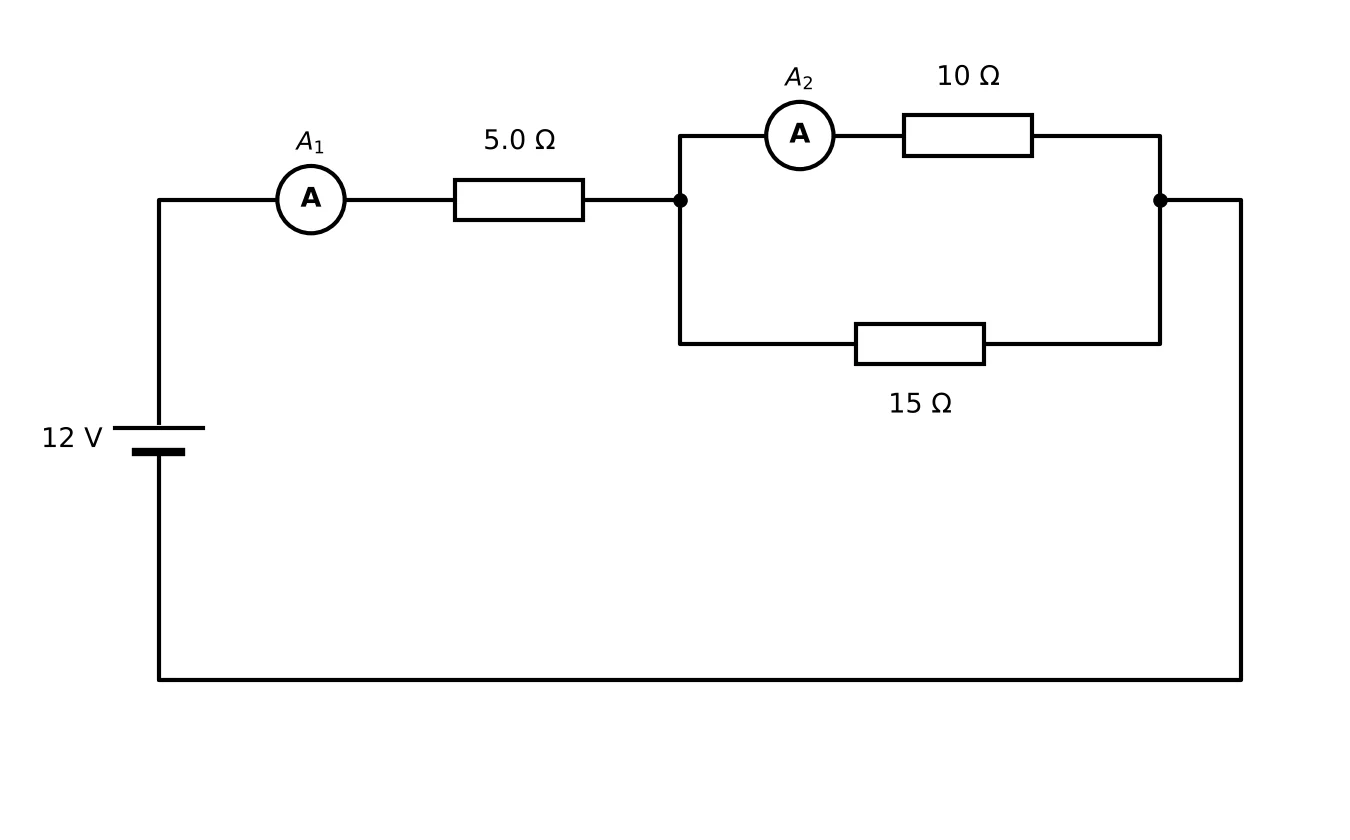
    The diagram shows a 5.0 Ω resistor connected in series with a parallel combination of a 10 Ω and a 15 Ω resistor, across a 12 V battery. Ammeter A₁ is in the main circuit and ammeter A₂ is in the 10 Ω branch.

    (a) Calculate the resistance of the parallel combination. [1]

    (b) Calculate the total resistance and the reading on A₁. [2]

    (c) Calculate the potential difference across the 5.0 Ω resistor and across the parallel combination. [2]

    (d) Calculate the reading on A₂. [1]
    Diagram for a Current, voltage, resistance and charge practice questionPractise this subtopic
  6. Magnetism, electromagnetism and induction[4 marks]
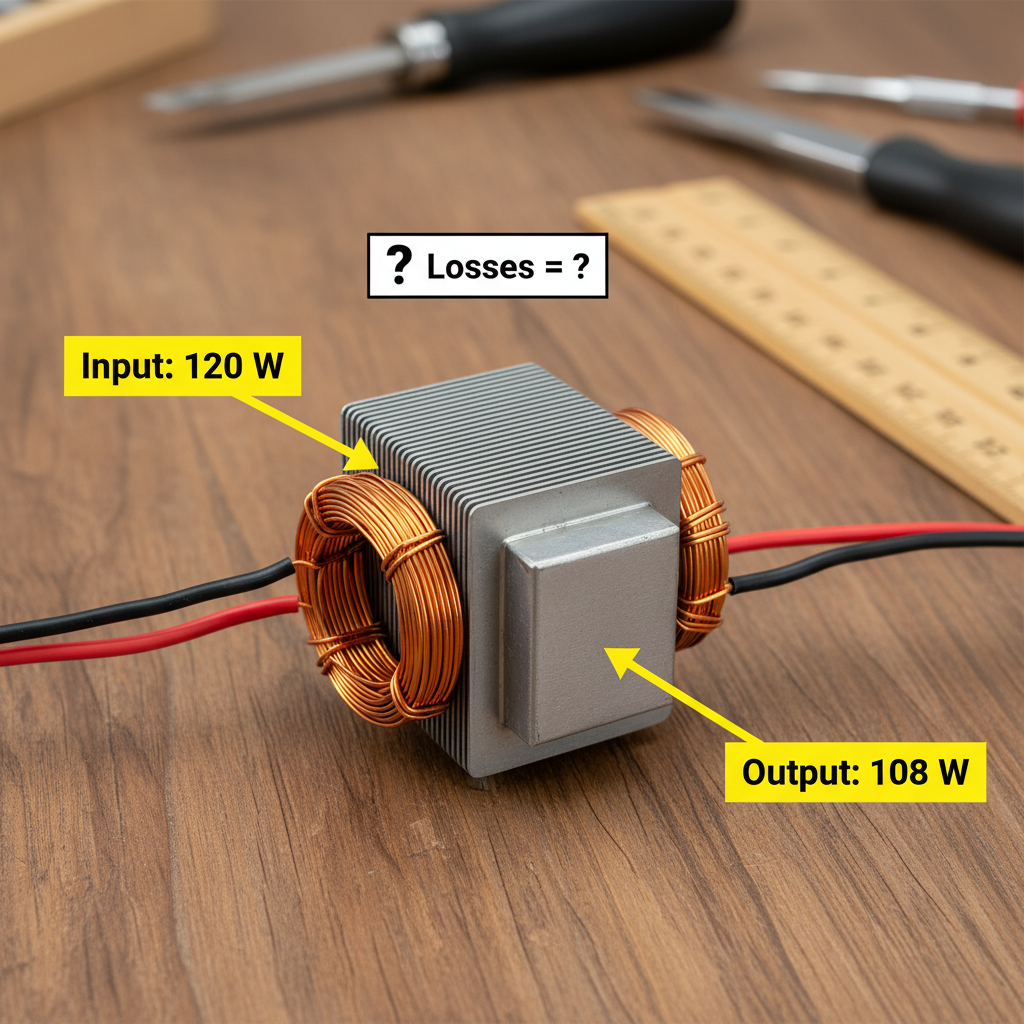
    The photograph shows a small transformer made for a school project, with an input power of 120 W and an output power of 108 W.

    (a) Calculate the efficiency of the transformer. [2]

    (b) Calculate the energy wasted in one hour of use, in joules. [2]
    Diagram for a Magnetism, electromagnetism and induction practice questionPractise this subtopic

Every question, revision note and worksheet for Electricity and Electromagnetism — with Premium.

Unlock Full Access