You're viewing free preview questions — 6 questions previewing here — subscribe to unlock 116 more, plus the Full Question Bank, Mock Papers & Worksheets.Upgrade
Back

Mains electricity, power and safety — Free MYP4 Physics Practice Questions

Free questions

Open in full, with answers, mark scheme and examiner insights.

Question 1Criterion A + D · Band 3-4 · Easy · 6 marksrevisionprep.com

Earth Wires and Electrical Grounding

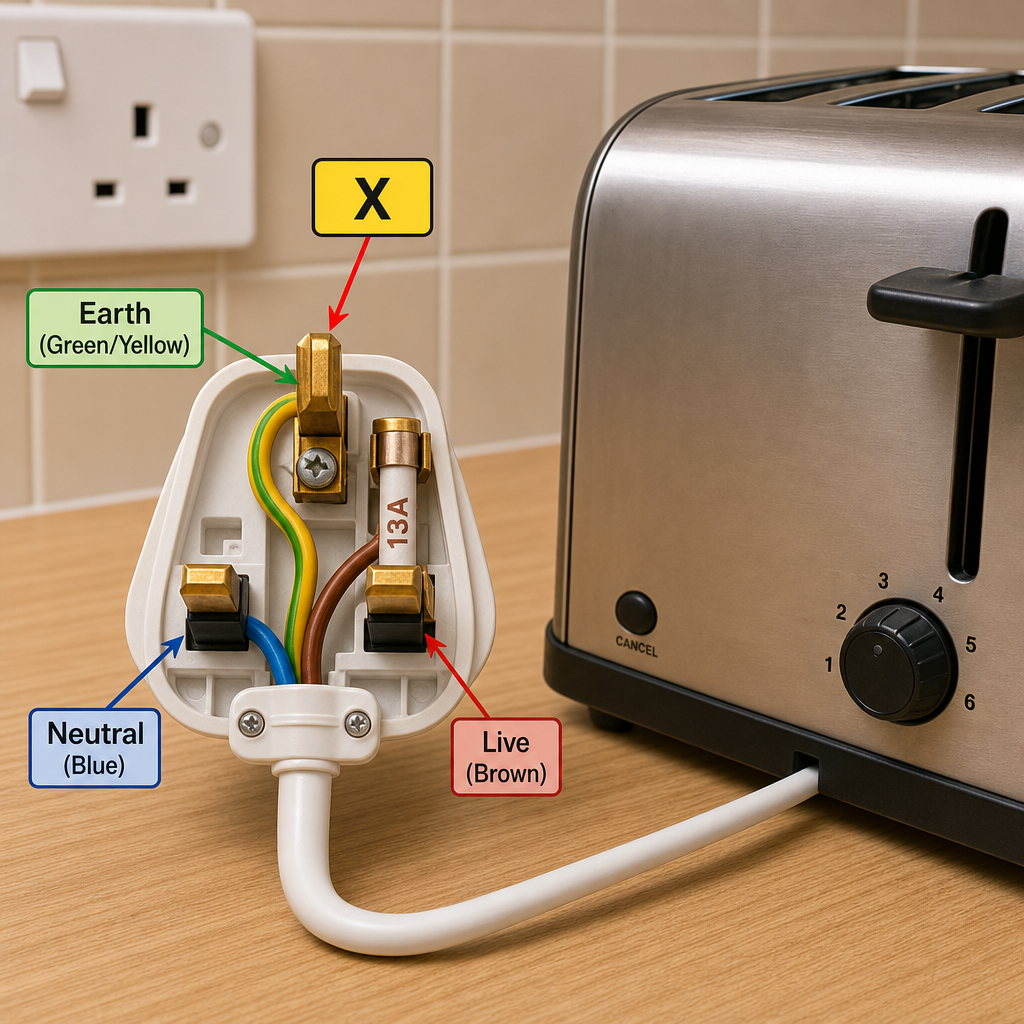
The image shows the inside of the plug of a metal-cased toaster, with the wires labelled. The toaster is rated at 2.2 kW and is used on a 230 V supply.
Question diagram
(a)
Show that the 13 A fuse is a suitable fuse for this toaster. [2]Criterion A (ii) · Level 3-4
(b)
Explain why the toaster needs the wire connected to terminal X, but a hair dryer with a plastic case and the double-insulation symbol does not. [2]Criterion A (i) · Level 3-4
(c)
Someone rewires the plug with the brown and blue wires swapped. Explain why the toaster would still work but would be dangerous if the fuse blew. [2]Criterion D (i) · Level 3-4

revisionprep.com

Summary Answer

Not available for this question.

Model Answer

Not available for this question.

Marking Scheme

Not available for this question.

Examiner Insights

Not available for this question.

Question 2Criterion A + D · Band 1-4 · Easy · 7 marksrevisionprep.com

Household Wiring and Power Ratings

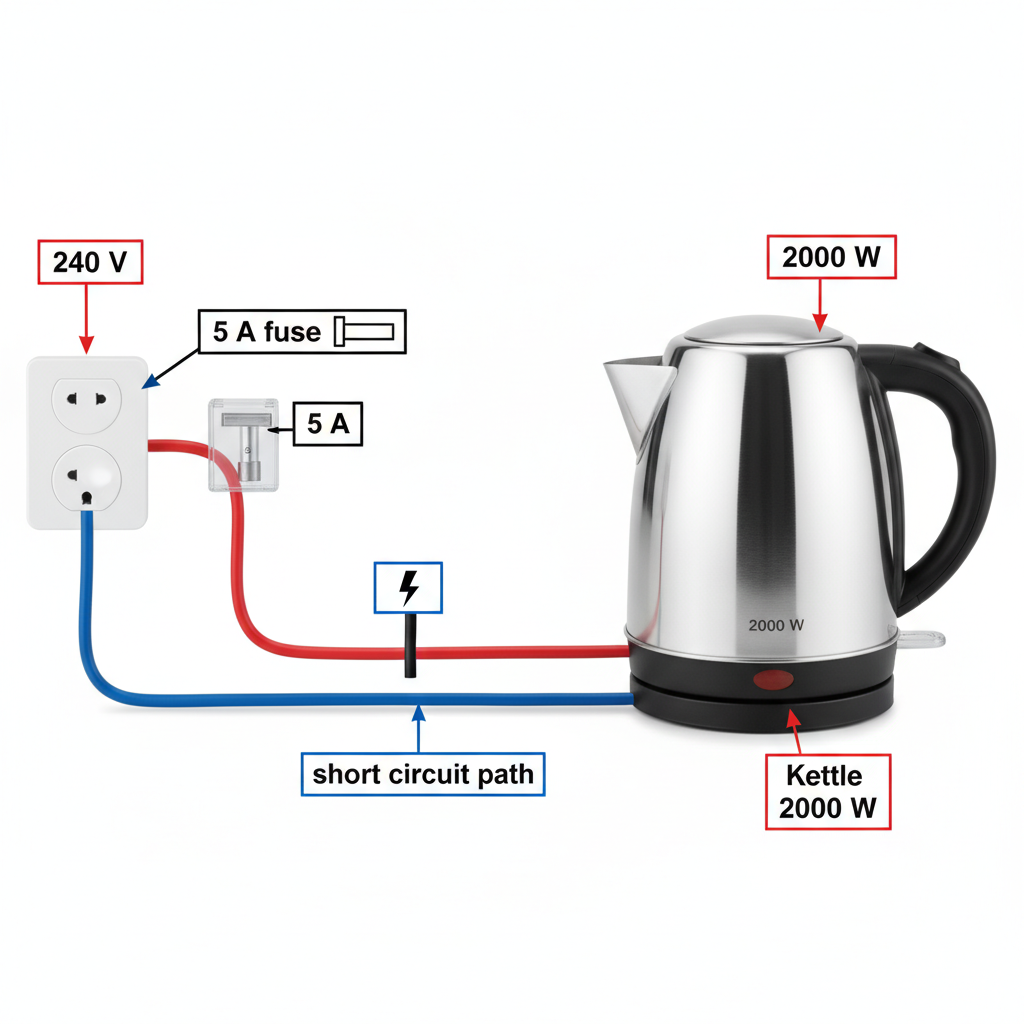
The image shows a 2000 W kettle connected to a 240 V supply. The plug has been fitted with a 5 A fuse. The image also marks where a short circuit could happen between the live and neutral wires.
Question diagram
(a)
Calculate the normal current in the kettle. [2]Criterion A (ii) · Level 1-2
(b)
Predict what will happen when the kettle is switched on with this fuse, and explain why. [2]Criterion A (ii) · Level 3-4
(c)
State the fuse that should be fitted, from 3 A, 5 A and 13 A. [1]Criterion A (ii) · Level 1-2
(d)
The correct fuse is fitted. Explain how it protects the cable if the short circuit marked in the image happens. [2]Criterion D (i) · Level 3-4

revisionprep.com

Summary Answer

Not available for this question.

Model Answer

Not available for this question.

Marking Scheme

Not available for this question.

Examiner Insights

Not available for this question.

Question 3Criterion A + D · Band 1-6 · Medium · 7 marksrevisionprep.com

Electric Fuses and Circuit Breakers

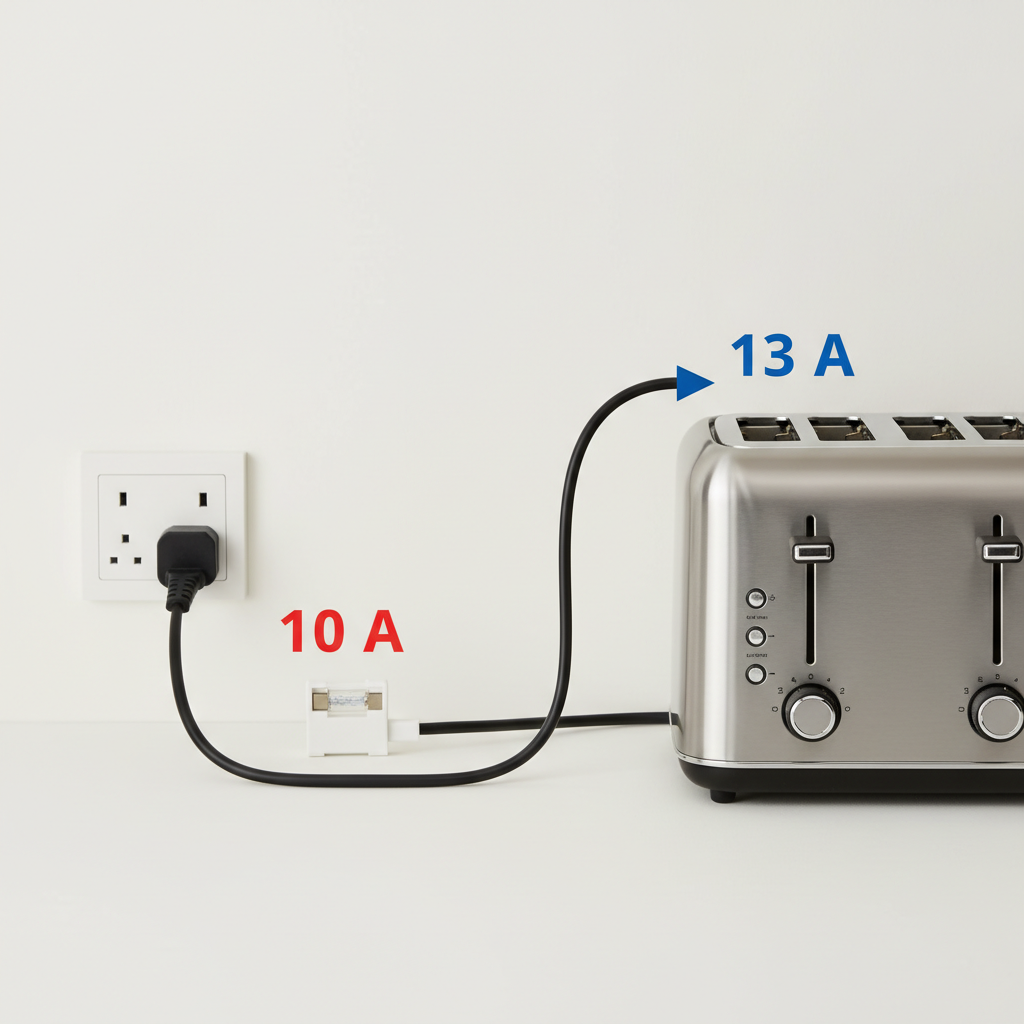
The image shows a toaster plugged into a 230 V socket. The flex (cable) of the toaster is rated at 13 A. The plug of the toaster has been fitted with the 10 A fuse shown. The toaster is rated at 2.8 kW.
Question diagram
(a)
Calculate the current in the toaster when it is working normally. [2]Criterion A (ii) · Level 1-2
(b)
Predict what will happen when the toaster is switched on, and explain your prediction. [2]Criterion A (ii) · Level 3-4
(c)
The owner says: "I will fit a 30 A fuse so that it never blows." Explain why this would be dangerous, and state the fuse rating that should be fitted. [3]Criterion D (ii) · Level 5-6

revisionprep.com

Summary Answer

Not available for this question.

Model Answer

Not available for this question.

Marking Scheme

Not available for this question.

Examiner Insights

Not available for this question.

Question 4Criterion C · Band 3-6 · Medium · 9 marksrevisionprep.com

Dangers of Overloading and Short Circuits
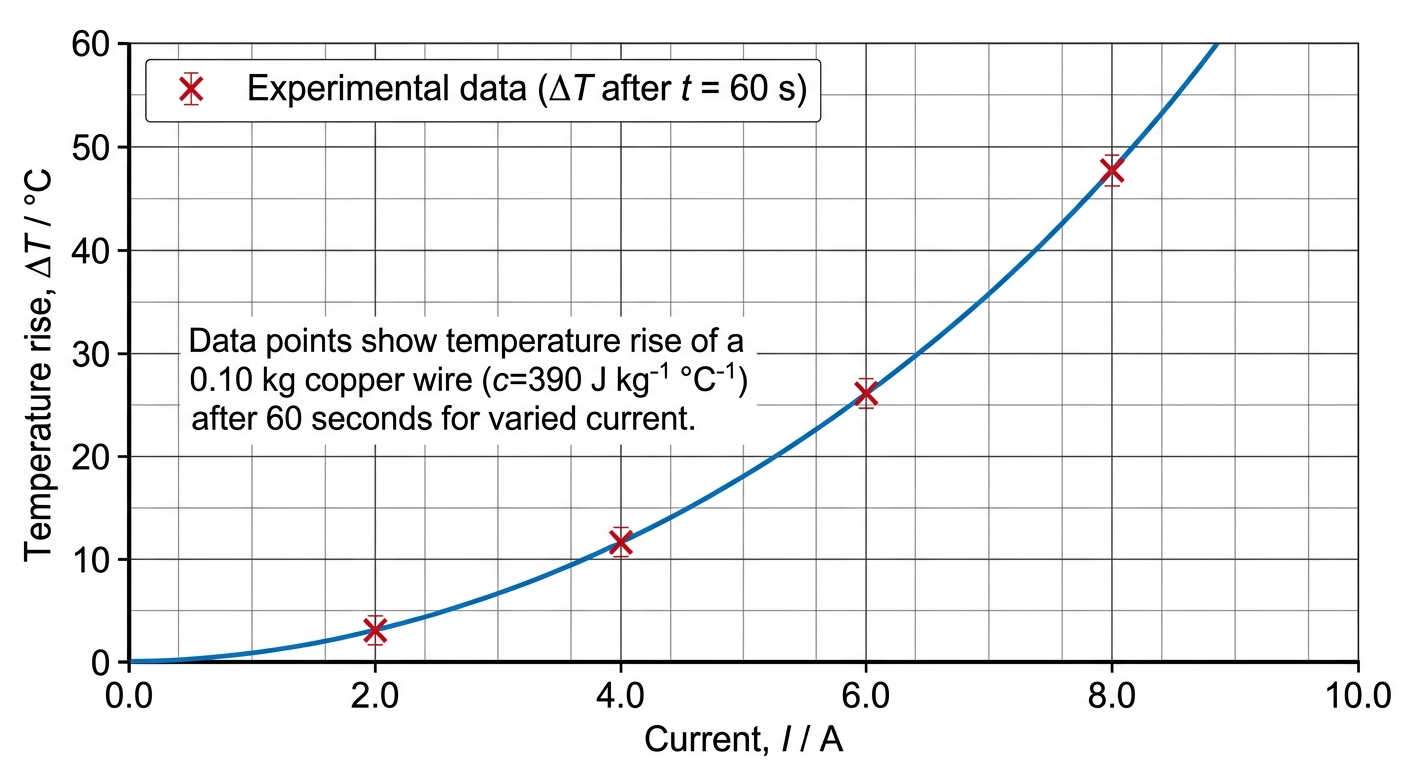
A student investigates the heating effect of current in a copper wire of mass 0.10 kg. The specific heat capacity of copper is 390 J kg⁻¹ °C⁻¹. The graph shows the temperature rise of the wire after 60 s for different currents. Assume no energy is lost to the surroundings.
Question diagram
(a)
Use two pairs of values from the graph to show that doubling the current multiplies the temperature rise by four. [2]Criterion C (ii) · Level 3-4
(b)
Predict the temperature rise after 60 s for a current of 10 A. [2]Criterion C (ii) · Level 3-4
(c)
Calculate the energy transferred to the wire in 60 s when the current is 8.0 A, and hence the power transferred to it. [2]Criterion C (i) · Level 5-6
(d)
Hence calculate the resistance of the wire. [1]

(e) Use the pattern in the graph to explain why a cable carrying 1.5 times its rated current is a serious fire risk. [2]
Criterion C (i) · Level 5-6

revisionprep.com

Summary Answer

Not available for this question.

Model Answer

Not available for this question.

Marking Scheme

Not available for this question.

Examiner Insights

Not available for this question.

Question 5Criterion D + A · Band 3-8 · Challenge · 10 marksrevisionprep.com

Electricity Safety Rules and First Aid
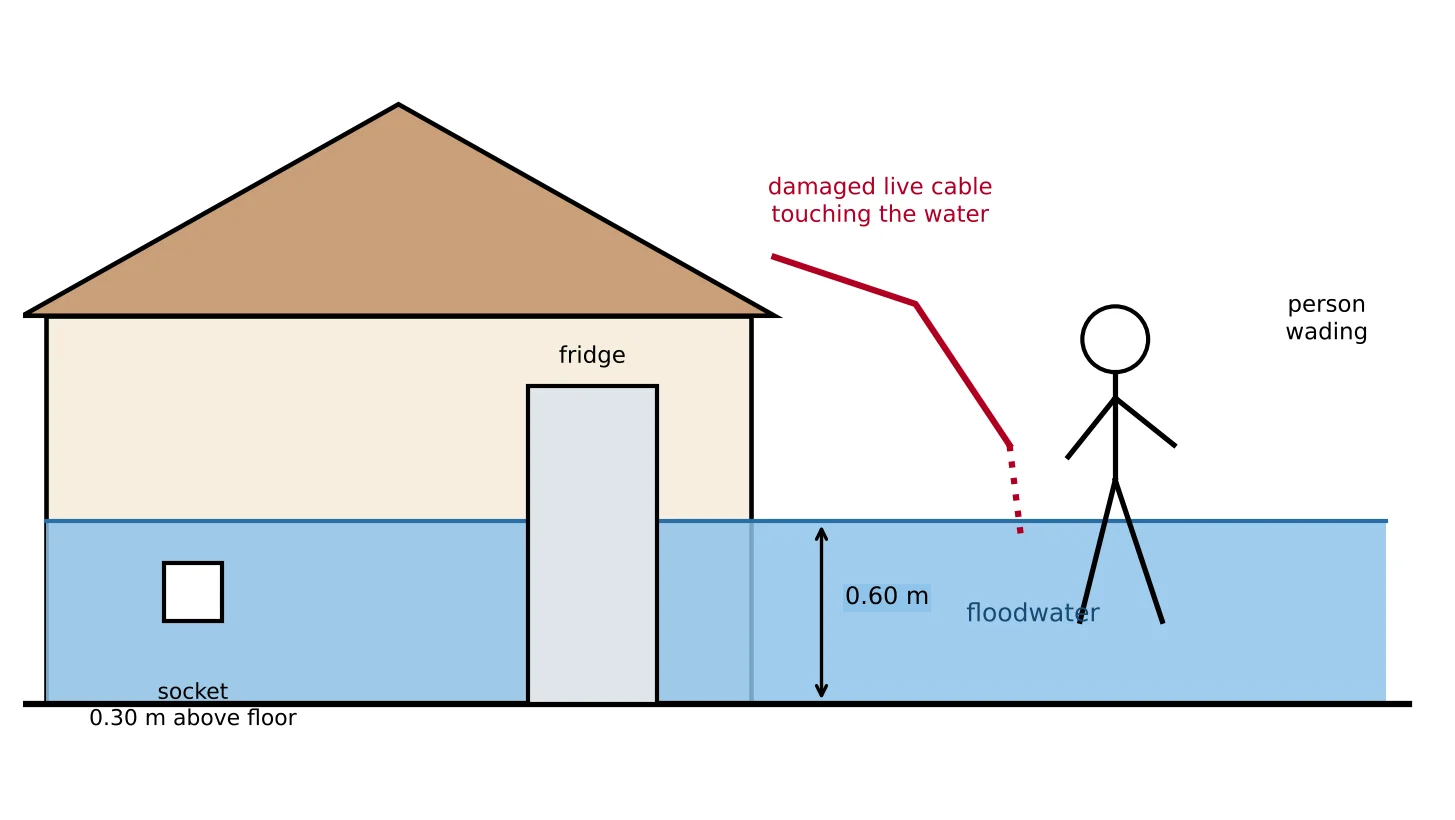
After a flood, a house is still connected to the 230 V mains. The water is 0.60 m deep. A socket is 0.30 m above the floor, so it is under the water, and a damaged live cable touches the water outside, as shown. Floodwater contains dissolved salts and conducts electricity. A person wades through the water towards the house.
Question diagram
(a)
The resistance between the person's hand and feet through the body and water is 1200 Ω when the person touches the live cable. Calculate the current through the person. [2]Criterion A (ii) · Level 3-4
(b)
Explain why the 13 A fuse in the house does not protect the person, and why a residual current device (RCD) that trips at 30 mA would. [2]Criterion A (i) · Level 5-6
(c)
Explain why the floodwater is dangerous for people wading through it, and give two pieces of advice that would make people safer, with a reason for each. [3]Criterion D (i) · Level 5-6
(d)
A householder wants to leave the supply on to keep the fridge running, to save food worth 200 dollars. The fridge is plugged into the socket that is under the water. Evaluate this decision, considering the risk to the household and to rescue workers, and give a justified conclusion. [3]Criterion D (ii) · Level 7-8

revisionprep.com

Summary Answer

Not available for this question.

Model Answer

Not available for this question.

Marking Scheme

Not available for this question.

Examiner Insights

Not available for this question.

Question 6Criterion B + C · Band 5-8 · Challenge · 10 marksrevisionprep.com

Electrical power and energy: P = VI, P = I²R, E = Pt
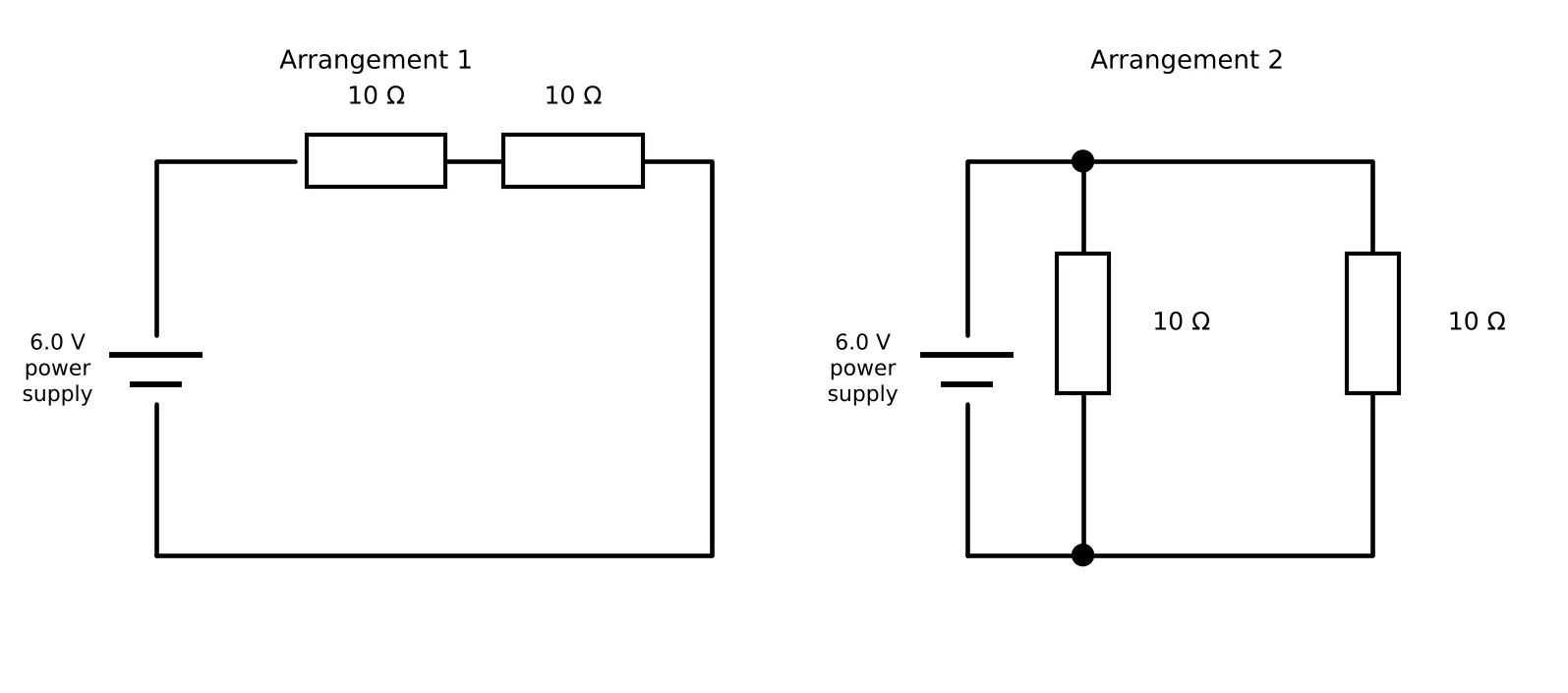
A student compares two ways of connecting two identical 10 Ω resistors to the same 6.0 V power supply, as shown. Each resistor is rated at 2.0 W, which means that the resistor can transfer thermal energy at this rate safely. She plans to measure the total current from the supply with an ammeter in each arrangement.
Question diagram
(a)
Formulate a testable hypothesis about which arrangement transfers more energy each second, and explain it using ideas about resistance and current. [3]Criterion B (ii) · Level 5-6
(b)
Identify the independent variable and the dependent variable, and explain how two other variables are controlled. [3]Criterion B (iii) · Level 5-6
(c)
The ammeter reads 0.30 A for arrangement 1 and 1.20 A for arrangement 2. Calculate the total power of the supply in each arrangement. [2]Criterion C (i) · Level 5-6
(d)
Evaluate whether it is safe to carry out the test with the 6.0 V supply, using the rating of the resistors, and suggest a change that keeps the comparison valid. [2]Criterion C (iii) · Level 7-8

revisionprep.com

Summary Answer

Not available for this question.

Model Answer

Not available for this question.

Marking Scheme

Not available for this question.

Examiner Insights

Not available for this question.

That's every free question here — 6 of 122.

+116 more questions, plus Mock Papers & Worksheets, are waiting in Premium.

Upgrade