You're viewing free preview questions — 6 questions previewing here — subscribe to unlock 136 more, plus the Full Question Bank, Mock Papers & Worksheets.Upgrade
Back

Series and Parallel Circuits — Free MYP4 Physics Practice Questions

Free questions

Open in full, with answers, mark scheme and examiner insights.

Question 1Criterion A · Band 1-2 · Easy · 4 marksrevisionprep.com

Current and Voltage in Series Circuits
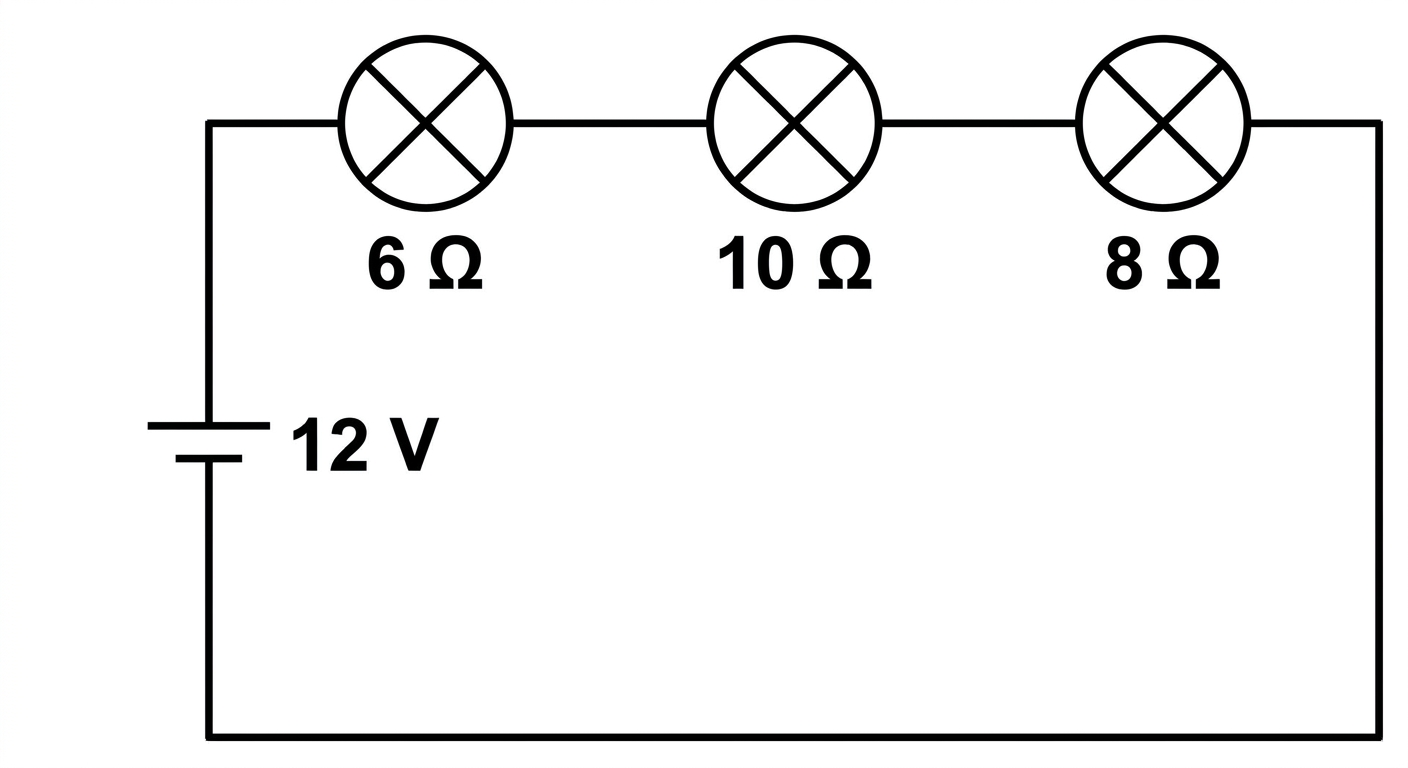
The diagram shows three bulbs of resistance 6 Ω, 10 Ω and 8 Ω connected in series to a 12 V supply.
Question diagram
(a)
Calculate the current. [2]Criterion A (ii) · Level 1-2
(b)
Calculate the pd across each bulb. [2]Criterion A (ii) · Level 1-2

revisionprep.com

Summary Answer

Not available for this question.

Model Answer

Not available for this question.

Marking Scheme

Not available for this question.

Examiner Insights

Not available for this question.

Question 2Criterion D + A · Band 1-4 · Easy · 3 marksrevisionprep.com

Current and Voltage in Parallel Circuits
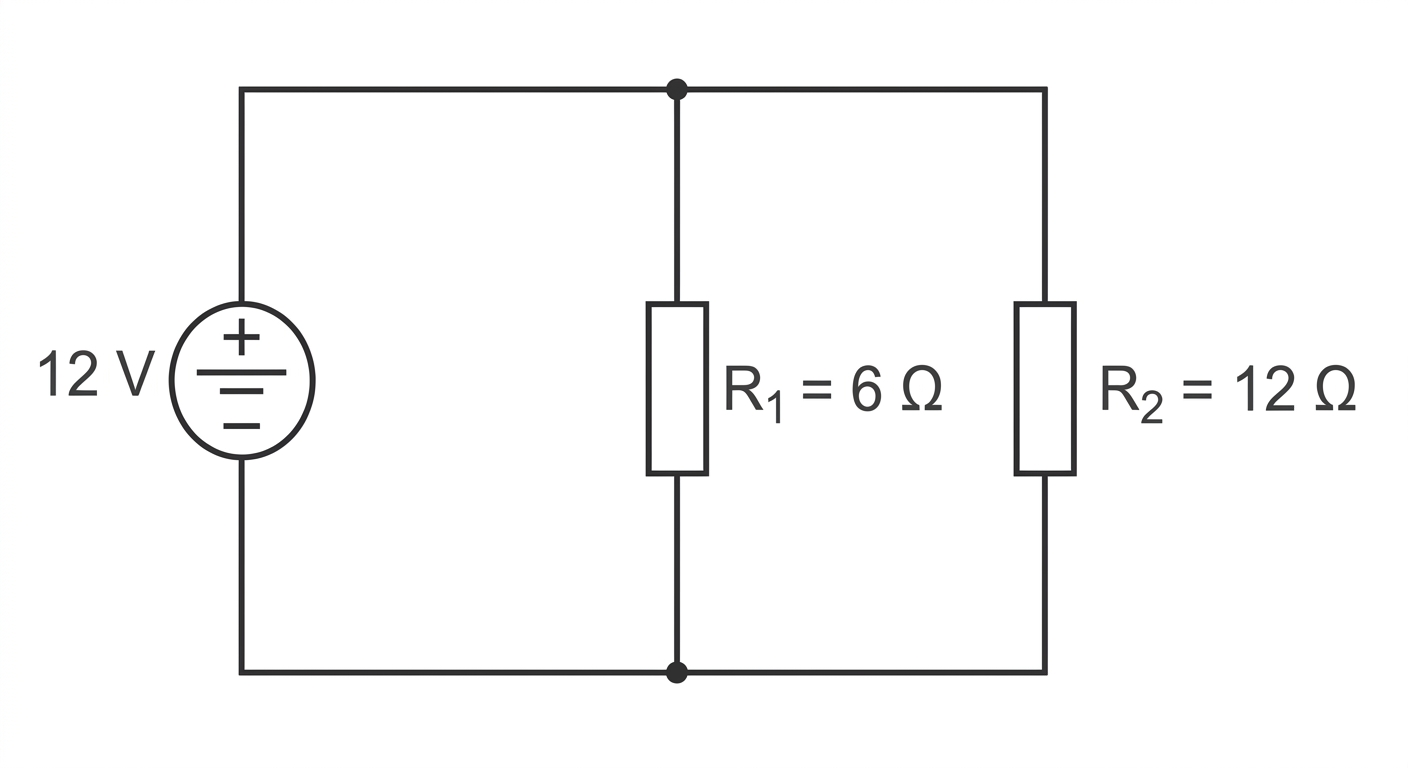
The diagram shows R₁ = 6 Ω and R₂ = 12 Ω connected in parallel to a 12 V supply. In a hospital lighting circuit, each resistor represents a lamp.
Question diagram
(a)
Determine the current in R₁. [1]Criterion A (ii) · Level 1-2
(b)
The lamp R₂ fails, leaving an open circuit. Explain what happens to R₁, and why this matters in a hospital. [2]Criterion D (i) · Level 3-4

revisionprep.com

Summary Answer

Not available for this question.

Model Answer

Not available for this question.

Marking Scheme

Not available for this question.

Examiner Insights

Not available for this question.

Question 3Criterion A + D · Band 1-6 · Medium · 7 marksrevisionprep.com

Electrical Components and their symbols
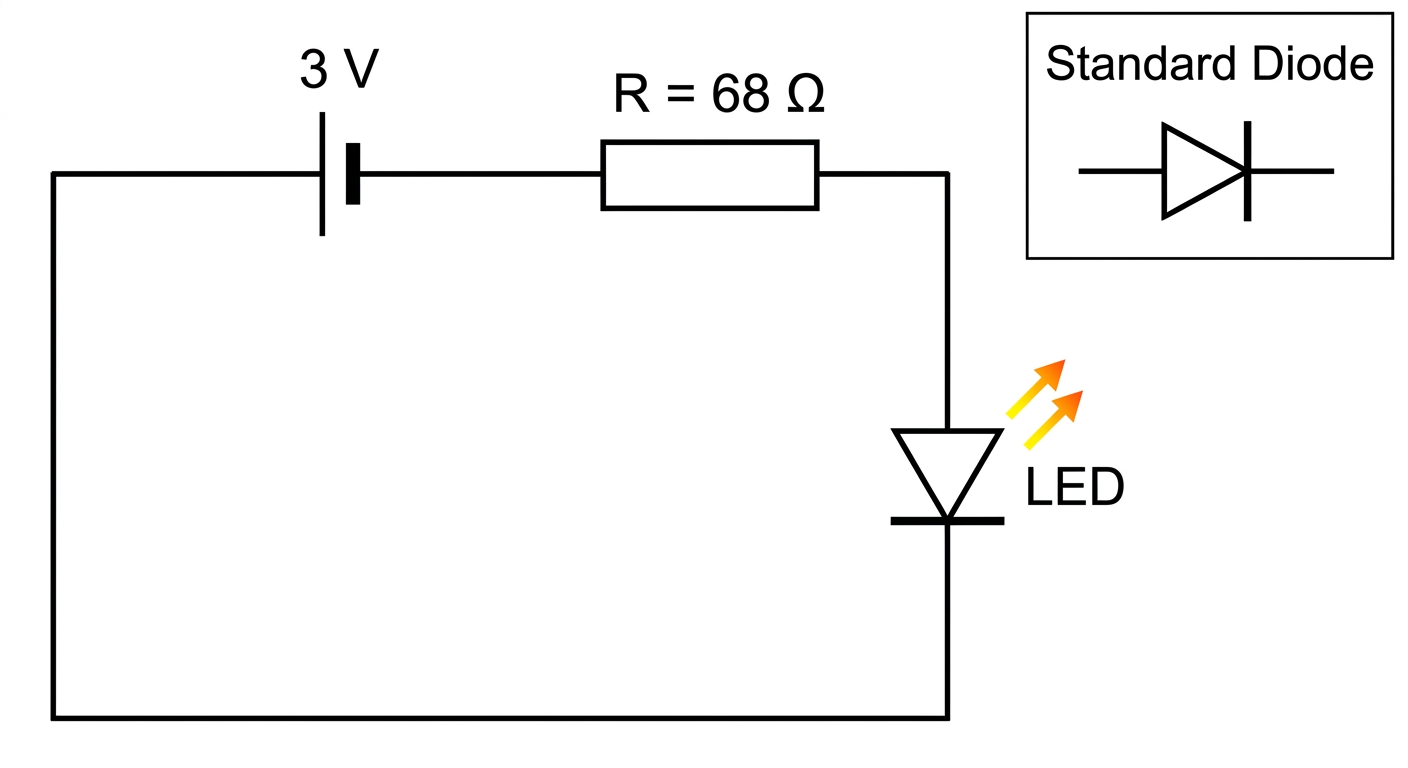
The diagram shows a student's indicator circuit: a 3 V cell, a 68 Ω resistor and an LED. The box shows the symbol for a standard diode. When the student connects the circuit, the LED does not light.
Question diagram
(a)
State one difference between the symbol for an LED and the symbol for a standard diode. [1]Criterion A (i) · Level 1-2
(b)
Use the diagram to explain why the LED does not light. [2]Criterion A (iii) · Level 5-6
(c)
The LED is turned round and lights. The pd across it is then 2.0 V. Calculate the current in the circuit. [2]Criterion A (ii) · Level 3-4
(d)
Suggest why an LED is a better indicator light than a small filament lamp. [2]Criterion D (i) · Level 3-4

revisionprep.com

Summary Answer

Not available for this question.

Model Answer

Not available for this question.

Marking Scheme

Not available for this question.

Examiner Insights

Not available for this question.

Question 4Criterion A + C · Band 1-6 · Medium · 7 marksrevisionprep.com

Measuring Current and Voltage with Ammeters and Voltmeters
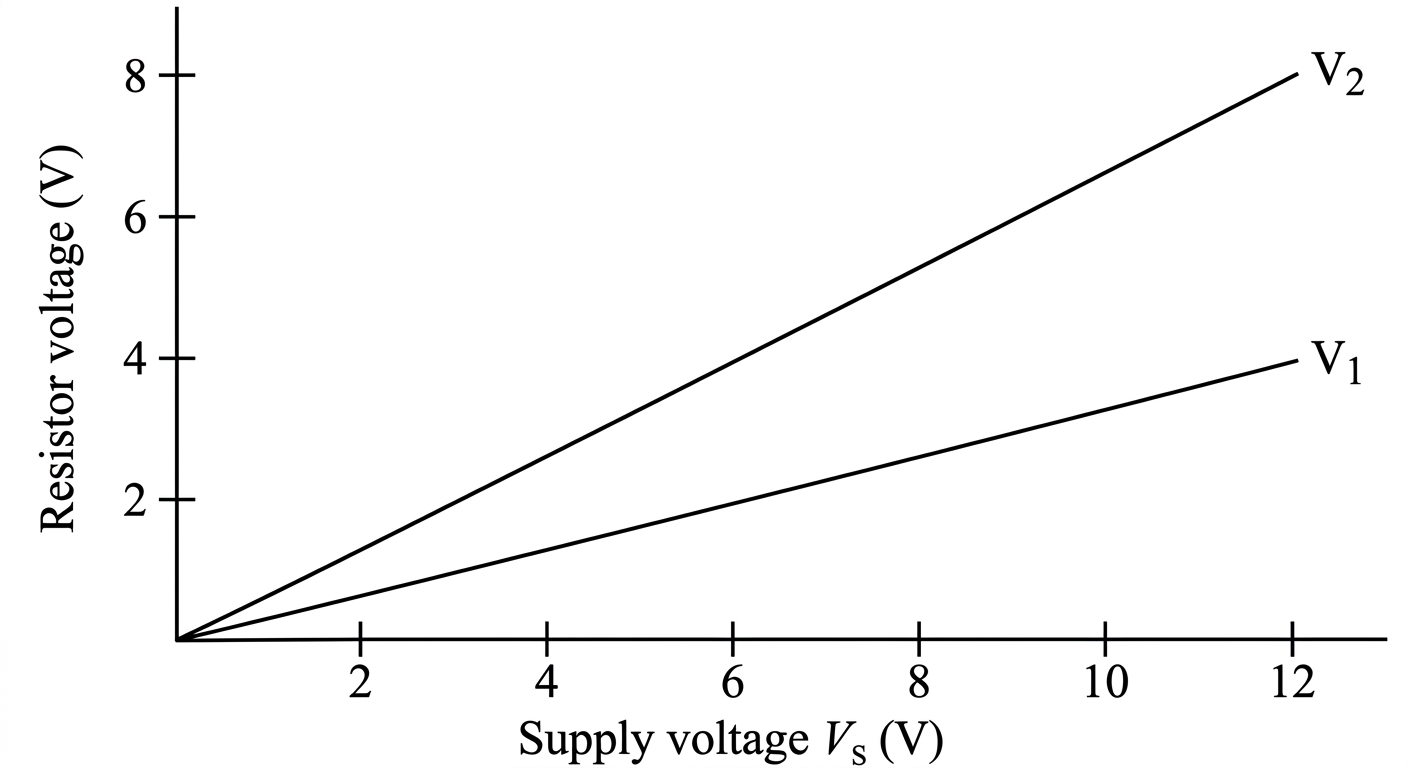
R₁ = 10 Ω and R₂ = 20 Ω are connected in series to a variable supply. A voltmeter measures the pd across each resistor as the supply pd is increased. The graph shows the results (V₁ across R₁, V₂ across R₂).
Question diagram
(a)
State what is true about the current in R₁ and R₂. [1]Criterion A (i) · Level 1-2
(b)
Use the graph to show that V₂ = 2V₁ when the supply pd is 12 V. [2]Criterion C (ii) · Level 3-4
(c)
Calculate the current in the circuit when the supply pd is 12 V. [2]Criterion A (ii) · Level 3-4
(d)
Explain why both lines are straight and pass through the origin. [2]Criterion A (iii) · Level 5-6

revisionprep.com

Summary Answer

Not available for this question.

Model Answer

Not available for this question.

Marking Scheme

Not available for this question.

Examiner Insights

Not available for this question.

Question 5Criterion B + A · Band 3-8 · Challenge · 10 marksrevisionprep.com

Constructing Simple Electrical Circuits
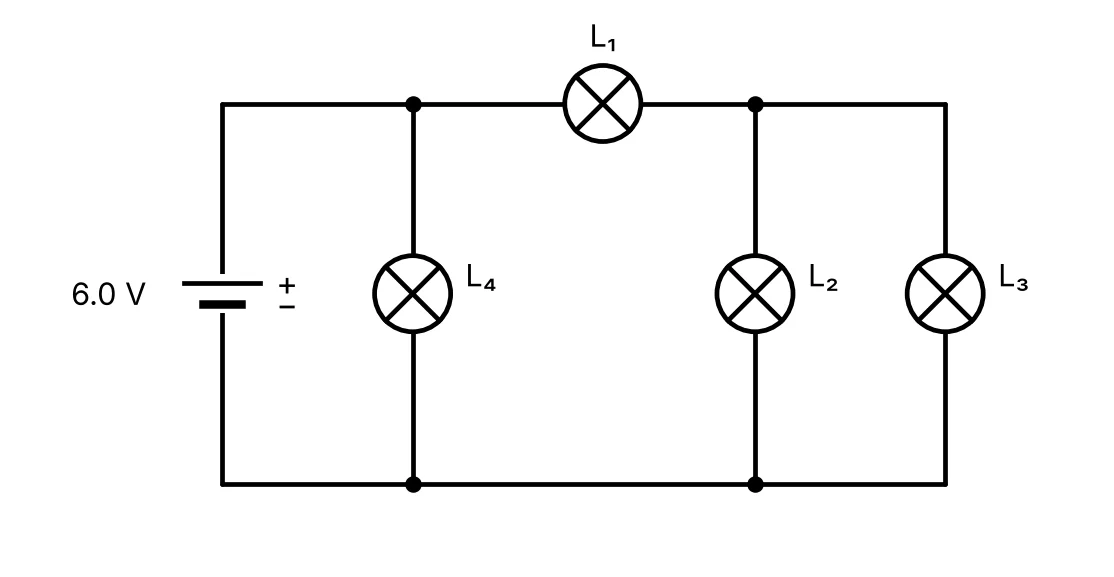
A student builds the circuit in the diagram. The cell has a pd of 6.0 V and the four identical lamps each have a resistance of 6.0 Ω, which you may assume stays constant. Ignore the resistance of the cell and the wires.
Question diagram
(a)
Calculate the current in L₁ and in L₄ when all four lamps work. [2]Criterion A (ii) · Level 3-4
(b)
The filament of L₃ breaks, so there is no current in L₃. Calculate the power of L₂ before and after the break and state how its brightness changes. [2]Criterion A (ii) · Level 5-6
(c)
A student predicts that when L₃ breaks, the current in L₁ falls and the current in L₄ stays the same. Describe how ammeters could be used to test both predictions and give the readings expected. [3]Criterion B (iii) · Level 5-6
(d)
Another student only watches the brightness of the lamps. Evaluate this method and write an improved method that gives reliable results. [3]Criterion B (iv) · Level 7-8

revisionprep.com

Summary Answer

Not available for this question.

Model Answer

Not available for this question.

Marking Scheme

Not available for this question.

Examiner Insights

Not available for this question.

Question 6Criterion C + A · Band 3-8 · Challenge · 9 marksrevisionprep.com

Advantages and Applications of Each Type
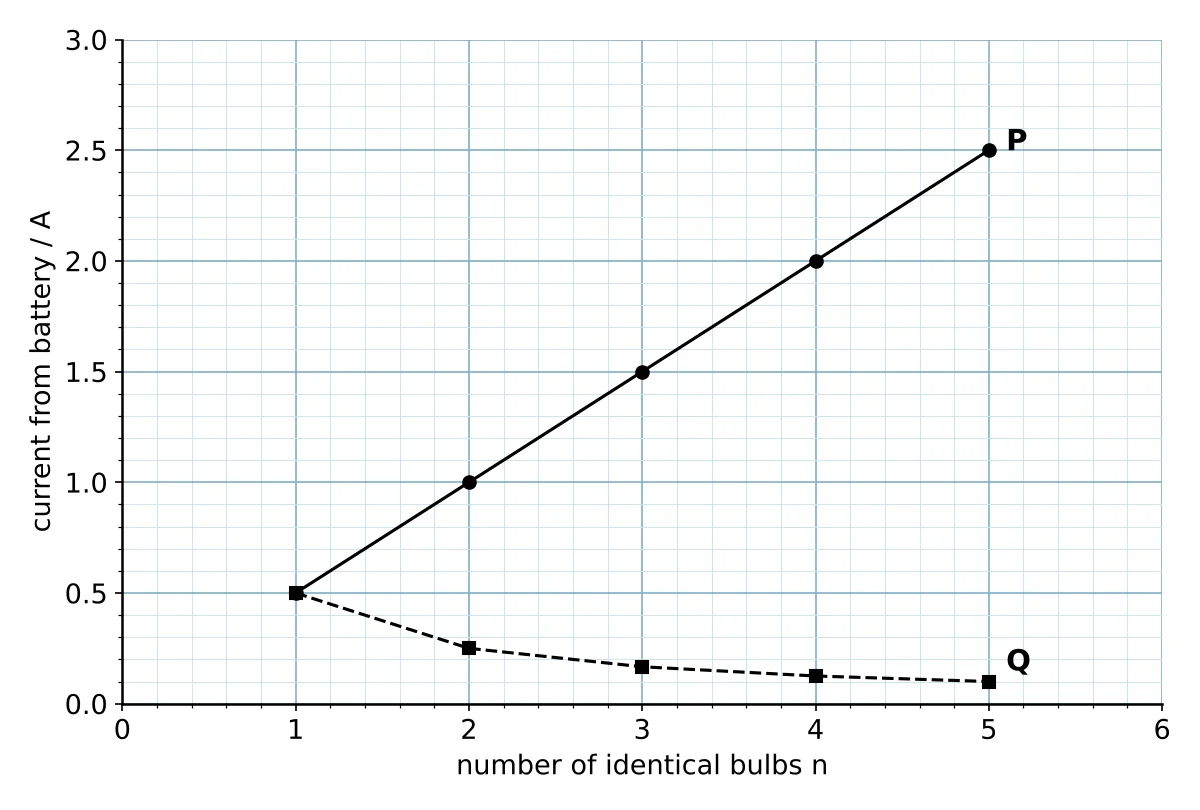
Identical bulbs, each of resistance 12 Ω, are connected to a 6.0 V battery, first all in series and then all in parallel. The graph shows the current from the battery as bulbs are added, for both arrangements (lines P and Q).
Question diagram
(a)
Identify which line shows the parallel arrangement, and give a reason. [2]Criterion C (ii) · Level 3-4
(b)
State why both lines start at the same current for one bulb. [1]Criterion C (ii) · Level 3-4
(c)
Use the graph to determine how many times larger the battery current is in parallel than in series with four bulbs. [2]Criterion C (i) · Level 5-6
(d)
Calculate the power of each bulb with four bulbs in series and with four bulbs in parallel. [2]

(e) Explain which arrangement is better for a battery torch with four bulbs. [2]
Criterion A (ii) · Level 5-6

revisionprep.com

Summary Answer

Not available for this question.

Model Answer

Not available for this question.

Marking Scheme

Not available for this question.

Examiner Insights

Not available for this question.

That's every free question here — 6 of 142.

+136 more questions, plus Mock Papers & Worksheets, are waiting in Premium.

Upgrade