You're viewing free preview questions — 6 questions previewing here — subscribe to unlock 134 more, plus the Full Question Bank, Mock Papers & Worksheets.Upgrade
Back

Static and Current Electricity — Free MYP4 Physics Practice Questions

Free questions

Open in full, with answers, mark scheme and examiner insights.

Question 1Criterion A · Band 3-4 · Easy · 4 marksrevisionprep.com

Understanding Static Charge and Discharge
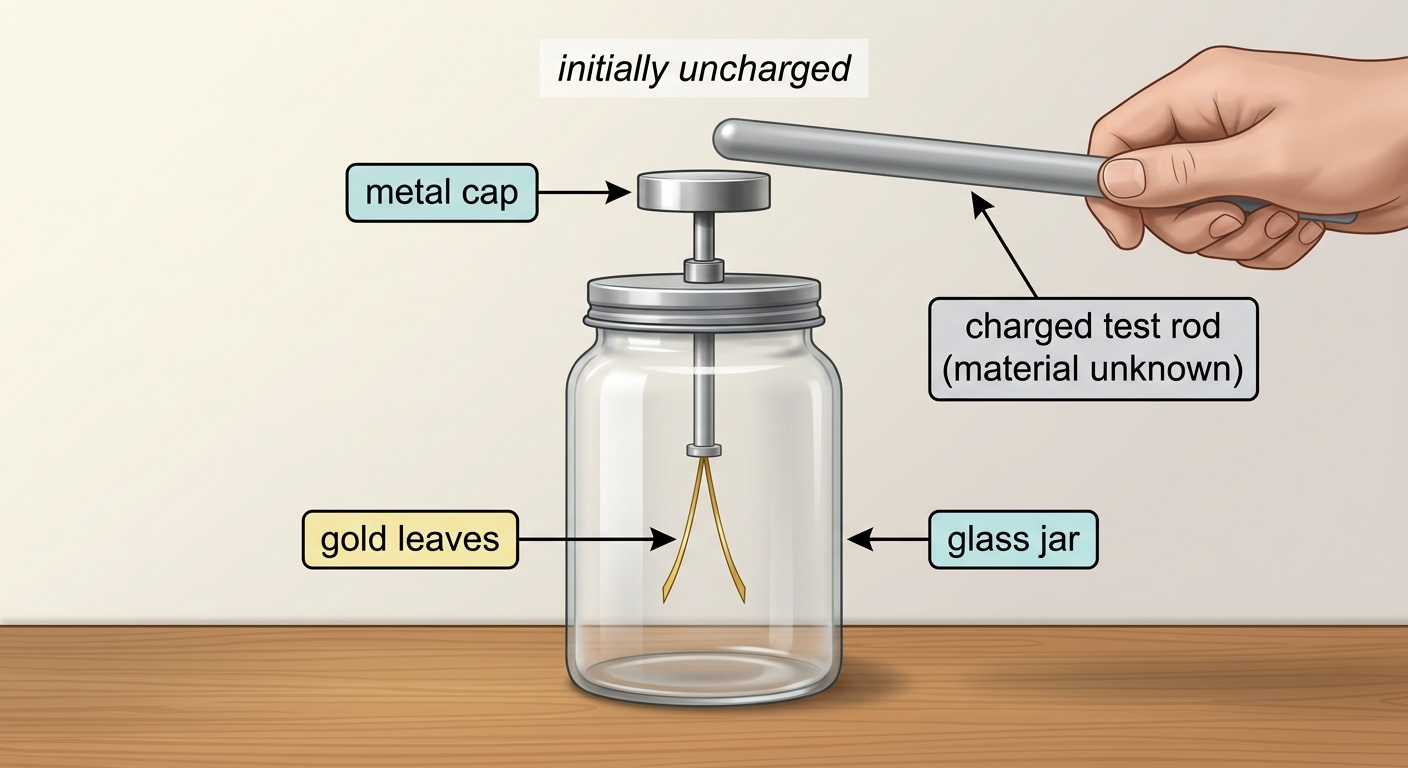
The diagram shows a charged test rod held against the metal cap of an uncharged electroscope.
Question diagram
(a)
The rod is metal with an insulating handle. Explain why the leaves diverge and stay apart when the rod is removed. [2]Criterion A (ii) · Level 3-4
(b)
The test is repeated with a charged plastic rod. The leaves diverge only slightly. Explain why. [2]Criterion A (ii) · Level 3-4

revisionprep.com

Summary Answer

Not available for this question.

Model Answer

Not available for this question.

Marking Scheme

Not available for this question.

Examiner Insights

Not available for this question.

Question 2Criterion A · Band 1-4 · Easy · 4 marksrevisionprep.com

Electric Conductors and Insulators Usage
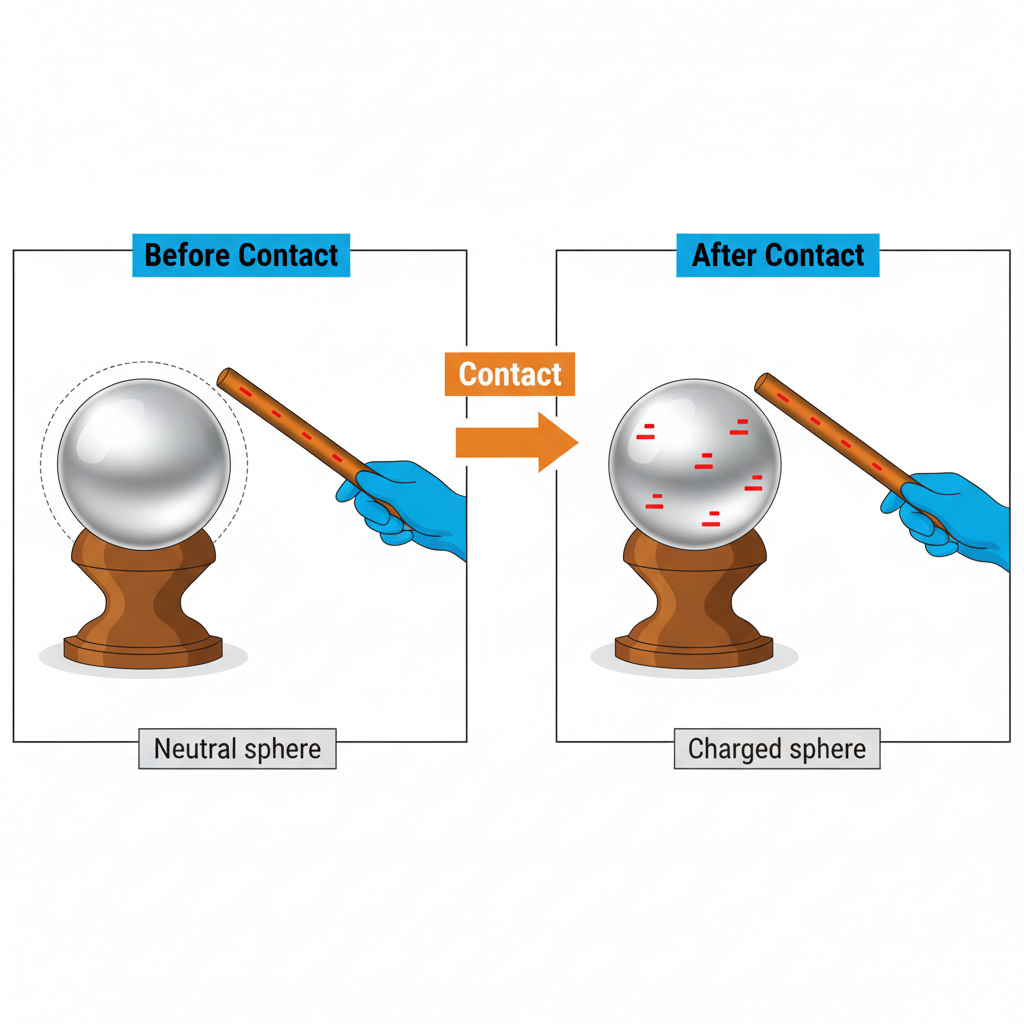
The diagram shows a negatively charged rod touched against an uncharged metal sphere on a stand, and the sphere after the rod is removed.
Question diagram
(a)
Name this method of charging. [1]Criterion A (i) · Level 1-2
(b)
Describe how the extra electrons arrange themselves on the metal sphere after the rod is removed, and explain why. [2]Criterion A (ii) · Level 3-4
(c)
Suggest why the sphere would lose its charge if its stand were made of damp wood. [1]Criterion A (iii) · Level 3-4

revisionprep.com

Summary Answer

Not available for this question.

Model Answer

Not available for this question.

Marking Scheme

Not available for this question.

Examiner Insights

Not available for this question.

Question 3Criterion A · Band 1-6 · Medium · 7 marksrevisionprep.com

Electric fields and field lines

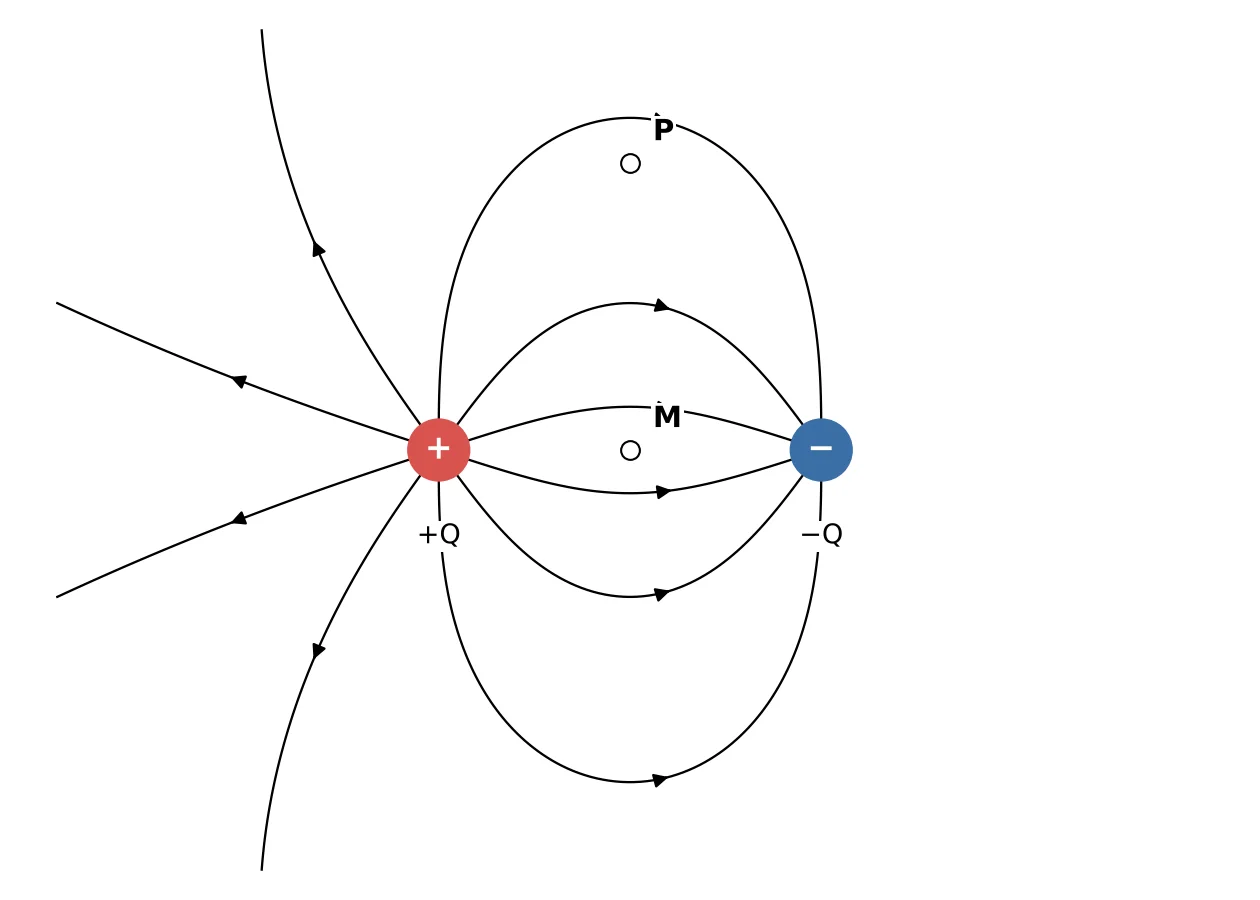
The diagram shows the electric field lines around two point charges, +Q and −Q, placed 0.10 m apart. M is the midpoint between the charges and P is a point above M.
Question diagram
(a)
State the direction of the electric field at M. [1]Criterion A (i) · Level 1-2
(b)
State how the field strength at P compares with the field strength at M, and how the diagram shows this. [2]Criterion A (ii) · Level 3-4
(c)
A student claims that the field at M must be zero because the two charges are equal and opposite. Evaluate this claim. [3]Criterion A (iii) · Level 5-6
(d)
State the direction of the force on an electron placed at M. [1]Criterion A (ii) · Level 3-4

revisionprep.com

Summary Answer

Not available for this question.

Model Answer

Not available for this question.

Marking Scheme

Not available for this question.

Examiner Insights

Not available for this question.

Question 4Criterion C · Band 3-6 · Medium · 8 marksrevisionprep.com

Comparison Between Static and Current Electricity
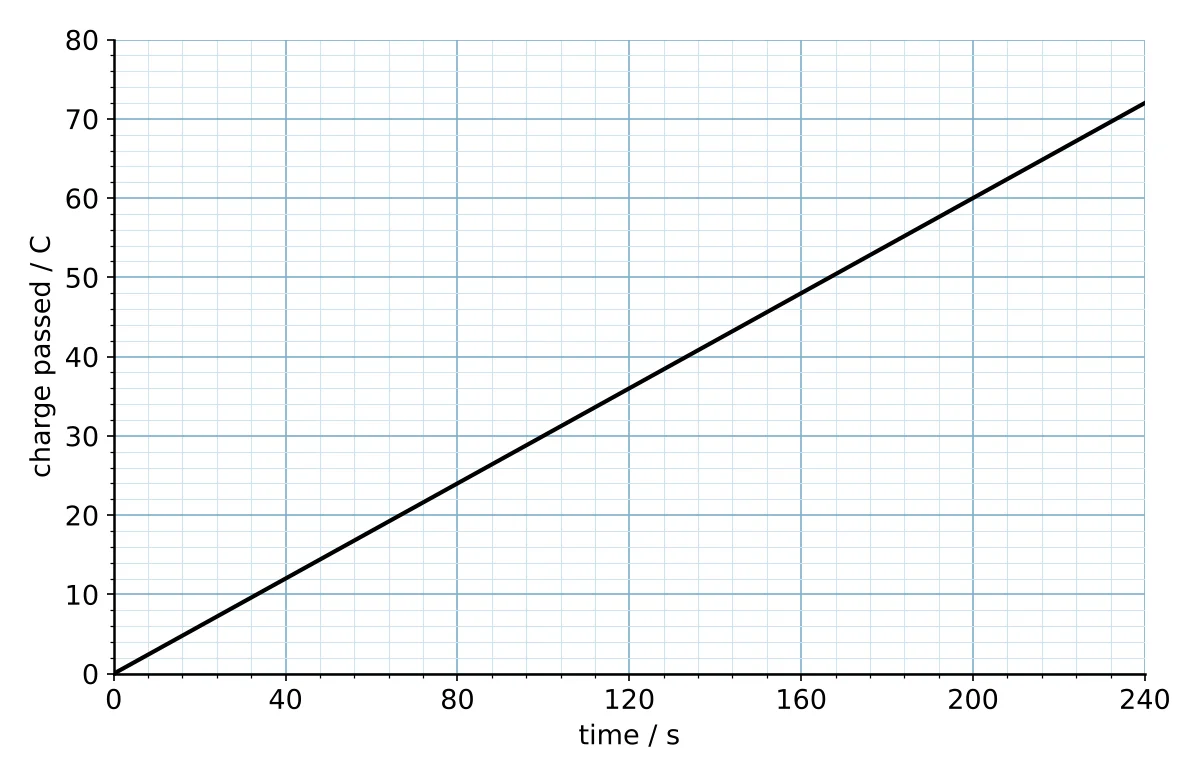
The graph shows the total charge that has passed through a torch lamp against time after the torch is switched on. The torch battery has a pd of 4.5 V.
Question diagram
(a)
Use the graph to determine the current in the lamp. [2]Criterion C (i) · Level 3-4
(b)
State what the straight line shows about the current. [1]Criterion C (ii) · Level 3-4
(c)
Calculate the energy transferred to the lamp in the first 200 s. [2]Criterion C (i) · Level 3-4
(d)
State how the line would change as the battery runs down. [1]

(e) On a graph of the same kind, a static discharge from a charged dome would appear as an almost vertical step that then stays flat. Explain why. [2]
Criterion C (ii) · Level 5-6

revisionprep.com

Summary Answer

Not available for this question.

Model Answer

Not available for this question.

Marking Scheme

Not available for this question.

Examiner Insights

Not available for this question.

Question 5Criterion D + A · Band 5-8 · Challenge · 10 marksrevisionprep.com

Charging by friction, induction and conduction
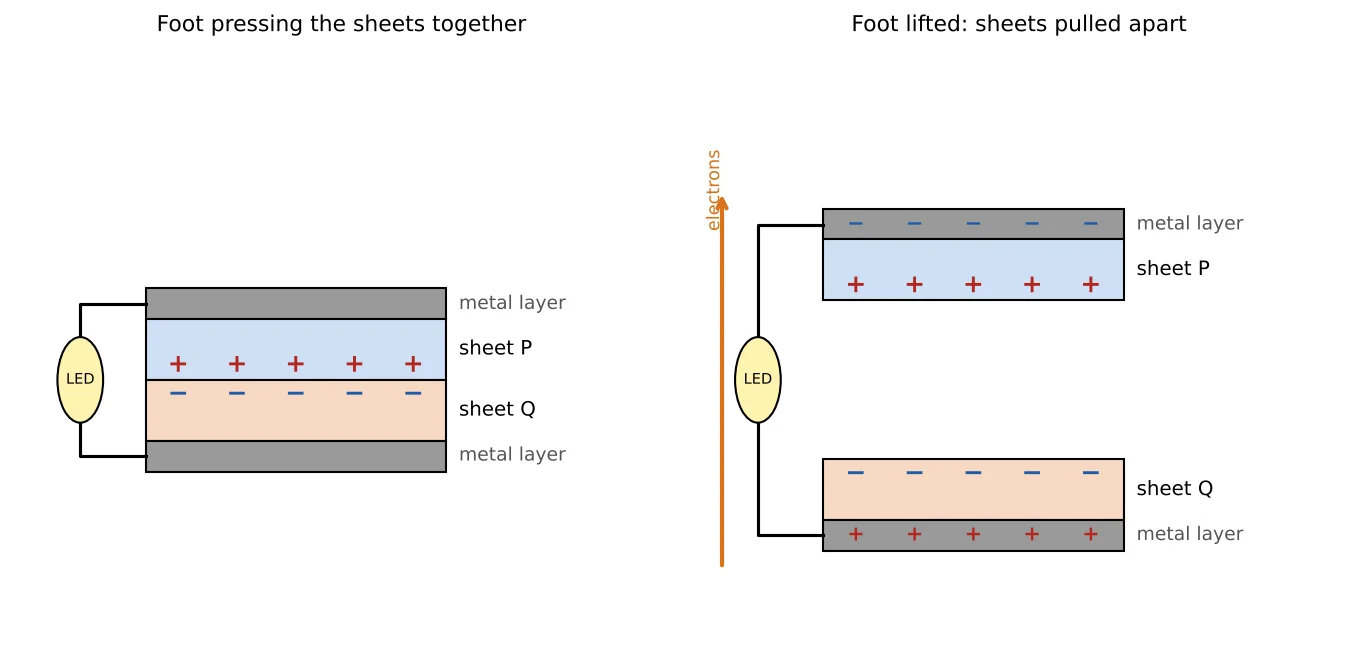
A railway station wants to fit triboelectric floor tiles in its busiest corridor. Each tile has two thin sheets, P and Q, made of different plastics, with a metal layer on the back of each sheet. The two metal layers are joined through a circuit. The figure shows a tile pressed together by a footstep (left) and pulled apart as the foot lifts (right). In a trial, a footstep on a tile produces an average of 0.015 J of electrical energy. 6000 people walk along the corridor each hour and each person steps on 4 tiles. One LED sign needs a power of 12 W. A small motion sensor needs 5.0 mW.
Question diagram
(a)
Use the figure to explain why electrons flow through the circuit when the sheets are pulled apart, and why they flow back when the sheets are pressed together again. [2]Criterion A (i) · Level 5-6
(b)
Calculate the average power produced by all the tiles in the corridor. [2]Criterion A (ii) · Level 5-6
(c)
Calculate how many 12 W LED signs and how many 5.0 mW motion sensors the tiles could power, and suggest which use makes better sense. [3]Criterion D (i) · Level 5-6
(d)
The station manager says: "These tiles will cut the carbon dioxide emissions of the station." Evaluate this claim, considering an economic and an environmental perspective. [3]Criterion D (ii), D (iii) · Level 7-8

revisionprep.com

Summary Answer

Not available for this question.

Model Answer

Not available for this question.

Marking Scheme

Not available for this question.

Examiner Insights

Not available for this question.

Question 6Criterion B + A · Band 3-8 · Challenge · 10 marksrevisionprep.com

Hazards and Uses of Static Electricity

A teacher says that lightning conductors have sharp points because charge leaks away faster from a point than from a rounded end. A student wants to test this idea with a gold-leaf electroscope. She charges the electroscope until the leaves are 40° apart, then holds an earthed copper tip 5 cm from the cap and times how long the leaves take to fall to 10°. She has earthed tips made from the same copper wire, each filed to a different sharpness (tip radius 0.1 mm, 0.5 mm, 1 mm, 2 mm and 5 mm), a stopwatch, a protractor, a ruler and a hygrometer. She wants to be able to see a difference of 3 s between tips. In a pilot test with the 0.5 mm tip she got these times:

Trial12345Time for the leaves to fall to 10° / s149211218\begin{array}{|l|c|c|c|c|c|}\hline \text{Trial} & 1 & 2 & 3 & 4 & 5 \\ \hline \text{Time for the leaves to fall to 10° / s} & 14 & 9 & 21 & 12 & 18 \\ \hline\end{array}
(a)
State a research question for this investigation. [1]Criterion B (i) · Level 3-4
(b)
Explain why the leaves fall when the earthed tip is held near the cap. [2]Criterion A (i) · Level 5-6
(c)
Write a hypothesis for this investigation and explain it using scientific reasoning. [3]Criterion B (ii) · Level 5-6
(d)
Use the pilot results to explain how she should plan her investigation to collect valid and reliable data, including how she will work safely. [4]Criterion B (iii), B (iv) · Level 7-8

revisionprep.com

Summary Answer

Not available for this question.

Model Answer

Not available for this question.

Marking Scheme

Not available for this question.

Examiner Insights

Not available for this question.

That's every free question here — 6 of 140.

+134 more questions, plus Mock Papers & Worksheets, are waiting in Premium.

Upgrade