You're viewing free preview questions — 5 questions previewing here — subscribe to unlock 204 more, plus the Full Question Bank, Mock Papers & Worksheets.Upgrade
Magnetic Fields and Electromagnetism — Free MYP4 Physics Practice Questions

1QuestionRight-Hand Rule and Magnetic Direction - AC GeneratorConcept Practice
2 marks~3 minCriterion D
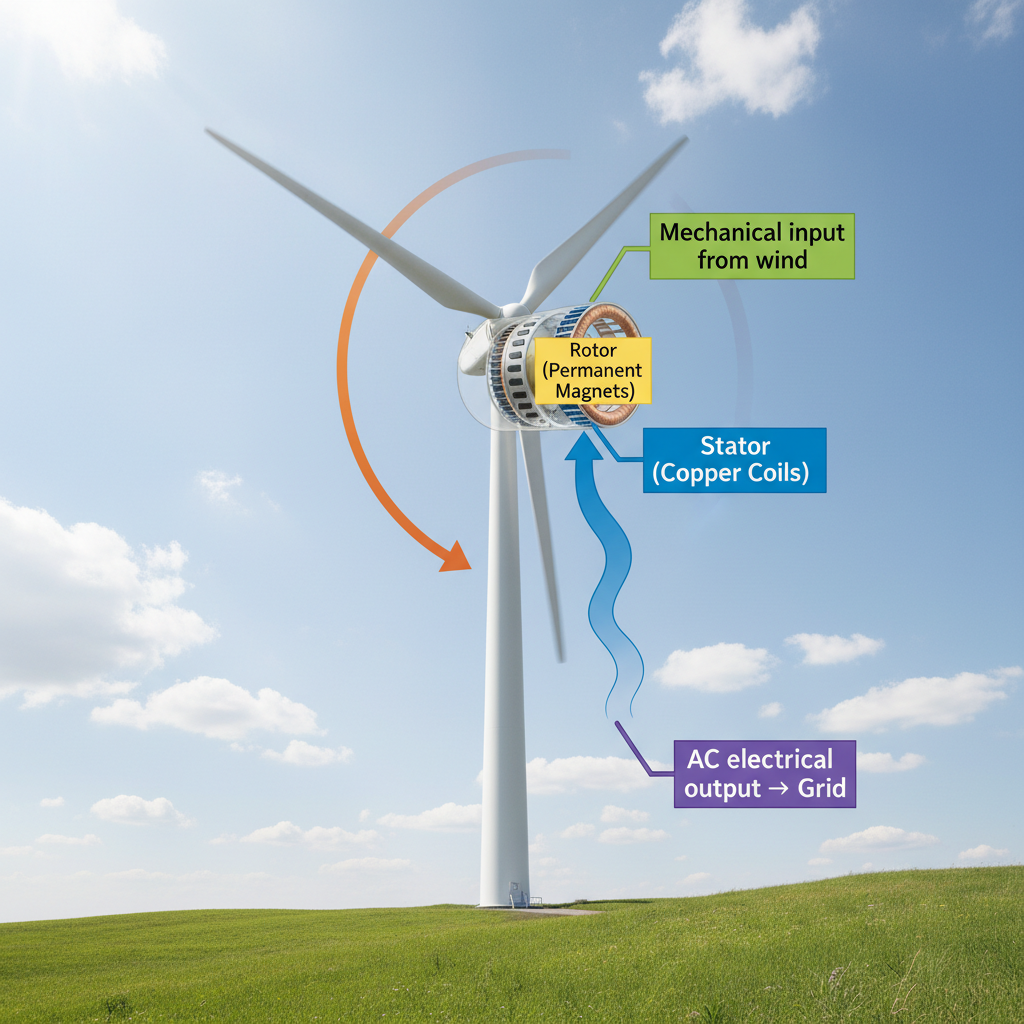
AC generators convert mechanical energy into electrical energy through electromagnetic induction and are used across many real-world contexts.
Discuss one real-world application of an AC generator. In your response, identify one societal benefit and one limitation associated with this application. [2]
Discuss one real-world application of an AC generator. In your response, identify one societal benefit and one limitation associated with this application. [2]

Solutions
2QuestionUses of Electromagnets in Real LifeAssessment Practice
3 marks~5 minCriterion B
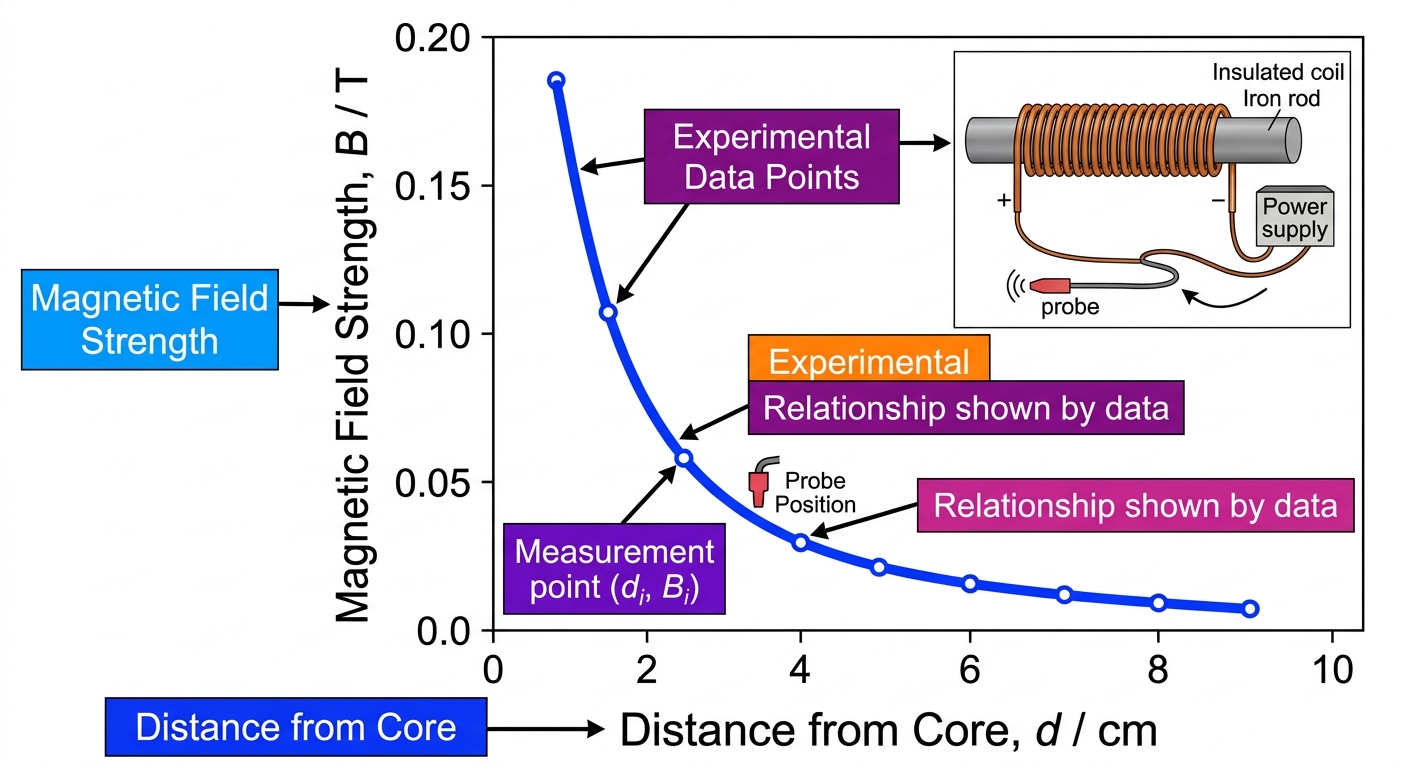
A student builds an electromagnet by wrapping a coil of wire around an iron core and connecting it to a power supply. She uses a magnetic field probe to measure field strength at several distances from the end of the core. Her results are shown in the graph below.
a
Describe the trend shown in the graph. [1]
b
State the mathematical relationship between and illustrated by the graph. [1]
c
Explain why the field strength drops much more steeply close to the core than far from it. [1]
Solutions
3QuestionMagnetic Field Around a Bar MagnetAssessment Practice
3 marks~5 minCriterion B
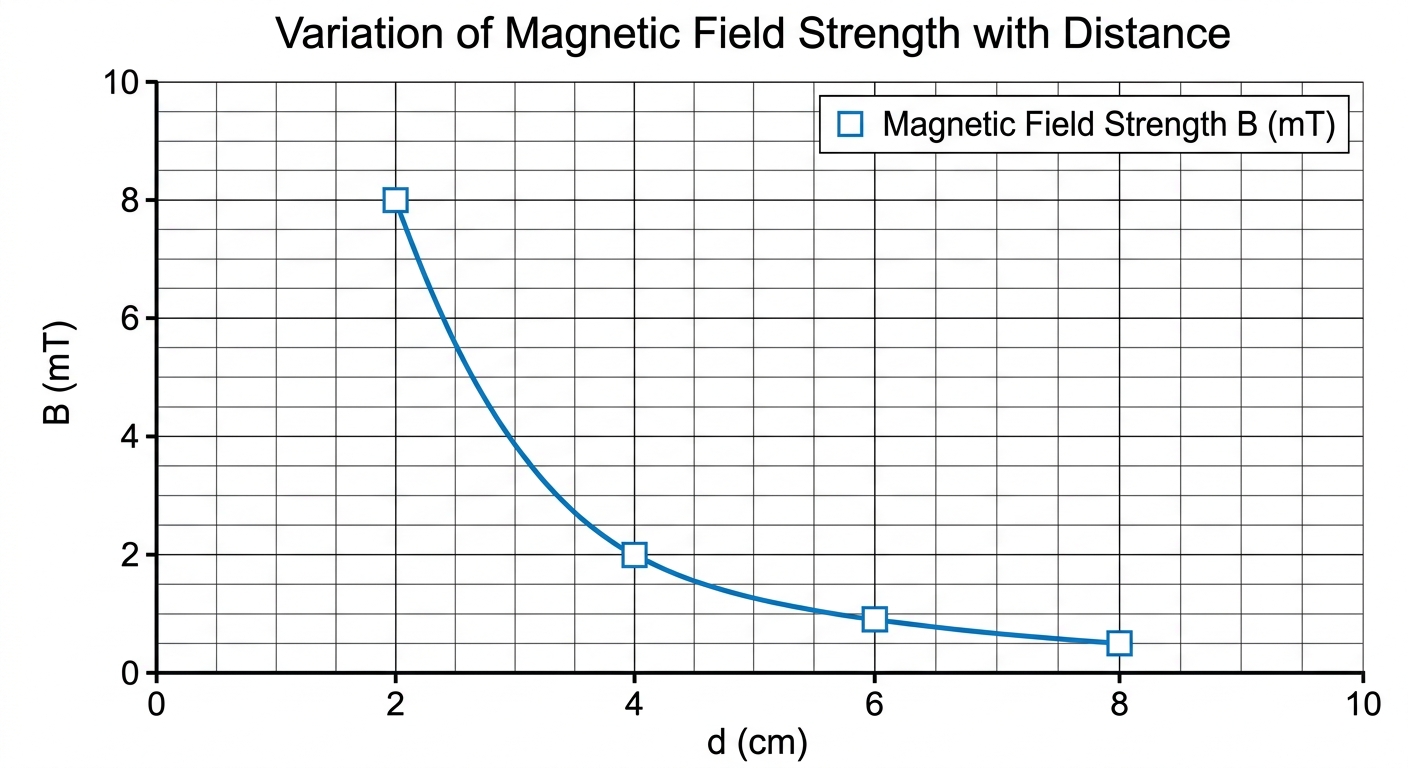
The table below shows measurements of magnetic field strength near the north pole of a bar magnet.
(cm): 2, 4, 6, 8
(mT): 8.0, 2.0, 0.9, 0.5
(cm): 2, 4, 6, 8
(mT): 8.0, 2.0, 0.9, 0.5
a
Describe the trend shown by the data. [1]
b
When doubles from 2 cm to 4 cm, decreases by a factor of 4. Deduce what this suggests about the mathematical relationship between and . [1]
c
Explain, using the concept of magnetic field lines, why decreases with increasing distance from the north pole. [1]
Solutions
4QuestionTransformers and their workingAssessment Practice
5 marks~8 minCriterion D
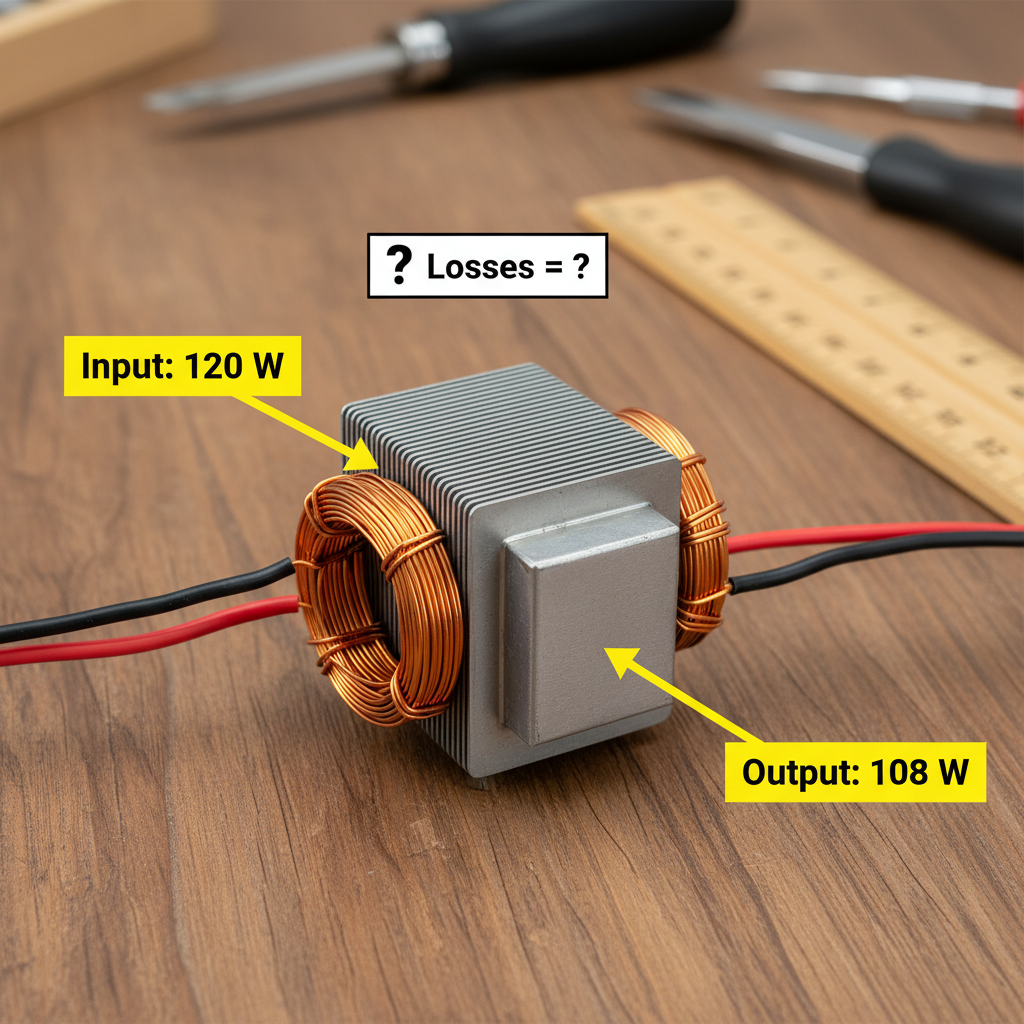
A student builds a step-down transformer for a school project using a laminated iron core and copper windings. The input power is 120 W and the output power is 108 W.
a
Calculate the efficiency of this transformer. Show your working. [2]
b
Explain why the efficiency is less than 100%, referring to specific energy losses in the transformer and how the laminated core and copper windings reduce these losses. [2]
c
Evaluate the use of laminated cores in real-world power distribution systems, considering energy savings, cost, and heat dissipation. [1]
Solutions
5QuestionUses of Electromagnets in Real LifeAssessment Practice
6 marks~9 minCriterion A
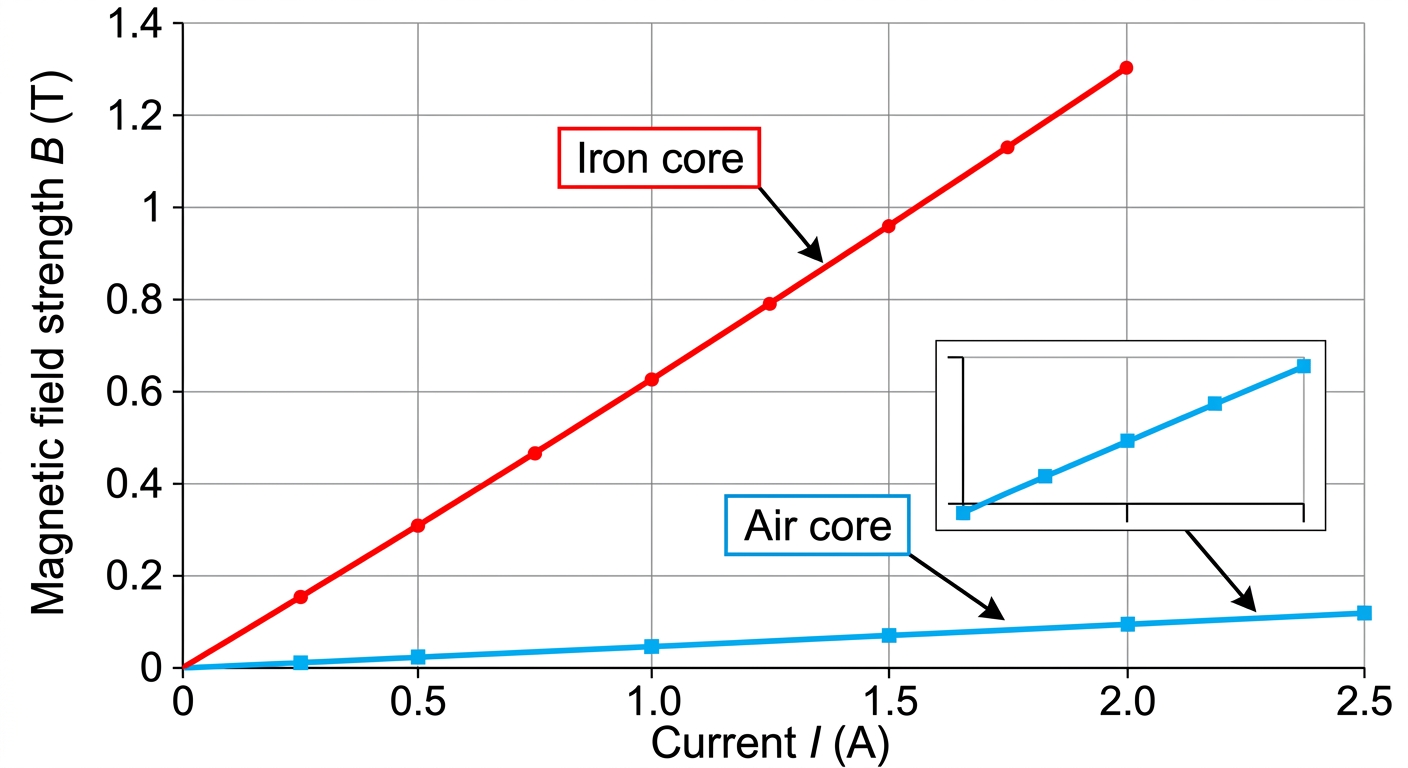
An experiment determines the relative permeability of iron. A solenoid is wound with 200 turns per metre and connected to a variable current supply. The magnetic field strength inside the solenoid is measured for different currents , first with an iron core, then with an air core. Both datasets produce straight lines through the origin on a – graph. The relationship governing the field is .
The gradient for the air core is T A. The gradient for the iron core is T A.
The gradient for the air core is T A. The gradient for the iron core is T A.
a
State the value of the permeability of free space . [1]
b
Deduce the number of turns per metre of the solenoid from the air-core gradient, and comment on whether this is consistent with the experimental setup. [2]
c
Analyse both gradients to determine the relative permeability of iron, and evaluate what this value reveals about iron as a core material for an electromagnet. [3]
Solutions
That's every free question here — 5 of 209.
+204 more questions, plus Mock Papers & Worksheets, are waiting in Premium.