You're viewing free preview questions — 5 questions previewing here — subscribe to unlock 135 more, plus the Full Question Bank, Mock Papers & Worksheets.Upgrade
Static and Current Electricity — Free MYP4 Physics Practice Questions

1QuestionCharging by Friction Induction and ConductionConcept Practice
2 marks~3 minCriterion A
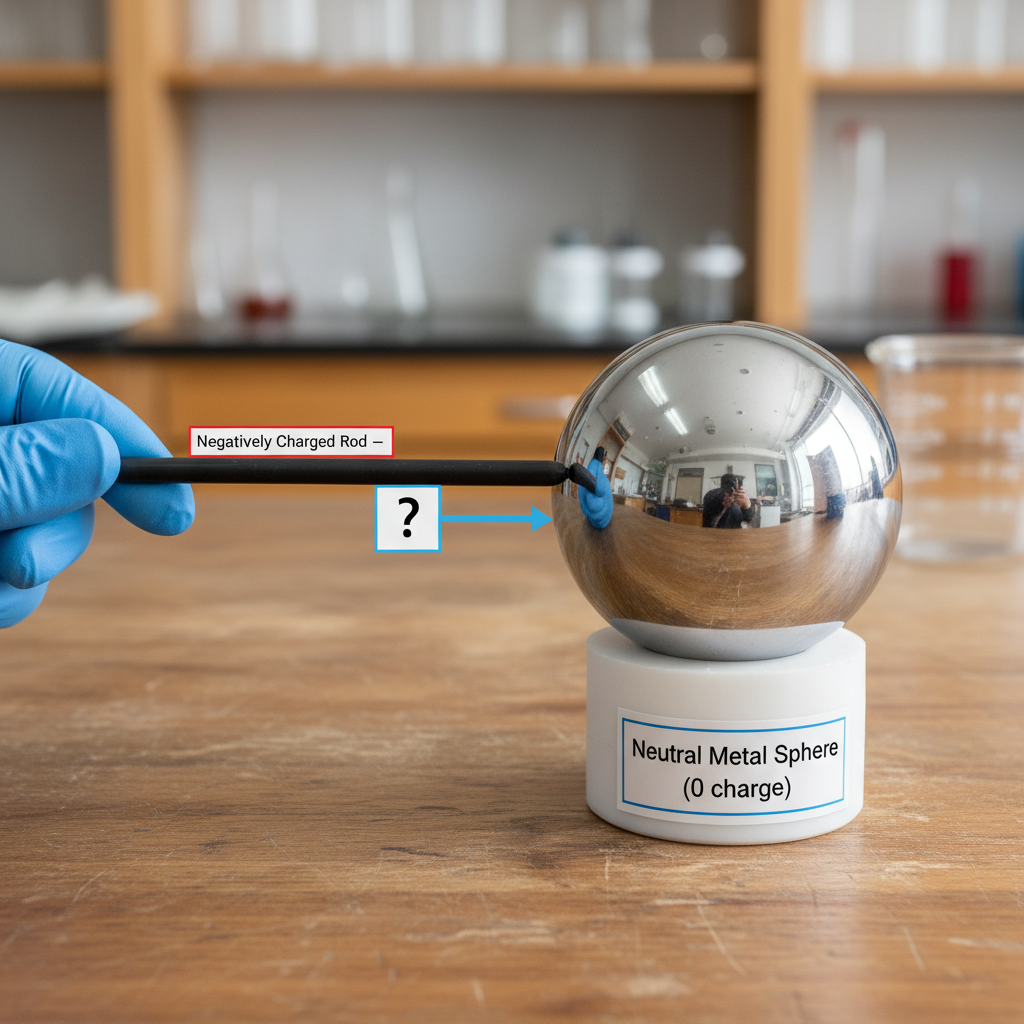
A student touches a negatively charged rod against a neutral metal sphere, then removes the rod.
a
Explain the movement of electrons between the rod and the sphere during contact. Use the terms transfer, negative charge, repel, and neutral in your answer. [1]
b
State and justify the final charge of the sphere after the rod is removed. [1]

Solutions
2QuestionUnderstanding Static Charge and DischargeAssessment Practice
3 marks~5 minCriterion C
The graph shows the charge (in microcoulombs, ) on the dome of a Van de Graaff generator against time (in seconds) after switch-on. The charge rises steeply from to approximately in the first , then gradually flattens, approaching a maximum of after about .
a
State one reason why the charge on the dome increases rapidly during the first . [1]
b
Explain why the rate of charge increase slows as approaches . [1]
c
Discuss why the charge reaches a constant maximum value even though the generator continues to operate. [1]
Solutions
3QuestionCharging by Friction Induction and ConductionAssessment Practice
3 marks~5 minCriterion A
A student brings a negatively charged rod near — but not touching — the metal cap of an uncharged gold-leaf electroscope. While the rod remains in place, the student momentarily touches the cap with a finger to ground it, then removes the finger. The rod is removed last.
a
Deduce the final net charge on the electroscope. [1]
b
Explain, using the law of conservation of charge, how this charge arose during the grounding step. [1]
c
Explain how the final charge is distributed across the electroscope and what this distribution causes the gold leaves to do. [1]
Solutions
4QuestionElectric Conductors and Insulators UsageAssessment Practice
5 marks~8 minCriterion D
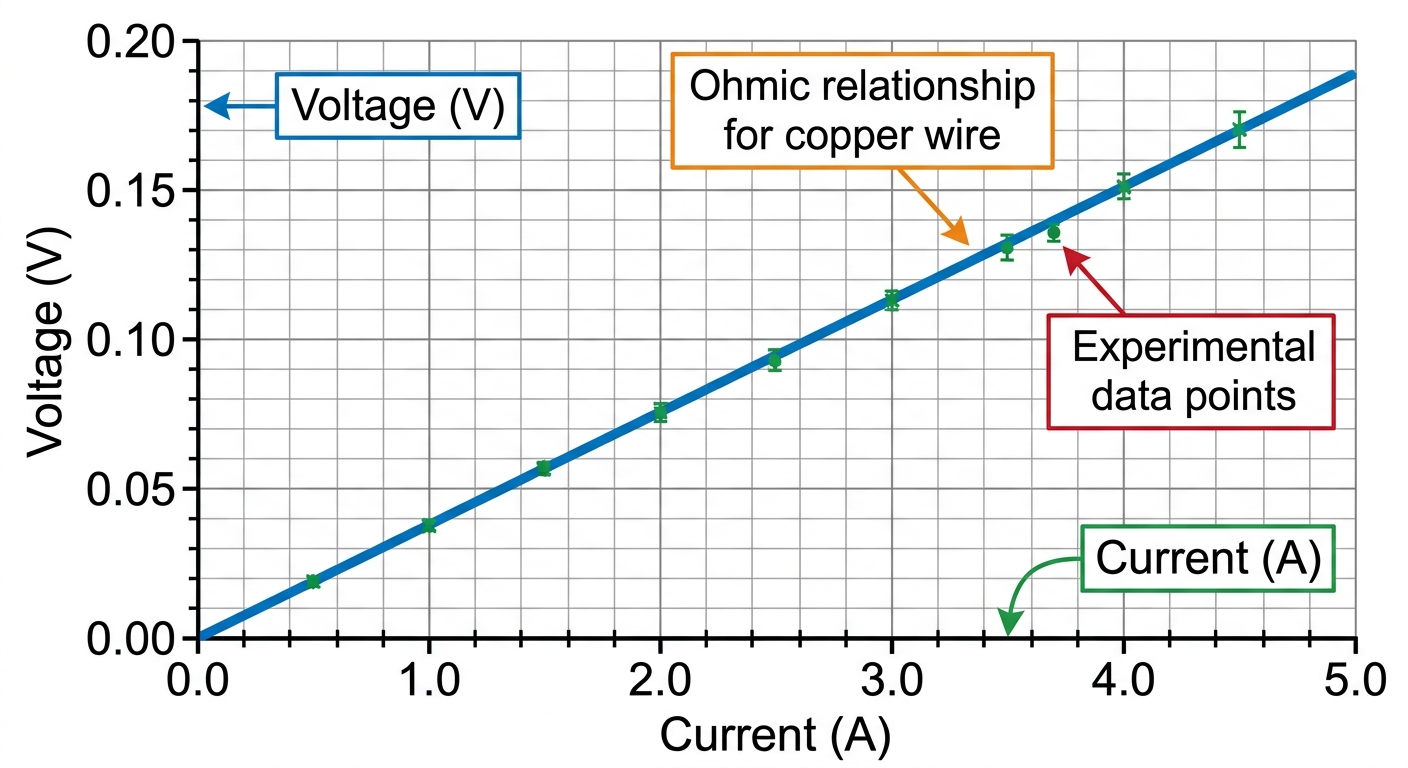
A student investigates a cylindrical copper wire of length and cross-sectional area . She measures the potential difference across the wire for several currents and plots voltage against current . The graph is a straight line through the origin with gradient .
The resistivity of a conductor is given by .
The accepted resistivity of copper is .
The resistivity of a conductor is given by .
The accepted resistivity of copper is .
a
Deduce the resistance of the wire from the graph. [1]
b
Calculate the resistivity of the copper wire. [2]
c
Analyse whether the experimental result is consistent with the accepted value of copper's resistivity, justifying your answer with a quantitative comparison. [2]
Solutions
5QuestionElectric Conductors and Insulators UsageAssessment Practice
6 marks~9 minCriterion D
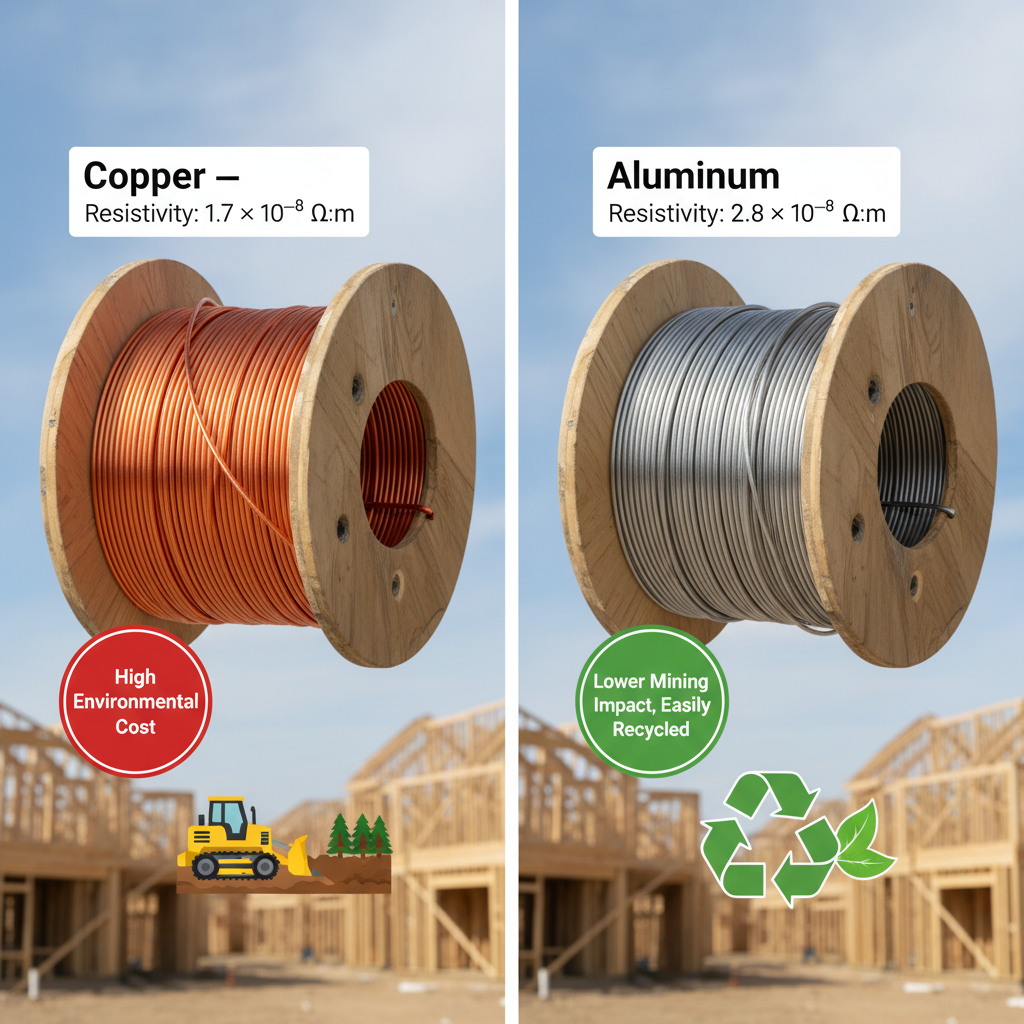
A government in a developing country must choose between copper and aluminium wiring for a new affordable housing project. Copper has electrical resistivity ; aluminium has . Copper mining causes significant habitat destruction and water pollution. Aluminium is lighter, recyclable using only 5% of the energy needed for primary production, and has a lower mining impact.
a
Using the resistivity values, explain which material offers better electrical performance for identical wire dimensions. [2]
b
Analyse the environmental and social trade-offs that make aluminium a viable alternative despite its higher resistivity. [2]
c
Evaluate which material the government should choose, considering electrical performance, environmental impact, and the socioeconomic context of affordable housing. [2]
Solutions
That's every free question here — 5 of 140.
+135 more questions, plus Mock Papers & Worksheets, are waiting in Premium.