You're viewing free preview questions — 6 questions previewing here — subscribe to unlock 72 more, plus the Full Question Bank, Mock Papers & Worksheets.Upgrade
Back

Friction, air resistance, terminal velocity and stopping distance — Free MYP4 Physics Practice Questions

Free questions

Open in full, with answers, mark scheme and examiner insights.

Question 1Criterion A · Band 1-4 · Easy · 6 marksrevisionprep.com

Air Resistance and Streamlining

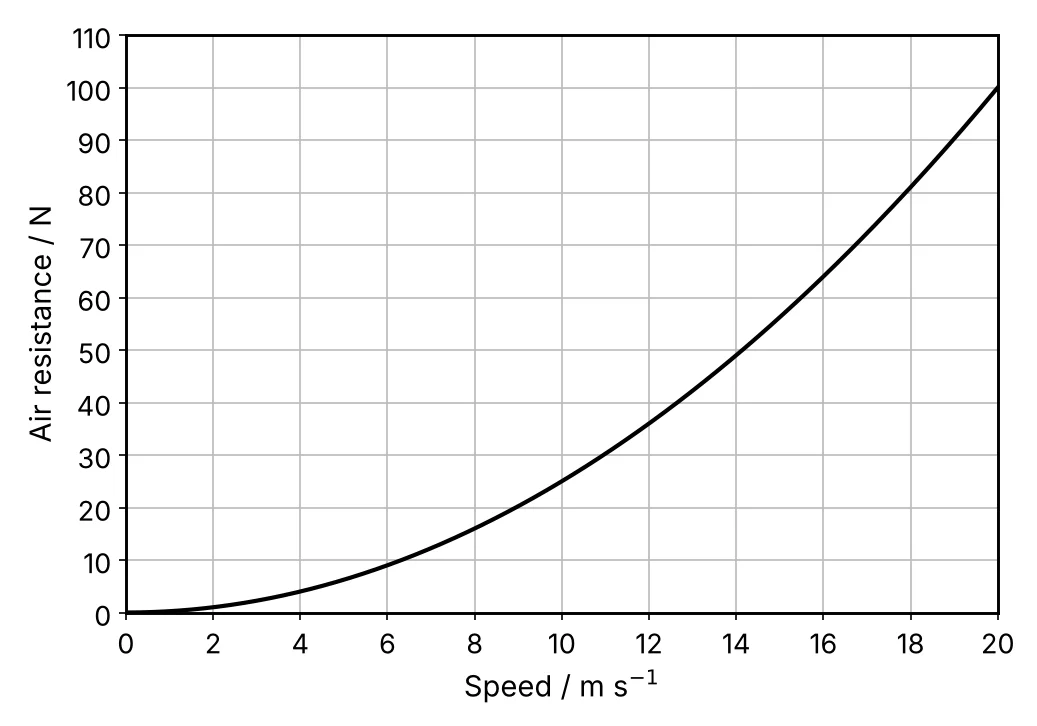
The graph shows how the air resistance on a cyclist varies with her speed.
Question diagram
(a)
Use the graph to determine the air resistance at 10 m s⁻¹ and at 20 m s⁻¹. [2]Criterion A (ii) · Level 1-2
(b)
Hence deduce what happens to the air resistance when the speed doubles. [1]Criterion A (iii) · Level 3-4
(c)
On a flat road, the largest forward force the cyclist can produce is 64 N. Use the graph to determine her top speed, and explain your method. [3]Criterion A (iii) · Level 3-4

revisionprep.com

Summary Answer

Not available for this question.

Model Answer

Not available for this question.

Marking Scheme

Not available for this question.

Examiner Insights

Not available for this question.

Question 2Criterion B · Band 3-4 · Easy · 4 marksrevisionprep.com

Stopping distance: thinking and braking distance
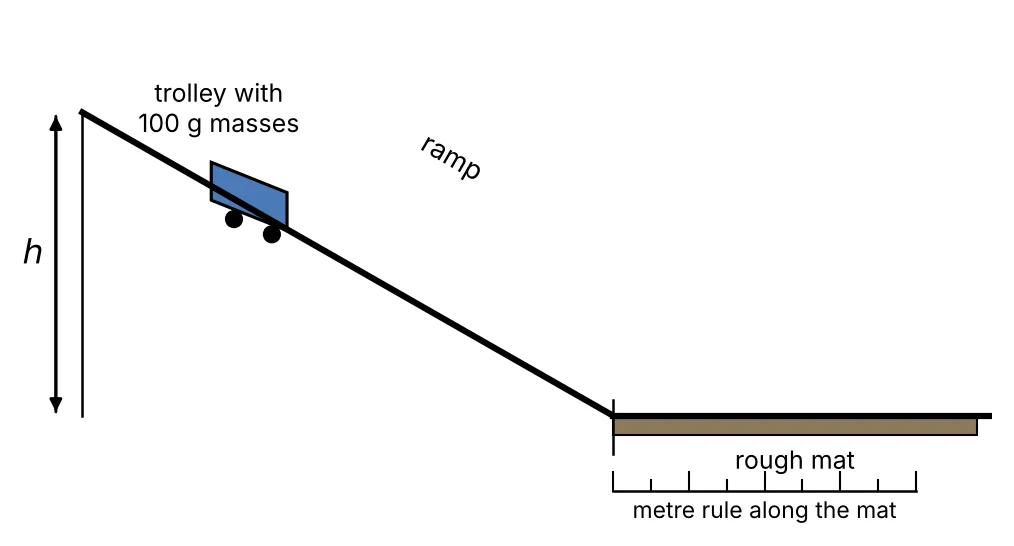
A student wants to find out how the release height of a trolley affects its braking distance. She lets the trolley roll down the ramp shown in the diagram and onto a rough mat. She measures how far it slides along the mat before it stops.
Question diagram
(a)
Formulate a hypothesis for the investigation and explain it using scientific reasoning. [2]Criterion B (ii) · Level 3-4
(b)
Explain how two control variables should be kept constant. [2]Criterion B (iii) · Level 3-4

revisionprep.com

Summary Answer

Not available for this question.

Model Answer

Not available for this question.

Marking Scheme

Not available for this question.

Examiner Insights

Not available for this question.

Question 3Criterion A · Band 1-6 · Medium · 6 marksrevisionprep.com

Friction: causes, benefits, drawbacks and reduction

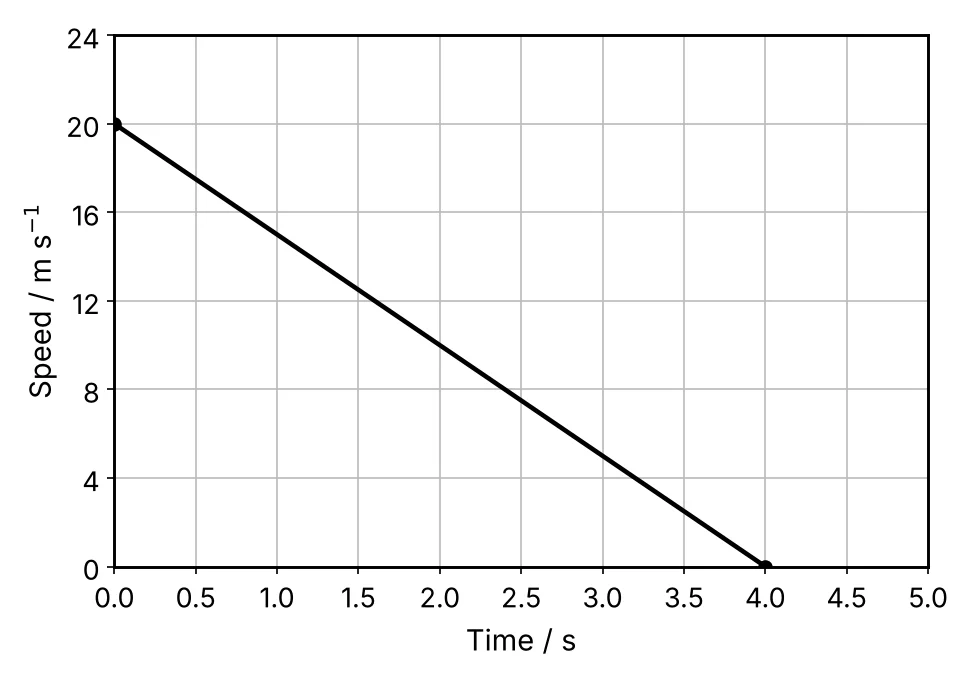
A car of mass 1200 kg travelling at 20 m s⁻¹ brakes to a stop in 40 m on a dry road. The brakes work by friction: pads press on discs that turn with the wheels.

The graph shows how the speed of the car changes with time as it brakes.
Question diagram
(a)
Calculate the kinetic energy of the car before braking. [2]Criterion A (ii) · Level 1-2
(b)
Use the graph to determine the average deceleration of the car, and hence calculate the average braking force. [2]Criterion A (ii) · Level 3-4
(c)
The car now brakes from 40 m s⁻¹ with the same average braking force. Calculate the new braking distance, and comment on what this shows about speed and road safety. [2]Criterion A (iii) · Level 5-6

revisionprep.com

Summary Answer

Not available for this question.

Model Answer

Not available for this question.

Marking Scheme

Not available for this question.

Examiner Insights

Not available for this question.

Question 4Criterion C + D · Band 3-6 · Medium · 7 marksrevisionprep.com

Applications in Engineering and Sports

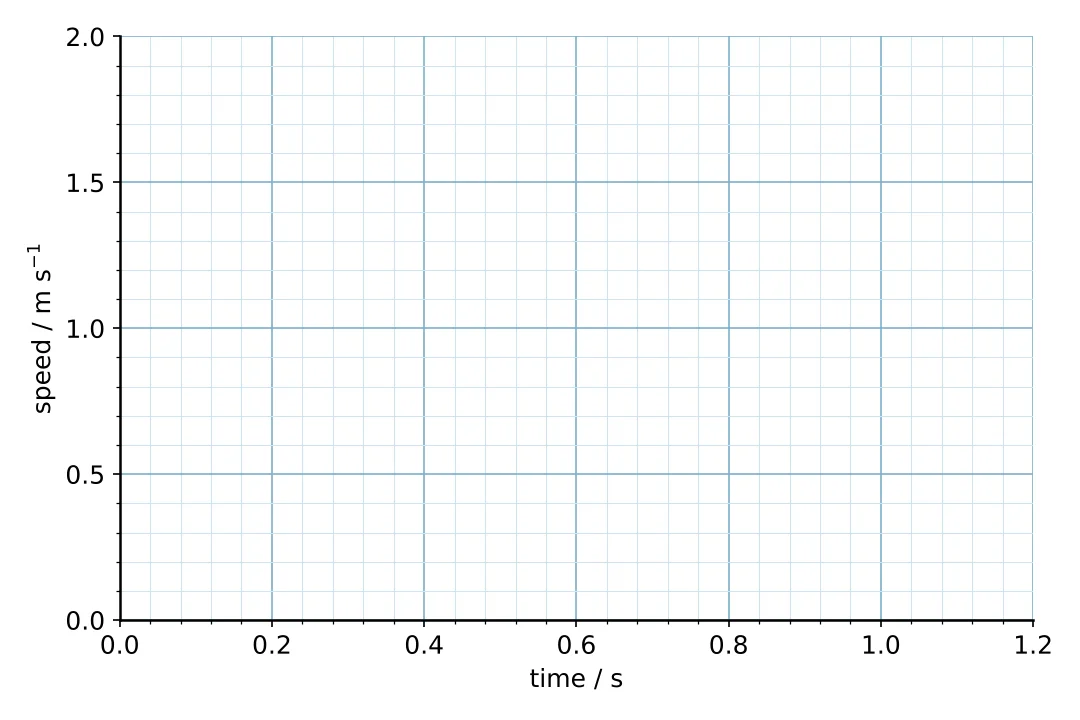
Engineers designing small delivery drones study how a sycamore seed spins as it falls. A seed of mass 0.20 g is filmed falling from rest, and its speed is found every 0.2 s.

Time / s00.20.40.60.81.01.2
Speed / m s⁻¹00.81.21.41.51.51.5
Question diagram
(a)
Plot a graph of speed against time on the grid, and draw a smooth curve of best fit. [3]Criterion C (i) · Level 3-4
(b)
Calculate the average acceleration of the seed during the first 0.2 s, and explain why it is much less than g. [3]Criterion C (ii) · Level 5-6
(c)
Suggest why engineers might copy the seed's spinning wing for a device that drops small packages from a drone. [1]Criterion D (i) · Level 3-4

revisionprep.com

Summary Answer

Not available for this question.

Model Answer

Not available for this question.

Marking Scheme

Not available for this question.

Examiner Insights

Not available for this question.

Question 5Criterion D + A · Band 1-8 · Challenge · 8 marksrevisionprep.com

Friction: causes, benefits, drawbacks and reduction

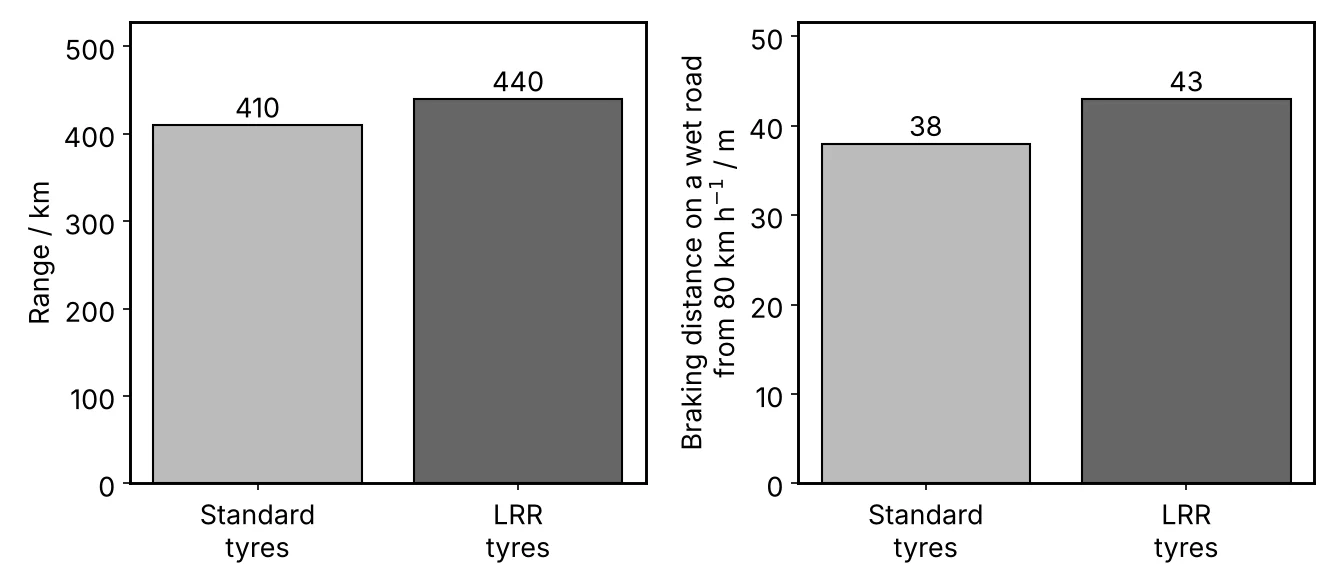
Many electric cars are fitted with low rolling resistance (LRR) tyres. These use a harder rubber and shallower tread, so less energy is lost as the tyre flexes. Tests on one car gave these results.

Standard tyres: range 410 km; braking distance on a wet road from 80 km h⁻¹: 38 m
LRR tyres: range 440 km; braking distance on a wet road from 80 km h⁻¹: 43 m

The bar charts show the same test results.
Question diagram
(a)
Calculate the percentage increase in range when LRR tyres are fitted. [2]Criterion A (ii) · Level 1-2
(b)
Explain why LRR tyres increase the range of the car. [2]Criterion D (i) · Level 3-4
(c)
A government is considering making LRR tyres compulsory on all new electric cars. Discuss this proposal, considering at least two implications (for example environmental, economic or safety), and give a conclusion. [4]Criterion D (ii), D (iii) · Level 7-8

revisionprep.com

Summary Answer

Not available for this question.

Model Answer

Not available for this question.

Marking Scheme

Not available for this question.

Examiner Insights

Not available for this question.

Question 6Criterion A + C · Band 3-8 · Challenge · 10 marksrevisionprep.com

Terminal velocity

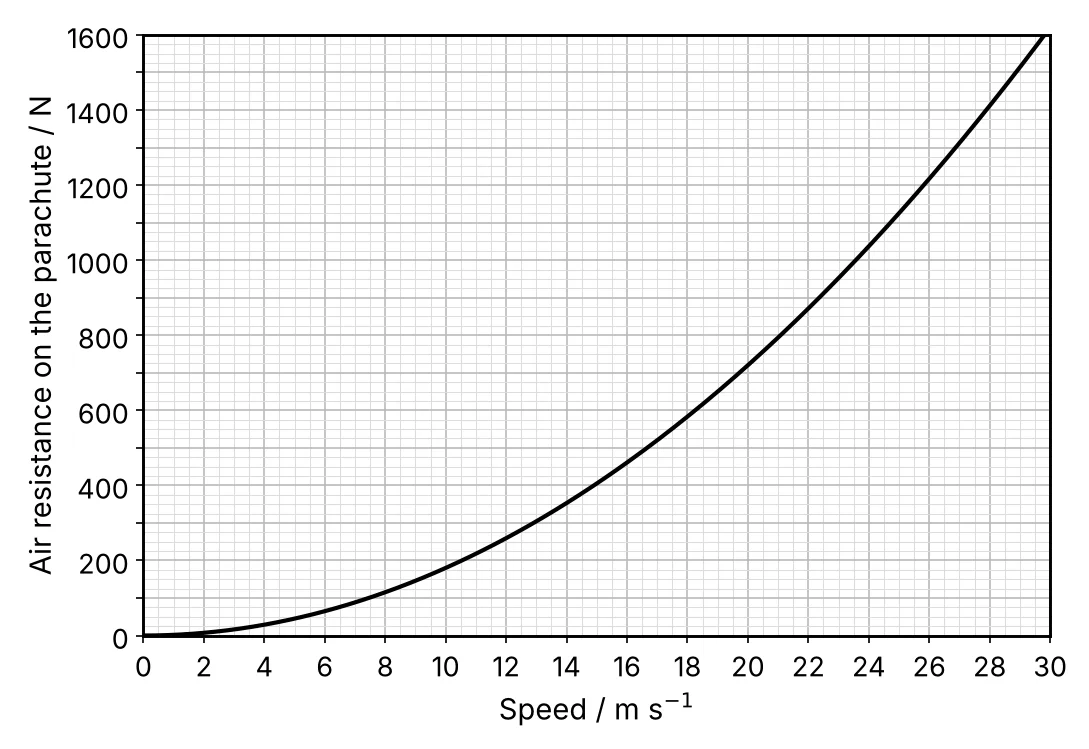
A space agency tests a landing probe of mass 300 kg that descends on a parachute. On Earth the probe and parachute reach a terminal speed of 5.0 m s⁻¹. The graph shows how the air resistance on the same parachute depends on speed in the thin atmosphere of Mars (hypothetical data). Take g = 9.8 N kg⁻¹ on Earth and 3.7 N kg⁻¹ on Mars.
Question diagram
(a)
Calculate the weight of the probe on Earth and on Mars. [2]Criterion A (ii) · Level 3-4
(b)
Use the graph to determine the terminal speed of the probe on Mars. [2]Criterion C (ii) · Level 3-4
(c)
Explain, in terms of forces, why the terminal speed on Mars is much greater than on Earth although the probe weighs less on Mars. [3]Criterion A (iii) · Level 5-6
(d)
A designer says: 'If the parachute area is 5 times larger, the air resistance at any speed becomes 5 times larger, and the probe will land as gently on Mars as on Earth.' Use the graph to evaluate this claim. [3]Criterion A (iii) · Level 7-8

revisionprep.com

Summary Answer

Not available for this question.

Model Answer

Not available for this question.

Marking Scheme

Not available for this question.

Examiner Insights

Not available for this question.

That's every free question here — 6 of 78.

+72 more questions, plus Mock Papers & Worksheets, are waiting in Premium.

Upgrade