You're viewing free preview questions — 5 questions previewing here — subscribe to unlock 107 more, plus the Full Question Bank, Mock Papers & Worksheets.Upgrade
Mass Weight and Gravity — Free MYP4 Physics Practice Questions

1QuestionFree Fall and the Effect of GravityConcept Practice
2 marks~3 minCriterion A
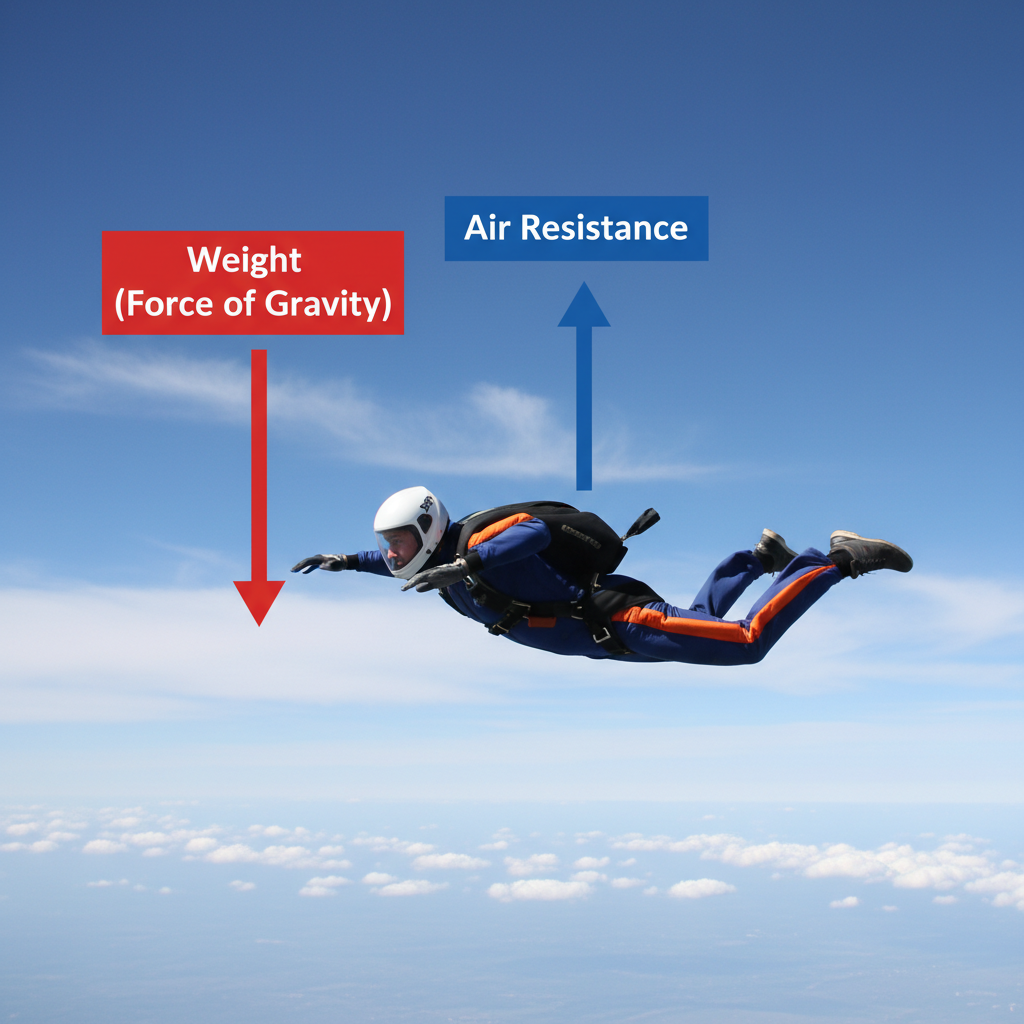
During a skydive, a skydiver jumps from an aircraft and falls toward Earth before deploying a parachute.
a
Identify one real-world safety feature of a parachute that is directly linked to the effects of gravity and air resistance. [1]
b
Explain how the design of a parachute uses the relationship between gravitational force and air resistance to ensure the skydiver lands safely. [1]

Solutions
2QuestionDistinguishing Mass from WeightAssessment Practice
3 marks~5 minCriterion B
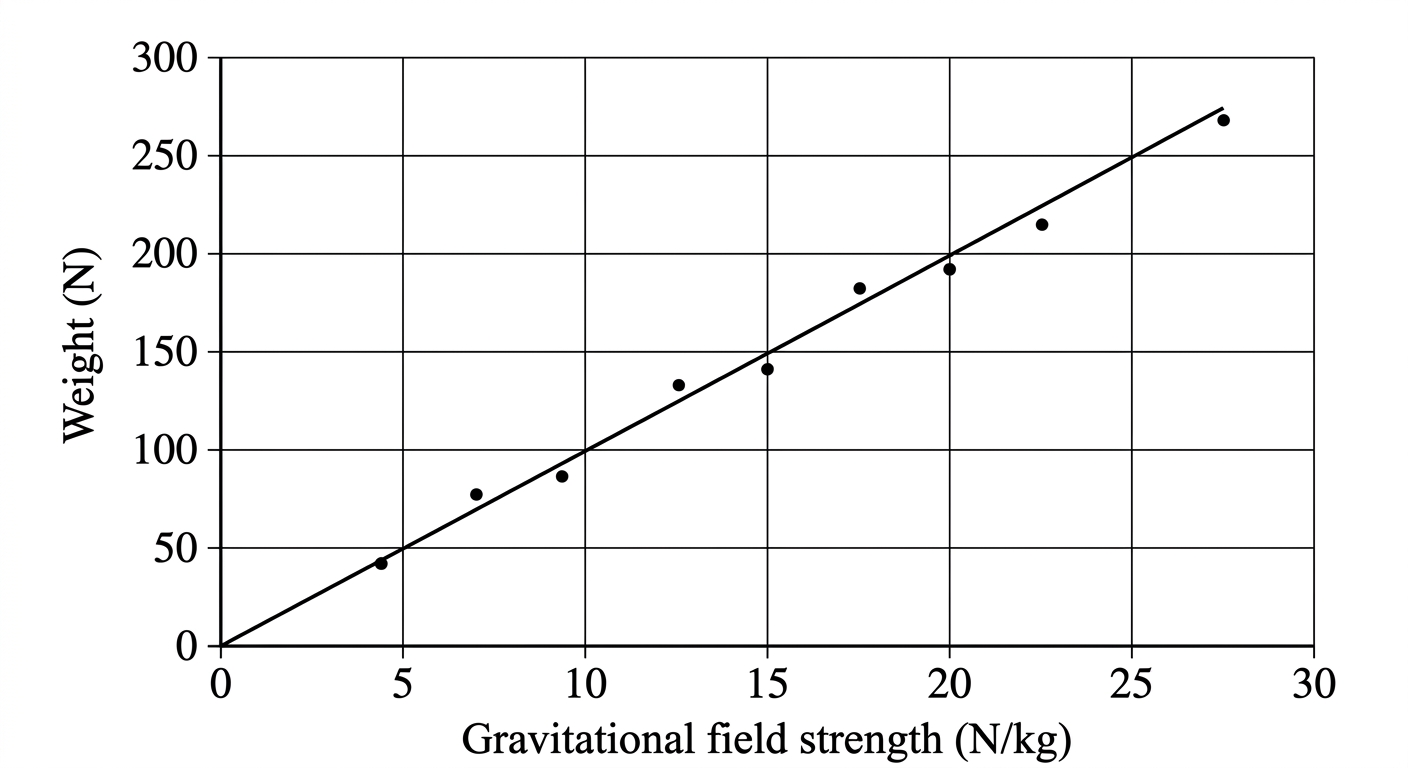
A student measures the weight of the same object on several planets and records the gravitational field strength of each planet. The graph shows weight (N) on the y-axis (0–300 N) and gravitational field strength (N/kg) on the x-axis (0–30 N/kg). The data points form a straight line passing through the origin.
The mass of the object remains constant throughout.
Explain the relationship shown in the graph, linking it to the formula , and state what the gradient of the line represents. [3]
The mass of the object remains constant throughout.
Explain the relationship shown in the graph, linking it to the formula , and state what the gradient of the line represents. [3]
Solutions
3QuestionCalculating Weight Using W = mgConcept Practice
4 marks~6 minCriterion C
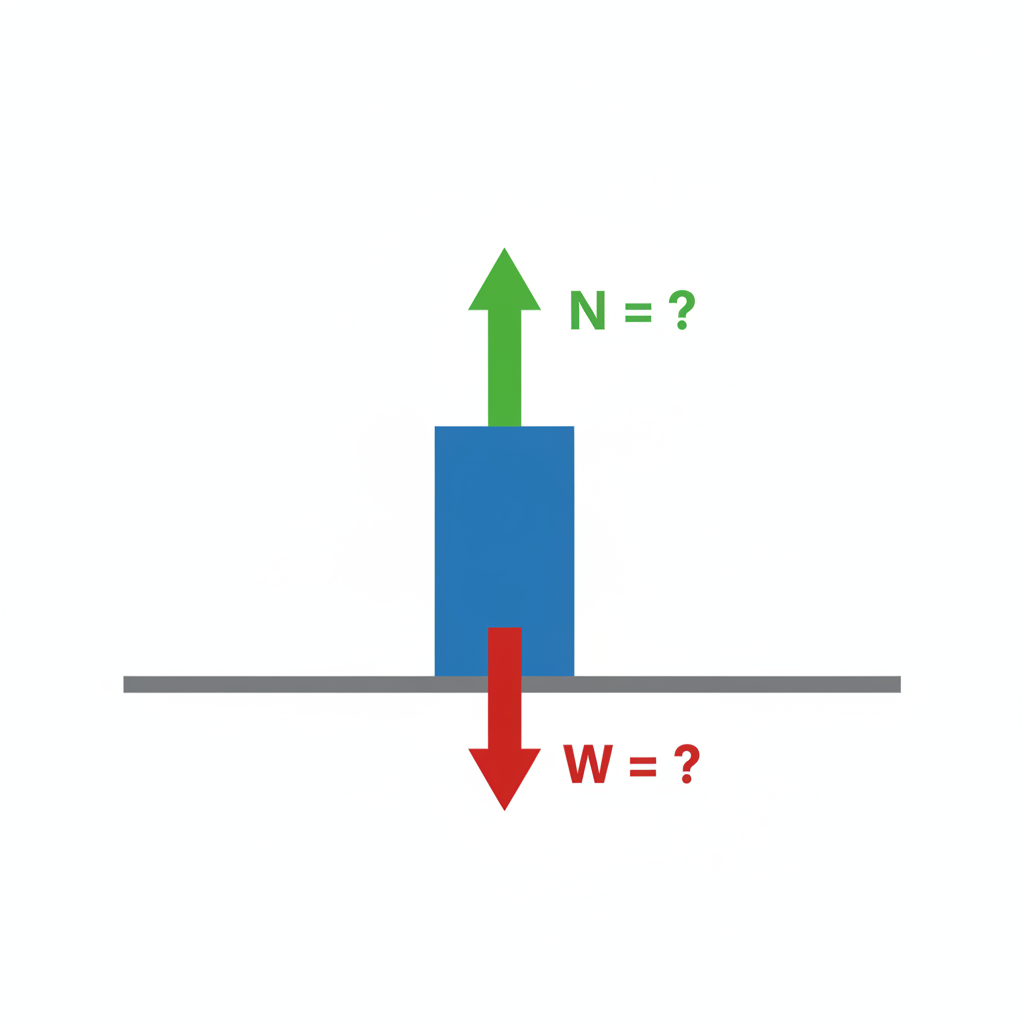
A student of mass 60 kg stands on the surface of Earth, where . On the Moon, .
a
State the equation relating weight, mass, and gravitational field strength. [1]
b
Calculate the weight of the student on Earth. [1]
c
The student claims that because they feel "lighter" on the Moon, their mass must have decreased. Evaluate this claim, using to justify your reasoning. [2]
Solutions
4QuestionCalculating Weight Using W = mgAssessment Practice
12 marks~18 minCriterion D
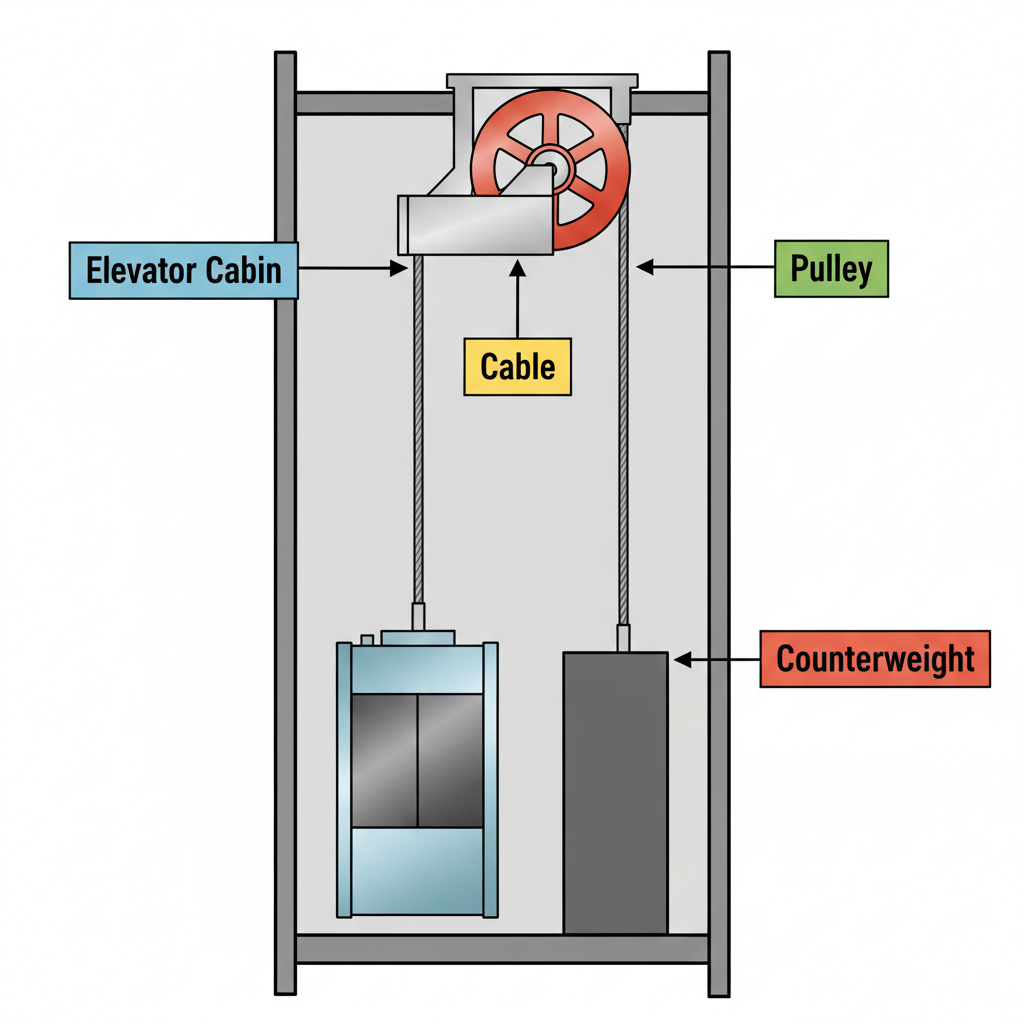
An elevator cabin made of steel has a mass of 800 kg. A redesigned cabin using an aluminium alloy has a mass of 480 kg. Both cabins carry a maximum passenger load of 400 kg. Take .
a
Calculate the weight of each fully loaded cabin and determine the reduction in weight when the aluminium cabin is used. [3]
b
Explain how the reduced cabin mass affects the motor's energy requirements and the design of the counterweight system. [4]
c
Discuss one limitation of using to model forces in a real, moving elevator, and evaluate whether this limitation makes the formula unsuitable for engineering design. [5]
Solutions
5QuestionCalculating Weight Using W = mgAssessment Practice
12 marks~18 minCriterion A
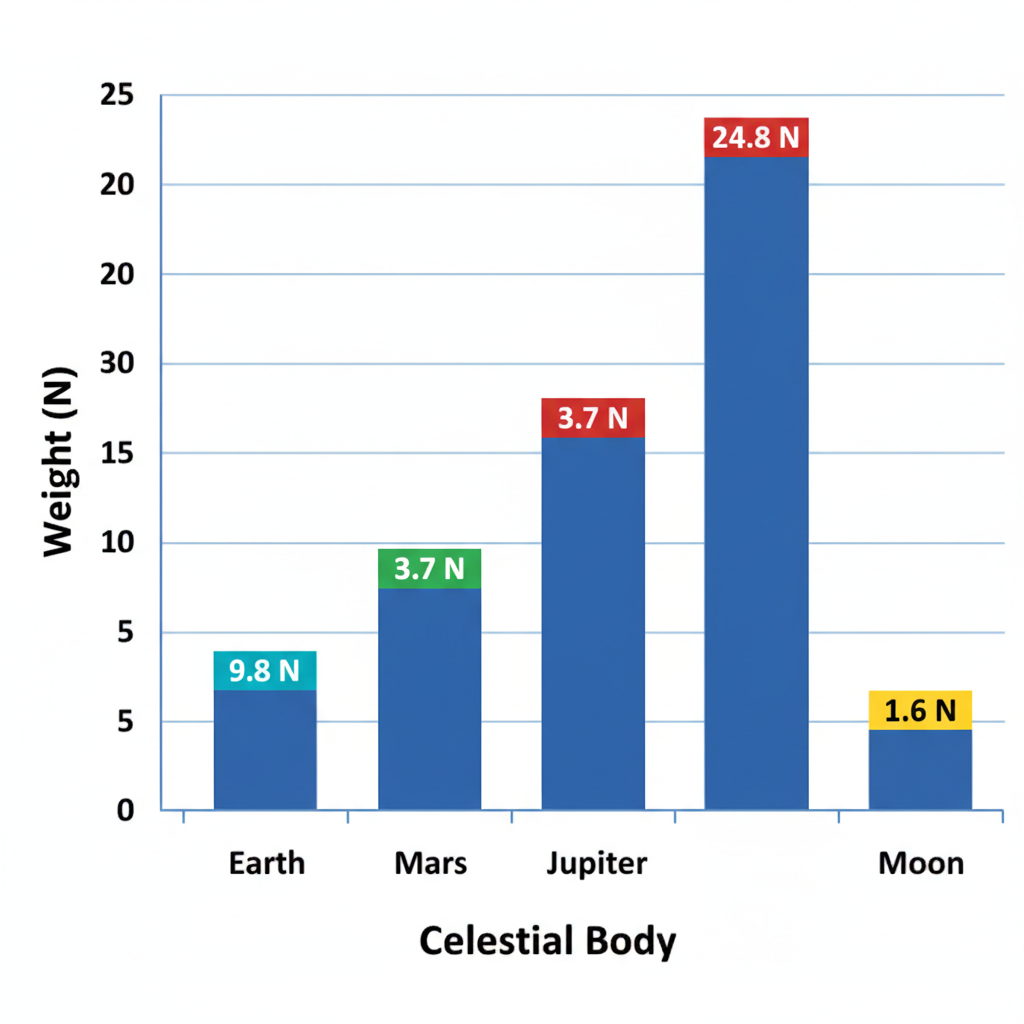
A bar chart shows the weight of a 1.0 kg mass on the surface of four bodies in our solar system. The weights recorded are:
Earth: 9.8 N
Mars: 3.7 N
Jupiter: 24.8 N
Moon: 1.6 N
Assume negligible air resistance.
Earth: 9.8 N
Mars: 3.7 N
Jupiter: 24.8 N
Moon: 1.6 N
Assume negligible air resistance.
a
Using , deduce the gravitational field strength, , at the surface of each body. Show all working. [4]
b
Explain why an astronaut of fixed mass weighs significantly less on the Moon than on Earth, using your values from part (a) and the relationship . [3]
c
Analyse how the size and composition of a planetary body affect its surface gravitational field strength, using the four bodies above as evidence. [5]
Solutions
That's every free question here — 5 of 112.
+107 more questions, plus Mock Papers & Worksheets, are waiting in Premium.