You're viewing free preview questions — 6 questions previewing here — subscribe to unlock 39 more, plus the Full Question Bank, Mock Papers & Worksheets.Upgrade
Back

Density — Free MYP4 Physics Practice Questions

Free questions

Open in full, with answers, mark scheme and examiner insights.

Question 1Criterion A · Band 3-4 · Easy · 3 marksrevisionprep.com

Density: ρ = m/V

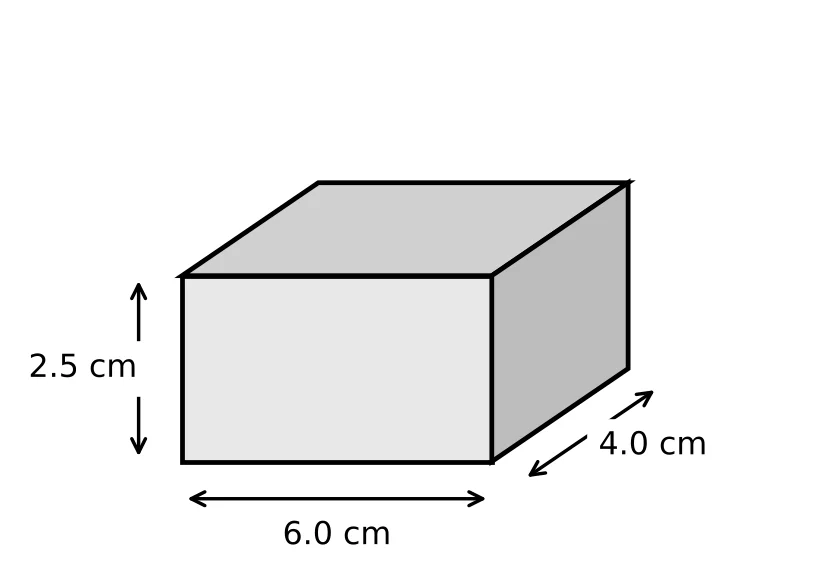
The metal block shown has a mass of 162 g.
Question diagram
(a)
Calculate the volume of the block. [1]Criterion A (ii) · Level 3-4
(b)
Calculate the density of the metal in g cm⁻³. [2]Criterion A (ii) · Level 3-4

revisionprep.com

Summary Answer

Not available for this question.

Model Answer

Not available for this question.

Marking Scheme

Not available for this question.

Examiner Insights

Not available for this question.

Question 2Criterion A · Band 3-4 · Easy · 3 marksrevisionprep.com

Measuring the density of regular and irregular objects
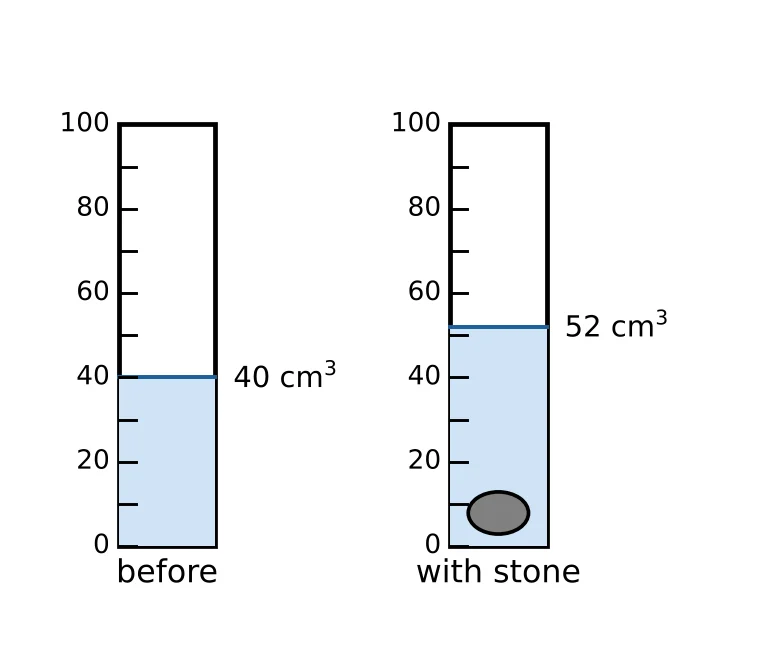
A student finds the volume of a small stone by lowering it into water in a measuring cylinder, as shown. The stone has a mass of 31.2 g.
Question diagram
(a)
Calculate the volume of the stone. [1]Criterion A (ii) · Level 3-4
(b)
Calculate the density of the stone in g cm⁻³. [2]Criterion A (ii) · Level 3-4

revisionprep.com

Summary Answer

Not available for this question.

Model Answer

Not available for this question.

Marking Scheme

Not available for this question.

Examiner Insights

Not available for this question.

Question 3Criterion A · Band 3-6 · Medium · 4 marksrevisionprep.com

Density: ρ = m/V

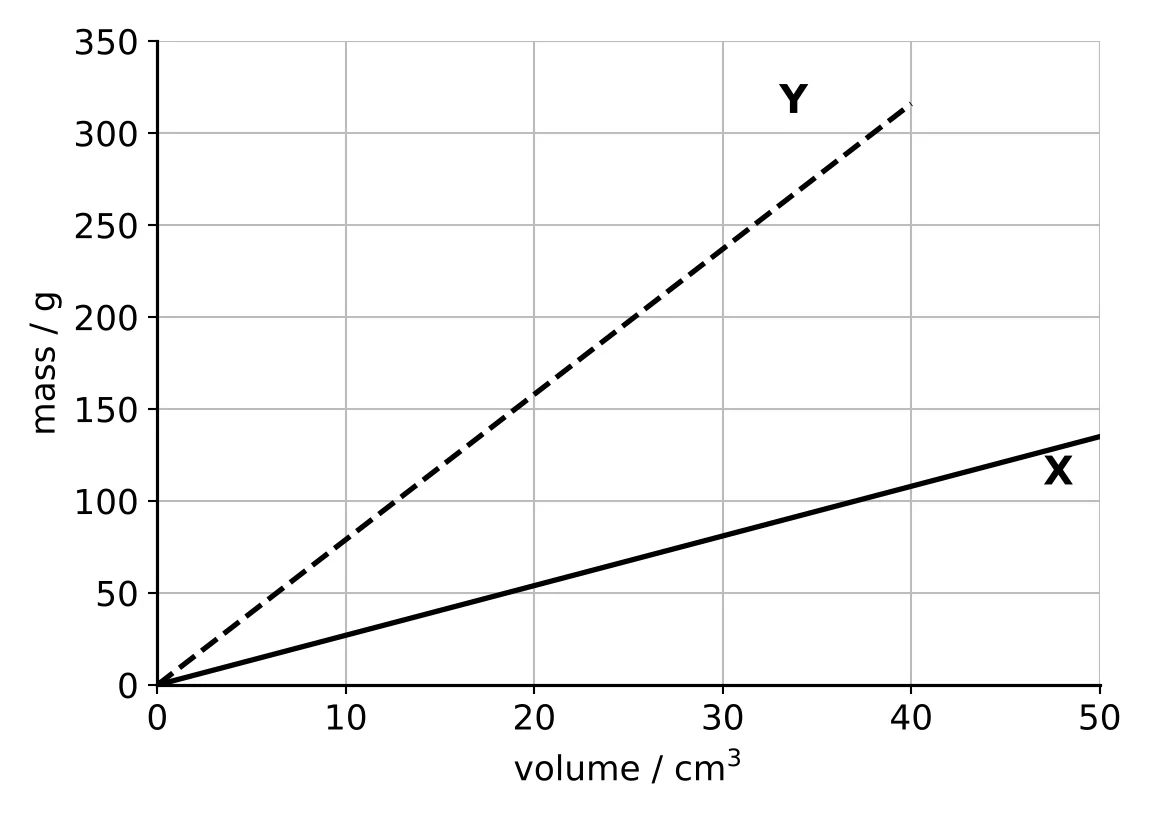
The graph shows how the mass of two solid materials, X and Y, depends on their volume.
Question diagram
(a)
Use the graph to determine the density of material X. [2]Criterion A (ii) · Level 3-4
(b)
Explain how the graph shows that material Y is denser than material X. [2]Criterion A (iii) · Level 5-6

revisionprep.com

Summary Answer

Not available for this question.

Model Answer

Not available for this question.

Marking Scheme

Not available for this question.

Examiner Insights

Not available for this question.

Question 4Criterion D + A · Band 3-6 · Medium · 7 marksrevisionprep.com

Floating, sinking and density of liquids
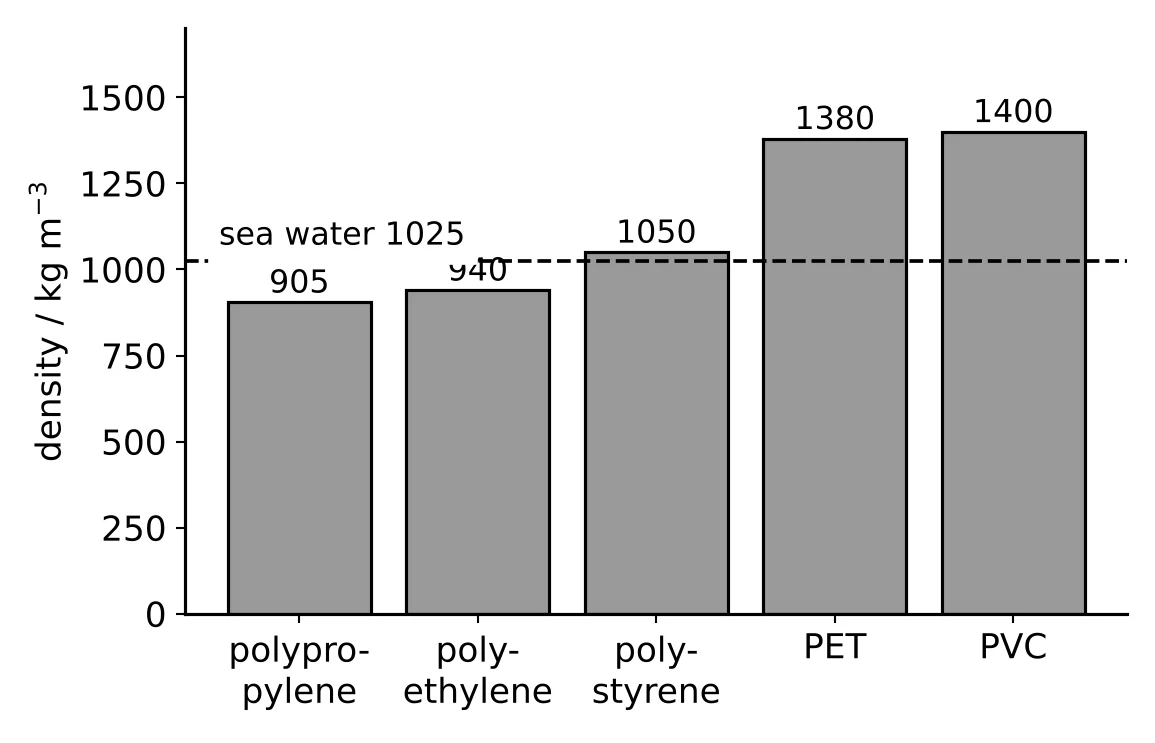
Plastic waste enters the sea. The bar chart shows the density of five plastics and, as a dashed line, the density of sea water.
Question diagram
(a)
State which of the plastics float in sea water. [1]Criterion A (ii) · Level 3-4
(b)
A sealed empty PET bottle floats in sea water, although PET itself sinks. Explain why. [2]Criterion A (iii) · Level 5-6
(c)
Discuss the implications for marine life of plastics that float and plastics that sink. [4]Criterion D (ii) · Level 5-6

revisionprep.com

Summary Answer

Not available for this question.

Model Answer

Not available for this question.

Marking Scheme

Not available for this question.

Examiner Insights

Not available for this question.

Question 5Criterion C · Band 3-8 · Challenge · 9 marksrevisionprep.com

Measuring the density of regular and irregular objects
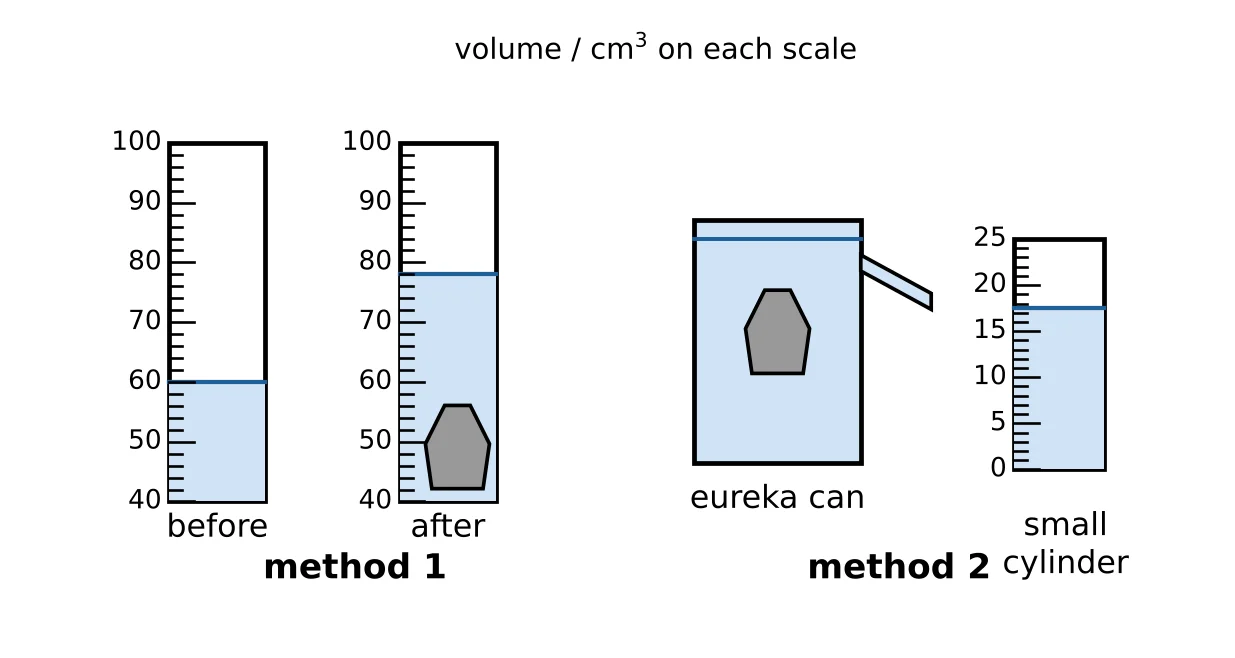
A student finds the density of a pebble of mass 47.3 g by two different methods, shown in the diagram. Method 1 uses the rise in the water level in a measuring cylinder. Its scale is marked every 2 cm³, so each reading has an uncertainty of ±1 cm³. Method 2 uses a eureka can and a small measuring cylinder marked every 1 cm³, so the reading of the water collected has an uncertainty of ±0.5 cm³.
Question diagram
(a)
Calculate the density of the pebble found with each method in g cm⁻³. [2]Criterion C (i) · Level 3-4
(b)
Calculate the percentage uncertainty in the volume found with each method. [3]Criterion C (ii) · Level 5-6
(c)
The student concludes: "The two densities agree, so both methods are equally reliable." Evaluate this conclusion and suggest one improvement for each method. [4]Criterion C (iv), C (v) · Level 7-8

revisionprep.com

Summary Answer

Not available for this question.

Model Answer

Not available for this question.

Marking Scheme

Not available for this question.

Examiner Insights

Not available for this question.

Question 6Criterion B · Band 5-8 · Challenge · 10 marksrevisionprep.com

Floating, sinking and density of liquids
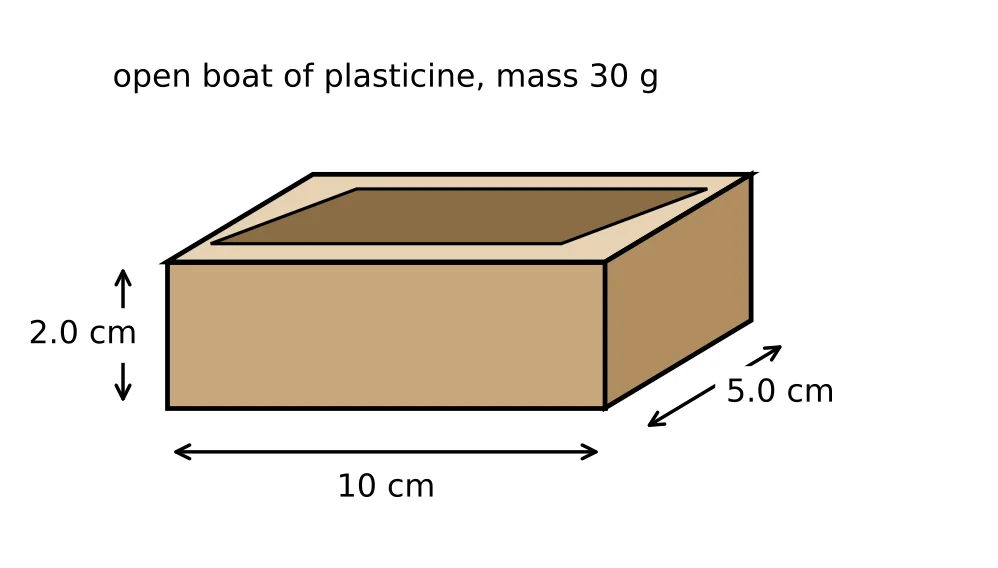
A student makes an open boat from 30 g of plasticine, as shown. On the outside the boat is 10 cm long, 5.0 cm wide and 2.0 cm high. She wants to find how the height of the sides affects the greatest load the boat can carry before it sinks in water. Water has a density of 1.00 g cm⁻³. She has a top-pan balance, a ruler, a large tank of water, plasticine and a set of 5 g masses.
Question diagram
(a)
The boat floats until its top edge is level with the water surface. Formulate a hypothesis for the greatest load that this boat can carry. Use ρ = m ÷ V to explain it and give a predicted value. [3]Criterion B (ii) · Level 5-6
(b)
Identify the independent variable, the dependent variable and two variables that must be controlled. [3]Criterion B (iii) · Level 5-6
(c)
Outline a method for the investigation. Include how you would find the greatest load, how you would make the results reliable and one safety precaution. [4]Criterion B (iv) · Level 7-8

revisionprep.com

Summary Answer

Not available for this question.

Model Answer

Not available for this question.

Marking Scheme

Not available for this question.

Examiner Insights

Not available for this question.

That's every free question here — 6 of 45.

+39 more questions, plus Mock Papers & Worksheets, are waiting in Premium.

Upgrade