You're viewing free preview questions — 6 questions previewing here — subscribe to unlock 80 more, plus the Full Question Bank, Mock Papers & Worksheets.Upgrade
Back

Pressure — Free MYP4 Physics Practice Questions

Free questions

Open in full, with answers, mark scheme and examiner insights.

Question 1Criterion A · Band 1-2 · Easy · 3 marksrevisionprep.com

Pressure: p = F/A (solids)

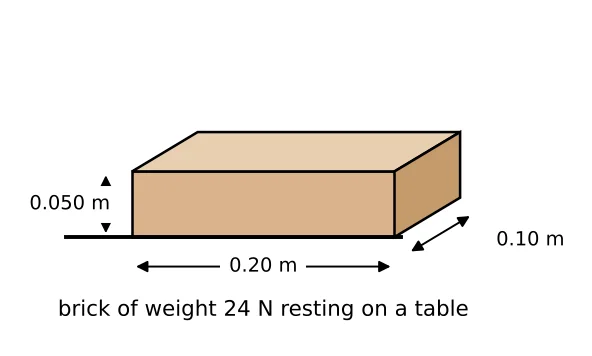
The diagram shows a brick of weight 24 N resting on a table. The brick measures 0.20 m by 0.10 m by 0.050 m.
Question diagram
(a)
State which face of the brick, when it rests on the table, would exert the greatest pressure. [1]Criterion A (i) · Level 1-2
(b)
Calculate the pressure the brick exerts on the table when it rests on its largest face. [2]Criterion A (ii) · Level 1-2

revisionprep.com

Summary Answer

Not available for this question.

Model Answer

Not available for this question.

Marking Scheme

Not available for this question.

Examiner Insights

Not available for this question.

Question 2Criterion A · Band 3-4 · Easy · 4 marksrevisionprep.com

Hydraulic Systems

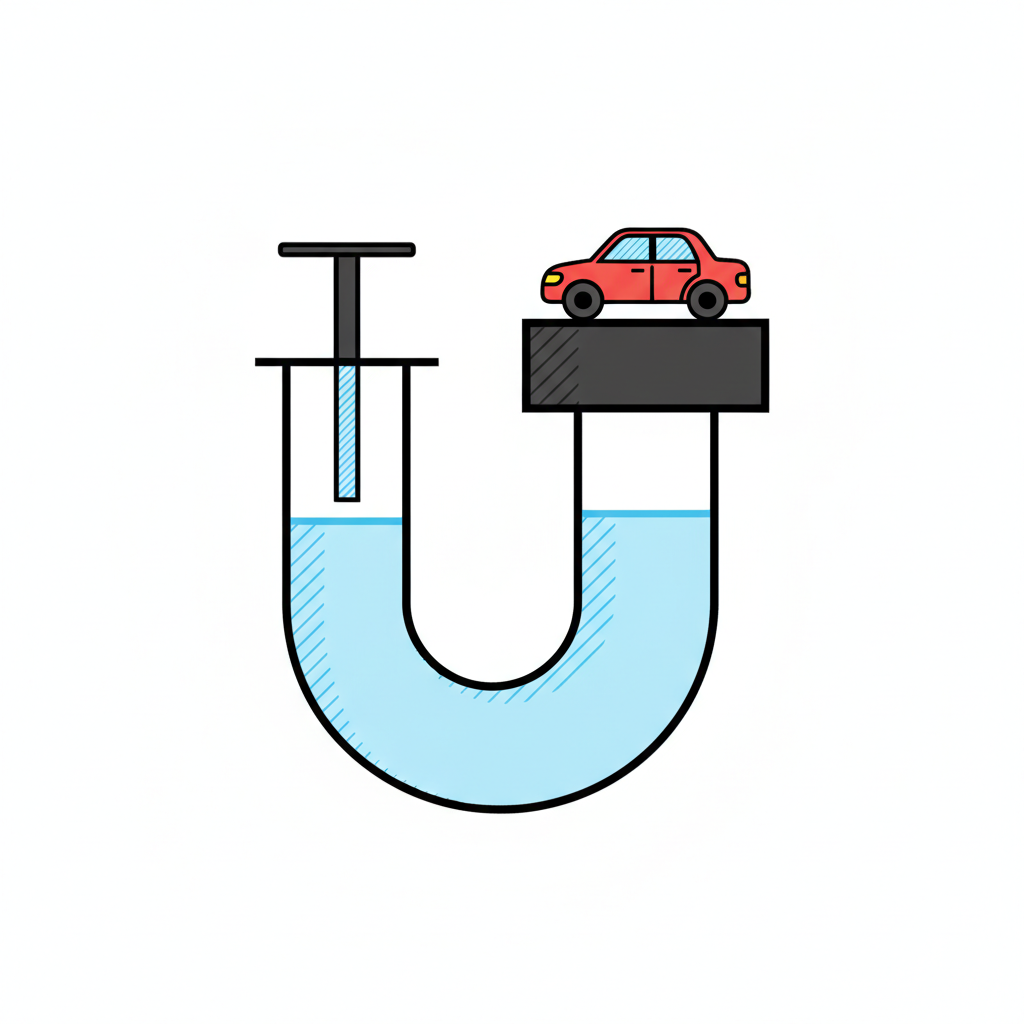
The diagram shows a simple model of a hydraulic car lift: two pistons in a U-shaped tube filled with oil. The car rests on a platform on the right-hand piston.
Question diagram
(a)
State which piston is the input piston, and explain your choice. [2]Criterion A (i) · Level 3-4
(b)
The car and platform have a weight of 12 000 N. The right-hand piston has an area of 0.30 m² and the left-hand piston has an area of 0.010 m². Calculate the force needed on the left-hand piston to hold the car still. [2]Criterion A (ii) · Level 3-4

revisionprep.com

Summary Answer

Not available for this question.

Model Answer

Not available for this question.

Marking Scheme

Not available for this question.

Examiner Insights

Not available for this question.

Question 3Criterion A + C · Band 3-6 · Medium · 7 marksrevisionprep.com

Pressure: p = F/A (solids)

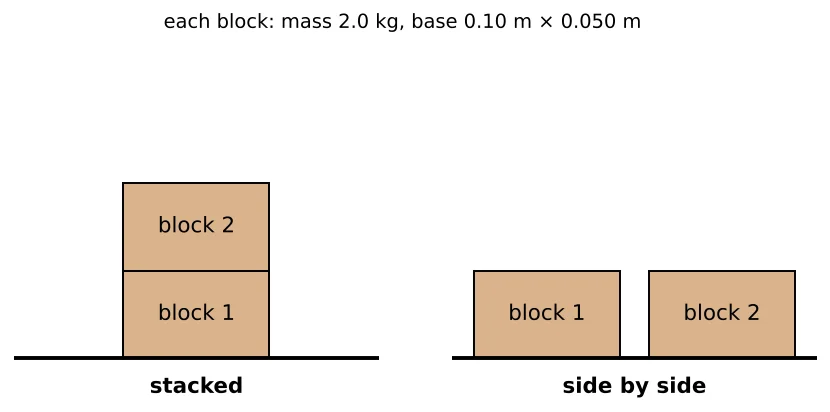
Two identical blocks each have a mass of 2.0 kg and a base of 0.10 m × 0.050 m. The diagram shows the blocks stacked on top of each other and standing side by side on a table. Take g = 9.8 N kg⁻¹.
Question diagram
(a)
Calculate the pressure under a single block standing alone on its base. [2]Criterion A (ii) · Level 3-4
(b)
Calculate the pressure on the table under the stacked blocks. [2]Criterion A (ii) · Level 3-4
(c)
A student says that the pressure on the table is the same for both arrangements. Evaluate this statement using calculations. [3]Criterion C (iii) · Level 5-6

revisionprep.com

Summary Answer

Not available for this question.

Model Answer

Not available for this question.

Marking Scheme

Not available for this question.

Examiner Insights

Not available for this question.

Question 4Criterion B · Band 1-6 · Medium · 10 marksrevisionprep.com

Pressure in liquids and gases (qualitative)
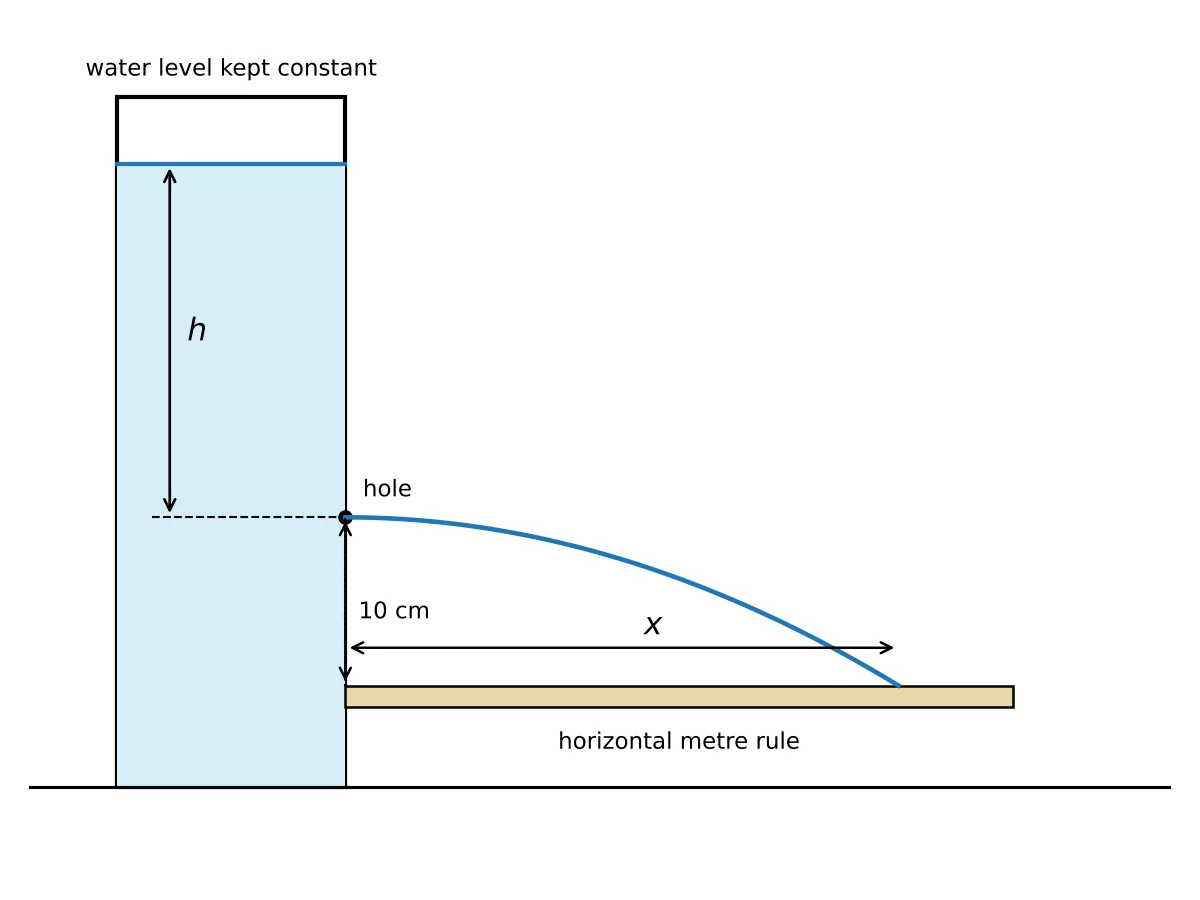
A student investigates how the depth of a hole below the water surface affects how fast water comes out of it. Water leaves a small hole in the side of a tall container, and the student measures the horizontal distance x the jet travels while it falls 10 cm onto a horizontal metre rule, as shown in the diagram. She can make holes at different depths h and can keep the water level constant by topping up from a jug.
Question diagram
(a)
State a research question for this investigation. [1]Criterion B (i) · Level 1-2
(b)
Formulate a hypothesis and explain it using ideas about pressure in liquids. [3]Criterion B (ii) · Level 5-6
(c)
Identify the independent and dependent variables and two control variables, and explain why the water level must be kept constant. [3]Criterion B (iii) · Level 3-4
(d)
Explain how the student should carry out the investigation to collect sufficient, reliable data. [3]Criterion B (iii), B (iv) · Level 5-6

revisionprep.com

Summary Answer

Not available for this question.

Model Answer

Not available for this question.

Marking Scheme

Not available for this question.

Examiner Insights

Not available for this question.

Question 5Criterion C + A · Band 3-8 · Challenge · 8 marksrevisionprep.com

Atmospheric pressure

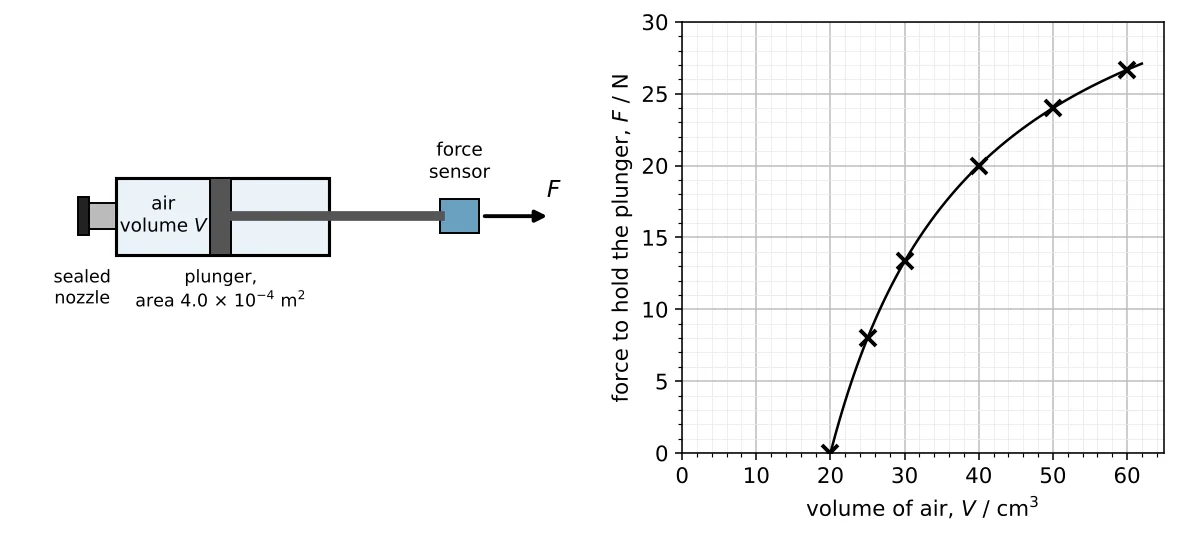
A student investigates the air trapped in a syringe, as shown. The nozzle is sealed and the syringe holds 20 cm³ of air at atmospheric pressure, 1.0 × 10⁵ Pa. The plunger has an area of 4.0 × 10⁻⁴ m². She slowly pulls the plunger out and uses a force sensor to measure the force F needed to hold the plunger still when the air has volume V. The temperature stays the same. The graph shows her results.
Question diagram
(a)
Use the graph to find the force needed when V = 40 cm³, and calculate the pressure of the air in the syringe at this volume. [3]Criterion C (ii) · Level 5-6
(b)
Explain why the force is zero when the volume is 20 cm³. [1]Criterion A (i) · Level 3-4
(c)
The student's hypothesis is that the force needed is directly proportional to the volume of the air. Evaluate the hypothesis using the graph. Show by calculation which relationship between the pressure and the volume of the air the data support. [4]Criterion C (iii) · Level 7-8

revisionprep.com

Summary Answer

Not available for this question.

Model Answer

Not available for this question.

Marking Scheme

Not available for this question.

Examiner Insights

Not available for this question.

Question 6Criterion D + A · Band 3-8 · Challenge · 8 marksrevisionprep.com

Pressure in liquids: p = ρgh

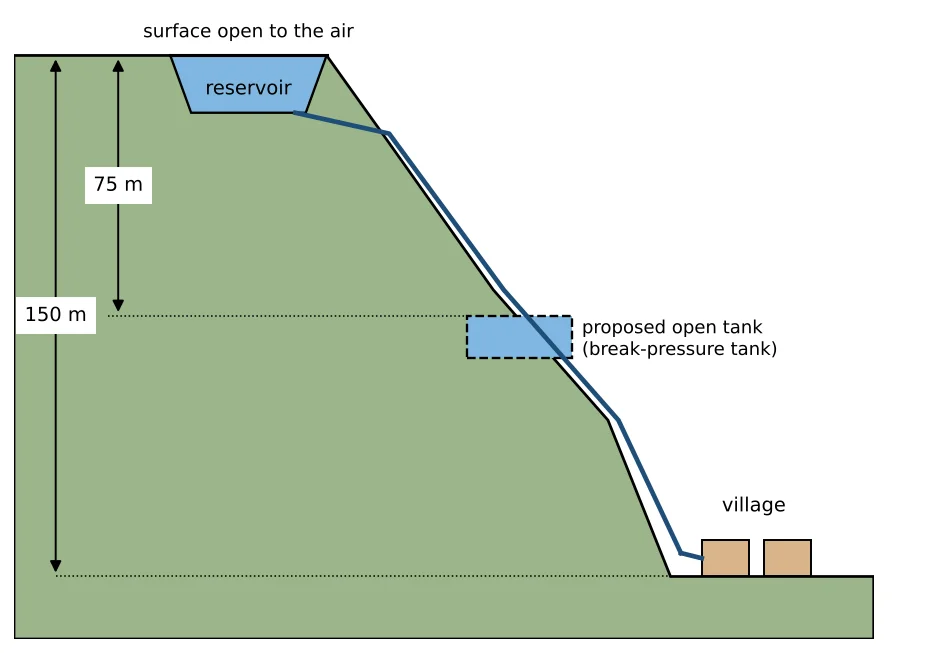
A mountain village is 150 m below a reservoir, as shown. Water flows from the reservoir to the village in a long pipe. The surface of the water in the reservoir is open to the air. The pipes in the village can withstand a pressure due to the water of up to 1.0 × 10⁶ Pa. The density of water is 1000 kg m⁻³. Take g = 9.8 N kg⁻¹. The village council compares this gravity-fed supply with an electric pump that lifts river water to a tank near the village. The table gives the figures.

featuregravity-fed supplyelectric pumpcost to build / dollars12000060000running cost per year / dollars100018000carbon dioxide released per year / tonnes025works in a power cutyesno\begin{array}{|l|c|c|}\hline \text{feature} & \text{gravity-fed supply} & \text{electric pump} \\ \hline \text{cost to build / dollars} & 120000 & 60000 \\ \hline \text{running cost per year / dollars} & 1000 & 18000 \\ \hline \text{carbon dioxide released per year / tonnes} & 0 & 25 \\ \hline \text{works in a power cut} & \text{yes} & \text{no} \\ \hline\end{array}
Question diagram
(a)
Calculate the pressure due to the water in the pipe at the village if there is no tank in the pipe. [2]Criterion A (ii) · Level 3-4
(b)
Engineers propose an open tank in the pipe 75 m below the reservoir surface, which the water enters before flowing on to the village. Explain why this protects the pipes in the village. [2]Criterion D (i) · Level 3-4
(c)
Evaluate whether the council should build the gravity-fed supply or the electric pump. Use the table and consider at least two perspectives, such as economic, environmental and social. [4]Criterion D (ii) · Level 7-8

revisionprep.com

Summary Answer

Not available for this question.

Model Answer

Not available for this question.

Marking Scheme

Not available for this question.

Examiner Insights

Not available for this question.

That's every free question here — 6 of 86.

+80 more questions, plus Mock Papers & Worksheets, are waiting in Premium.

Upgrade