You're viewing free preview questions — 6 questions previewing here — subscribe to unlock 54 more, plus the Full Question Bank, Mock Papers & Worksheets.Upgrade
Back

States of matter and kinetic theory — Free MYP4 Physics Practice Questions

Free questions

Open in full, with answers, mark scheme and examiner insights.

Question 1Criterion A · Band 1-2 · Easy · 2 marksrevisionprep.com

Particles in solids, liquids and gases
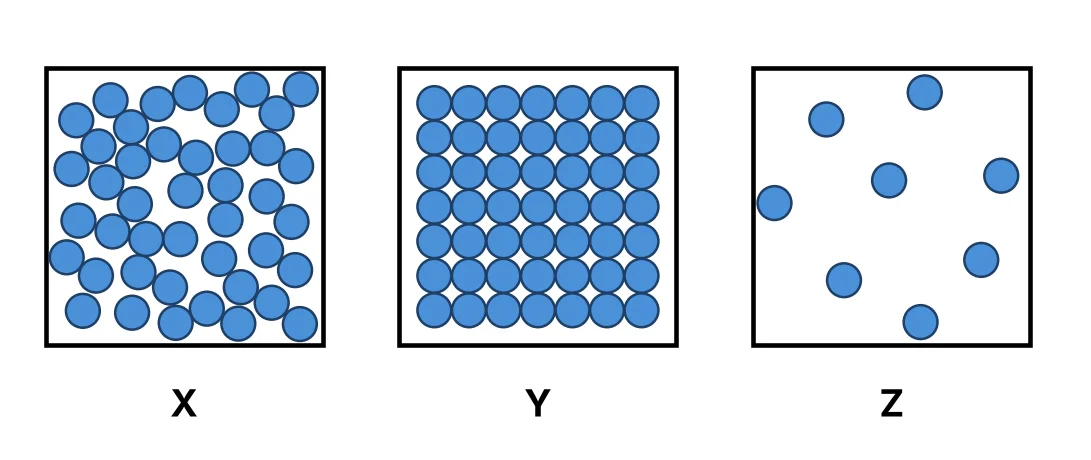
The diagram shows the particles in the same substance in three different states, labelled X, Y and Z.
Question diagram
(a)
State which box, X, Y or Z, shows the gas. [1]Criterion A (i) · Level 1-2
(b)
State which box shows the solid. [1]Criterion A (i) · Level 1-2

revisionprep.com

Summary Answer

Not available for this question.

Model Answer

Not available for this question.

Marking Scheme

Not available for this question.

Examiner Insights

Not available for this question.

Question 2Criterion A · Band 1-2 · Easy · 2 marksrevisionprep.com

Temperature, particle energy and absolute zero
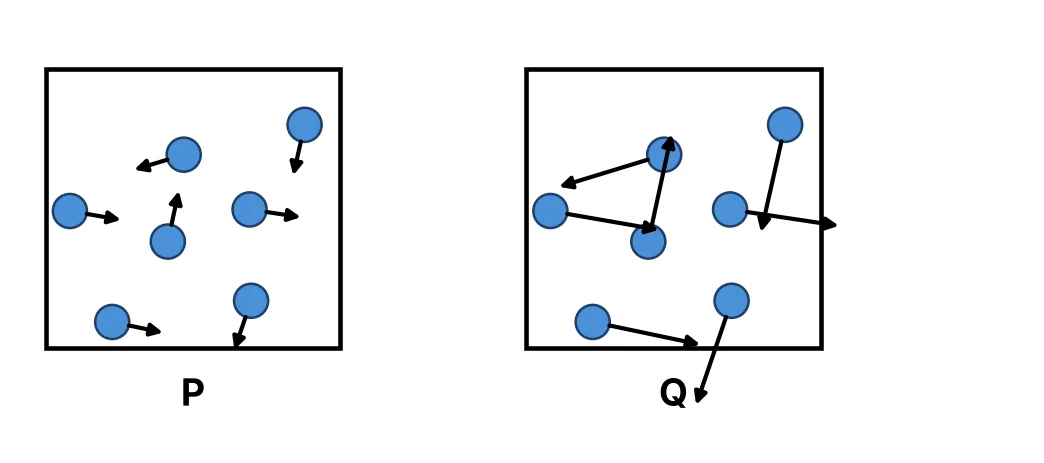
The diagram shows the same gas in two sealed containers, P and Q. The arrow on each particle shows how fast it is moving. A longer arrow means a faster particle.
Question diagram
(a)
State which container, P or Q, holds the gas at the higher temperature. [1]Criterion A (i) · Level 1-2
(b)
State what happens to the average kinetic energy of the particles when the temperature of a gas increases. [1]Criterion A (i) · Level 1-2

revisionprep.com

Summary Answer

Not available for this question.

Model Answer

Not available for this question.

Marking Scheme

Not available for this question.

Examiner Insights

Not available for this question.

Question 3Criterion A · Band 3-6 · Medium · 4 marksrevisionprep.com

Particles in solids, liquids and gases
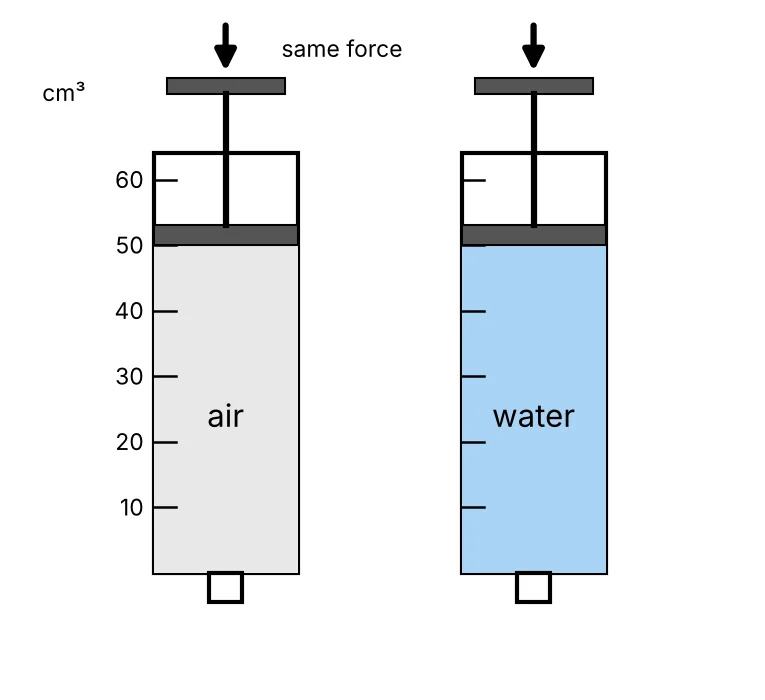
A student seals the nozzles of two identical syringes. One syringe holds 50 cm³ of air and the other holds 50 cm³ of water. She pushes each plunger inwards with the same force.
Question diagram
(a)
Predict which plunger moves further into its syringe. [1]Criterion A (ii) · Level 3-4
(b)
Explain your prediction, using the particle model. [3]Criterion A (ii) · Level 5-6

revisionprep.com

Summary Answer

Not available for this question.

Model Answer

Not available for this question.

Marking Scheme

Not available for this question.

Examiner Insights

Not available for this question.

Question 4Criterion C + A · Band 3-6 · Medium · 8 marksrevisionprep.com

Gas pressure, volume and temperature (qualitative)
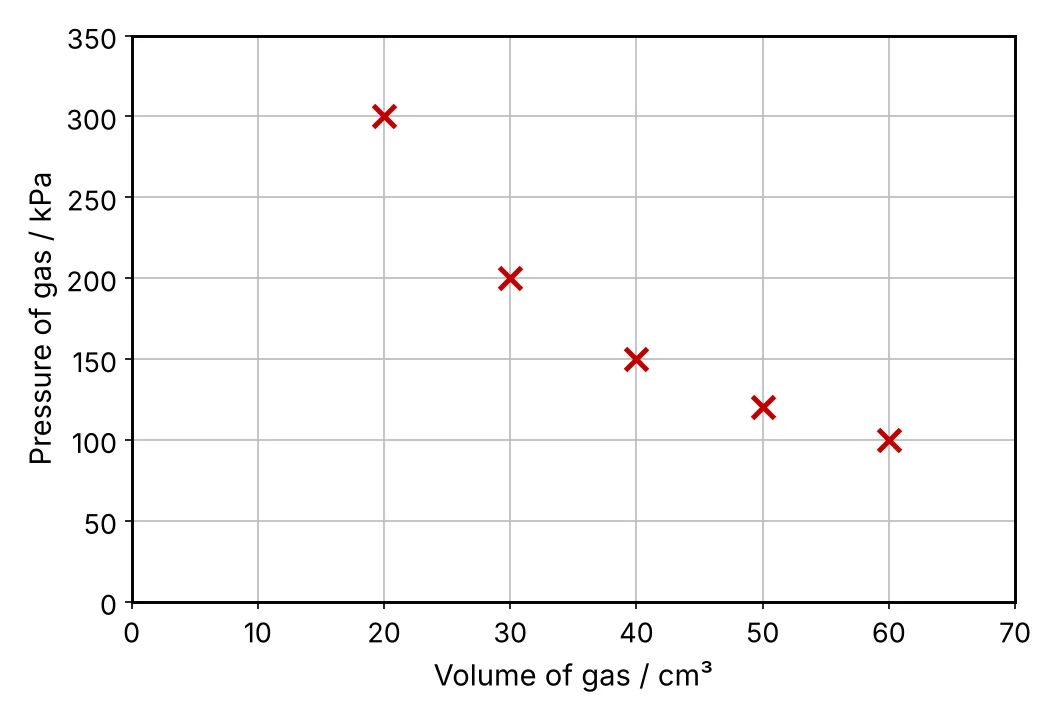
A student pushes the plunger of a sealed syringe in steps and measures the pressure of the gas. The temperature stays the same throughout. The graph shows her results.
Question diagram
(a)
Describe the pattern shown by the crosses. [2]Criterion C (ii) · Level 3-4
(b)
Use the graph to state the pressure when the volume is 40 cm³. [1]Criterion C (i) · Level 3-4
(c)
Calculate the increase in pressure when the volume is reduced from 60 cm³ to 20 cm³. [2]Criterion C (i) · Level 3-4
(d)
Explain the pattern, using the idea of collisions with the walls. [3]Criterion A (i) · Level 5-6

revisionprep.com

Summary Answer

Not available for this question.

Model Answer

Not available for this question.

Marking Scheme

Not available for this question.

Examiner Insights

Not available for this question.

Question 5Criterion B · Band 3-8 · Challenge · 9 marksrevisionprep.com

Temperature, particle energy and absolute zero
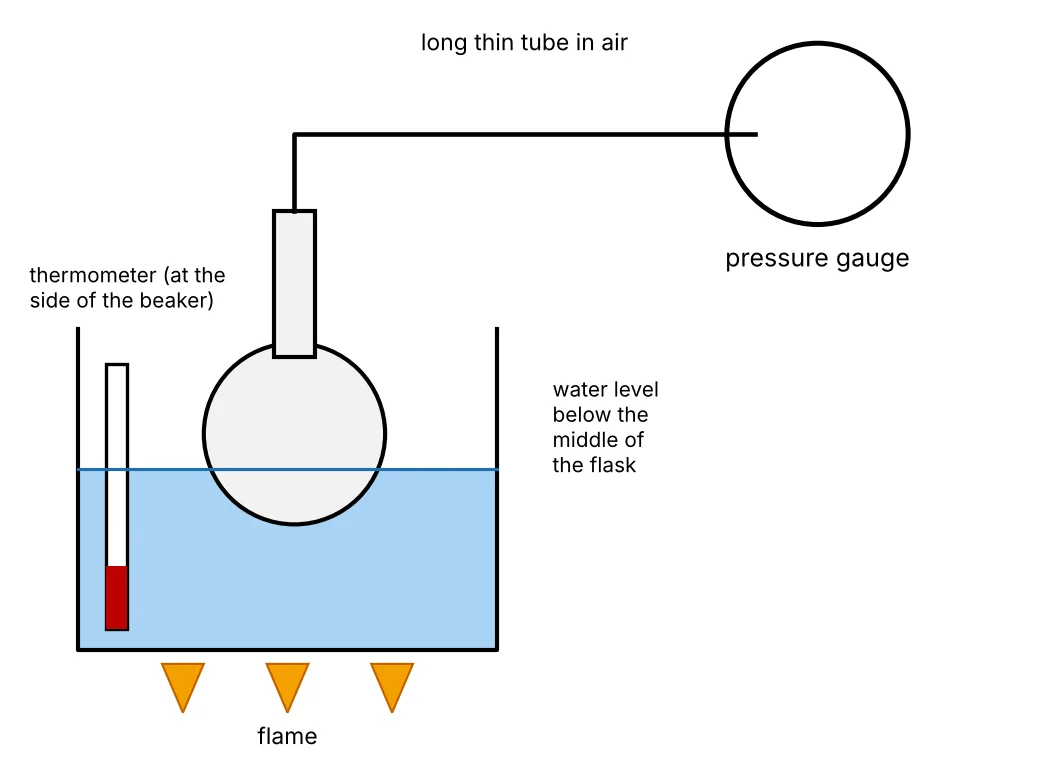
A student wants to use the apparatus in the diagram to find how the pressure of a fixed mass of air depends on its temperature, so that she can estimate the temperature of absolute zero. She heats the beaker with a flame and reads the gauge each minute.
Question diagram
(a)
Identify two faults in the set-up that make the temperature of the air uncertain. [2]Criterion B (iii) · Level 3-4
(b)
Suggest three improvements to the method so that the readings are valid. [3]Criterion B (iv) · Level 5-6
(c)
Describe how she should collect and use results to estimate absolute zero, and explain why readings at only two temperatures would be a poor basis for the estimate. [4]Criterion B (iv) · Level 7-8

revisionprep.com

Summary Answer

Not available for this question.

Model Answer

Not available for this question.

Marking Scheme

Not available for this question.

Examiner Insights

Not available for this question.

Question 6Criterion D + A · Band 3-8 · Challenge · 9 marksrevisionprep.com

Brownian motion and evidence for particles
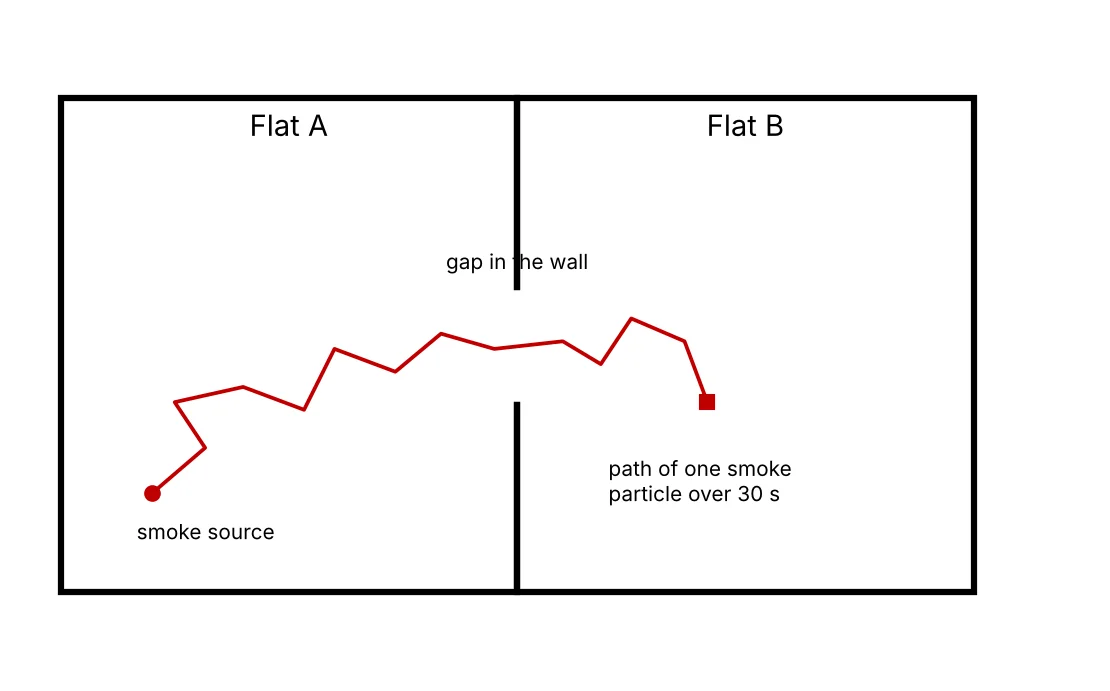
A resident in Flat A smokes near a wall that has a small gap. His neighbour in Flat B can smell the smoke even though there is no draught. The diagram is a plan view that shows the path of one smoke particle over 30 s.
Question diagram
(a)
Describe the motion of the smoke particle in the diagram and give the reason for it. [2]Criterion A (iii) · Level 3-4
(b)
Explain why sealing the gap reduces how much smoke reaches Flat B, but opening a window in Flat A is also needed to remove the smoke. [3]Criterion D (i) · Level 5-6
(c)
Discuss what the landlord should do about the smoke, considering the views of the smoker and of the neighbour. Make a judgement. [4]Criterion D (ii) · Level 7-8

revisionprep.com

Summary Answer

Not available for this question.

Model Answer

Not available for this question.

Marking Scheme

Not available for this question.

Examiner Insights

Not available for this question.

That's every free question here — 6 of 60.

+54 more questions, plus Mock Papers & Worksheets, are waiting in Premium.

Upgrade