RevisionPrep
Log inGo Premium

Physics

Free Version

Work, Energy and Power

4 subtopics · 310 exam-style questions

“Pick a subtopic to start practising.”
Forms and Conservation of EnergyWork, power and efficiencyEnergy in electrical and everyday devicesRenewable and Non-Renewable Resources

Sample questions from Work, Energy and Power

  1. Energy in electrical and everyday devices[7 marks]
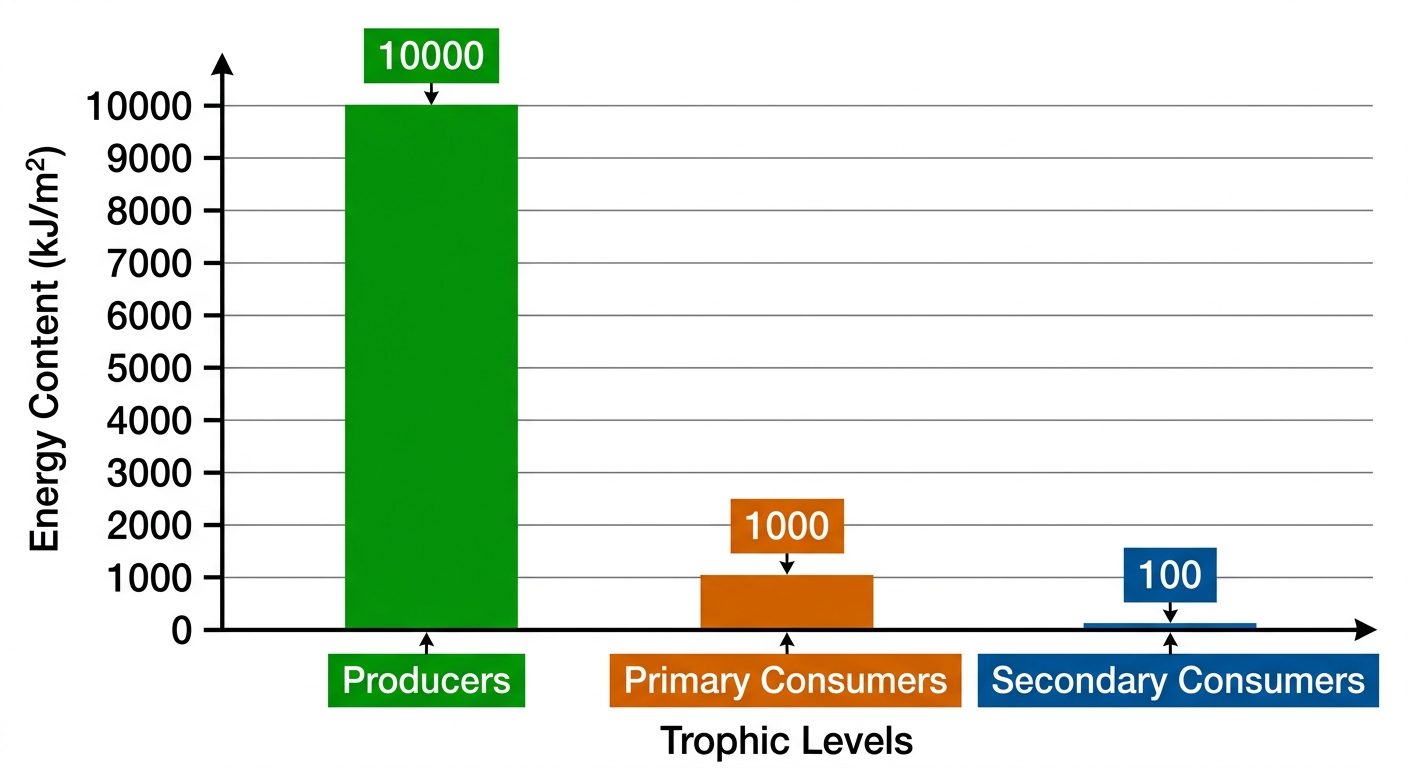
    Energy flows along a food chain and is dissipated at each step. The bar chart shows the energy stored at each level of a grassland, in kJ per square metre per year.

    (a) State the energy stored in the primary consumers. [1]

    (b) Calculate the percentage of energy transferred from the producers to the primary consumers. [2]

    (c) Explain two ways in which energy is lost between one trophic level and the next. [2]

    (d) Use the bar chart to explain why food chains rarely have more than four or five trophic levels. [2]
    Diagram for a Energy in electrical and everyday devices practice questionPractise this subtopic
  2. Forms and Conservation of Energy[6 marks]
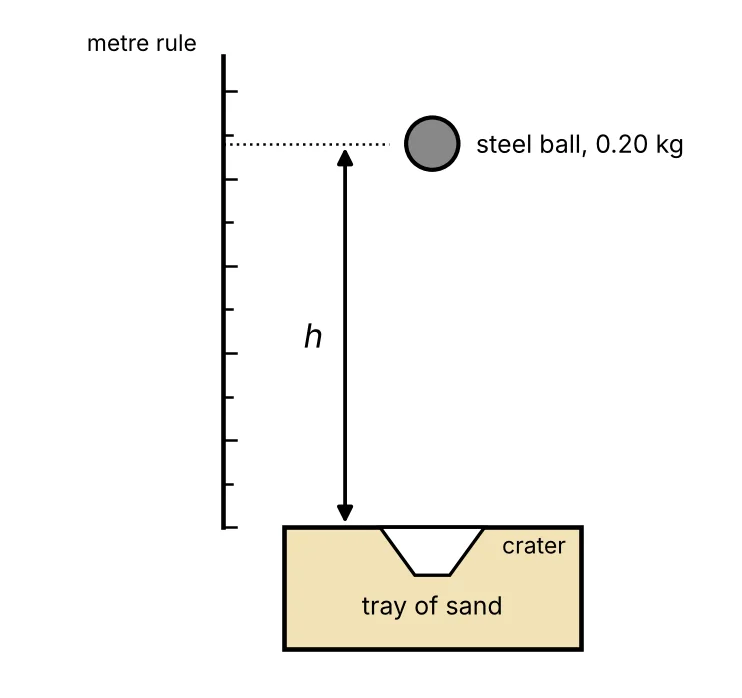
    A student drops a steel ball of mass 0.20 kg from different heights into a tray of sand and measures the depth of the crater it makes, as shown. Take g = 9.8 N kg⁻¹.

    (a) Calculate the gravitational potential energy of the ball when it is released from a height of 0.80 m. [2]

    (b) Identify the independent variable and the dependent variable in this investigation. [2]

    (c) Suggest one change to the method that would make the results more reliable, and explain why it helps. [2]
    Diagram for a Forms and Conservation of Energy practice questionPractise this subtopic
  3. Work, power and efficiency[6 marks]
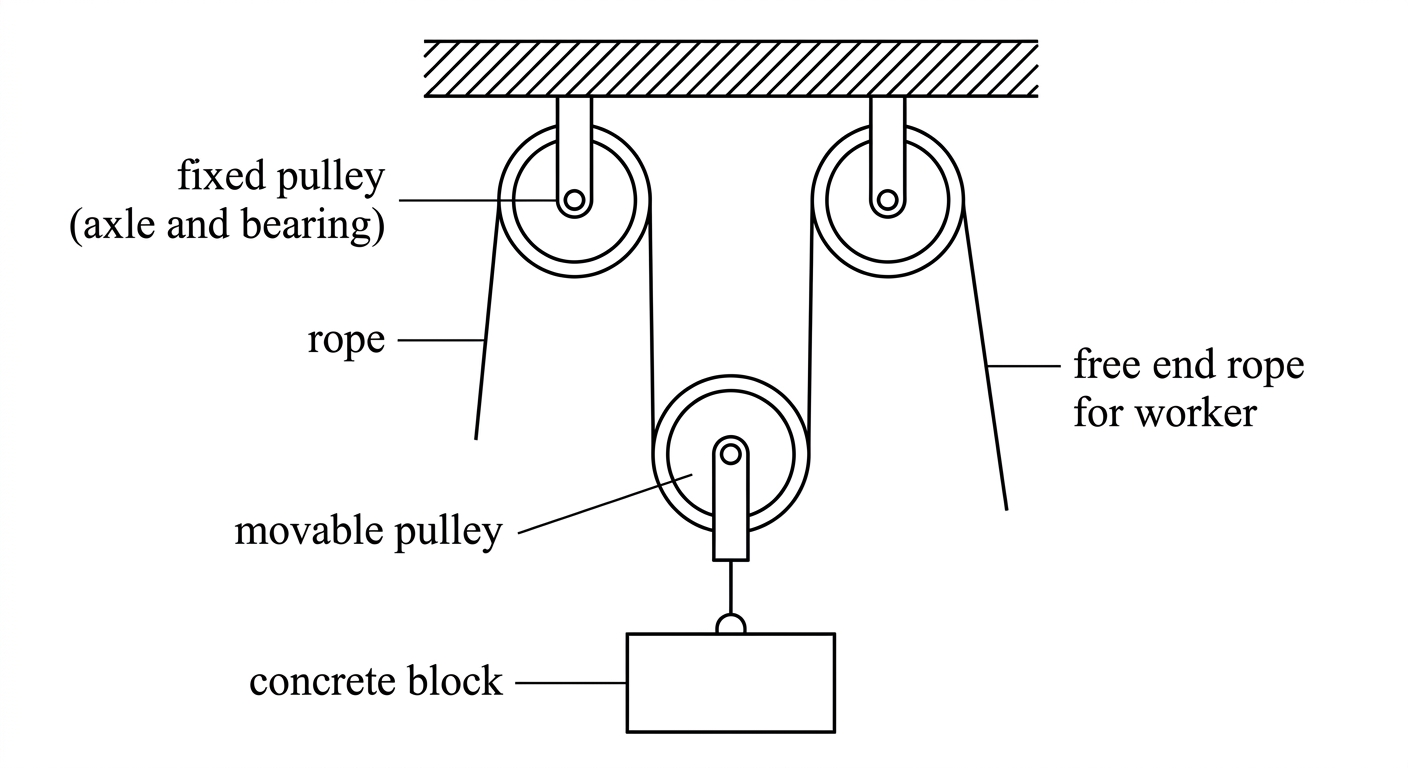
    A builder uses the pulley system shown to lift a concrete block of weight 600 N through a height of 0.80 m. To do this she pulls 1.6 m of rope with a force of 350 N.

    (a) Identify one place in the system where friction causes energy to be wasted. [1]

    (b) Calculate the efficiency of the pulley system. [3]

    (c) Suggest two practical ways to make this pulley system more efficient. Explain how each one helps. [2]
    Diagram for a Work, power and efficiency practice questionPractise this subtopic
  4. Renewable and Non-Renewable Resources[4 marks]
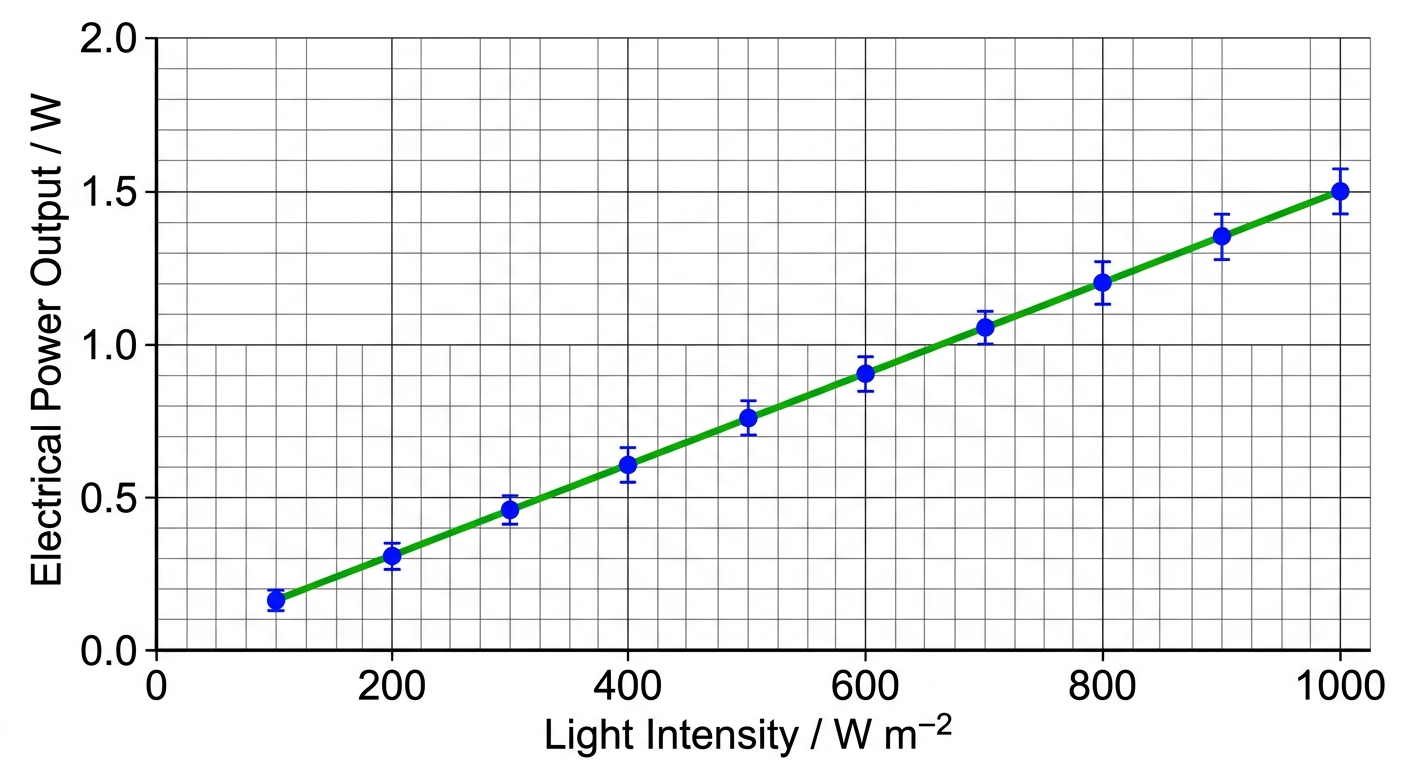
    A photovoltaic (PV) cell of area 0.010 m² is tested with a lamp at different light intensities. The graph shows the electrical power output of the cell, with error bars, against light intensity.

    (a) Use the graph to determine the electrical power output when the light intensity is 600 W m⁻². [1]

    (b) Calculate the efficiency of the cell at a light intensity of 600 W m⁻². [3]
    Diagram for a Renewable and Non-Renewable Resources practice questionPractise this subtopic
  5. Energy in electrical and everyday devices[6 marks]
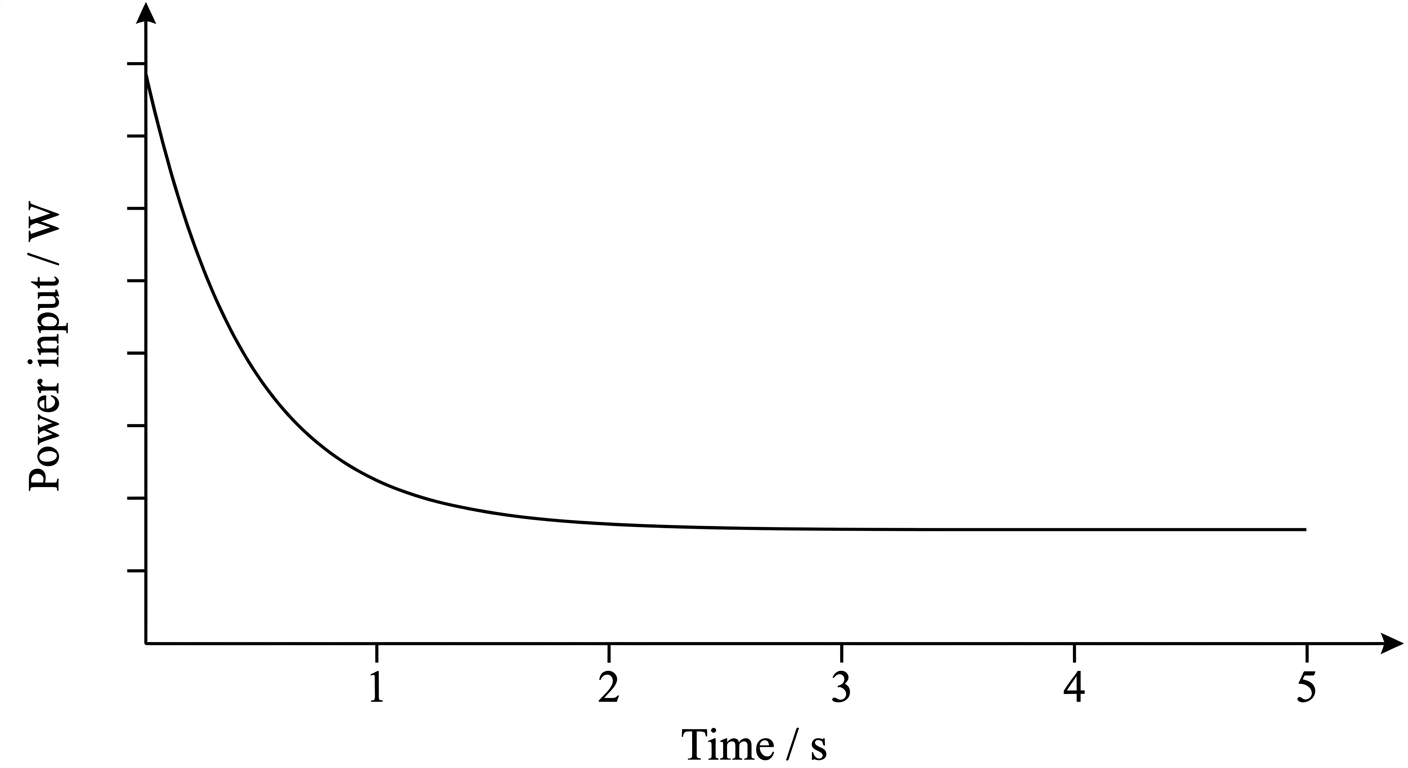
    A filament lamp is switched on at time t = 0. The graph shows how the electrical power input to the lamp changes during the first 5 s. The supply voltage stays constant, and the resistance of the filament increases as its temperature rises.

    (a) Describe how the power input changes during the first 5 s. [2]

    (b) Explain why the power input is greatest at the moment the lamp is switched on. [2]

    (c) Explain why the power input becomes constant after about 3 s. [2]
    Diagram for a Energy in electrical and everyday devices practice questionPractise this subtopic
  6. Forms and Conservation of Energy[4 marks]
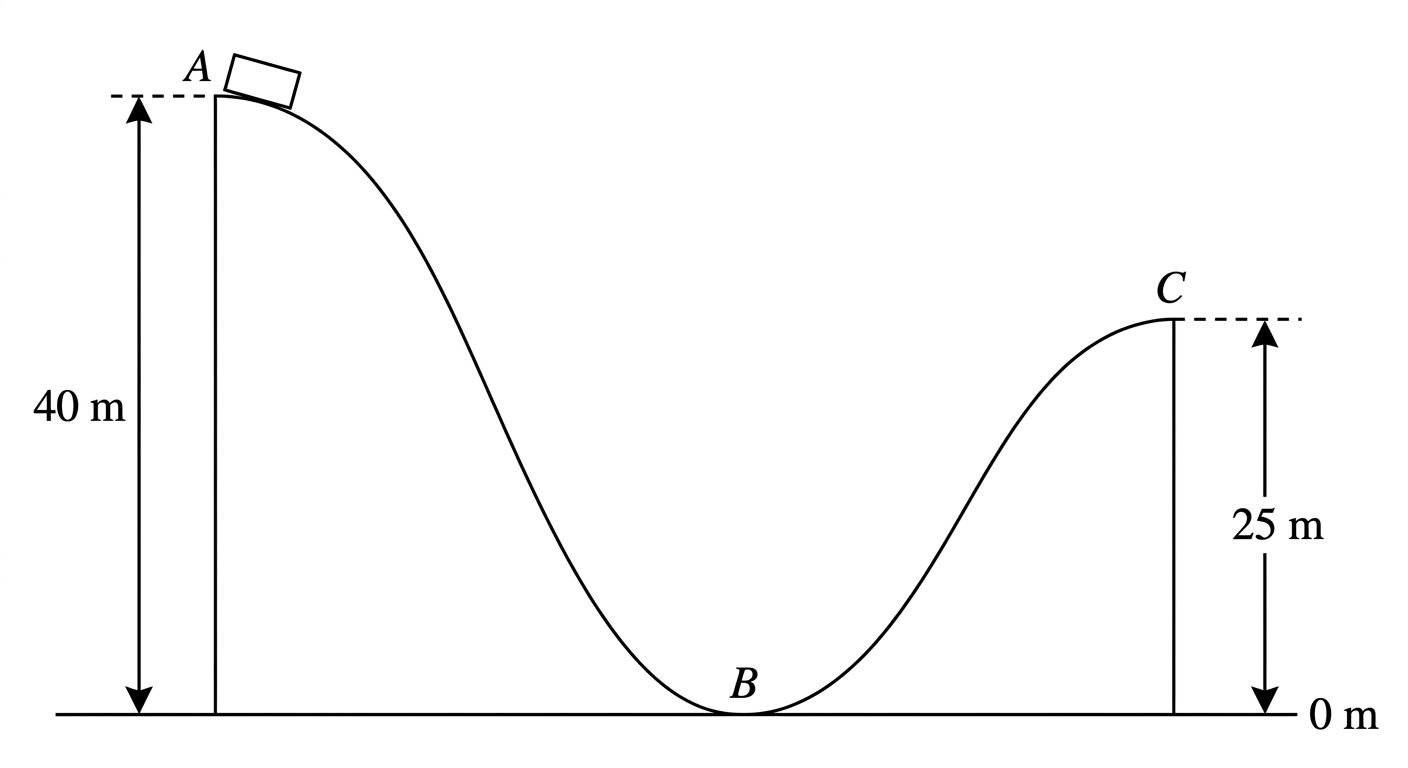
    The diagram shows part of a roller-coaster track. A car of mass 800 kg starts from rest at A, 40 m above the ground, runs down to B at ground level and up to C, 25 m above the ground. Take g = 9.8 N kg⁻¹.

    (a) Calculate the gravitational potential energy of the car at A, relative to the ground. [2]

    (b) Assuming no energy is dissipated, calculate the speed of the car at B. [2]
    Diagram for a Forms and Conservation of Energy practice questionPractise this subtopic

Every question, revision note and worksheet for Work, Energy and Power — with Premium.

Unlock Full Access