You're viewing free preview questions — 5 questions previewing here — subscribe to unlock 64 more, plus the Full Question Bank, Mock Papers & Worksheets.Upgrade
3D tissue and organ printing — Free MYP5 Biology Practice Questions

1QuestionApplications in Tissue EngineeringConcept Practice
2 marks~3 minCriterion A
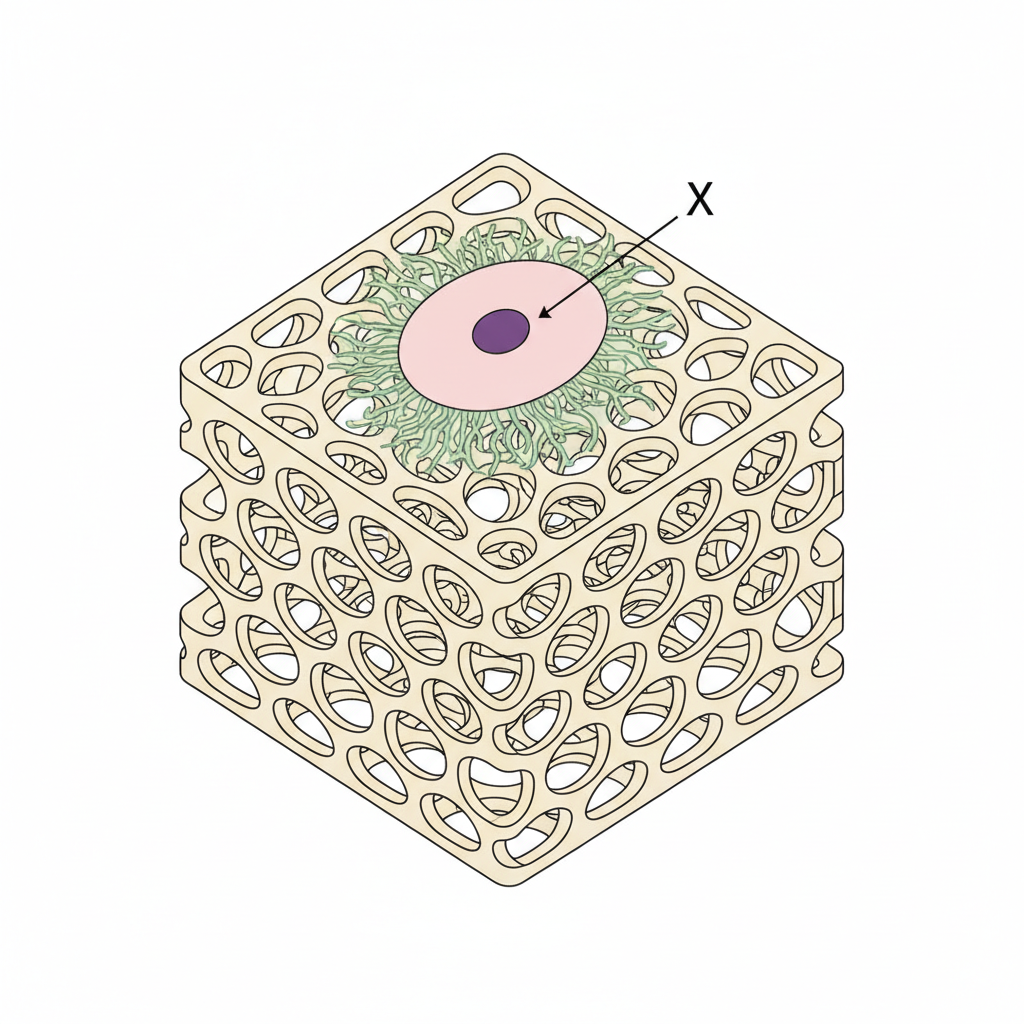
The diagram below shows a 3D-printed tissue scaffold used in regenerative medicine. Cells are seeded onto the scaffold surface; one cell is shown with its internal structures visible. Structure X is labelled inside the cell, surrounded by an extracellular matrix mesh.
a
Identify structure X. [1]
b
Explain how structure X enables the seeded cells to contribute to the formation of functional tissue on the scaffold. [1]

Solutions
2QuestionApplications in Tissue EngineeringAssessment Practice
2 marks~3 minCriterion D
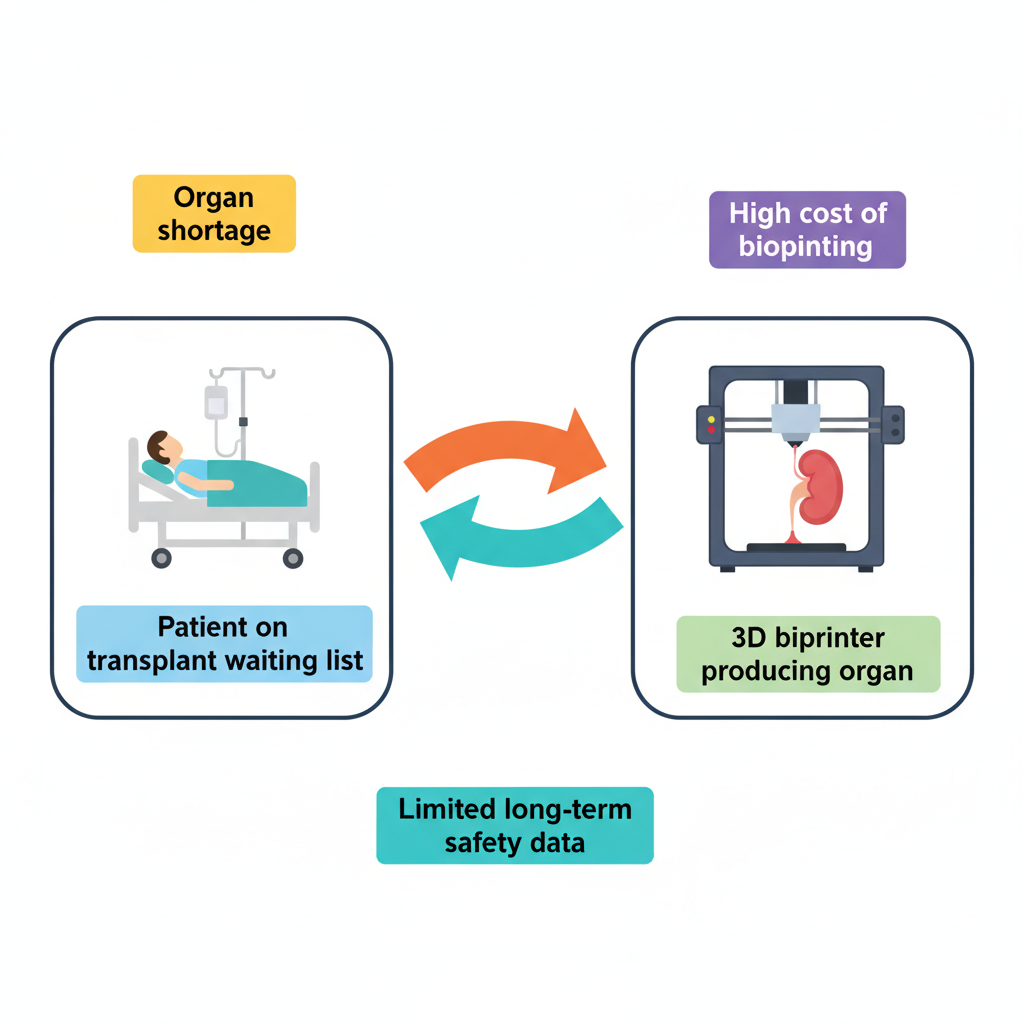
Bioprinting uses a patient's own cells to construct replacement organs layer by layer, offering a potential solution to global transplant shortages. However, the technology remains experimental: long-term outcomes in human recipients are largely unknown, and production costs are currently very high.
Outline one ethical issue a hospital must consider when deciding whether to offer 3D-printed organ transplants to patients. [2]
Outline one ethical issue a hospital must consider when deciding whether to offer 3D-printed organ transplants to patients. [2]
Solutions
3QuestionApplications in Tissue EngineeringAssessment Practice
4 marks~6 minCriterion A
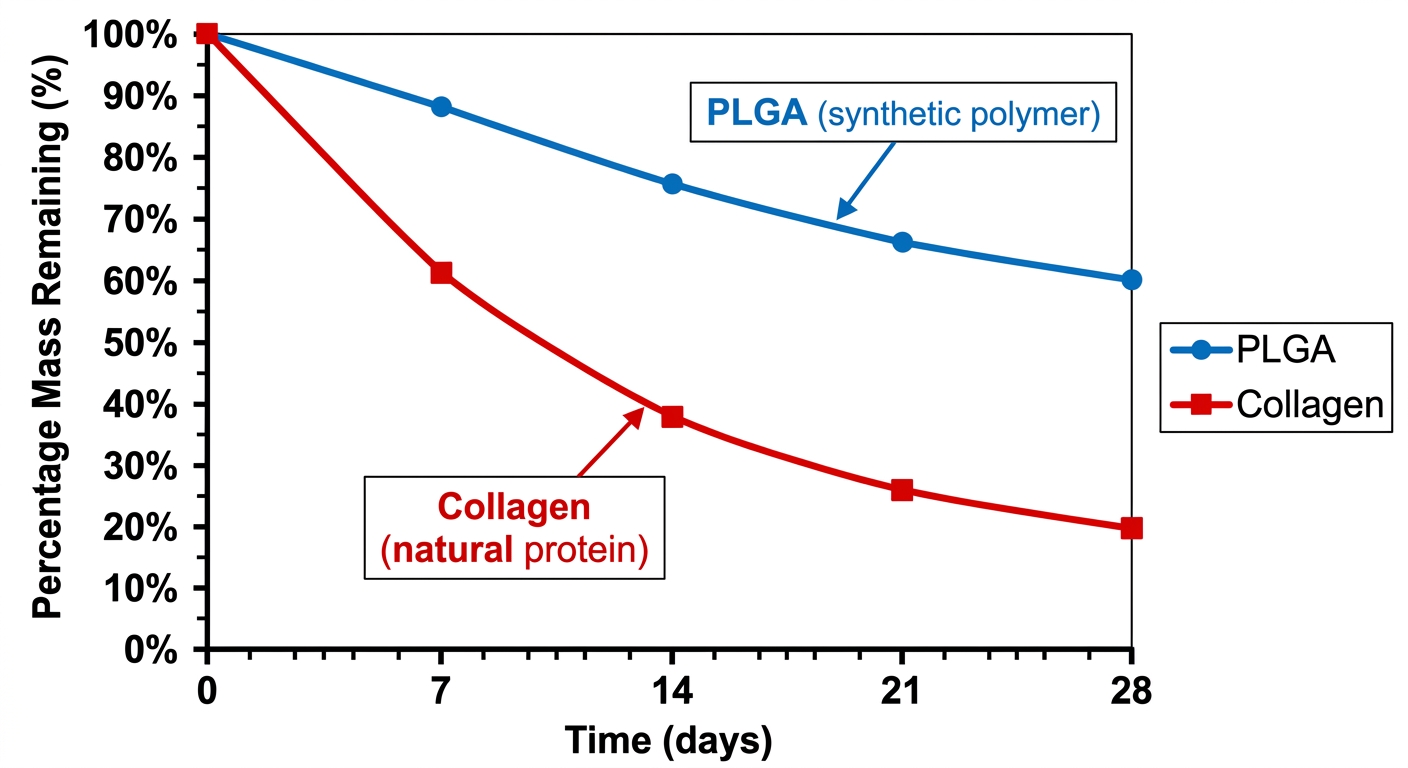
The graph below shows the percentage mass remaining over time for two hydrogel scaffolds used in 3D tissue printing: PLGA (a synthetic polymer) and collagen (a natural protein).
Graph description: X-axis: Time (days), 0 to 28. Y-axis: Percentage mass remaining, 0% to 100%. PLGA decreases gradually from 100% to approximately 60% at day 28. Collagen decreases steeply from 100% to approximately 20% at day 28.
Graph description: X-axis: Time (days), 0 to 28. Y-axis: Percentage mass remaining, 0% to 100%. PLGA decreases gradually from 100% to approximately 60% at day 28. Collagen decreases steeply from 100% to approximately 20% at day 28.
a
Describe the degradation trends shown by both scaffolds over the 28-day period, using appropriate biological terminology. [2]
b
Explain which scaffold would better support cell infiltration and new tissue formation in a tissue engineering application. Use specific evidence from the graph and correct scientific language in your answer. [2]
Solutions
4QuestionApplications in Tissue EngineeringAssessment Practice
4 marks~6 minCriterion A
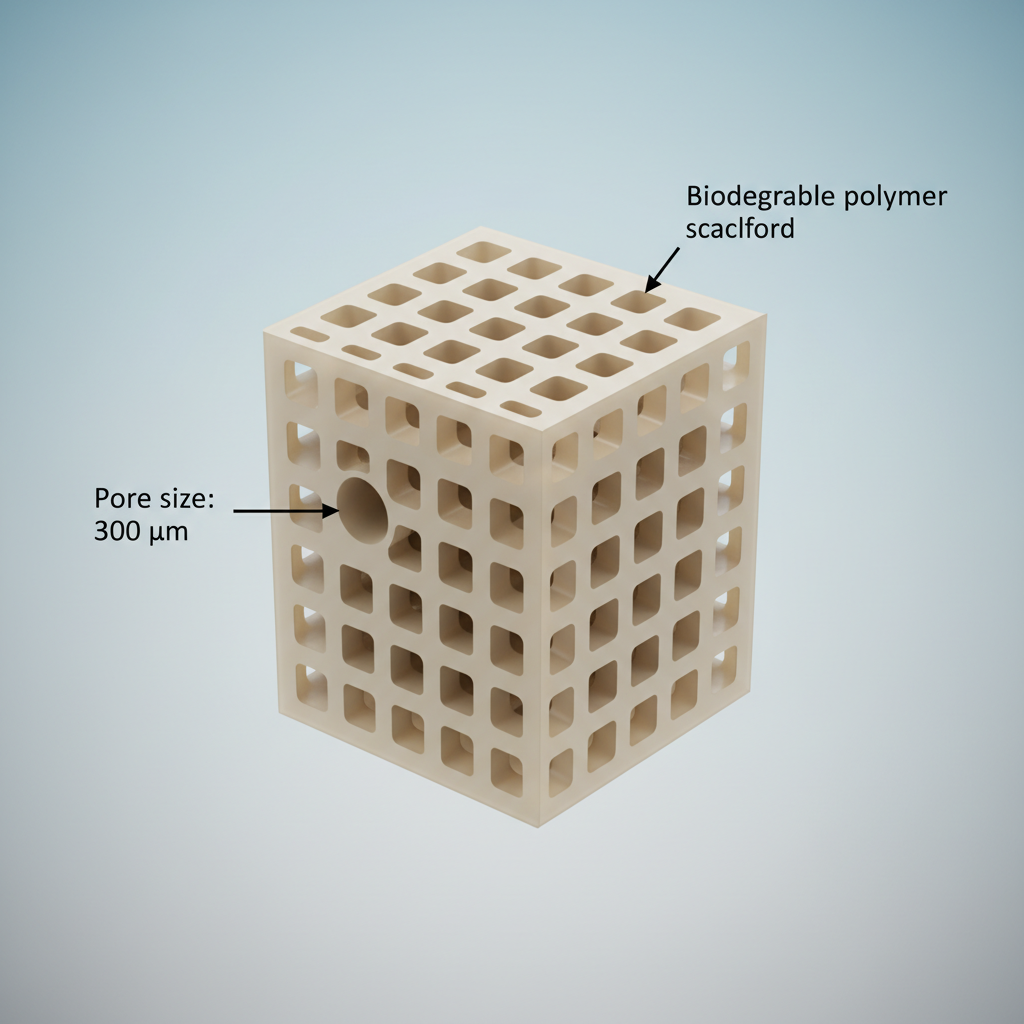
A research team is developing a biodegradable polymer scaffold for cartilage repair. The scaffold contains interconnected pores of uniform diameter (300 µm) and is pre-loaded with transforming growth factor-beta (TGF-β), a growth factor that promotes chondrocyte differentiation. As the polymer degrades, TGF-β is released gradually into the surrounding tissue.
a
Explain how the interconnected pore structure of the scaffold supports cell attachment and survival. [2]
b
Analyse how the gradual release of TGF-β from the degrading scaffold promotes organised cartilage regeneration, rather than simply stimulating random cell proliferation. [2]
Solutions
5QuestionApplications in Tissue EngineeringAssessment Practice
6 marks~9 minCriterion D
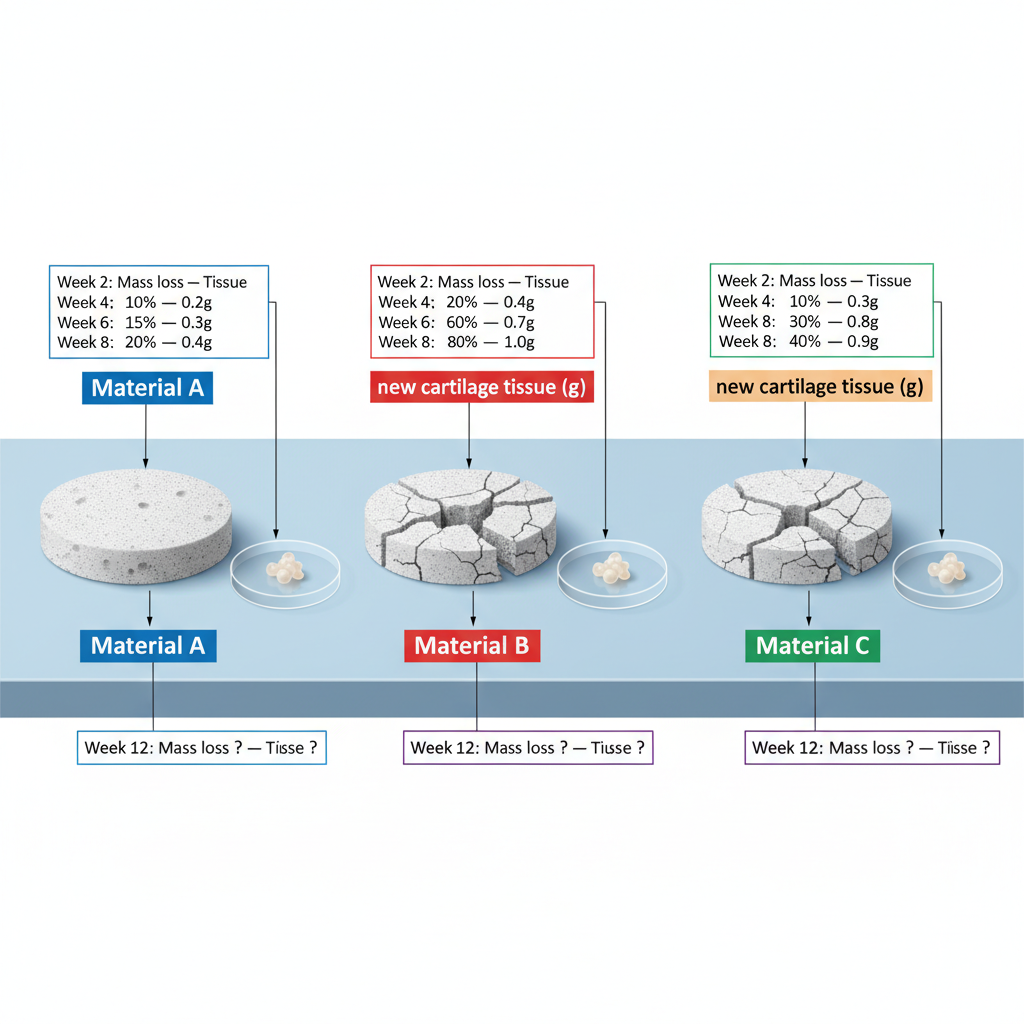
Three biodegradable scaffold materials (A, B, C) were tested for cartilage repair over 8 weeks. The percentage of scaffold mass lost and the mass of new tissue formed were recorded every two weeks.
Material A mass loss (%): 5, 10, 15, 20 at weeks 2, 4, 6, 8
Material A tissue mass (g): 0.1, 0.2, 0.3, 0.4 at weeks 2, 4, 6, 8
Material B mass loss (%): 20, 40, 60, 80 at weeks 2, 4, 6, 8
Material B tissue mass (g): 0.4, 0.7, 0.9, 1.0 at weeks 2, 4, 6, 8
Material C mass loss (%): 10, 20, 30, 40 at weeks 2, 4, 6, 8
Material C tissue mass (g): 0.3, 0.6, 0.8, 0.9 at weeks 2, 4, 6, 8
Material A mass loss (%): 5, 10, 15, 20 at weeks 2, 4, 6, 8
Material A tissue mass (g): 0.1, 0.2, 0.3, 0.4 at weeks 2, 4, 6, 8
Material B mass loss (%): 20, 40, 60, 80 at weeks 2, 4, 6, 8
Material B tissue mass (g): 0.4, 0.7, 0.9, 1.0 at weeks 2, 4, 6, 8
Material C mass loss (%): 10, 20, 30, 40 at weeks 2, 4, 6, 8
Material C tissue mass (g): 0.3, 0.6, 0.8, 0.9 at weeks 2, 4, 6, 8
a
Describe the relationship between scaffold mass loss and tissue mass formed for each material over the 8-week period. [2]
b
Explain why a scaffold that degrades too quickly or too slowly would be unsuitable for cartilage repair. [2]
c
Evaluate which material would best support cartilage repair by Week 12, using extrapolated trends and the requirement that scaffold degradation and tissue formation must remain coordinated throughout repair. [2]
Solutions
That's every free question here — 5 of 69.
+64 more questions, plus Mock Papers & Worksheets, are waiting in Premium.