You're viewing free preview questions — 5 questions previewing here — subscribe to unlock 46 more, plus the Full Question Bank, Mock Papers & Worksheets.Upgrade
Cloning — Free MYP5 Biology Practice Questions

1QuestionCloning Efficiency and LimitationsConcept Practice
2 marks~3 minCriterion A
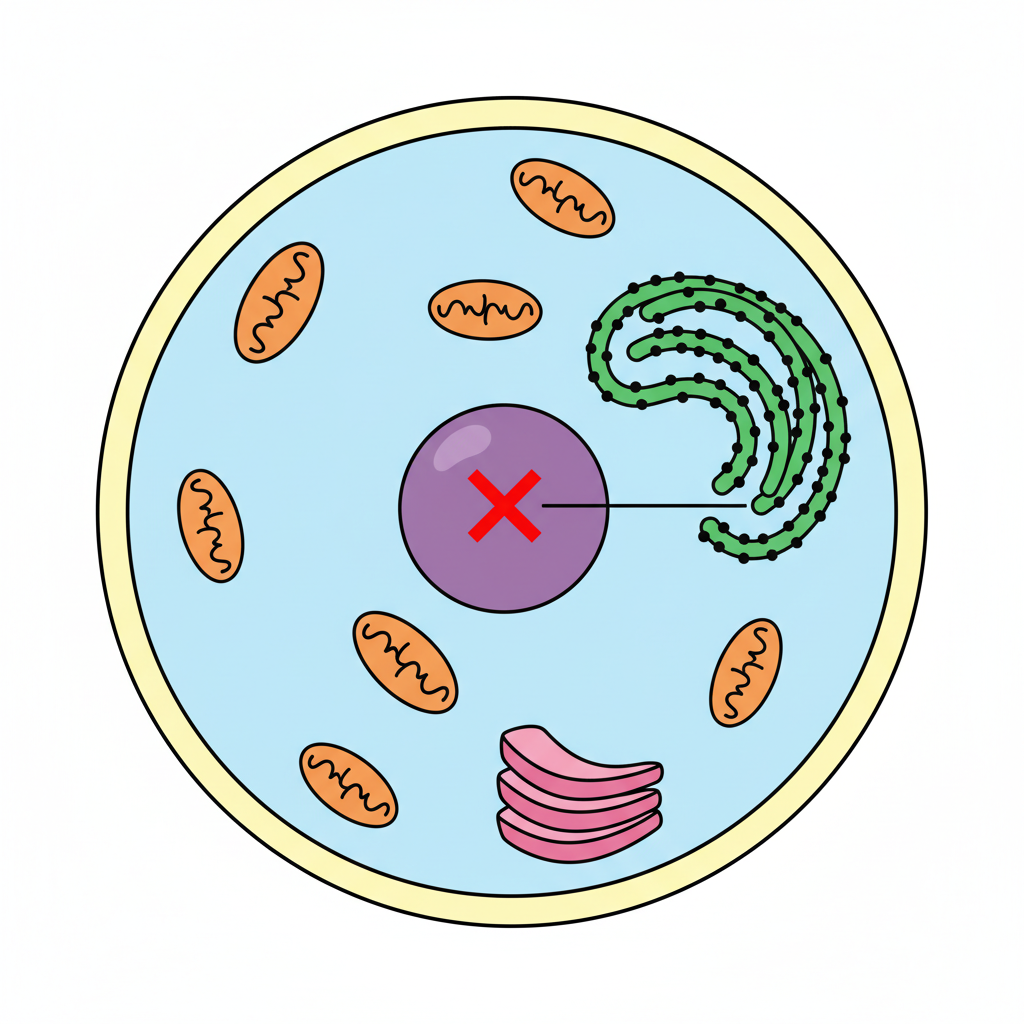
The diagram below shows a somatic cell from a female mammal prepared for somatic cell nuclear transfer (SCNT). Structure X is labelled on the diagram.
a
Identify structure X. [1]
b
Explain why structure X, rather than any other part of the cell, is transferred during SCNT. [1]

Solutions
2QuestionCloning Efficiency and LimitationsAssessment Practice
2 marks~3 minCriterion D
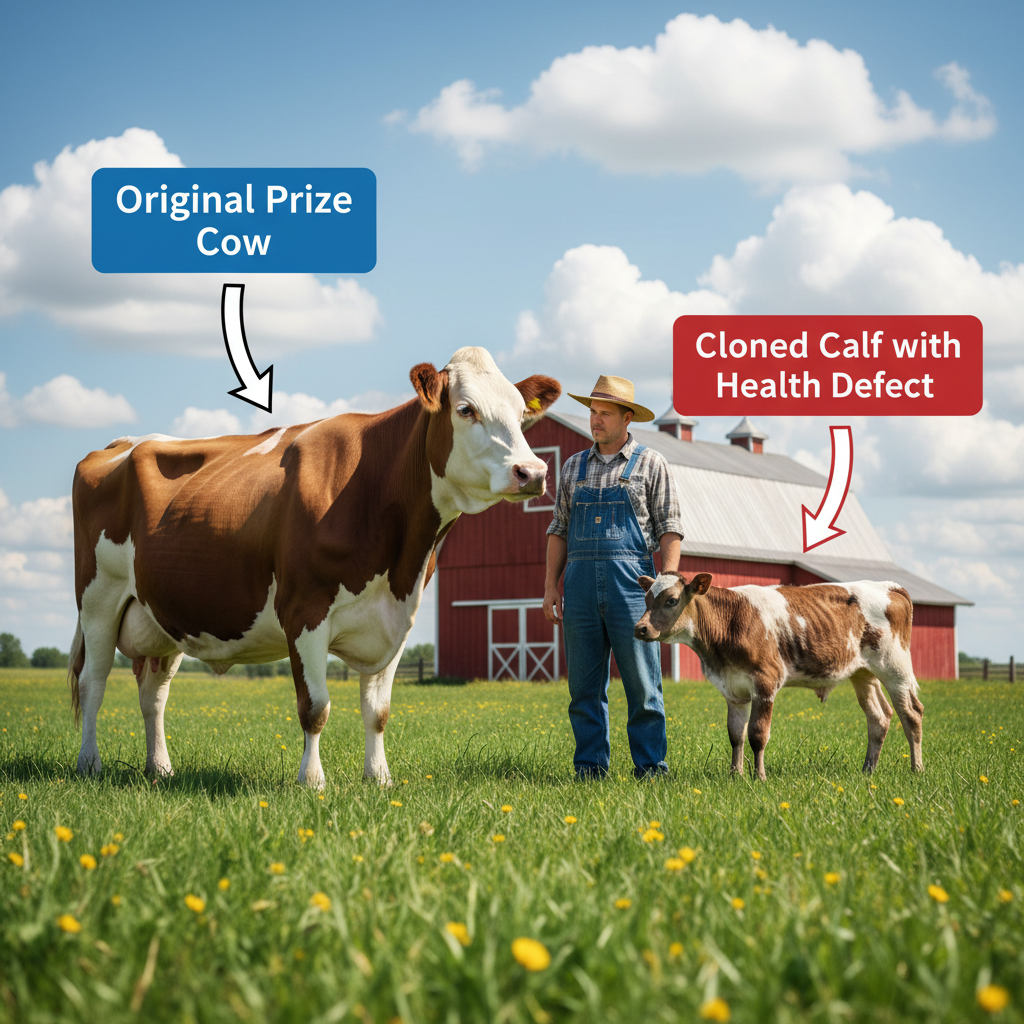
A farmer plans to clone his entire dairy herd from a single prize-winning cow to maximise milk yield. All cloned individuals would be genetically identical.
Identify one ethical concern arising from cloning the entire herd. [1]
Explain why this concern should influence the farmer's decision about whether to proceed. [1]
Identify one ethical concern arising from cloning the entire herd. [1]
Explain why this concern should influence the farmer's decision about whether to proceed. [1]
Solutions
3QuestionTherapeutic Cloning and Stem CellsConcept Practice
4 marks~6 minCriterion C
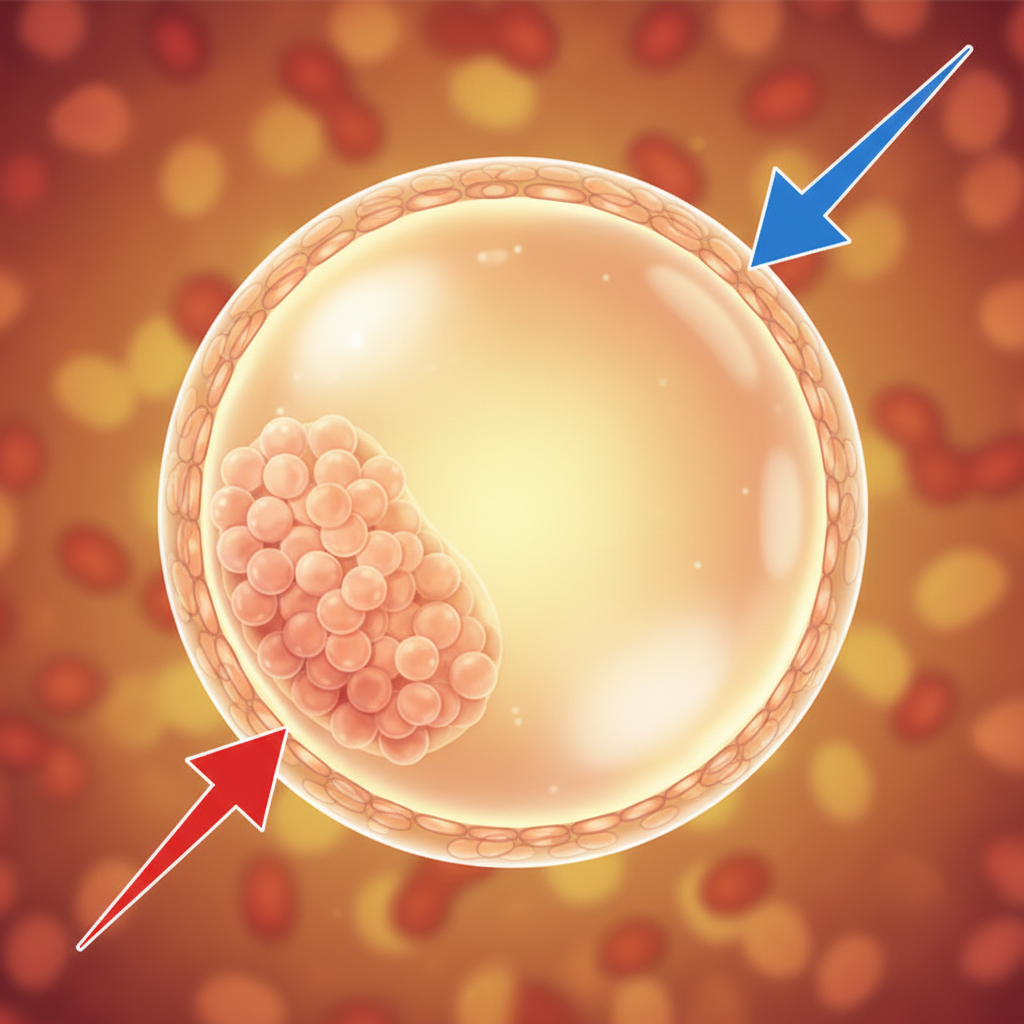
The diagram below shows a blastocyst, an early stage embryo used in therapeutic cloning.
a
Label the inner cell mass and trophoblast on the diagram.
b
Explain in your own words, using clear biological terminology, why cells from the inner cell mass are specifically used in therapeutic cloning rather than cells from the trophoblast.
Solutions
4QuestionCloning Efficiency and LimitationsAssessment Practice
4 marks~6 minCriterion A
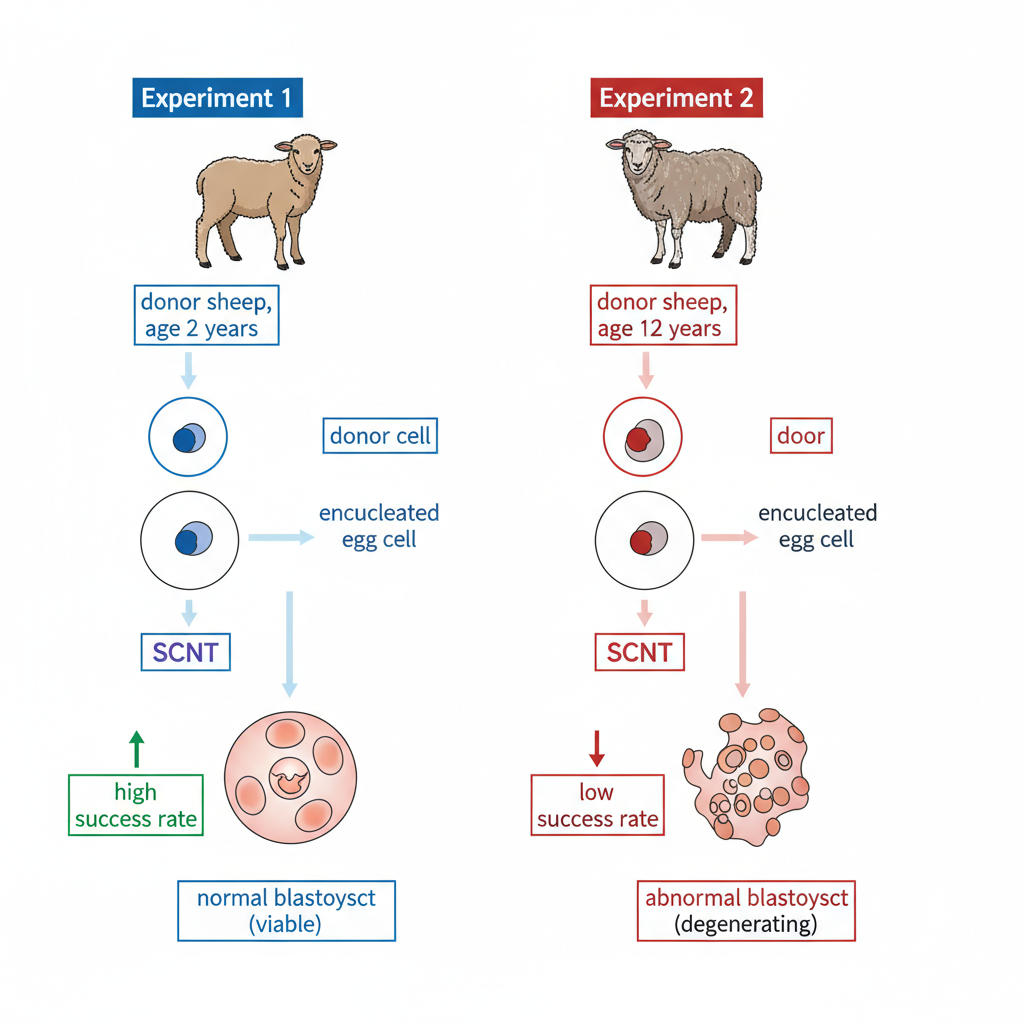
The diagram below shows two somatic cell nuclear transfer (SCNT) experiments. In Experiment 1, a donor nucleus from a 2-year-old sheep is transferred into an enucleated egg cell, producing a healthy blastocyst. In Experiment 2, a donor nucleus from a 12-year-old sheep is transferred into an enucleated egg cell, producing an abnormal blastocyst that degenerates.
a
Identify one cellular change that occurs in the nucleus of an aged donor cell that reduces cloning efficiency. [1]
b
Explain how this change impairs development of the cloned embryo. [1]
c
Explain how accumulated epigenetic modifications in an aged donor nucleus contribute to lower cloning efficiency, referring to both the reprogramming process and its effect on embryonic gene expression. [2]
Solutions
5QuestionCloning Efficiency and LimitationsAssessment Practice
6 marks~9 minCriterion D
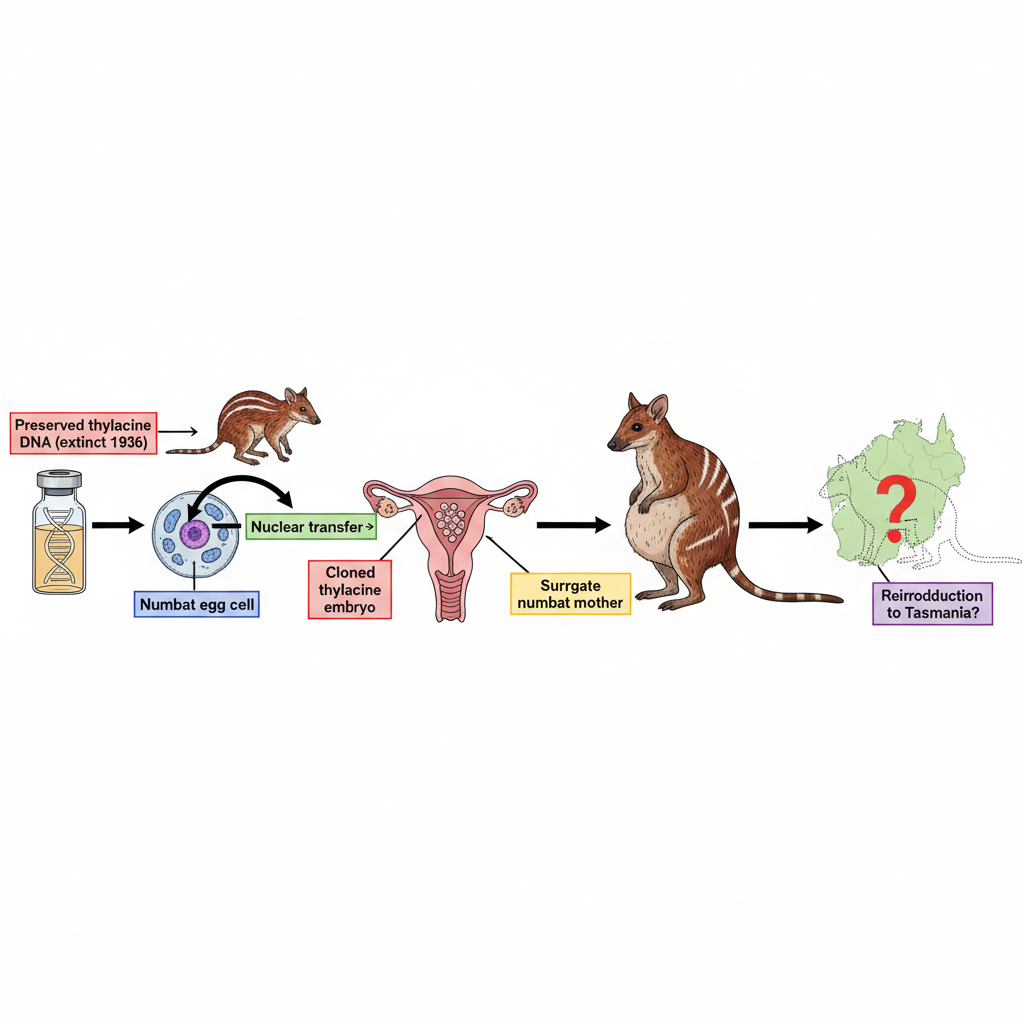
A team of scientists proposes using cloning to revive the thylacine (Tasmanian tiger), extinct since 1936. Preserved thylacine DNA would be inserted into enucleated egg cells of the numbat, a related marsupial. The resulting embryo would be carried to term by a surrogate numbat. Scientists hope eventually to reintroduce thylacines into Tasmania, where the ecosystem has changed substantially over the past 90 years.
a
Identify and explain one ethical concern raised by this cloning proposal. [2]
b
Identify one ecological limitation of this approach to species restoration and explain how it would affect the long-term viability of a reintroduced thylacine population. [2]
c
Evaluate whether a population of cloned thylacines could genuinely constitute a restored species. [2]
Solutions
That's every free question here — 5 of 51.
+46 more questions, plus Mock Papers & Worksheets, are waiting in Premium.