You're viewing free preview questions — 5 questions previewing here — subscribe to unlock 69 more, plus the Full Question Bank, Mock Papers & Worksheets.Upgrade
Ethical implications — Free MYP5 Biology Practice Questions

1QuestionEthical Issues in Genetic EngineeringConcept Practice
2 marks~3 minCriterion A
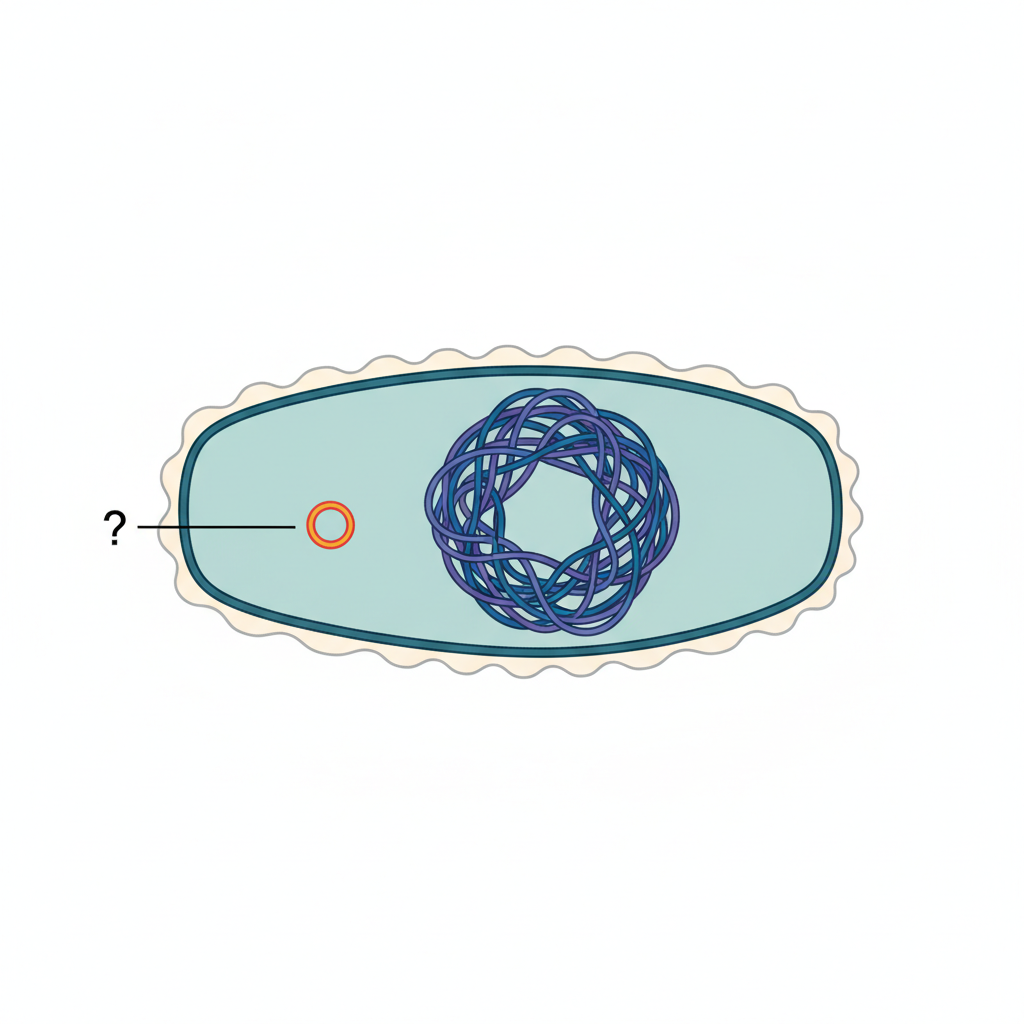
The diagram below shows a bacterial cell used in genetic engineering.
a
Identify the small circular DNA structure highlighted in the diagram. [1]
b
Explain how this structure is used to introduce a human gene into a bacterial host cell. [1]

Solutions
2QuestionEthical Issues in Genetic EngineeringAssessment Practice
3 marks~5 minCriterion C
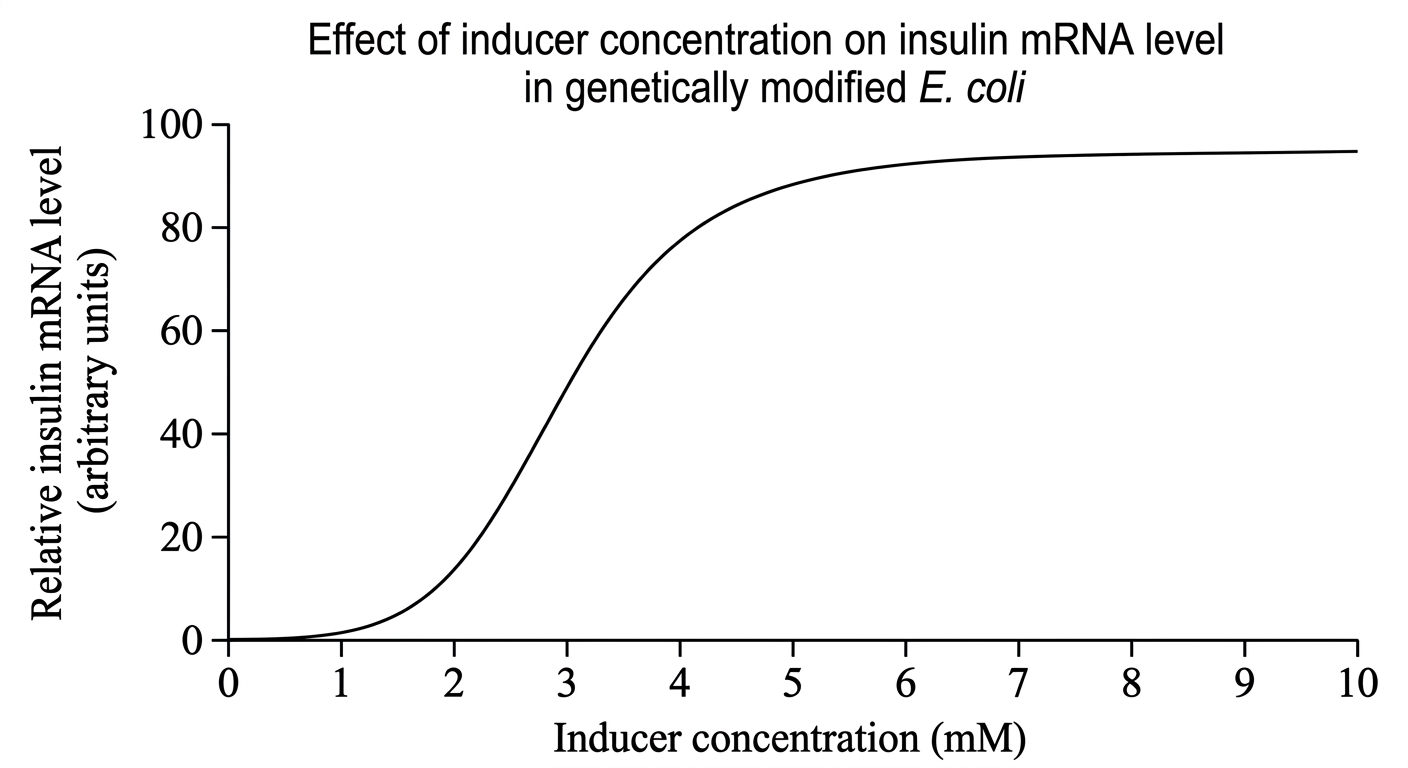
Genetically modified E. coli bacteria carry the human insulin gene under the control of an inducible promoter. When an inducer chemical is added to the bacterial culture, it activates this promoter, triggering transcription of the insulin gene. The graph below shows how the concentration of the inducer affects the level of insulin mRNA produced by the bacteria.
a
Describe the trend shown in the graph between inducer concentration and insulin mRNA level. [1]
b
Explain, at the molecular level, why increasing inducer concentration leads to greater insulin mRNA production. [1]
c
Evaluate the significance of this dose-dependent response for the controlled production of insulin as a therapeutic protein. [1]
Solutions
3QuestionGenetic Data Ownership and PrivacyConcept Practice
2 marks~3 minCriterion D
Direct-to-consumer (DTC) genetic testing companies, such as 23andMe, collect and store vast quantities of genetic data from customers. This data is increasingly used beyond individual ancestry or health reports, raising important scientific and societal questions.
a
Identify and explain one real-world application of genetic data collected by DTC companies. [1]
b
Identify and explain one ethical issue arising from the way DTC companies use or share this genetic data. [1]

Solutions
4QuestionEnvironmental Ethics of GM OrganismsAssessment Practice
4 marks~6 minCriterion D
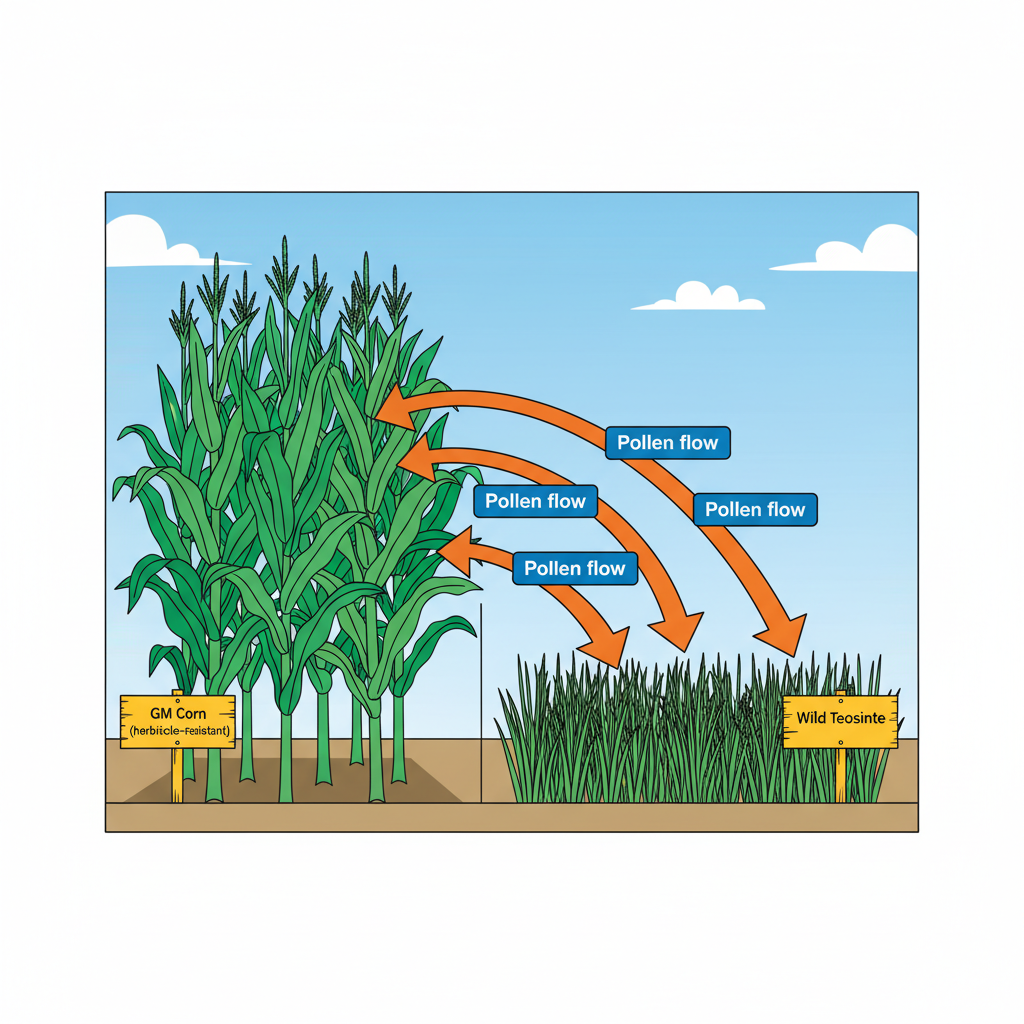
The diagram shows a field of genetically modified (GM) herbicide-resistant corn adjacent to a population of wild teosinte, a close relative of corn. Arrows indicate pollen movement from the GM corn toward the wild teosinte.
a
Explain the biological process by which the herbicide-resistance gene may be transferred from the GM corn into the wild teosinte population. [2]
b
A farmer begins applying herbicide across both the GM corn field and the surrounding area. Analyse how the presence of the herbicide-resistance gene in the teosinte population could alter the competitive dynamics between teosinte and other wild plant species in the ecosystem. [2]
Solutions
5QuestionEnvironmental Ethics of GM OrganismsAssessment Practice
6 marks~9 minCriterion A
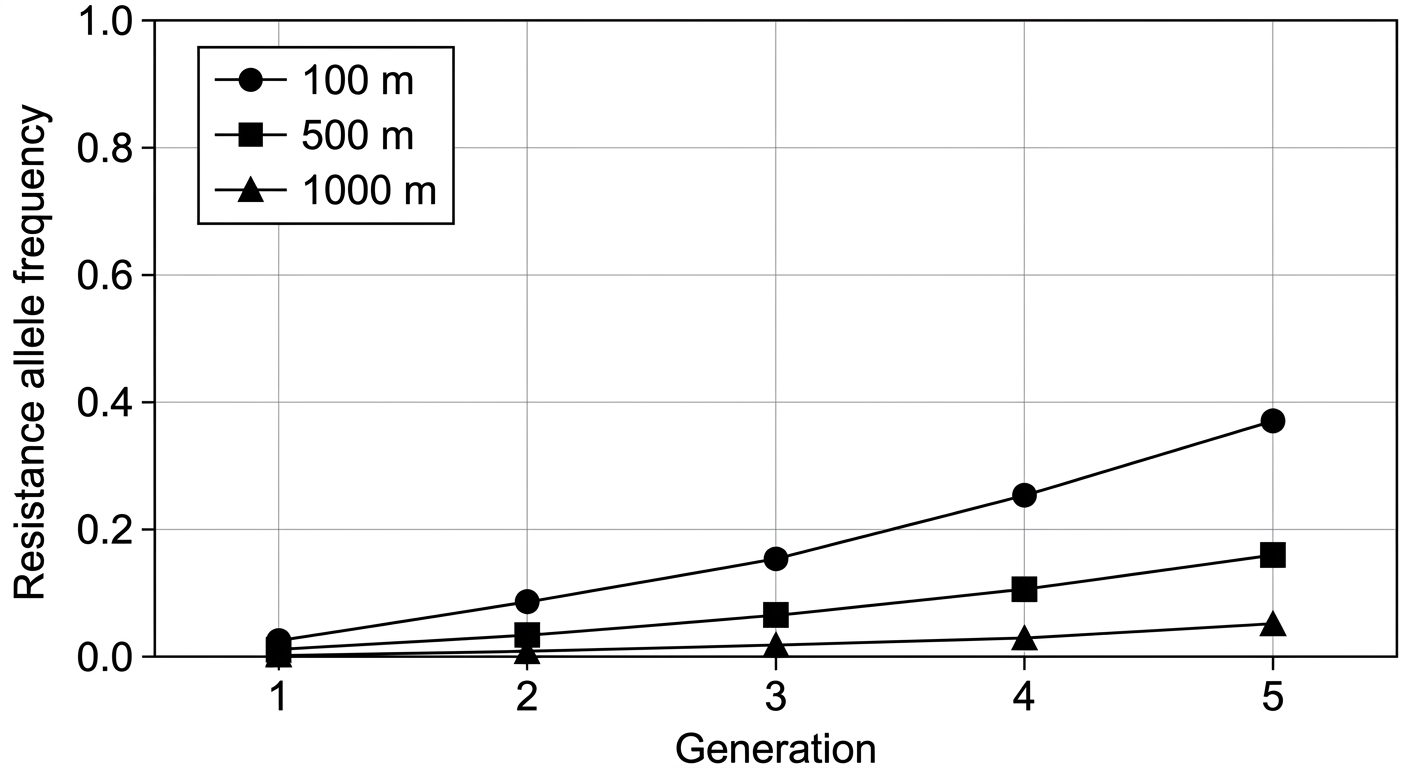
A population of wild canola (Brassica rapa) grows near a field of genetically modified (GM) canola that produces Bt toxin. The GM canola carries a dominant resistance allele (R). Scientists tracked the frequency of allele R in the wild population over five generations at three isolation distances.
| Distance 100 m — Generation 1 | 0.02 | Gen 2: 0.08 | Gen 3: 0.15 | Gen 4: 0.25 | Gen 5: 0.38 |
|---|---|---|---|---|---|
| Distance 500 m — Generation 1 | 0.01 | Gen 2: 0.03 | Gen 3: 0.06 | Gen 4: 0.10 | Gen 5: 0.16 |
| Distance 1000 m — Generation 1 | 0.00 | Gen 2: 0.01 | Gen 3: 0.02 | Gen 4: 0.03 | Gen 5: 0.05 |
a
Deduce the trend in resistance allele frequency at 500 m over generations 1–5. [2]
b
Using the 500 m data, calculate the average increase in allele frequency per generation between generations 1 and 5, and use this value to estimate the allele frequency at generation 8. [2]
c
Evaluate whether the resistance allele frequency at 500 m will continue to rise indefinitely, using the concepts of gene flow, selection pressure, and allele frequency limits. [2]
Solutions
That's every free question here — 5 of 74.
+69 more questions, plus Mock Papers & Worksheets, are waiting in Premium.