You're viewing free preview questions — 5 questions previewing here — subscribe to unlock 67 more, plus the Full Question Bank, Mock Papers & Worksheets.Upgrade
Genetic modification — Free MYP5 Biology Practice Questions

1QuestionCRISPR-Cas9 Gene Editing TechnologyConcept Practice
2 marks~3 minCriterion A
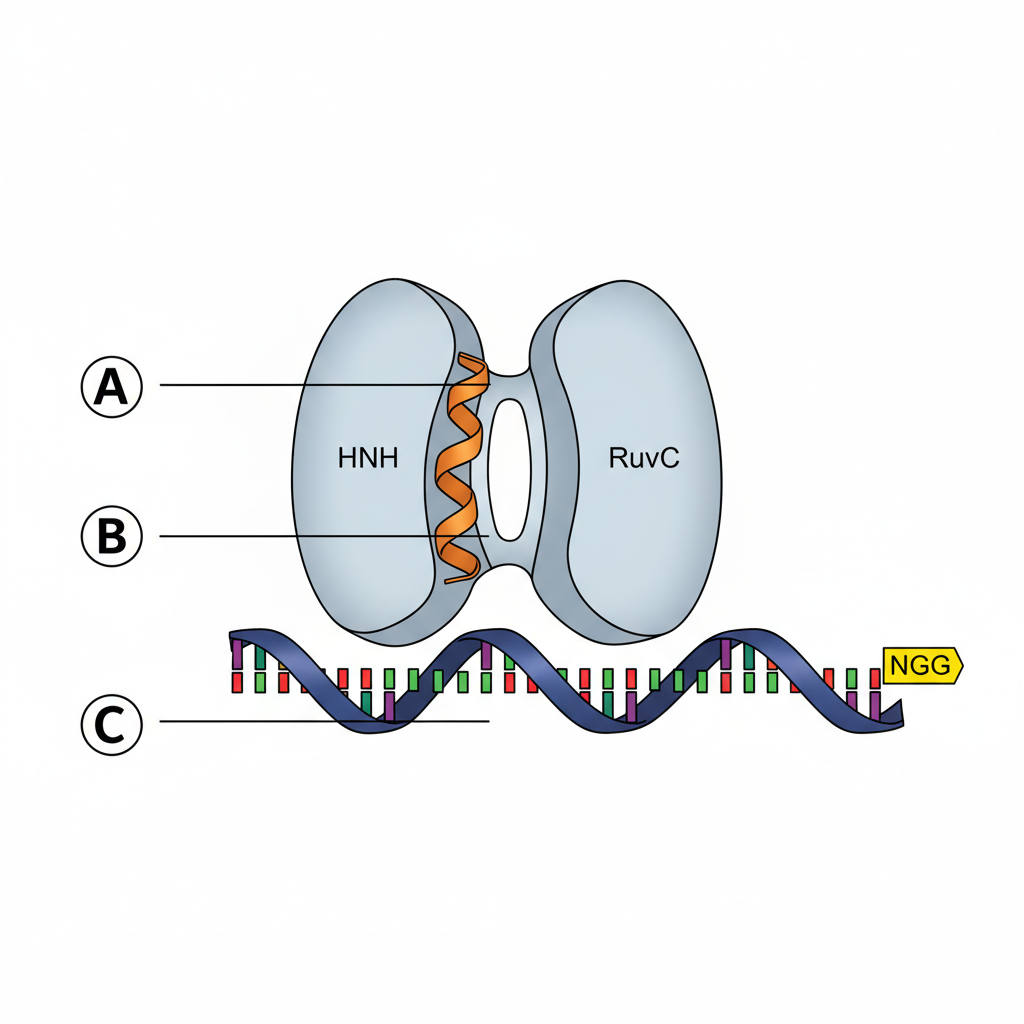
The diagram shows the CRISPR-Cas9 system. Component A is the Cas9 protein, Component B is the guide RNA (gRNA), and Component C is the target DNA containing the PAM sequence.
a
State the role of the guide RNA (Component B) in the CRISPR-Cas9 system. [1]
b
Explain how the PAM sequence (part of Component C) and the Cas9 protein (Component A) work together to edit the target DNA. [1]

Solutions
2QuestionCRISPR-Cas9 Gene Editing TechnologyAssessment Practice
4 marks~6 minCriterion D
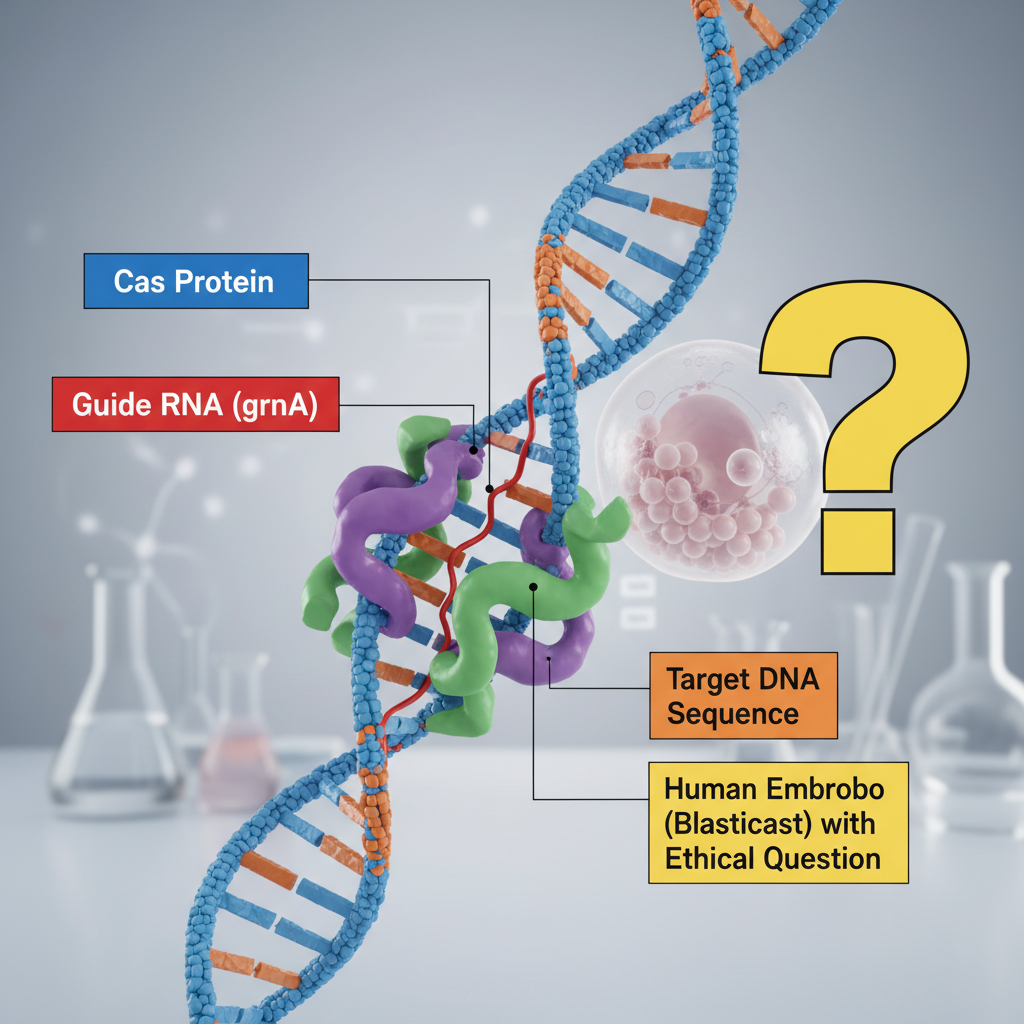
A couple with a family history of Huntington's disease is considering CRISPR-Cas9 editing of the disease-causing mutation in their embryos before implantation. Huntington's disease is caused by a dominant allele producing a toxic protein that destroys neurons, leading to progressive and fatal neurological decline.
a
Explain how CRISPR-Cas9 technology could be used to edit the Huntington's disease mutation in an embryo. [1]
b
Discuss the ethical implications of using CRISPR-Cas9 for human germline editing in this context, including both potential benefits and risks. [2]
c
Evaluate the broader societal and ecological impacts of making heritable genetic modifications in human embryos. [1]
Solutions
3QuestionCRISPR-Cas9 Gene Editing TechnologyAssessment Practice
5 marks~8 minCriterion C
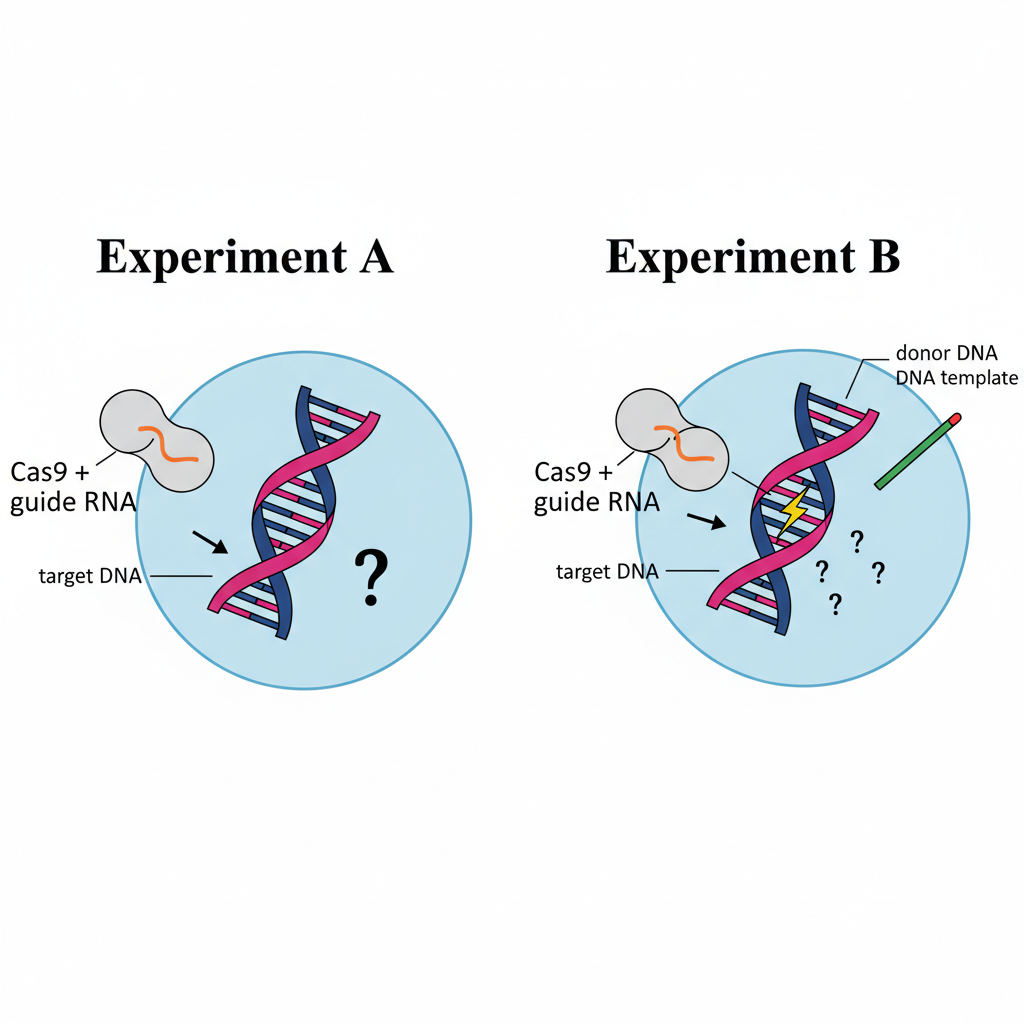
A researcher uses CRISPR-Cas9 to target the LMNA gene in human cells across two experiments.
Experiment A: Cas9 + guide RNA only (no donor template). After 48 hours: 85% of cells show a frameshift mutation in LMNA; 0% show a precise edit.
Experiment B: Cas9 + guide RNA + single-stranded donor DNA template carrying a specific base change. After 48 hours: 50% frameshift mutations; 30% precise edits; 20% unmodified.
Experiment A: Cas9 + guide RNA only (no donor template). After 48 hours: 85% of cells show a frameshift mutation in LMNA; 0% show a precise edit.
Experiment B: Cas9 + guide RNA + single-stranded donor DNA template carrying a specific base change. After 48 hours: 50% frameshift mutations; 30% precise edits; 20% unmodified.
a
State which DNA repair pathway produces frameshift mutations and explain why no precise edits occur in Experiment A. [2]
b
Using data from both experiments, explain how the presence of the donor template influences which repair pathway operates. [2]
c
Evaluate the hypothesis: "In these cells, NHEJ is always preferred over HDR when both repair templates are available." [1]
Solutions
4QuestionGenetically Modified Crops and Agricultural ApplicationsAssessment Practice
6 marks~9 minCriterion A
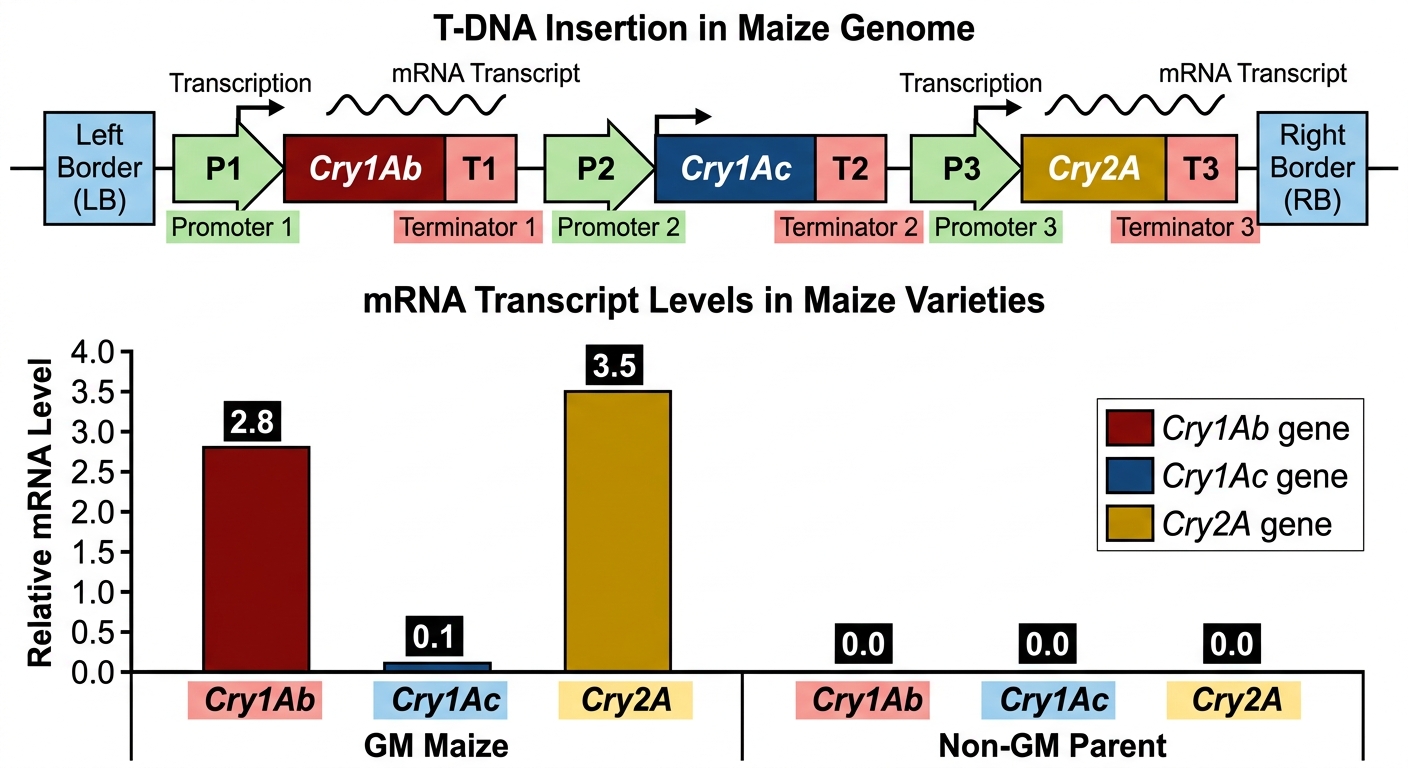
A research team inserted a T-DNA cassette containing three pest-resistance genes — , , and — into the maize genome. Each gene is flanked by a constitutive promoter and a terminator sequence. The cassette is arranged: LB — promoter1--terminator1 — promoter2--terminator2 — promoter3--terminator3 — RB.
RT-PCR measured mRNA transcript levels in GM maize and its non-GM parent:
Gene: / /
GM maize (relative mRNA): 2.8 / 0.1 / 3.5
Non-GM parent (relative mRNA): 0.0 / 0.0 / 0.0
RT-PCR measured mRNA transcript levels in GM maize and its non-GM parent:
Gene: / /
GM maize (relative mRNA): 2.8 / 0.1 / 3.5
Non-GM parent (relative mRNA): 0.0 / 0.0 / 0.0
a
Deduce which transgenes are actively expressed in the GM maize, using the data to support your answer. [2]
b
Explain the roles of the promoter and terminator sequences in the expression of the inserted genes. [2]
c
Analyse why shows very low mRNA levels despite being present in the T-DNA cassette and regulated by a constitutive promoter. [2]
Solutions
5QuestionCRISPR-Cas9 Gene Editing TechnologyAssessment Practice
6 marks~9 minCriterion D
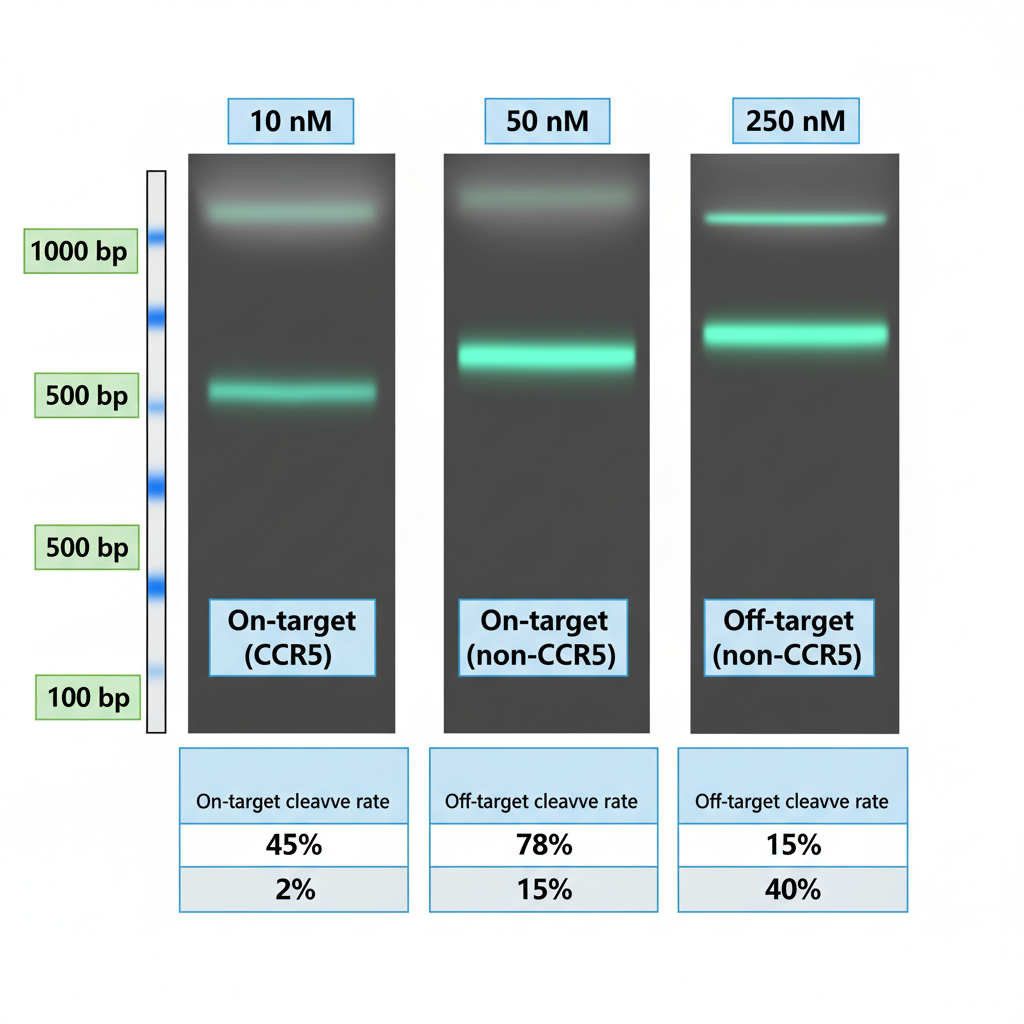
A research team is testing a guide RNA designed to target the gene using CRISPR-Cas9 technology as a potential HIV therapy. The experiment measured cleavage rates at three guide RNA concentrations.
| Guide RNA concentration (nM) | 10 | 50 | 250 |
|---|---|---|---|
| On-target cleavage rate (%) | 45 | 78 | 85 |
| Off-target cleavage rate (%) | 2 | 15 | 40 |
a
State the roles of the Cas9 nuclease and the guide RNA in the CRISPR-Cas9 system. [2]
b
Analyse the relationship between guide RNA concentration and both cleavage rates shown in the data. [2]
c
Justify whether this guide RNA is suitable for therapeutic use, using evidence from the data and cause-and-effect reasoning. [2]
Solutions
That's every free question here — 5 of 72.
+67 more questions, plus Mock Papers & Worksheets, are waiting in Premium.