You're viewing free preview questions — 5 questions previewing here — subscribe to unlock 56 more, plus the Full Question Bank, Mock Papers & Worksheets.Upgrade
Genome mapping and application — Free MYP5 Biology Practice Questions

1QuestionData Privacy and Risks in Genomic ResearchConcept Practice
2 marks~3 minCriterion A
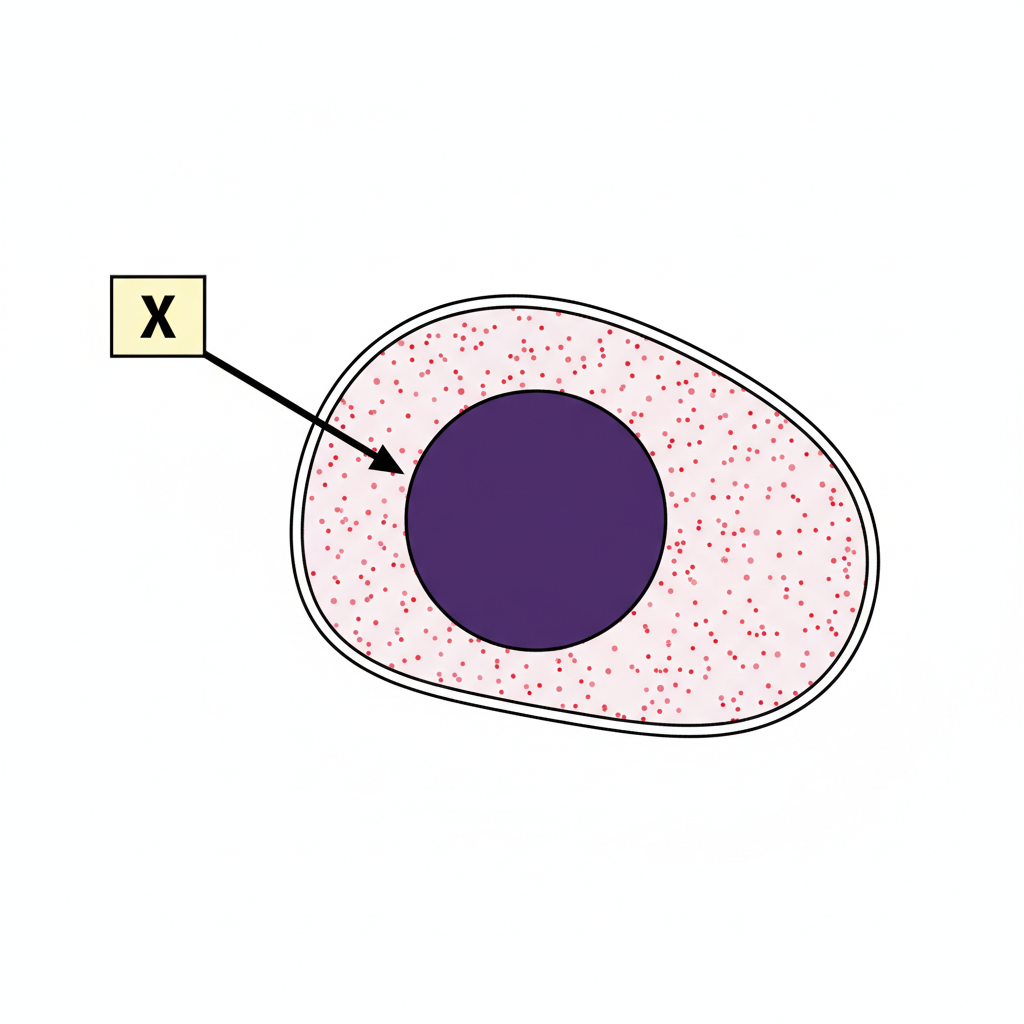
During a genomics study, a buccal (cheek) swab is taken from a volunteer. The extracted cells are examined under a light microscope. A diagram of one cheek cell is provided, with a large, membrane-bound, centrally located organelle labelled X.
a
Identify the organelle labelled X. [1]
b
Explain why the DNA found in organelle X is described as "genomic" DNA, rather than the DNA found elsewhere in the cell. [1]

Solutions
2QuestionData Privacy and Risks in Genomic ResearchAssessment Practice
2 marks~3 minCriterion D
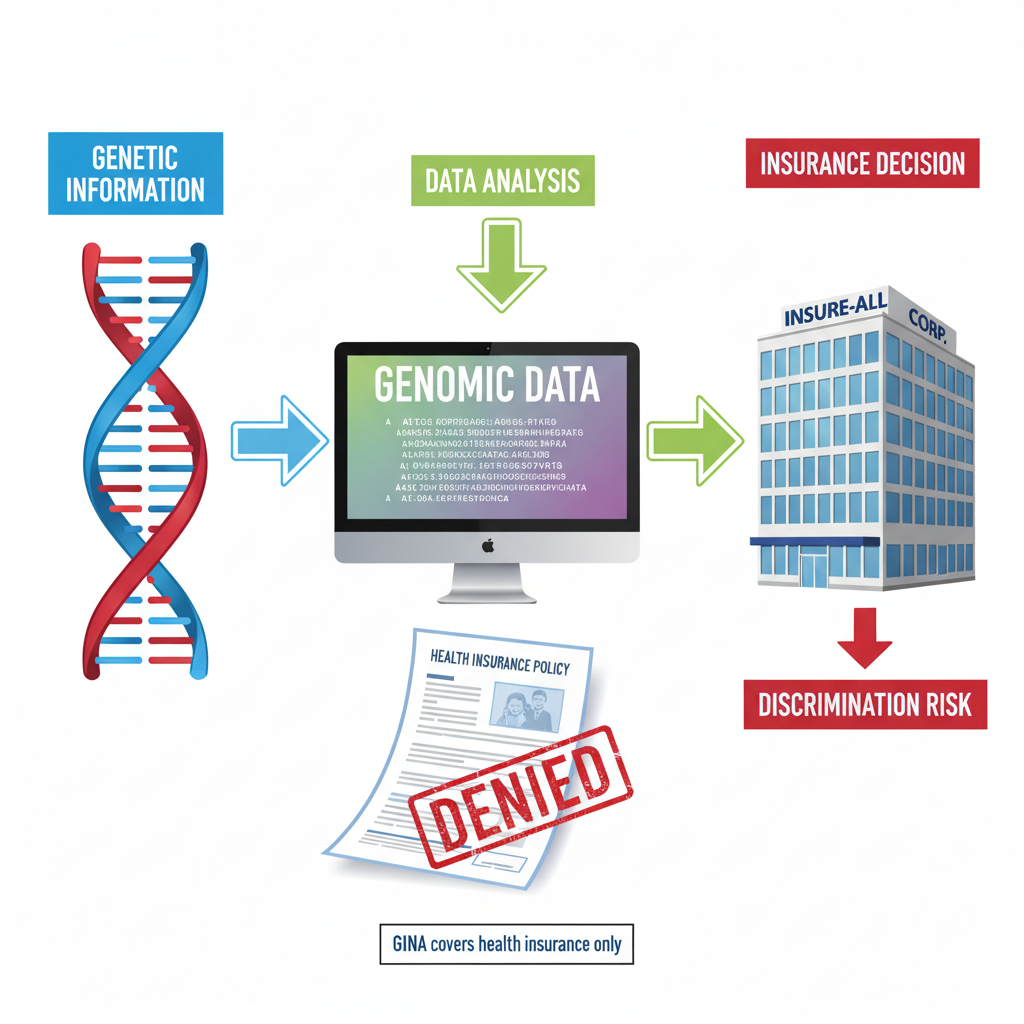
Direct-to-consumer genomic testing companies, such as 23andMe, collect and store individuals' genetic data, including variants associated with disease risk. This data may be shared with third parties, including insurers, without the individual's full awareness.
a
Identify one ethical issue related to data privacy in genomic research and support your answer with a real-world example. [1]
b
Discuss a specific limitation of current legislation in addressing this ethical issue. [1]
Solutions
3QuestionGenetic Disease Identification through Genome MappingAssessment Practice
3 marks~5 minCriterion A
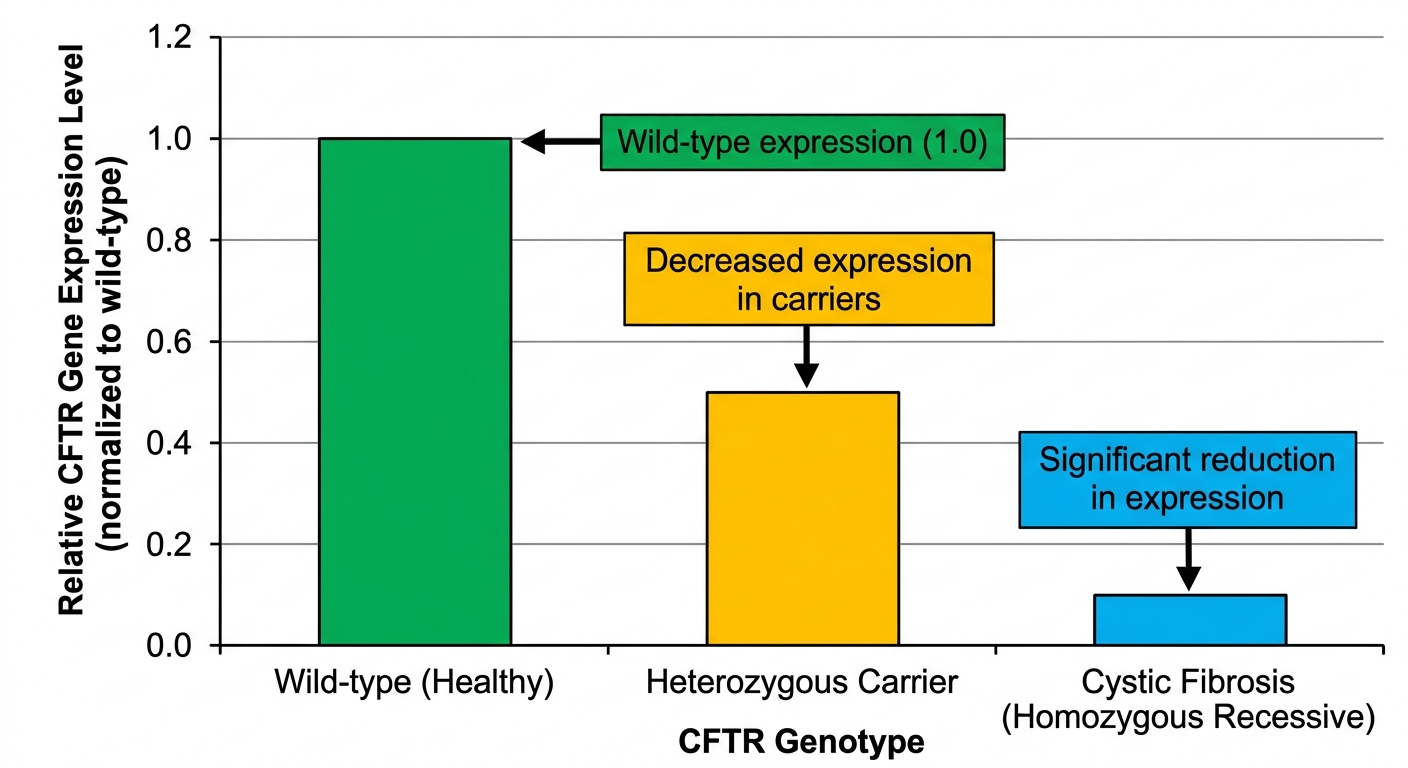
A bar graph shows relative CFTR gene expression in lung tissue for three genotypes. The x-axis shows genotype; the y-axis shows relative expression, normalised to 1.0 for wild-type.
Wild-type: 1.0
Heterozygous carrier: ≈ 0.5
Cystic fibrosis (homozygous recessive): ≈ 0.1
Wild-type: 1.0
Heterozygous carrier: ≈ 0.5
Cystic fibrosis (homozygous recessive): ≈ 0.1
a
Describe the trend in CFTR expression across the three genotypes shown in the graph. [1]
b
Explain how the number of mutated CFTR alleles accounts for the expression level observed in each genotype. [1]
c
Explain how the severely reduced CFTR expression in homozygous recessive individuals leads to the pulmonary symptoms of cystic fibrosis. [1]
Solutions
4QuestionHuman Genome Project OverviewAssessment Practice
5 marks~8 minCriterion C
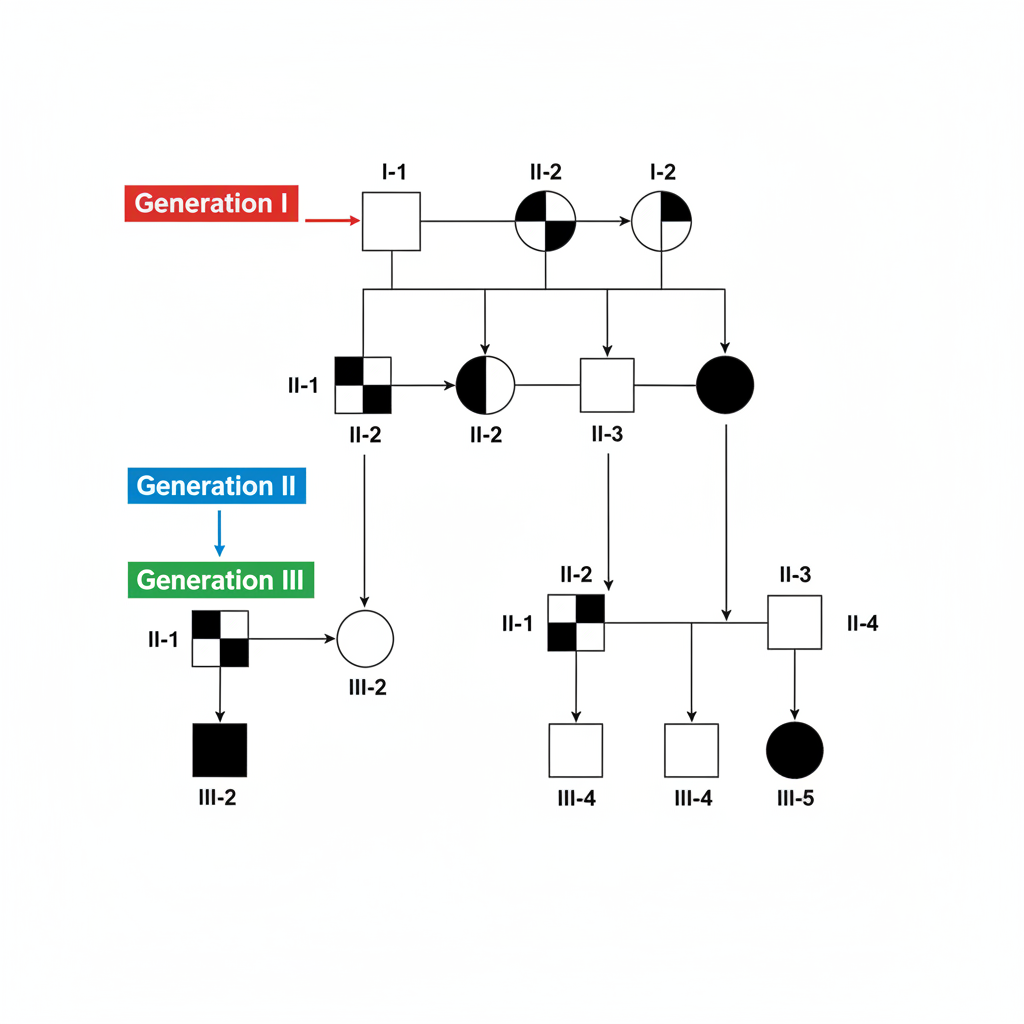
A family pedigree shows the following individuals across three generations. Filled symbols represent affected individuals; half-filled symbols represent carriers; empty symbols represent unaffected non-carriers.
Generation I: carrier father (I-1) × carrier mother (I-2)
Generation II: carrier son (II-1), carrier daughter (II-2), unaffected son (II-3), affected daughter (II-4)
Generation III: II-1 × unaffected mother (III-1) → affected son (III-2); II-2 × unaffected father (III-3) → unaffected son (III-4), affected daughter (III-5)
Generation I: carrier father (I-1) × carrier mother (I-2)
Generation II: carrier son (II-1), carrier daughter (II-2), unaffected son (II-3), affected daughter (II-4)
Generation III: II-1 × unaffected mother (III-1) → affected son (III-2); II-2 × unaffected father (III-3) → unaffected son (III-4), affected daughter (III-5)
a
Deduce whether the condition is dominant or recessive, using one piece of evidence from Generation I and II. [1]
b
Justify why X-linked recessive inheritance can be ruled out, using evidence from both Generation II and Generation III. [2]
c
Analyse how the pedigree as a whole supports autosomal recessive inheritance as the most consistent explanation for the pattern observed. [2]
Solutions
5QuestionData Privacy and Risks in Genomic ResearchAssessment Practice
5 marks~8 minCriterion D
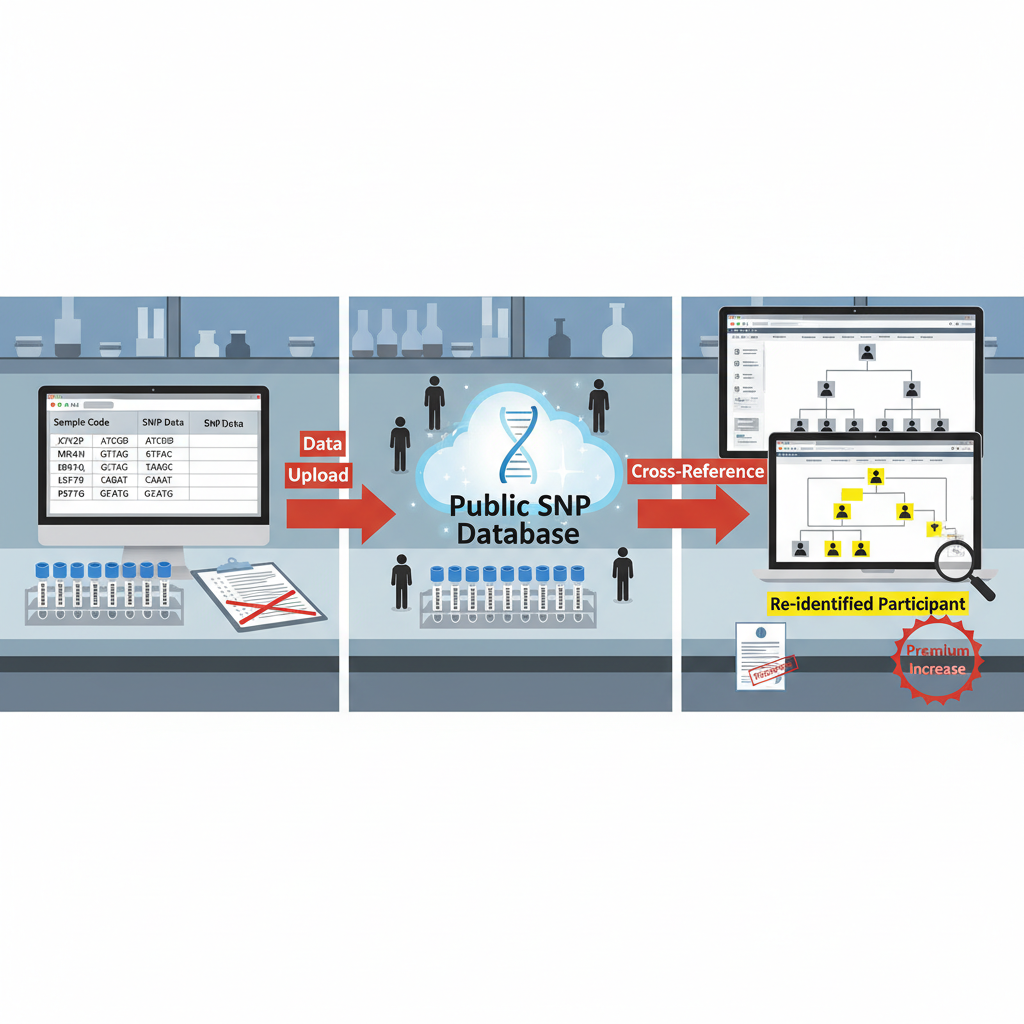
A genomic research study collected DNA samples from 500 volunteers. All personal identifiers were removed and each sample was assigned a random code. The anonymised single nucleotide polymorphism (SNP) data were uploaded to a public database. A journalist later re-identified several participants by cross-referencing the SNP data with a genealogy website containing named family trees and shared genetic markers. One re-identified participant subsequently faced increased health insurance premiums after the insurer obtained this information.
a
Define single nucleotide polymorphisms (SNPs) and explain how a combination of SNPs can uniquely identify an individual. [1]
b
Explain how linkage disequilibrium and database cross-referencing together made re-identification of the anonymised participants possible. [2]
c
Evaluate the biological and ethical consequences of this data breach for both the affected participants and the future of genomic research. [2]
Solutions
That's every free question here — 5 of 61.
+56 more questions, plus Mock Papers & Worksheets, are waiting in Premium.