Cell Structure and Microscopy — Free MYP5 Biology Practice Questions

1QuestionUsing Light Microscopes and Staining TechniquesConcept Practice
2 marks~3 minCriterion A
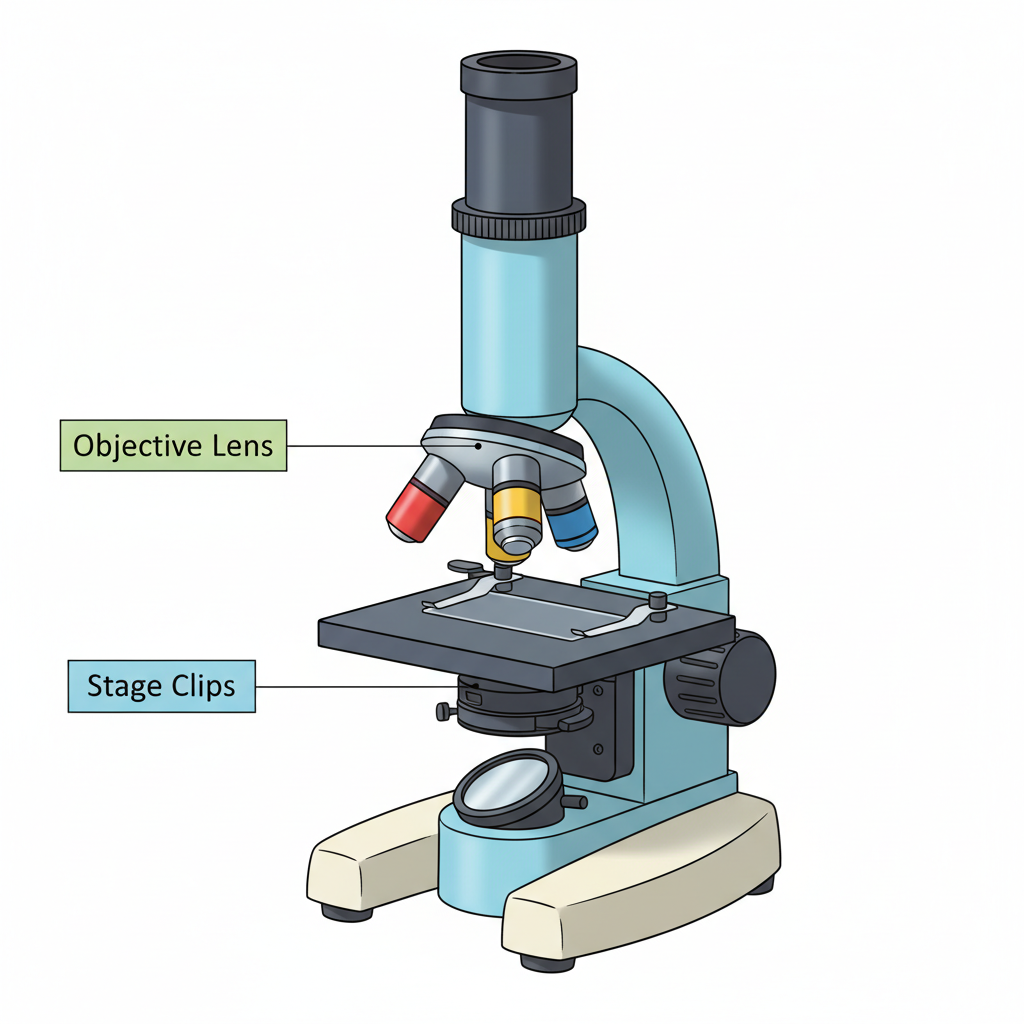
A student uses a light microscope with a eyepiece lens and a low-power objective lens to observe a prepared slide of onion epidermal cells.
a
State the total magnification produced when using these two lenses together. [1]
b
The student notices the image blurs whenever they adjust the slide. Explain how stage clips prevent this problem, linking their function to image quality. [1]

Solutions
2QuestionCell Theory and the Basis of LifeAssessment Practice
2 marks~3 minCriterion D
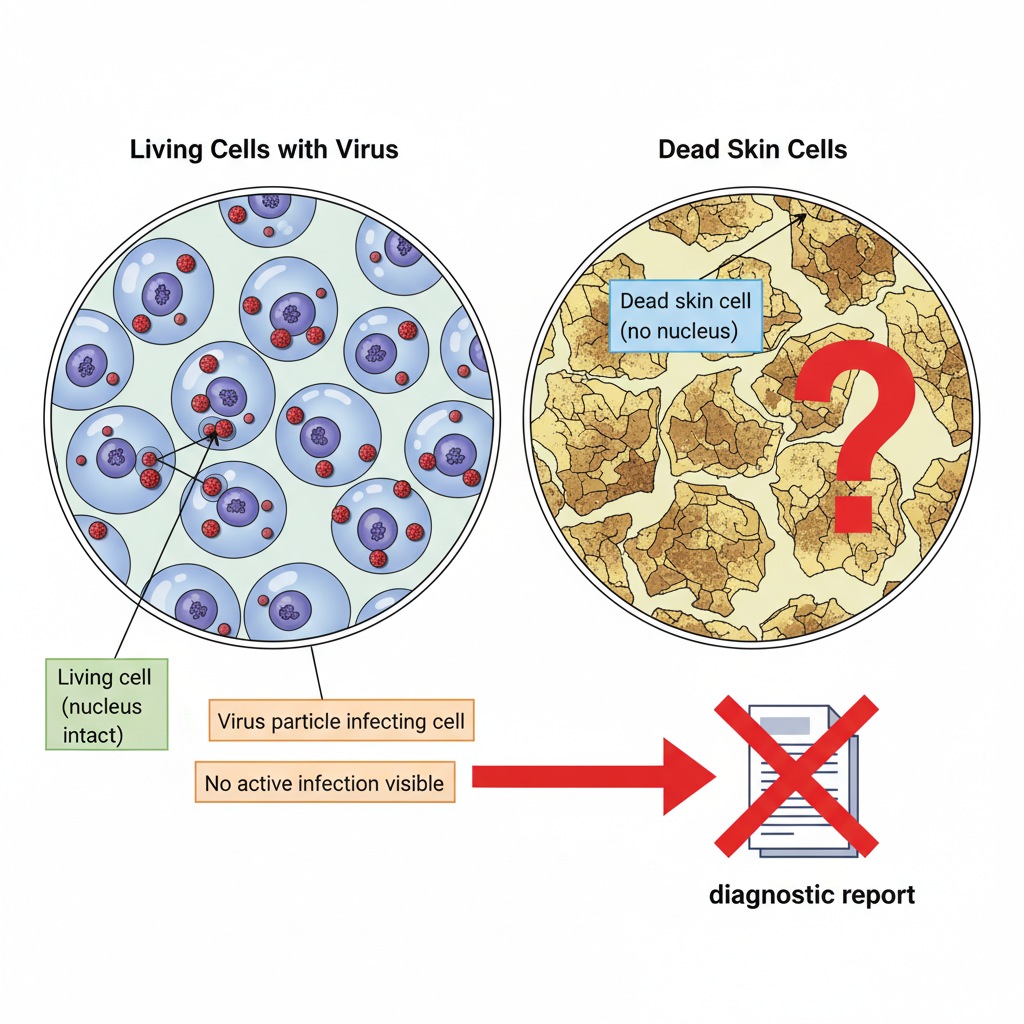
A clinician suspects a patient has an active viral infection affecting epithelial tissue. A colleague suggests using a swab of dead, shed skin cells for diagnostic testing rather than a biopsy of living tissue.
Using cell theory, explain why dead skin cells are unsuitable for detecting an active viral infection. [1]
Evaluate one consequence for the patient if diagnosis relies solely on dead tissue samples. [1]
Using cell theory, explain why dead skin cells are unsuitable for detecting an active viral infection. [1]
Evaluate one consequence for the patient if diagnosis relies solely on dead tissue samples. [1]
Solutions
3QuestionStructure and Function of Cell OrganellesConcept Practice
2 marks~3 minCriterion A
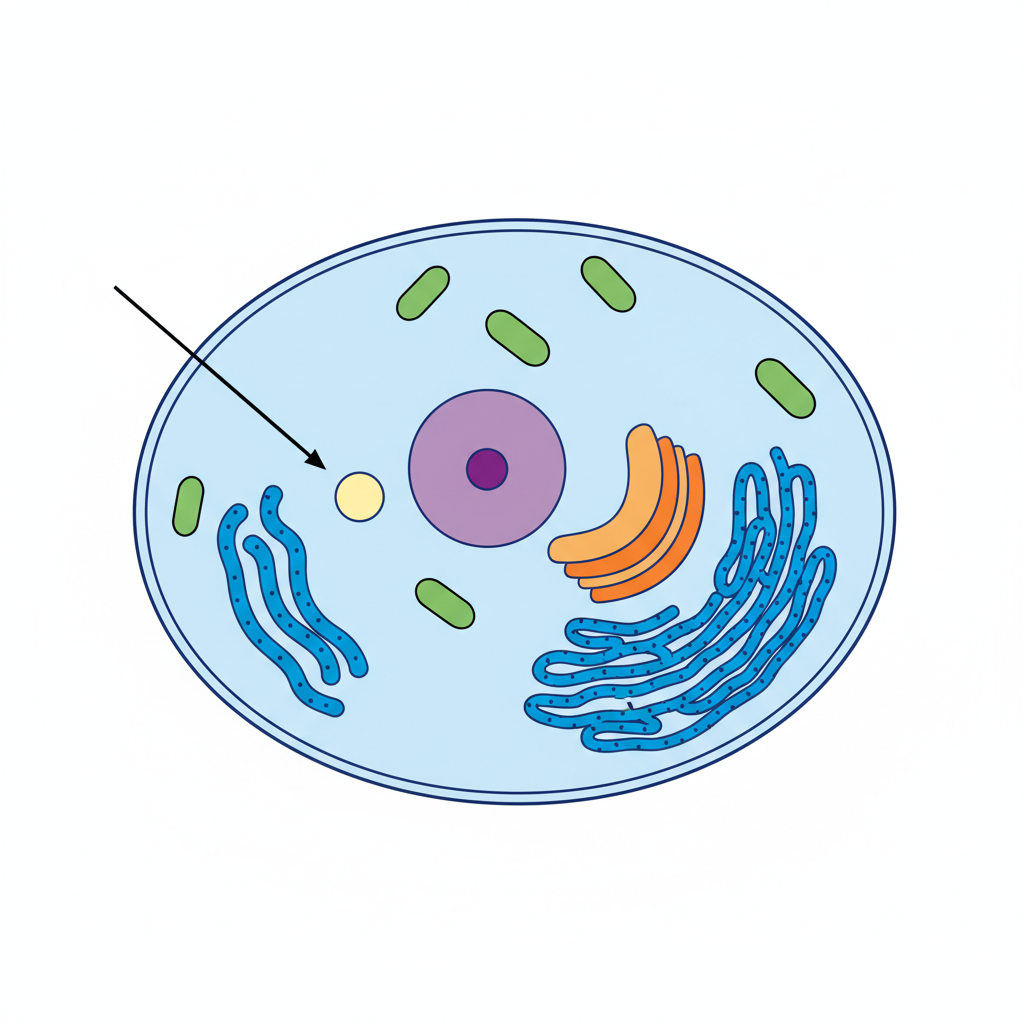
The electron micrograph below shows an animal cell. Arrow X points to an organelle with a highly folded inner membrane.
a
Identify the organelle indicated by arrow X. [1]
b
Explain how the folded inner membrane of this organelle is related to its function in the cell. [1]
Solutions
4QuestionSpecialized Cells and Their AdaptationsAssessment Practice
2 marks~3 minCriterion A
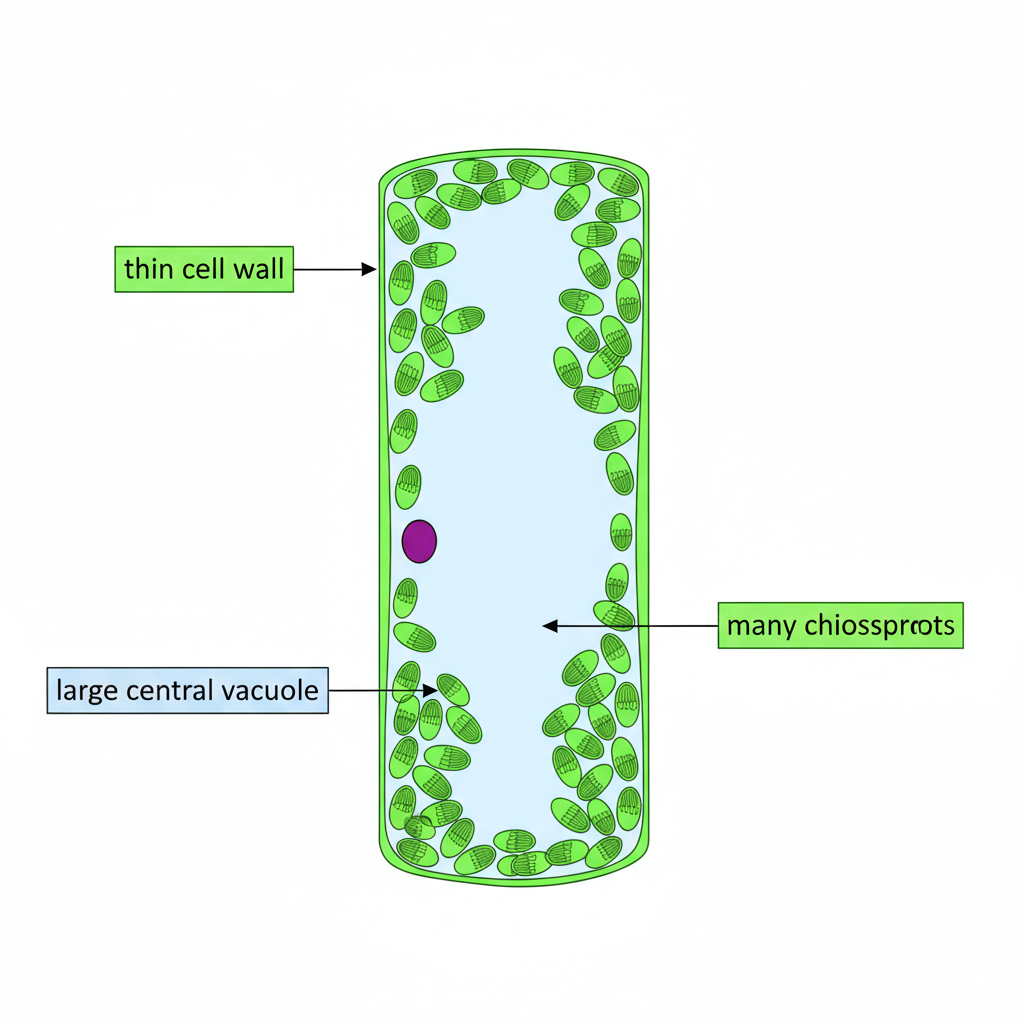
A diagram of a palisade mesophyll cell shows three labeled features: (i) numerous chloroplasts arranged near the cell membrane, (ii) a large central vacuole, and (iii) a thin cell wall.
a
Identify one structural adaptation shown in the diagram and state its function in photosynthesis. [1]
b
Explain how the large central vacuole and the thin cell wall work together to maximise the efficiency of photosynthesis in this cell. [1]
Solutions
5QuestionStructure and Function of Animal and Plant CellsConcept Practice
2 marks~3 minCriterion A
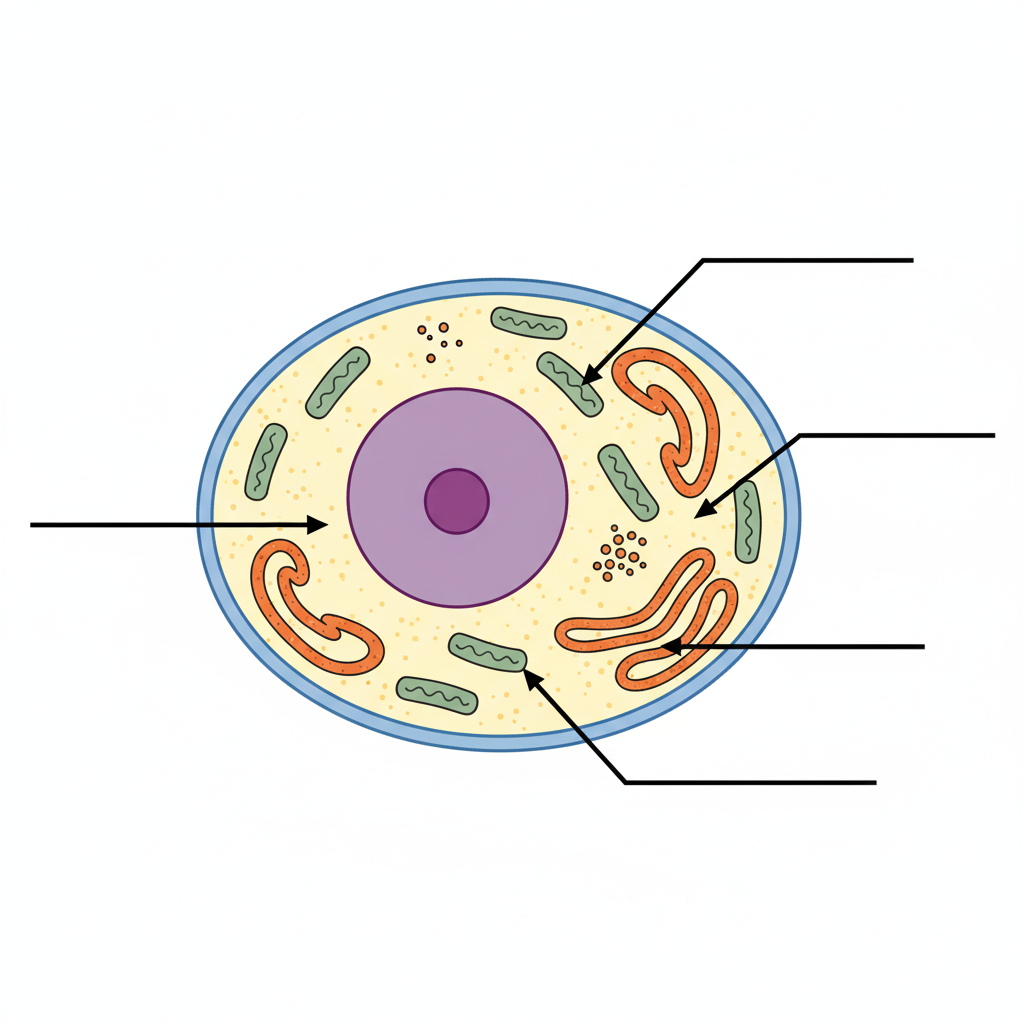
The diagram below shows an animal cell with three labelled structures: the cell membrane, nucleus, and cytoplasm.
a
Identify the structure responsible for regulating the movement of substances into and out of the cell. [1]
b
Explain how this structure controls which substances enter and exit the cell. [1]
Solutions
6QuestionStructure and Function of Animal and Plant CellsAssessment Practice
2 marks~3 minCriterion D
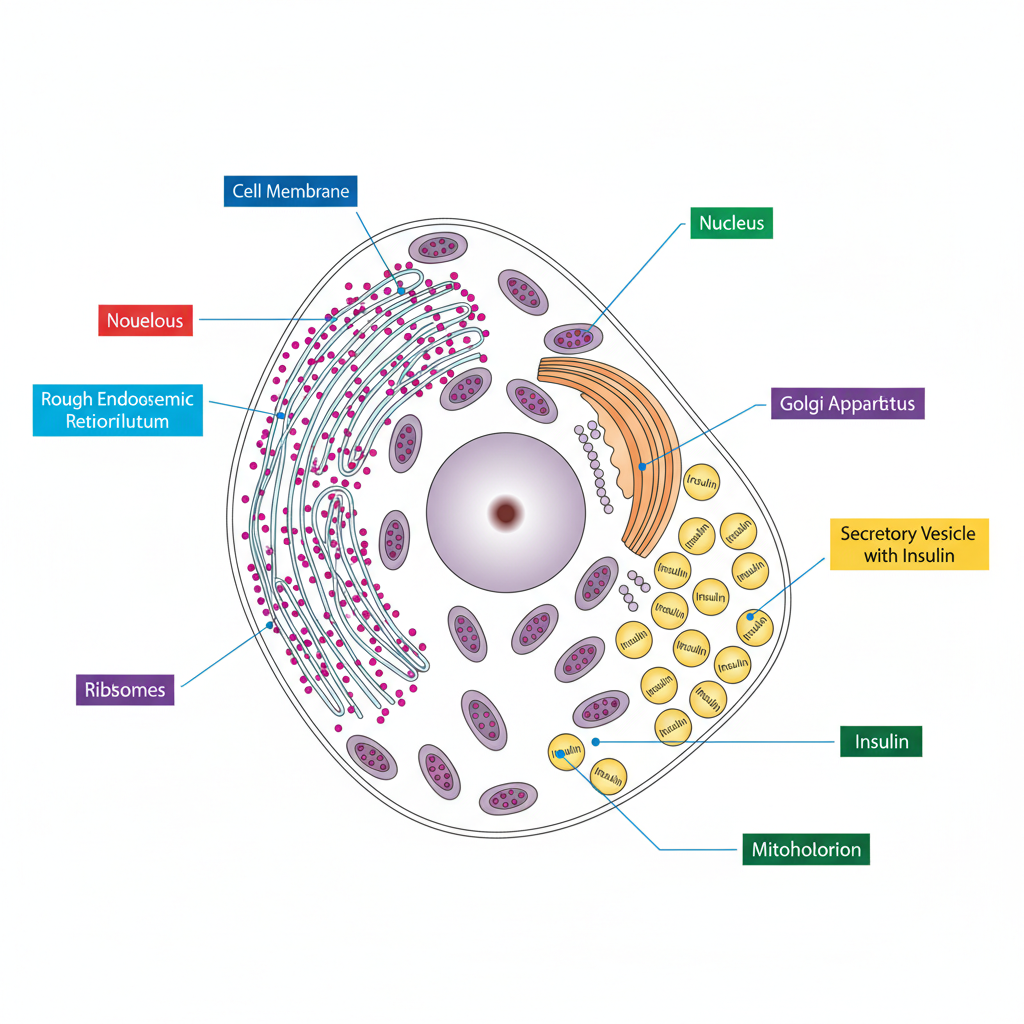
Researchers developing an artificial pancreas implant study the structure and function of insulin-producing beta cells in the pancreas. Beta cells contain secretory vesicles that store insulin and abundant mitochondria that supply energy for insulin release. They detect rising blood glucose and respond by secreting insulin through exocytosis.
Discuss how knowledge of beta cell structure and function assists researchers in designing an artificial pancreas implant, and identify one limitation of using donated human beta cells in such a device. [2]
Discuss how knowledge of beta cell structure and function assists researchers in designing an artificial pancreas implant, and identify one limitation of using donated human beta cells in such a device. [2]
Solutions
7QuestionTransport Mechanisms (Diffusion, Osmosis, Active Transport)Concept Practice
2 marks~3 minCriterion A
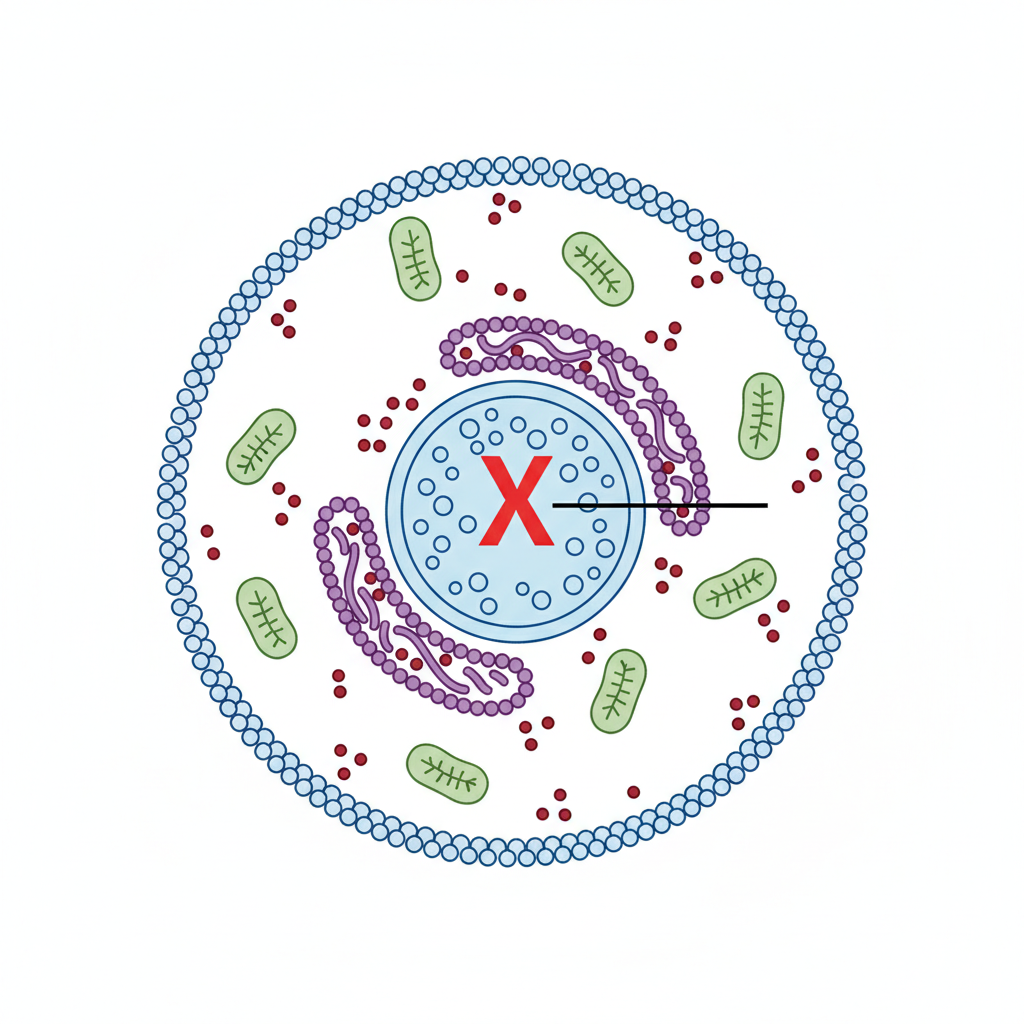
A student observes a plant cell under a light microscope. The diagram shows the cell surrounded by a solution with a lower water potential than the cell's cytoplasm.
a
Identify the structure that acts as a selectively permeable barrier, regulating the movement of substances into and out of the cell. [1]
b
The cell is transferred to a solution with an even lower water potential. Explain the direction of net water movement across this structure and the transport mechanism responsible. [1]
Solutions
8QuestionTransport Mechanisms (Diffusion, Osmosis, Active Transport)Assessment Practice
2 marks~3 minCriterion A
Salting and sugaring are traditional food preservation methods used worldwide. When fish is packed in salt or fruit is cooked with high concentrations of sugar to make jam, the surrounding solution becomes hypertonic relative to bacterial cells present on the food.
a
Explain how osmosis prevents bacterial growth in salted or sugared food. [1]
b
Identify one limitation of using salt or sugar as a food preservative and explain why this limitation reduces the method's effectiveness. [1]

Solutions
9QuestionTransport Mechanisms (Diffusion, Osmosis, Active Transport)Concept Practice
2 marks~3 minCriterion A
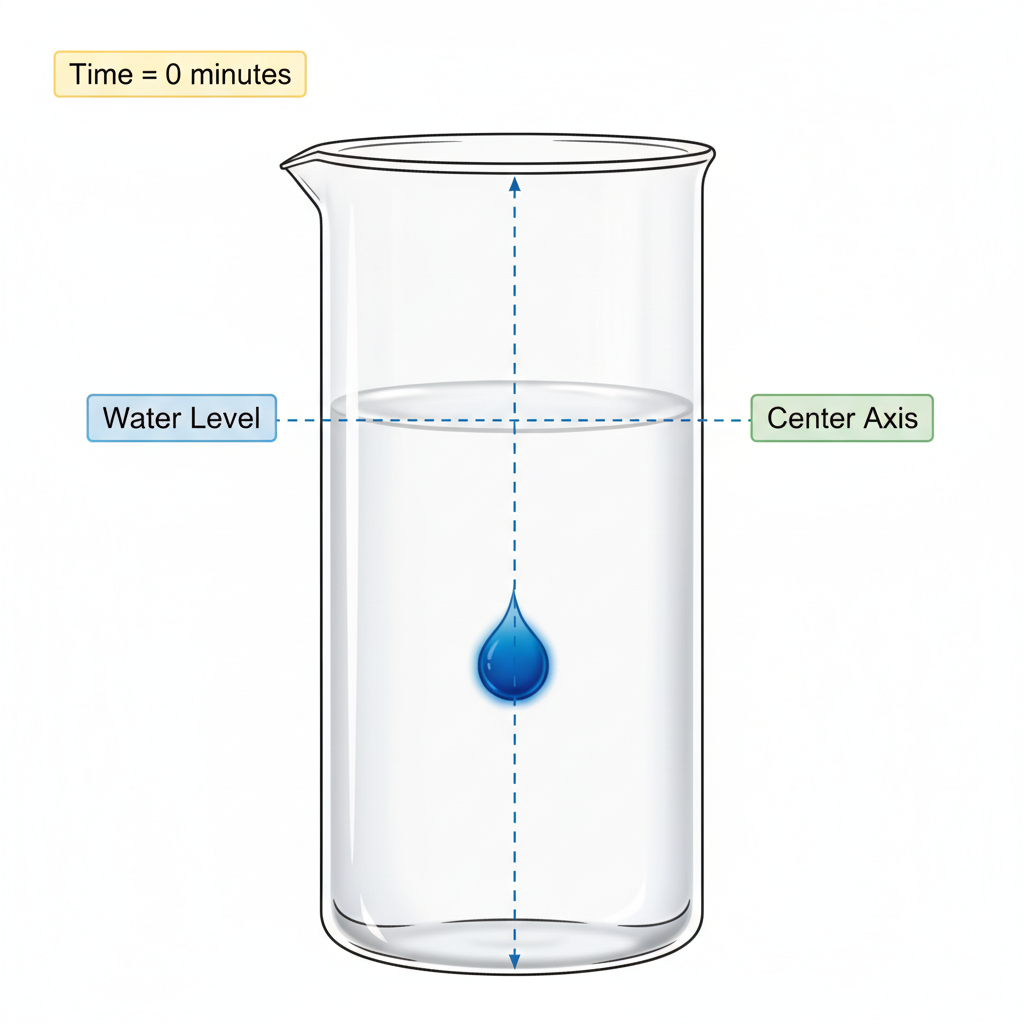
A drop of blue dye is placed at the centre of a beaker of still water at minutes. After one hour, the dye is observed to have spread throughout the beaker.
a
Describe the process by which the dye spreads through the water, using appropriate biological terminology. [1]
b
Explain how the concentration gradient of the dye changes between minutes and minutes. [1]
Solutions
10QuestionMicroscopy and Cell Observation TechniquesAssessment Practice
2 marks~3 minCriterion A
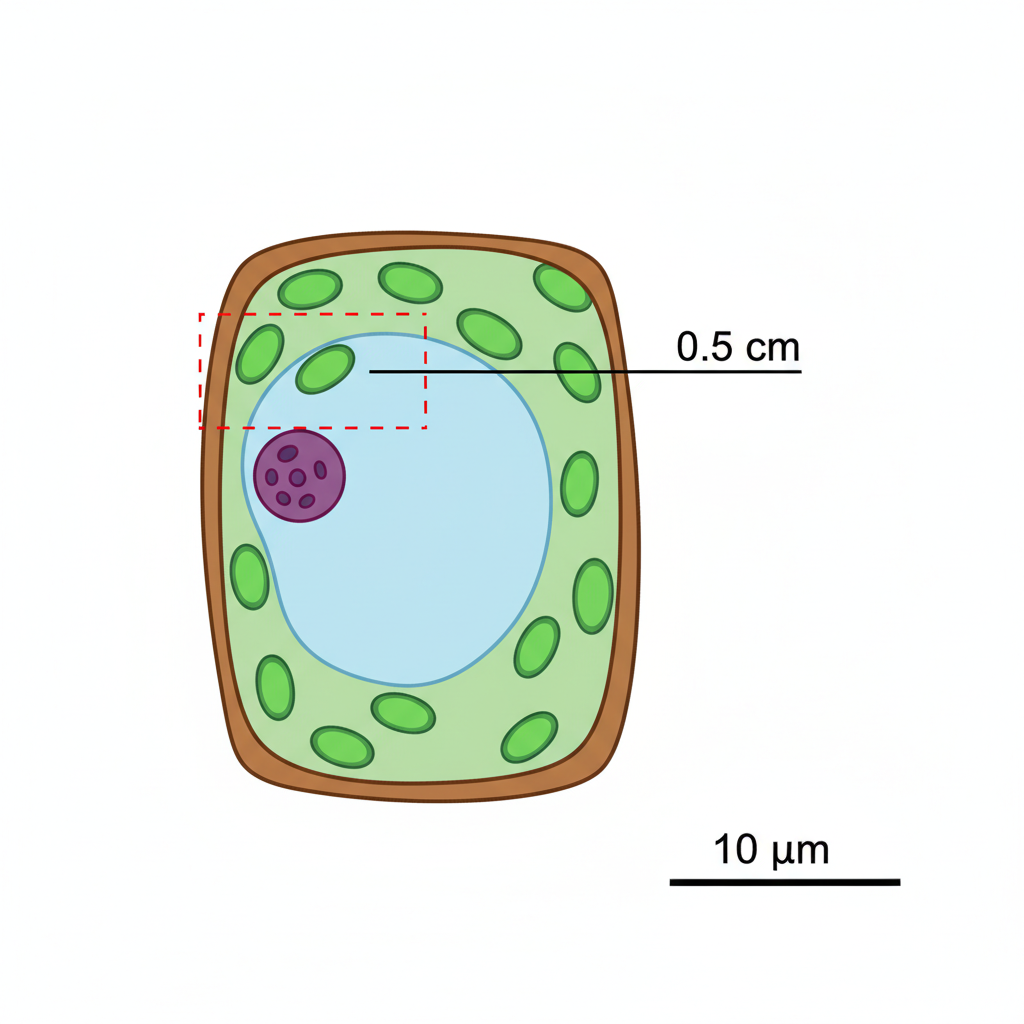
A micrograph of a plant cell includes a scale bar representing , which measures in the image. A chloroplast in the same image measures in length.
(a) Calculate the actual length of the chloroplast in micrometres (). [2]
(a) Calculate the actual length of the chloroplast in micrometres (). [2]
Solutions
11QuestionCell Membrane and Fluid Mosaic ModelConcept Practice
2 marks~3 minCriterion A
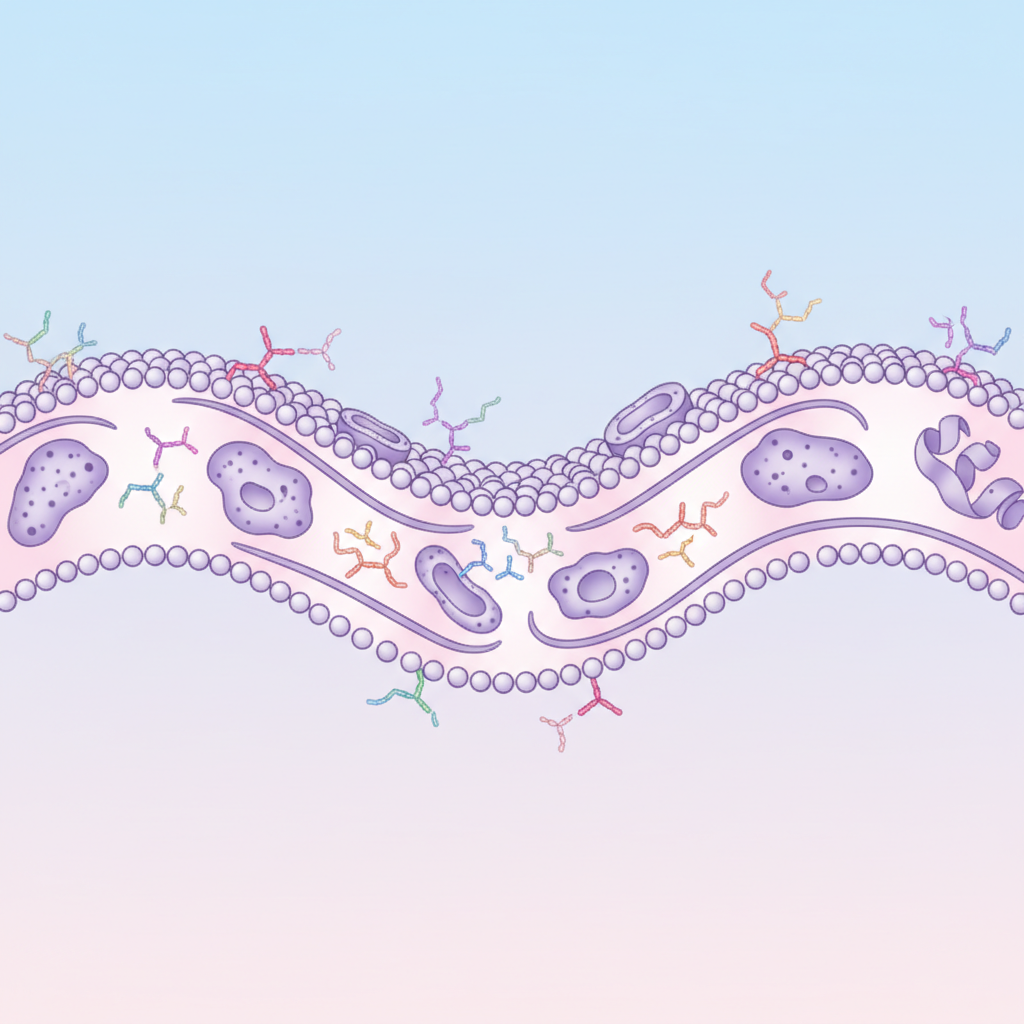
The fluid mosaic model describes the cell membrane as a dynamic, flexible structure. Membrane components are not fixed but move laterally within the membrane plane.
a
Describe the arrangement of the phospholipid bilayer, including the orientation of hydrophilic and hydrophobic regions. [1]
b
Using two of the following terms — channel protein, glycoprotein, cholesterol, glycolipid — explain how each component contributes to membrane function. [1]
Solutions
12QuestionUsing Light Microscopes and Staining TechniquesAssessment Practice
2 marks~3 minCriterion D
A forensic scientist collects a cheek-cell sample from a crime scene and prepares a stained slide using methylene blue to visualise nuclei for suspect identification.
Identify one ethical issue that could arise if the staining technique produces unreliable results in this forensic context. [1]
Discuss how a specific limitation of the staining procedure could compromise the reliability of the evidence. [1]
Identify one ethical issue that could arise if the staining technique produces unreliable results in this forensic context. [1]
Discuss how a specific limitation of the staining procedure could compromise the reliability of the evidence. [1]

Solutions
13QuestionSurface Area to Volume Ratio in CellsConcept Practice
2 marks~3 minCriterion A
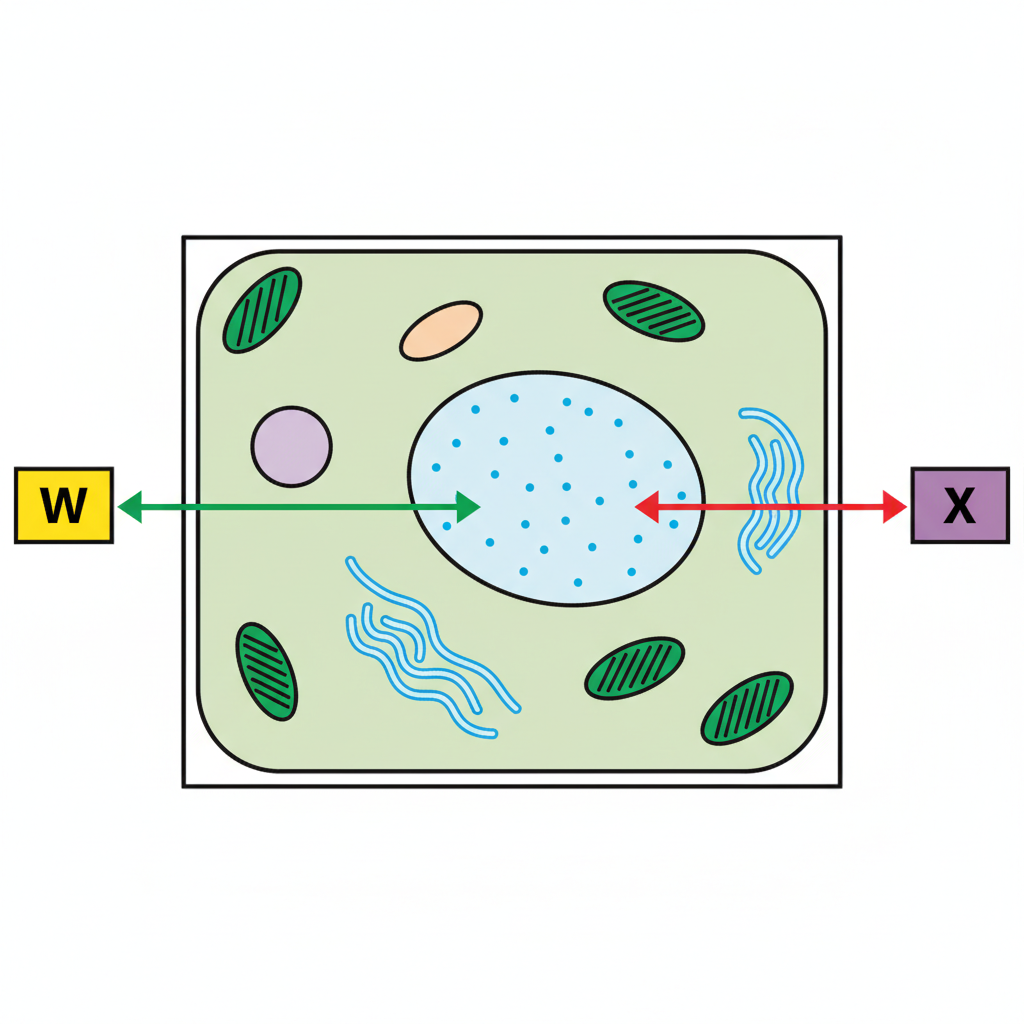
The diagram shows a plant cell with three structures labelled W, X, and Y.
Structure W: large, fluid-filled, located centrally in the cell.
Structure X: small and oval-shaped, located near the nucleus.
Structure Y: the outer boundary of the cell, just inside the cell wall.
Structure W: large, fluid-filled, located centrally in the cell.
Structure X: small and oval-shaped, located near the nucleus.
Structure Y: the outer boundary of the cell, just inside the cell wall.
a
Identify the structures labelled W, X, and Y. [1]
b
Explain why none of the labelled structures (W, X, or Y) is responsible for controlling the activities of the cell. [1]
Solutions
14QuestionSpecialized Cells and Their AdaptationsAssessment Practice
2 marks~3 minCriterion D
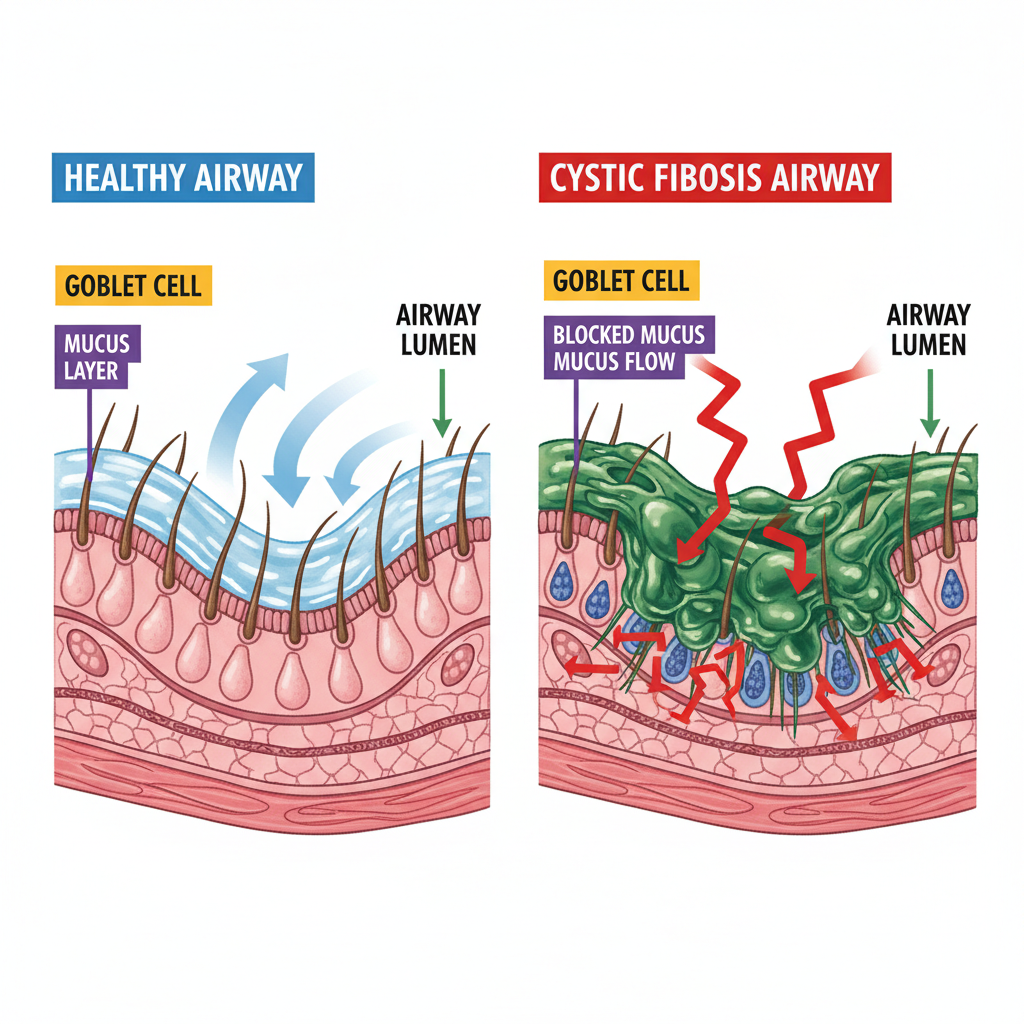
Goblet cells lining the airways secrete mucus that traps pathogens and debris. In cystic fibrosis (CF), a mutation in the CFTR gene causes goblet cells to produce abnormally thick, sticky mucus that obstructs airways and promotes chronic infection.
a
Describe one way that understanding goblet cell adaptation in CF has led to a real-world medical application. [1]
b
Discuss one ethical issue raised by genetic screening for cystic fibrosis, considering more than one perspective. [1]
Solutions
15QuestionSurface Area to Volume Ratio in CellsConcept Practice
2 marks~3 minCriterion A
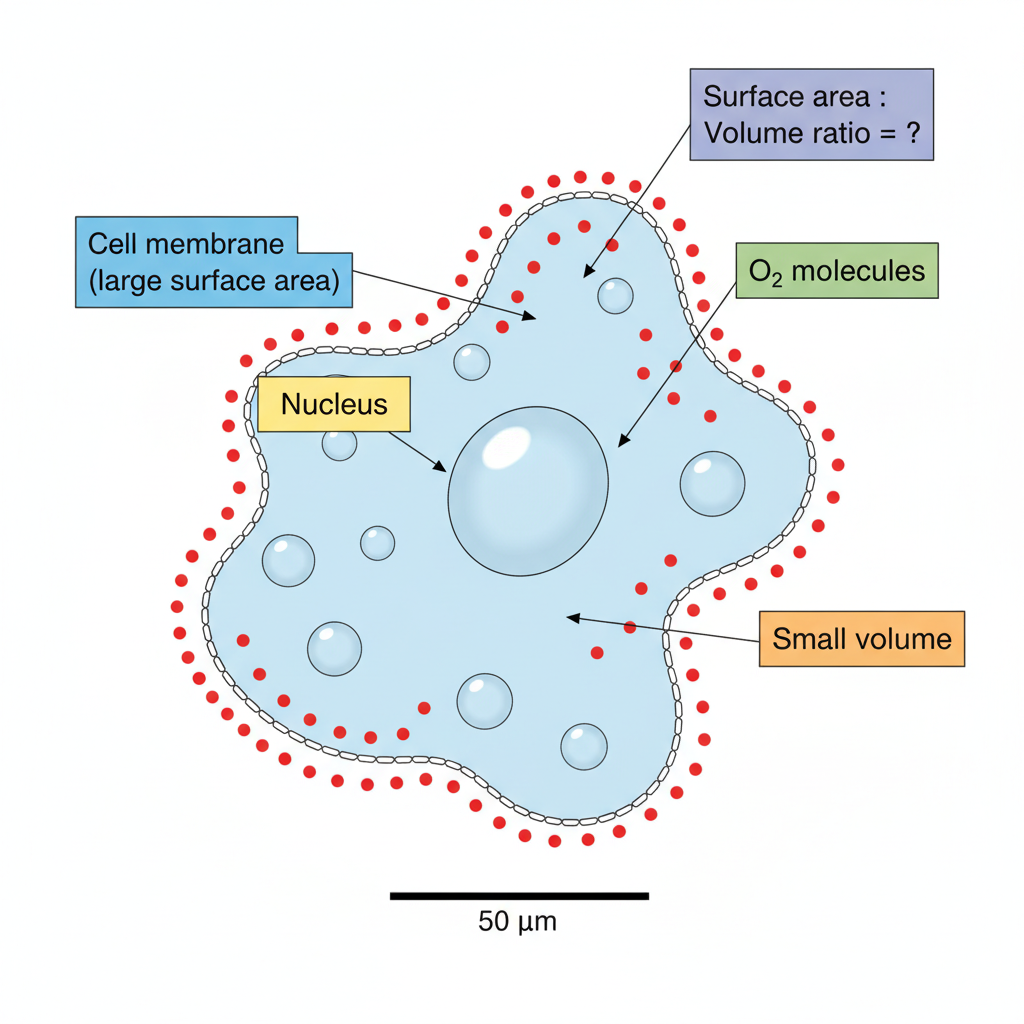
Amoeba is a single-celled organism approximately 0.5 mm in diameter. Because of its small size, it relies entirely on diffusion to obtain oxygen, with no specialised transport systems.
Explain how the large surface area to volume ratio of Amoeba enables efficient diffusion of oxygen across its cell membrane. [2]
Explain how the large surface area to volume ratio of Amoeba enables efficient diffusion of oxygen across its cell membrane. [2]
Solutions
16QuestionSurface Area to Volume Ratio in CellsAssessment Practice
2 marks~3 minCriterion D
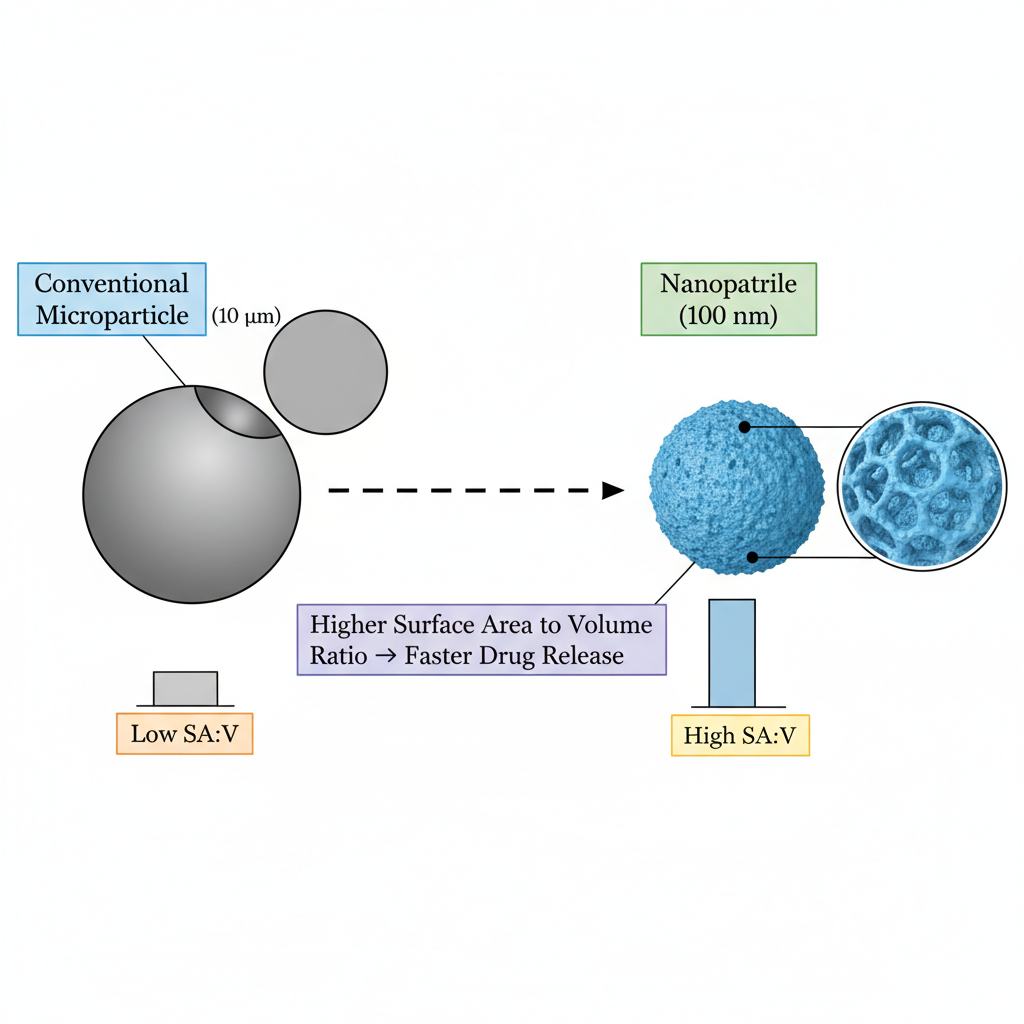
Nanoparticles (diameter 10–200 nm) are engineered to deliver chemotherapy drugs directly to tumour cells, minimising damage to healthy tissue.
a
State one reason why a high surface area to volume ratio is important for the drug release rate of a nanoparticle. [1]
b
Discuss one limitation of using nanoparticles as drug-delivery vehicles in the human body. [1]
Solutions
17QuestionStructure and Function of Cell OrganellesConcept Practice
2 marks~3 minCriterion A
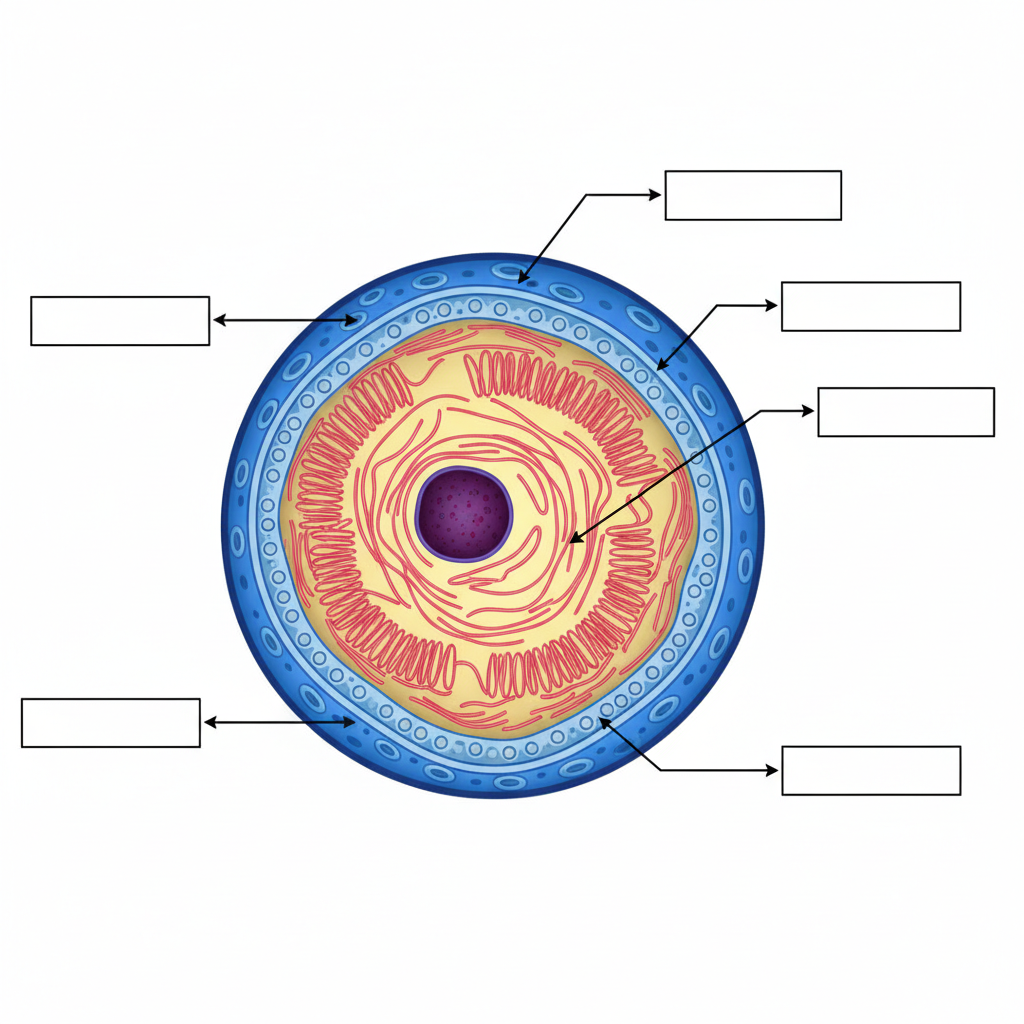
During an investigation into cell specialisation, students examine electron micrographs of liver cells and observe that the nucleus contains a prominent nucleolus and densely packed chromatin.
a
State two structural features of the nuclear envelope visible in an electron micrograph. [1]
b
Explain how the nucleus regulates cell activity by controlling protein synthesis. [1]
Solutions
18QuestionCell Membrane and Fluid Mosaic ModelAssessment Practice
2 marks~3 minCriterion D
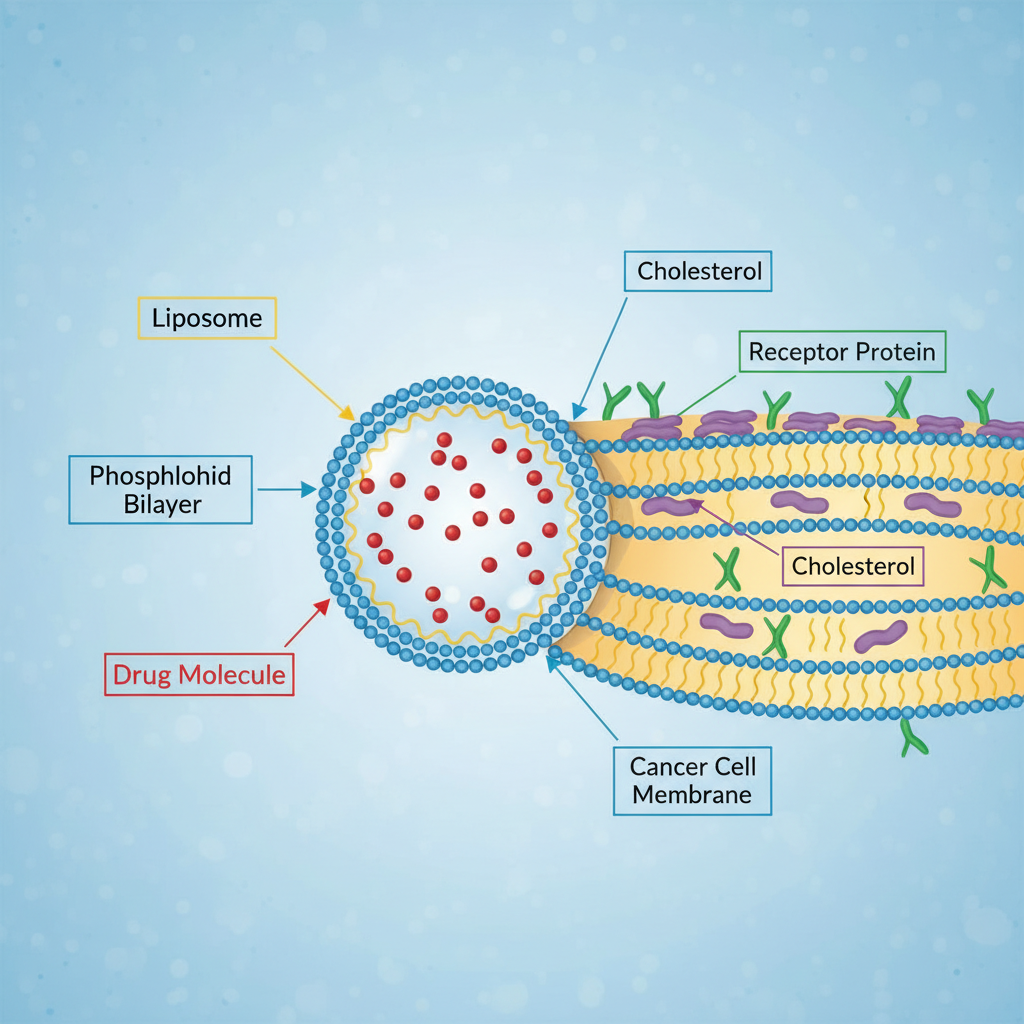
Liposome-based drug delivery systems exploit the fluid mosaic model by engineering phospholipid vesicles that fuse with target cell membranes to release chemotherapy agents directly into cancer cells.
a
Outline how knowledge of the fluid mosaic model makes liposome-based drug delivery possible. [1]
b
Discuss one ethical issue arising from the use of liposome-based cancer therapies in healthcare systems. [1]
Solutions
19QuestionCell Theory and the Basis of LifeConcept Practice
2 marks~3 minCriterion A
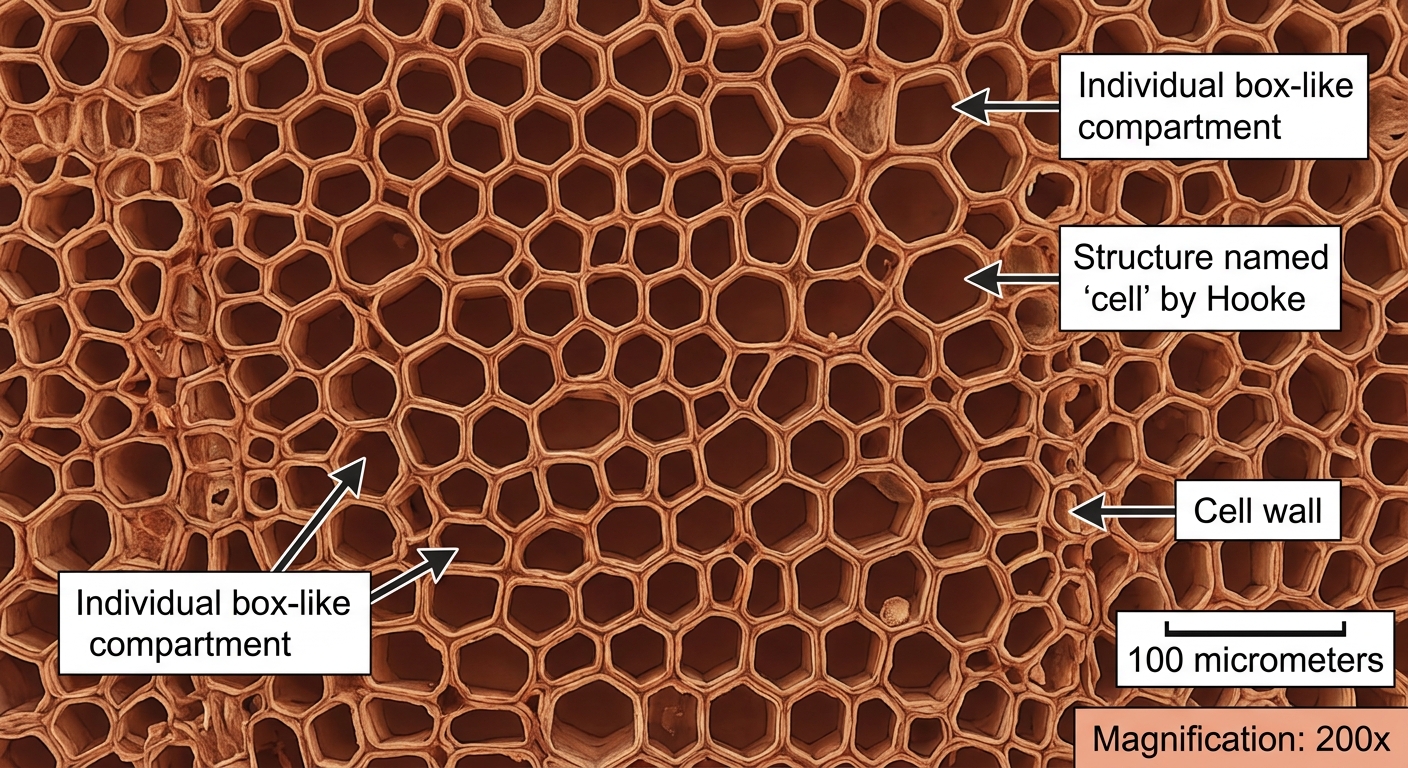
In 1665, Robert Hooke examined a thin slice of cork under a compound microscope and observed numerous small, box-like compartments arranged in a regular pattern throughout the tissue. He named these compartments 'cells'. The cork cells were dead at the time of observation, leaving only their rigid boundaries visible.
a
Identify the structure that Hooke directly observed and named 'cells'. [1]
b
Explain how this observation supports one principle of Cell Theory. [1]
Solutions
20QuestionTransport Mechanisms (Diffusion, Osmosis, Active Transport)Assessment Practice
3 marks~5 minCriterion A
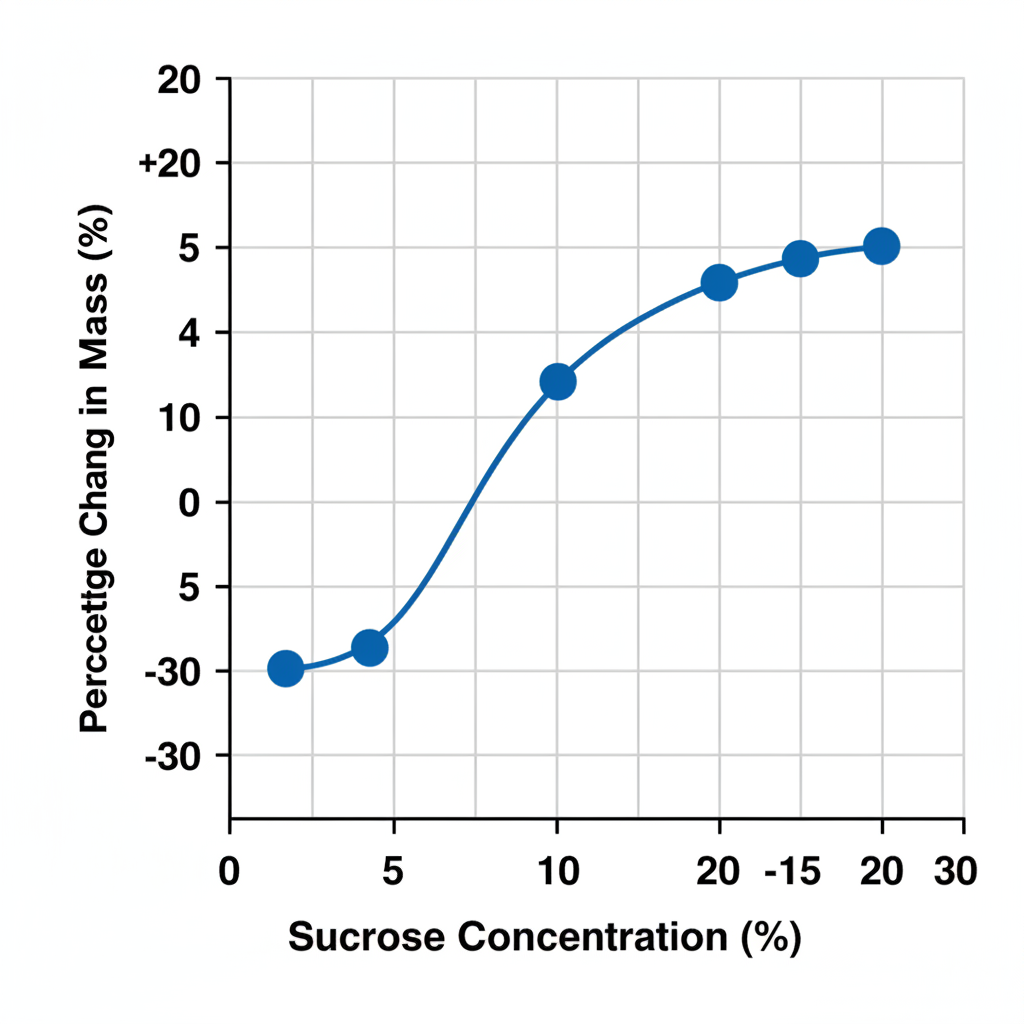
The graph below shows the percentage change in mass of potato strips placed in sucrose solutions of 0%, 5%, 10%, 20%, and 30% after 30 minutes.
a
Describe the trend shown in the graph. [1]
b
Explain why potato strips gain mass in hypotonic solutions and lose mass in hypertonic solutions, referring to osmosis and the water potential gradient. [1]
c
Analyse how turgor pressure changes across the sucrose concentrations tested, and deduce the approximate isotonic concentration for potato cell sap. [1]
Solutions
Showing 20 of 233 free questions