You're viewing free preview questions — 5 questions previewing here — subscribe to unlock 124 more, plus the Full Question Bank, Mock Papers & Worksheets.Upgrade
Diffusion, Osmosis, and Active Transport — Free MYP5 Biology Practice Questions

1QuestionDefinition and Examples of DiffusionConcept Practice
2 marks~3 minCriterion A
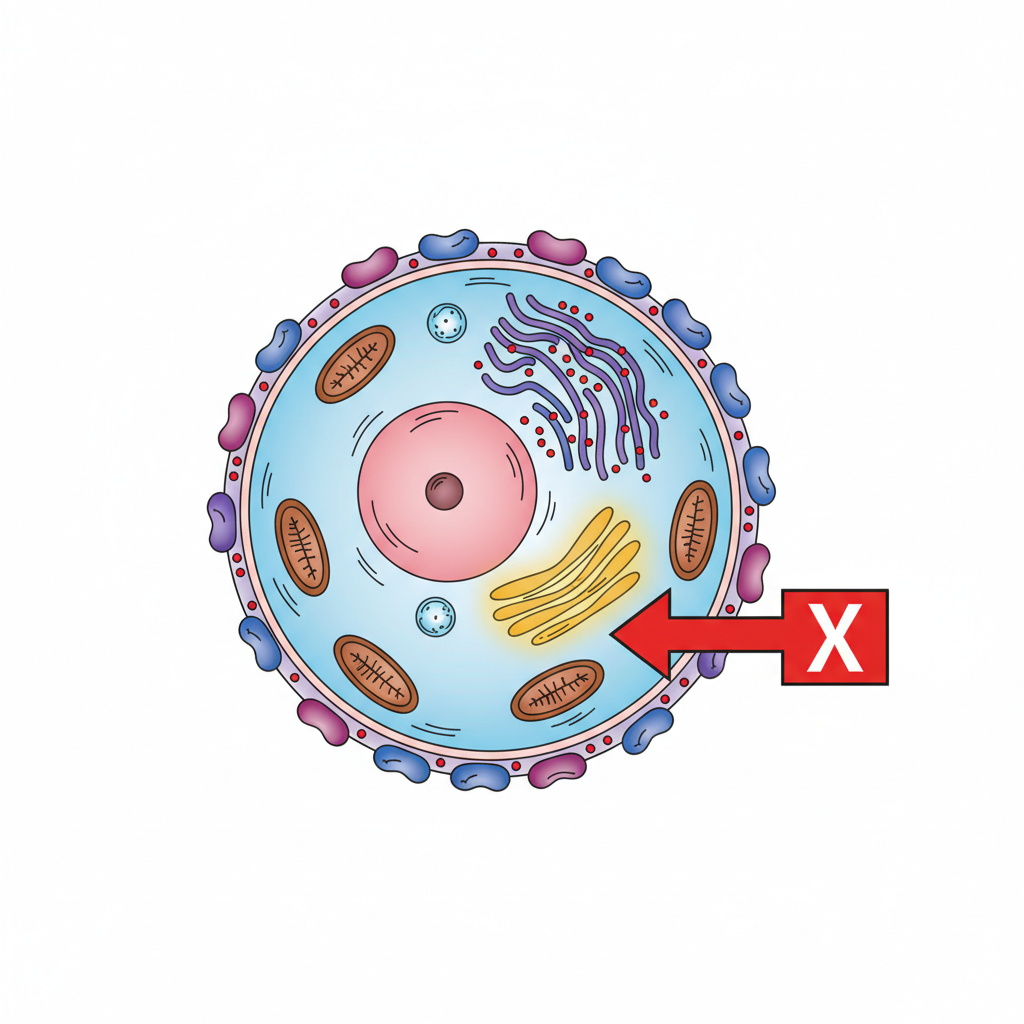
The diagram below shows an animal cell. Structure X is labelled on the diagram.
a
Identify structure X. [1]
b
Explain how structure X controls which substances can diffuse into and out of the cell. [1]

Solutions
2QuestionOsmosis in Cells and Living SystemsAssessment Practice
4 marks~6 minCriterion A
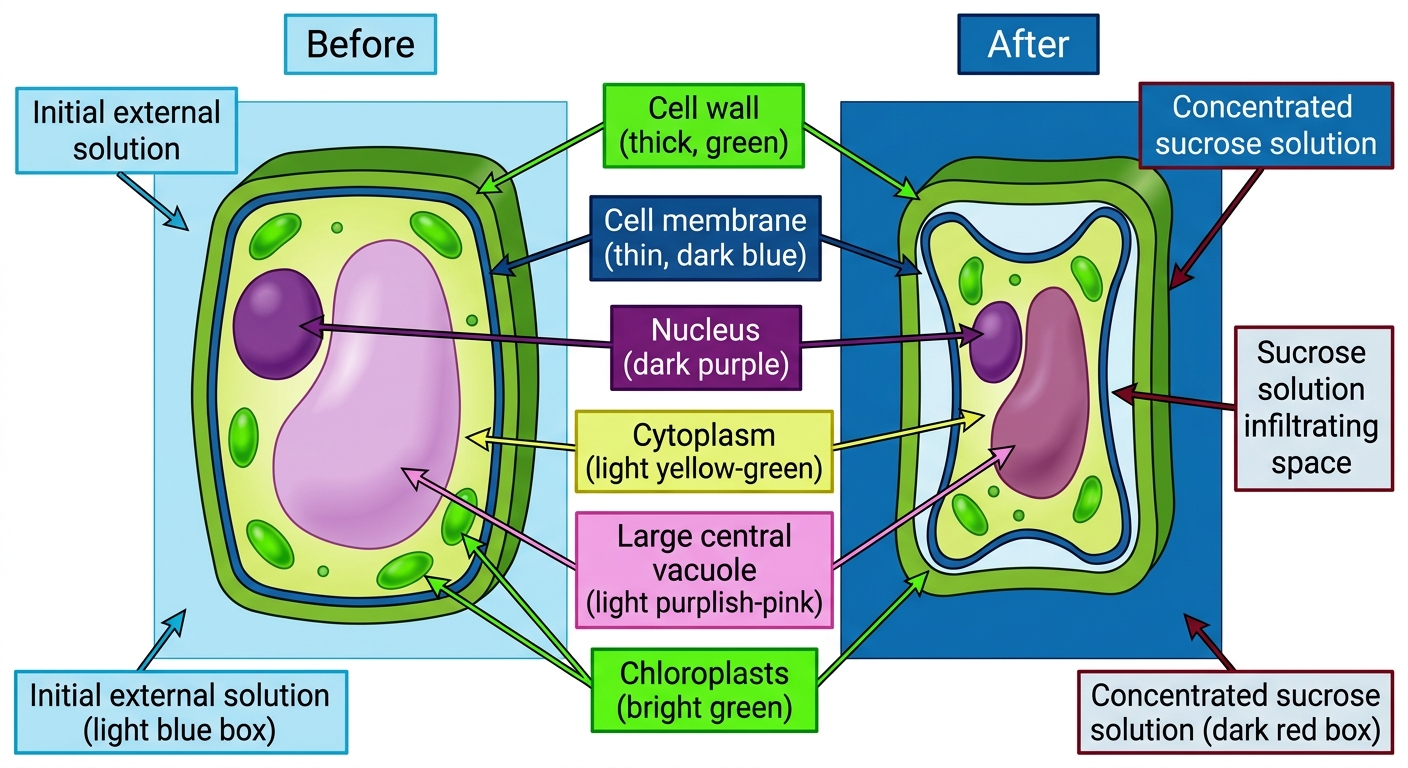
The diagram shows a plant cell before and after immersion in a concentrated sucrose solution.
a
Identify the term for the process in which the cell membrane pulls away from the cell wall. [1]
b
Explain the changes visible in the cell after immersion in the sucrose solution, referring to the vacuole, cytoplasm, and cell membrane. [1]
c
Analyse why the cell wall prevents a plant cell from bursting when placed in pure water, and why an animal cell placed in the same conditions does not survive. [2]
Solutions
3QuestionActive Transport and Energy RequirementAssessment Practice
6 marks~9 minCriterion D
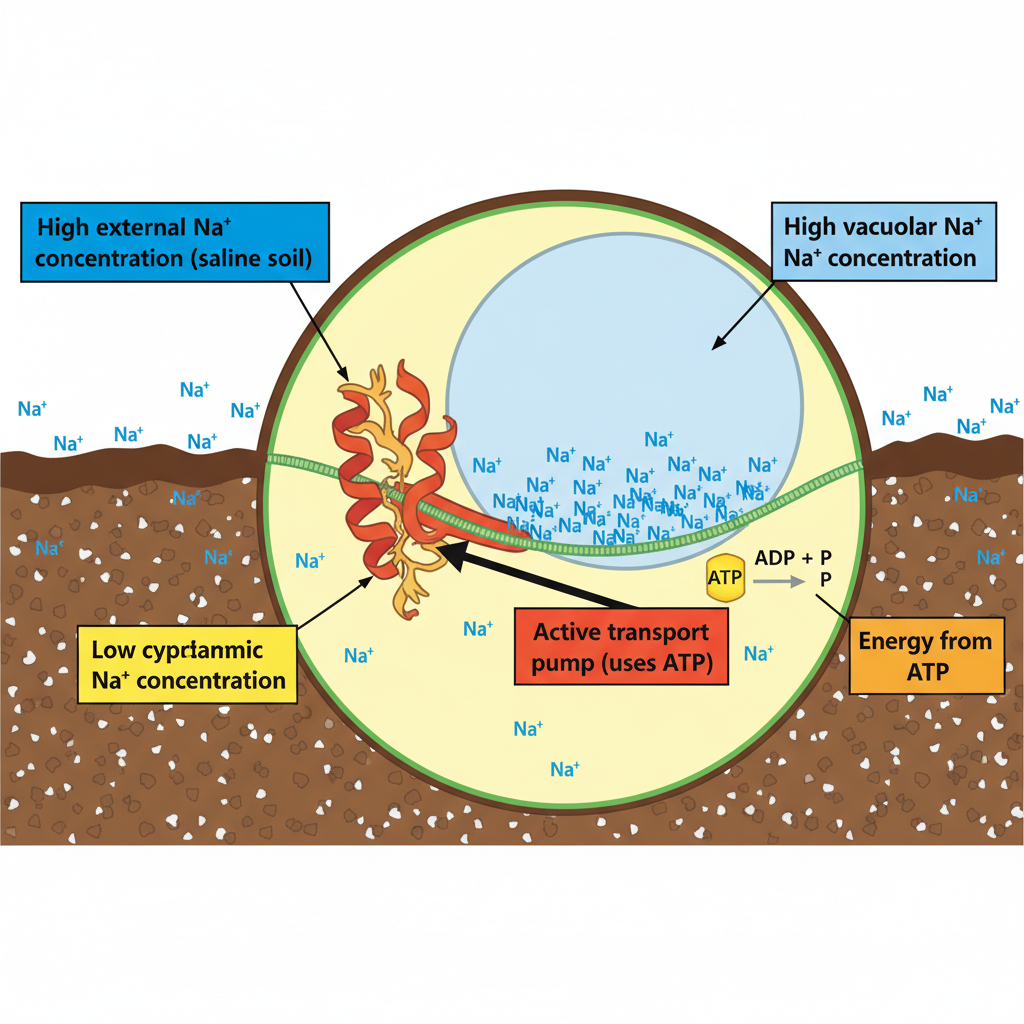
In saline soils, plant cells use ATP-driven membrane pumps to actively transport ions into vacuoles, preventing toxic cytoplasmic accumulation. Researchers have genetically modified (GM) crops to overexpress these pumps, enabling growth on salt-damaged farmland. Approximately one billion hectares of agricultural land worldwide are affected by soil salinity, threatening food production for vulnerable populations.
a
Explain one societal benefit of deploying salt-tolerant GM crops on saline farmland. [2]
b
Explain one environmental risk that could arise if these GM crops are grown at large scale. [2]
c
Evaluate the limitations of translating laboratory results for these GM crops into reliable large-scale agricultural practice. [2]
Solutions
4QuestionActive Transport and Energy RequirementAssessment Practice
6 marks~9 minCriterion D
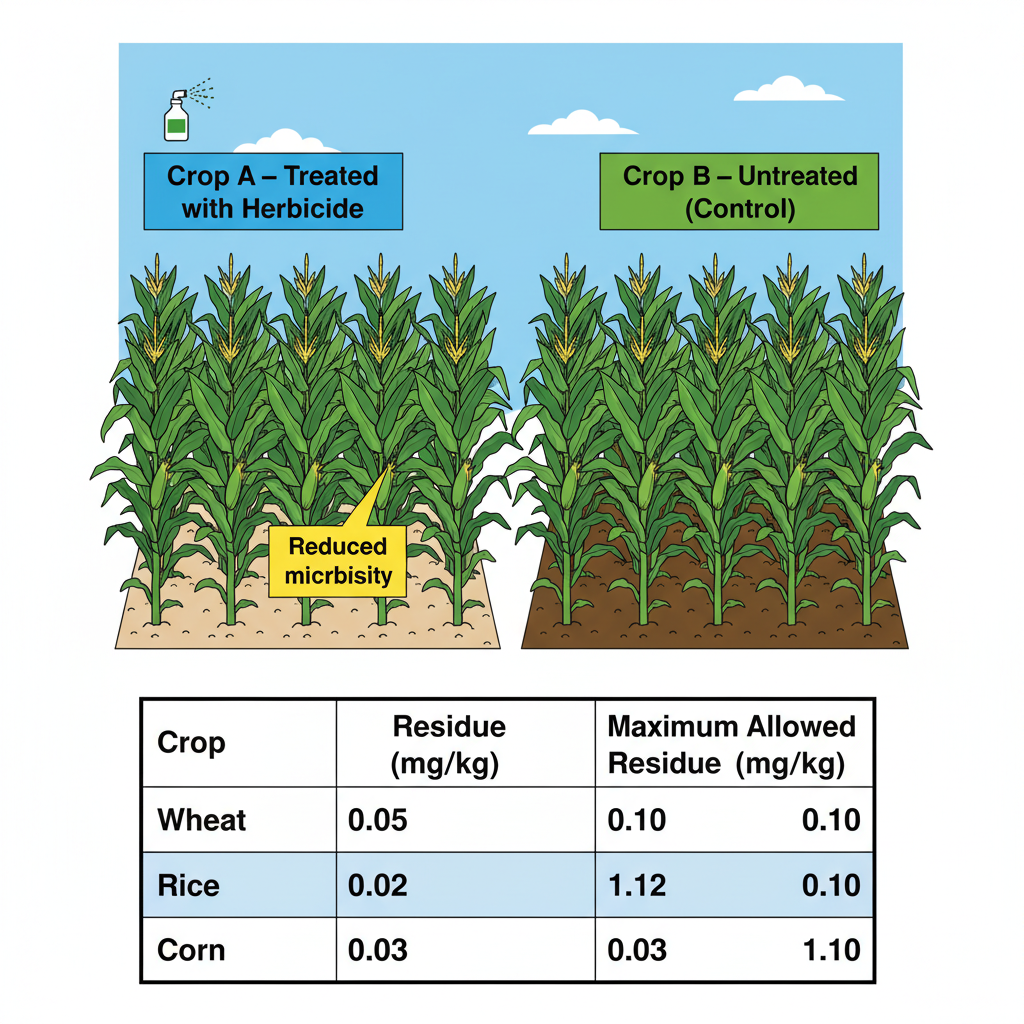
Farmers apply herbicides that block active transport in plant root cells, preventing the energy-dependent uptake of mineral ions such as and against their concentration gradient. Two fields are compared: one treated with herbicide (Crop A) and one untreated (Crop B). Crop A shows higher yield but reduced soil microbial diversity. Herbicide residue levels in harvested crops are recorded below.
| Crop | Wheat | Rice | Corn |
|---|---|---|---|
| Residue (mg/kg) | 0.05 | 0.12 | 0.03 |
| Maximum allowed residue (mg/kg) | 0.10 | 0.10 | 0.10 |
a
Explain how inhibiting active transport of mineral ions leads to the death of weeds. [2]
b
Using the residue data, discuss one ethical issue raised by the use of this herbicide on food crops. [2]
c
Evaluate the ecological significance of reduced soil microbial diversity resulting from herbicide use. [2]
Solutions
5QuestionDefinition and Examples of DiffusionAssessment Practice
8 marks~12 minCriterion C
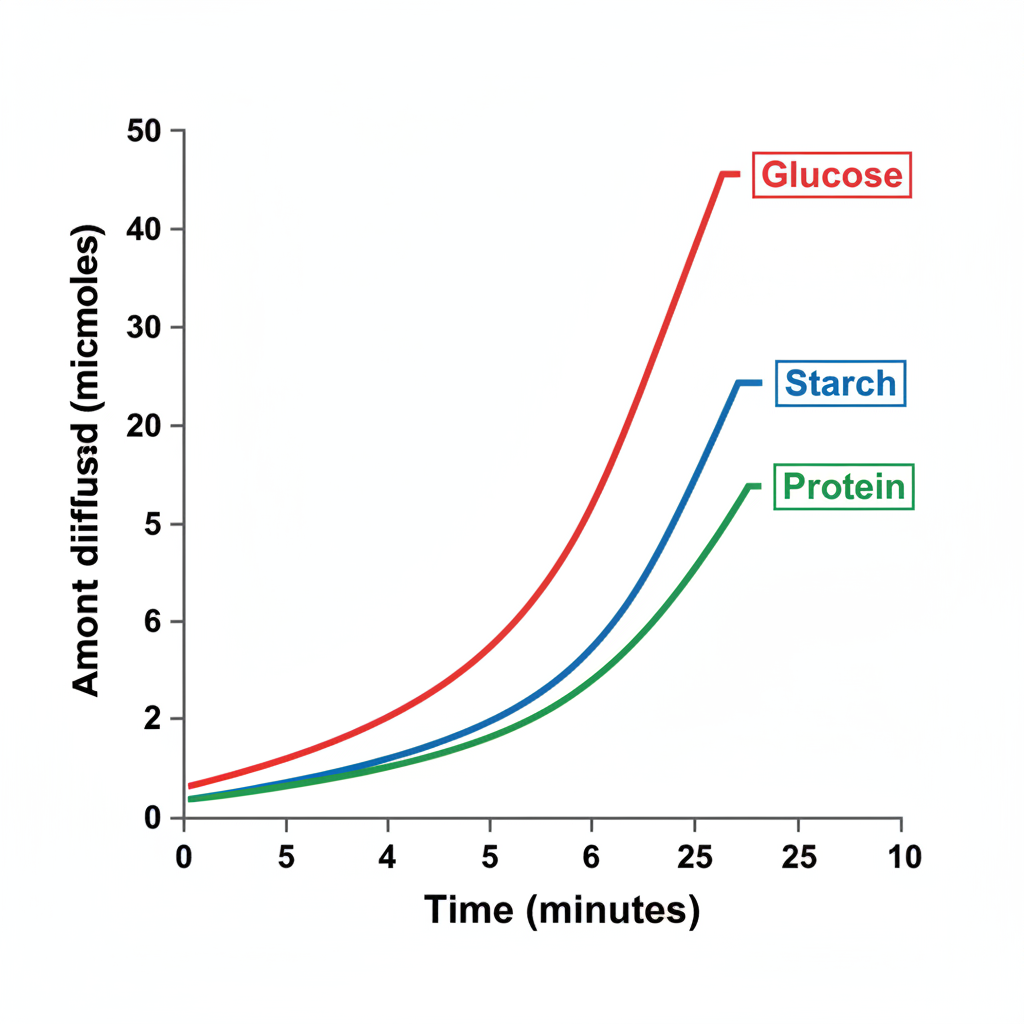
An artificial membrane with pores of diameter 10 nm separates two compartments. Three molecules are tested: glucose (molecular diameter 1 nm), starch (molecular diameter 5 nm), and a protein (molecular diameter 8 nm). Each molecule begins at a concentration of 10 mM on one side and 0 mM on the other. Diffusion is measured at 25°C over 10 minutes. The graph shows amount diffused (micromoles) against time (minutes) for each molecule.
a
Identify the molecule with the highest diffusion rate and the molecule with the lowest diffusion rate. [1]
b
Describe the relationship between molecular size and diffusion rate shown by the data, and suggest why this relationship exists. [2]
c
The three molecules differ not only in size but also in shape: glucose is roughly spherical, starch is a long unbranched chain, and the protein is a folded globular structure. Analyse how molecular shape could account for the difference in diffusion rate between starch and the protein, given that both are smaller than the pore diameter. [3]
d
Evaluate the hypothesis that 'molecular size is the only factor affecting diffusion rate', using evidence from the graph and the information about molecular shape. [2]
Solutions
That's every free question here — 5 of 129.
+124 more questions, plus Mock Papers & Worksheets, are waiting in Premium.