RevisionPrep
Log inGo Premium

Biology

Free Version

Evolution, Inheritance and Reproduction

6 subtopics · 461 exam-style questions

“Pick a subtopic to start practising.”
AdaptationNatural SelectionTheory of Evolution (Charles Darwin)Evidence of EvolutionDNA, Genes and InheritanceReproduction and Life Cycles

Sample questions from Evolution, Inheritance and Reproduction

  1. Theory of Evolution (Charles Darwin)[5 marks]
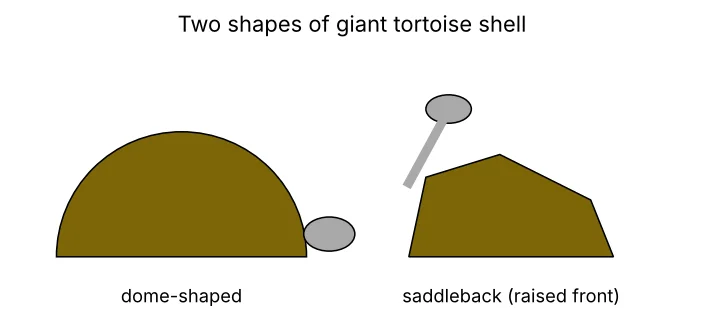
    The vice-governor of the Galápagos told Darwin that he could tell which island a giant tortoise came from by the shape of its shell. On wetter islands, where plants grow close to the ground, tortoises have dome-shaped shells. On drier islands, where much of the food is tall cactus, many tortoises have 'saddleback' shells that rise up at the front, so the neck can stretch upwards.

    The diagram shows the two shell shapes.

    (a) Explain how the saddleback shell is an adaptation to life on the drier islands. [2]

    (b) Suggest how tortoises with dome-shaped shells and tortoises with saddleback shells could both have descended from one ancestral population. [3]
    Diagram for a Theory of Evolution (Charles Darwin) practice questionPractise this subtopic
  2. Natural Selection[9 marks]
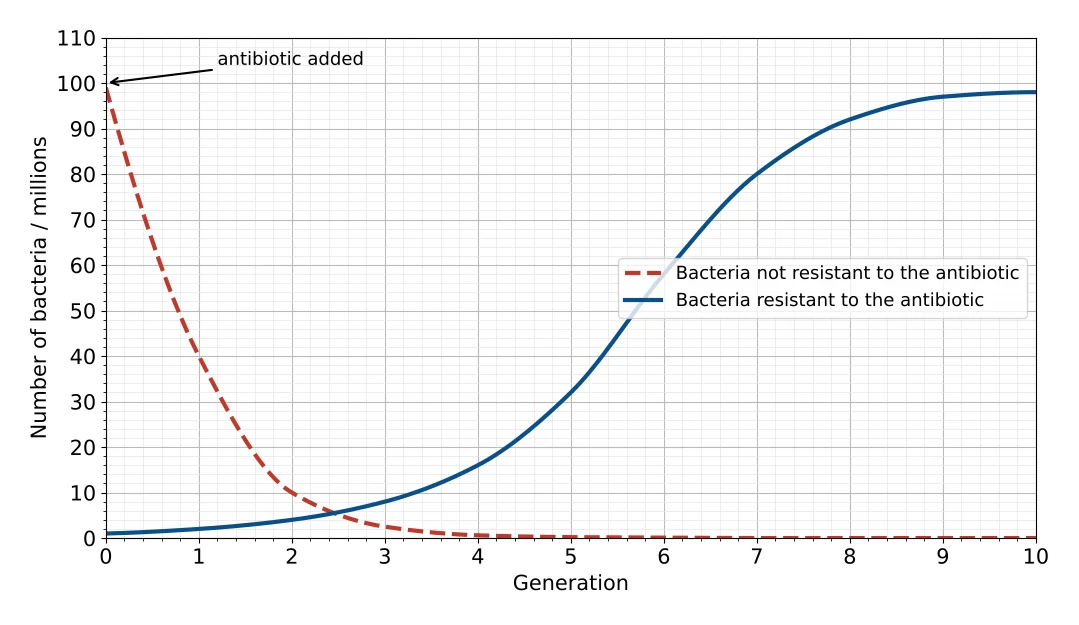
    A population of bacteria was grown in a nutrient broth. An antibiotic was added at generation 0. The graph shows the number of resistant and non-resistant bacteria over the next 10 generations.

    (a) State the number of resistant bacteria at generation 0. [1]

    (b) Describe how the numbers of each type of bacterium change after the antibiotic is added. [2]

    (c) Explain why resistant bacteria were present before the antibiotic was added. [2]

    (d) Explain the change in the population of resistant bacteria using the theory of natural selection. [4]
    Diagram for a Natural Selection practice questionPractise this subtopic
  3. Adaptation[4 marks]
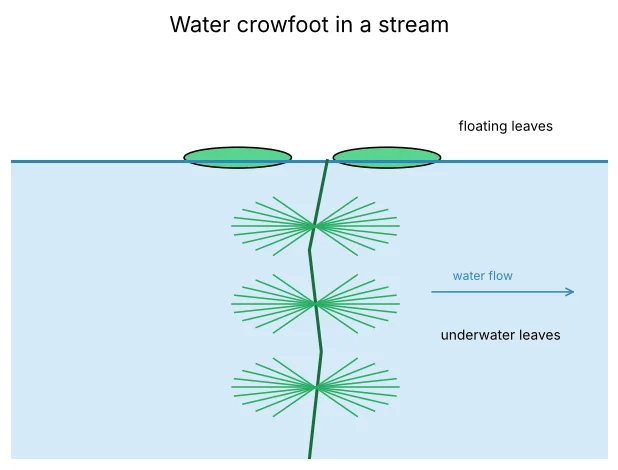
    Water crowfoot (Ranunculus aquatilis) grows in streams. One plant produces two kinds of leaf: broad, flat leaves that float on the surface, and finely divided, thread-like leaves that stay under the water.

    The diagram shows the two kinds of leaf.

    (a) Explain two advantages of finely divided leaves for a plant living under flowing water. [2]

    (b) Suggest why the floating leaves are broad and flat. [1]

    (c) Both leaf types grow from the same plant and carry the same genes. Suggest what causes the two leaf types to develop differently. [1]
    Diagram for a Adaptation practice questionPractise this subtopic
  4. Evidence of Evolution[3 marks]
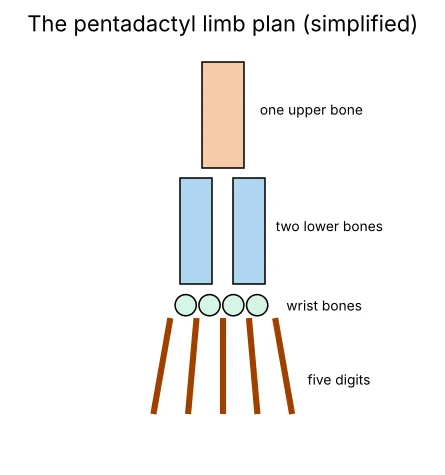
    Vertebrate forelimbs share the same basic arrangement of bones (humerus, radius, ulna, carpals, metacarpals and phalanges), yet they perform very different functions.

    The diagram shows the basic arrangement of bones.

    (a) Define the term homologous structure. [1]

    (b) Using the forelimbs of two named vertebrates, explain how homologous structures provide evidence for common ancestry. [2]
    Diagram for a Evidence of Evolution practice questionPractise this subtopic
  5. DNA, Genes and Inheritance[4 marks]
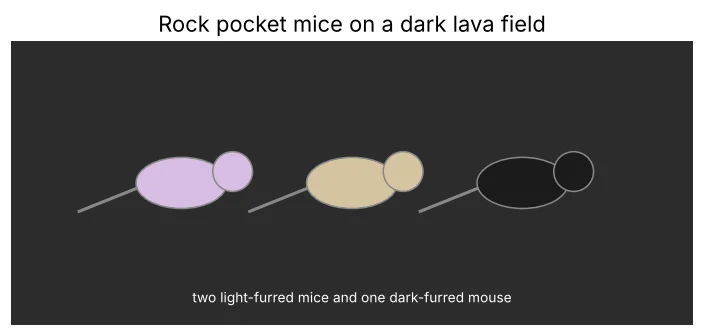
    Rock pocket mice live in the deserts of the south-western USA. On one dark lava field most mice had light-coloured fur, but a few had dark fur. Genetic analysis showed that the dark fur was caused by a change in the DNA of a single gene, producing a new allele.

    The diagram shows the two forms of mouse on the lava field.

    (a) Identify the process that produced the new allele. [1]

    (b) Explain how this process produces genetic variation in a population. [2]

    (c) State in which type of cell the change must happen for the new allele to be passed to offspring. [1]
    Diagram for a DNA, Genes and Inheritance practice questionPractise this subtopic
  6. Reproduction and Life Cycles[3 marks]
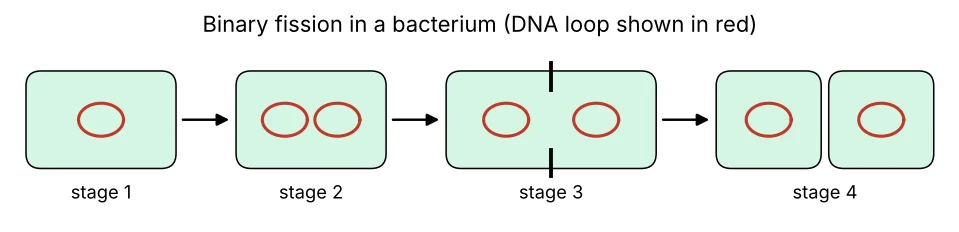
    The diagram shows a bacterium reproducing by binary fission.

    (a) State whether binary fission is sexual or asexual reproduction. [1]

    (b) Explain why the two cells produced are genetically identical. [2]
    Diagram for a Reproduction and Life Cycles practice questionPractise this subtopic

Every question, revision note and worksheet for Evolution, Inheritance and Reproduction — with Premium.

Unlock Full Access