You're viewing free preview questions — 6 questions previewing here — subscribe to unlock 81 more, plus the Full Question Bank, Mock Papers & Worksheets.Upgrade
Back

DNA, Genes and Inheritance — Free MYP5 Biology Practice Questions

Free questions

Open in full, with answers, mark scheme and examiner insights.

Question 1Criterion A + C · Band 1-4 · Easy · 6 marksrevisionprep.com

Variation: continuous and discontinuous
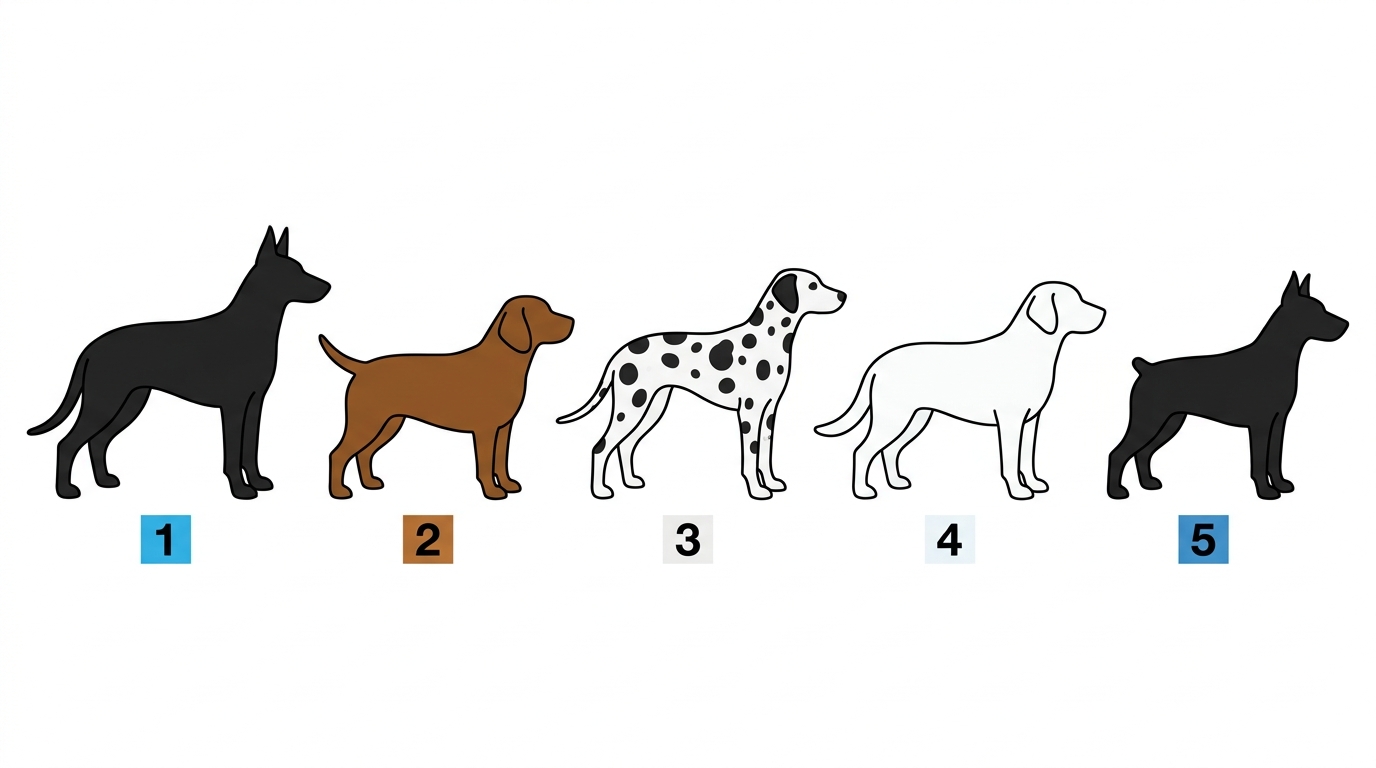
The drawing shows five dogs, numbered 1 to 5. Their body masses are: dog 1, 15 kg; dog 2, 22 kg; dog 3, 18 kg; dog 4, 31 kg; dog 5, 26 kg.
Question diagram
(a)
Identify one feature visible in the drawing that shows discontinuous variation. [1]Criterion A (i) · Level 1-2
(b)
Identify the feature in the data that shows continuous variation, and explain your choice. [2]Criterion A (ii) · Level 3-4
(c)
State the type of graph that should be used to present each type of variation for a large group of dogs. [2]Criterion C (i) · Level 3-4
(d)
Suggest one environmental factor that could affect the body mass of a dog. [1]Criterion A (ii) · Level 1-2

revisionprep.com

Summary Answer

Not available for this question.

Model Answer

Not available for this question.

Marking Scheme

Not available for this question.

Examiner Insights

Not available for this question.

Question 2Criterion A · Band 1-4 · Easy · 4 marksrevisionprep.com

Mutation

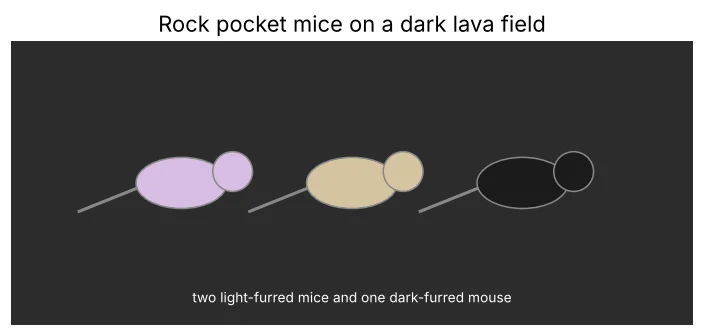
Rock pocket mice live in the deserts of the south-western USA. On one dark lava field most mice had light-coloured fur, but a few had dark fur. Genetic analysis showed that the dark fur was caused by a change in the DNA of a single gene, producing a new allele.

The diagram shows the two forms of mouse on the lava field.
Question diagram
(a)
Identify the process that produced the new allele. [1]Criterion A (i) · Level 1-2
(b)
Explain how this process produces genetic variation in a population. [2]Criterion A (ii) · Level 3-4
(c)
State in which type of cell the change must happen for the new allele to be passed to offspring. [1]Criterion A (i) · Level 3-4

revisionprep.com

Summary Answer

Not available for this question.

Model Answer

Not available for this question.

Marking Scheme

Not available for this question.

Examiner Insights

Not available for this question.

Question 3Criterion B + A · Band 3-6 · Medium · 7 marksrevisionprep.com

DNA structure and the genetic code

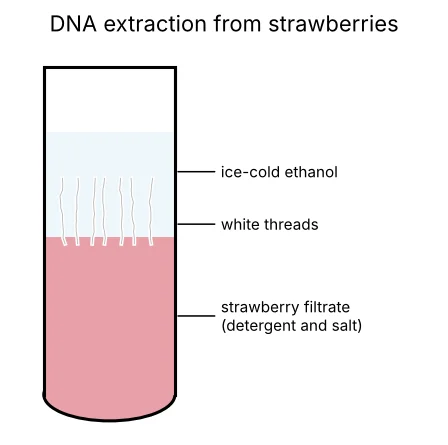
Students can extract DNA from strawberries. They mash the fruit with a solution of washing-up liquid and salt, filter the mixture, and then pour ice-cold ethanol carefully on top of the filtrate. White threads of DNA appear where the two layers meet.
Question diagram
(a)
Suggest why the fruit is mashed with washing-up liquid. [1]Criterion A (i) · Level 3-4
(b)
A student wants to find out whether ripe or unripe strawberries give more DNA. Formulate a hypothesis and explain it. [2]Criterion B (ii) · Level 5-6
(c)
Explain how the student should make the comparison fair and measure the amount of DNA. [3]Criterion B (iii) · Level 5-6
(d)
State one safety precaution, with a reason. [1]Criterion B (iv) · Level 3-4

revisionprep.com

Summary Answer

Not available for this question.

Model Answer

Not available for this question.

Marking Scheme

Not available for this question.

Examiner Insights

Not available for this question.

Question 4Criterion A + C · Band 3-6 · Medium · 8 marksrevisionprep.com

Sex determination and sex-linked inheritance

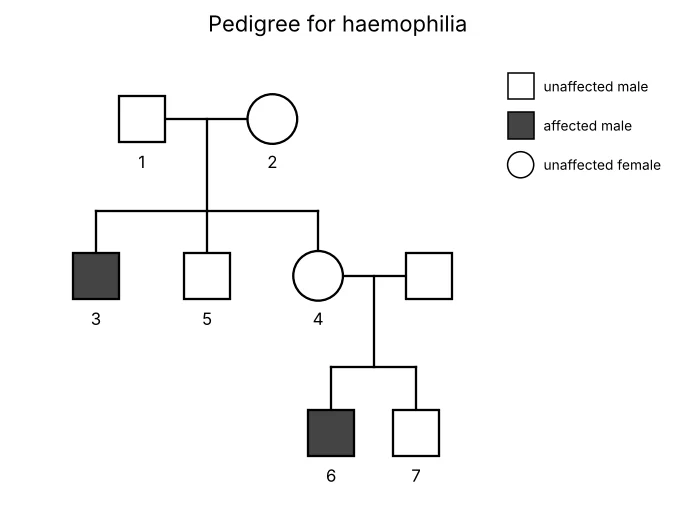
The diagram shows a family pedigree for haemophilia, a sex-linked recessive condition in which blood does not clot properly.

Generation I: 1 (male, unaffected) and 2 (female, unaffected).
Generation II: 3 (male, affected), 4 (female, unaffected), 5 (male, unaffected).
Generation III: 4 has two sons with an unaffected man: 6 (affected) and 7 (unaffected).
Question diagram
(a)
Deduce the genotype of individual 2, giving a reason. [2]Criterion C (ii) · Level 5-6
(b)
Explain how the pedigree shows that individual 4 is a carrier. [2]Criterion C (ii) · Level 5-6
(c)
Explain why an affected man cannot pass haemophilia to his sons. [2]Criterion A (ii) · Level 3-4
(d)
Individual 4 has a third son. State the probability that he has haemophilia, with a reason. [2]Criterion A (ii) · Level 3-4

revisionprep.com

Summary Answer

Not available for this question.

Model Answer

Not available for this question.

Marking Scheme

Not available for this question.

Examiner Insights

Not available for this question.

Question 5Criterion D + C · Band 3-8 · Challenge · 8 marksrevisionprep.com

Genes, alleles and chromosomes

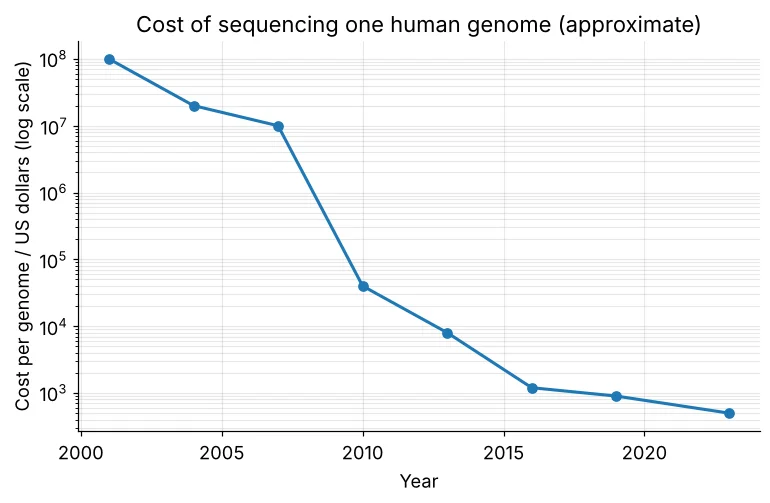
The Human Genome Project, completed in 2003, worked out the sequence of the 3 billion base pairs of human DNA. The cost of sequencing one human genome has fallen from about 100 million US dollars in 2001 to a few hundred dollars today.
Question diagram
(a)
Explain how knowing the human genome sequence can help doctors. [2]Criterion D (i) · Level 3-4
(b)
Discuss the implications of offering whole-genome sequencing to all newborn babies, considering at least two perspectives. [4]Criterion D (ii) · Level 7-8
(c)
Use the graph to describe how the cost of sequencing changed, and suggest why a logarithmic scale is used. [2]Criterion C (ii) · Level 3-4

revisionprep.com

Summary Answer

Not available for this question.

Model Answer

Not available for this question.

Marking Scheme

Not available for this question.

Examiner Insights

Not available for this question.

Question 6Criterion C + B · Band 3-8 · Challenge · 9 marksrevisionprep.com

Monohybrid inheritance and Punnett squares

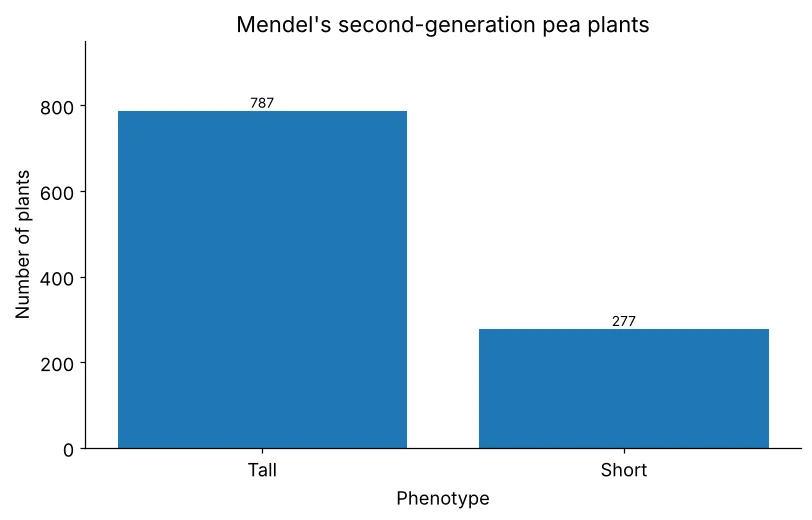
Gregor Mendel crossed tall and short pea plants and grew the offspring. The graph shows some of his results for the second generation (from crossing two first-generation tall plants).

Tall plants: 787; short plants: 277
Question diagram
(a)
Calculate the ratio of tall to short plants. Give your answer in the form n : 1. [2]Criterion C (i) · Level 3-4
(b)
Explain why the ratio is not exactly 3 : 1. [2]Criterion C (ii) · Level 5-6
(c)
Evaluate whether these results support the hypothesis that tallness is controlled by one gene with a dominant allele. [3]Criterion C (iii) · Level 7-8
(d)
Mendel then let each tall second-generation plant self-pollinate. Formulate a hypothesis for the proportion of these tall plants that would produce only tall offspring, with reasoning. [2]Criterion B (ii) · Level 5-6

revisionprep.com

Summary Answer

Not available for this question.

Model Answer

Not available for this question.

Marking Scheme

Not available for this question.

Examiner Insights

Not available for this question.

That's every free question here — 6 of 87.

+81 more questions, plus Mock Papers & Worksheets, are waiting in Premium.

Upgrade