You're viewing free preview questions — 5 questions previewing here — subscribe to unlock 59 more, plus the Full Question Bank, Mock Papers & Worksheets.Upgrade
Adaptation — Free MYP5 Biology Practice Questions

1QuestionBehavioral AdaptationsConcept Practice
2 marks~3 minCriterion A
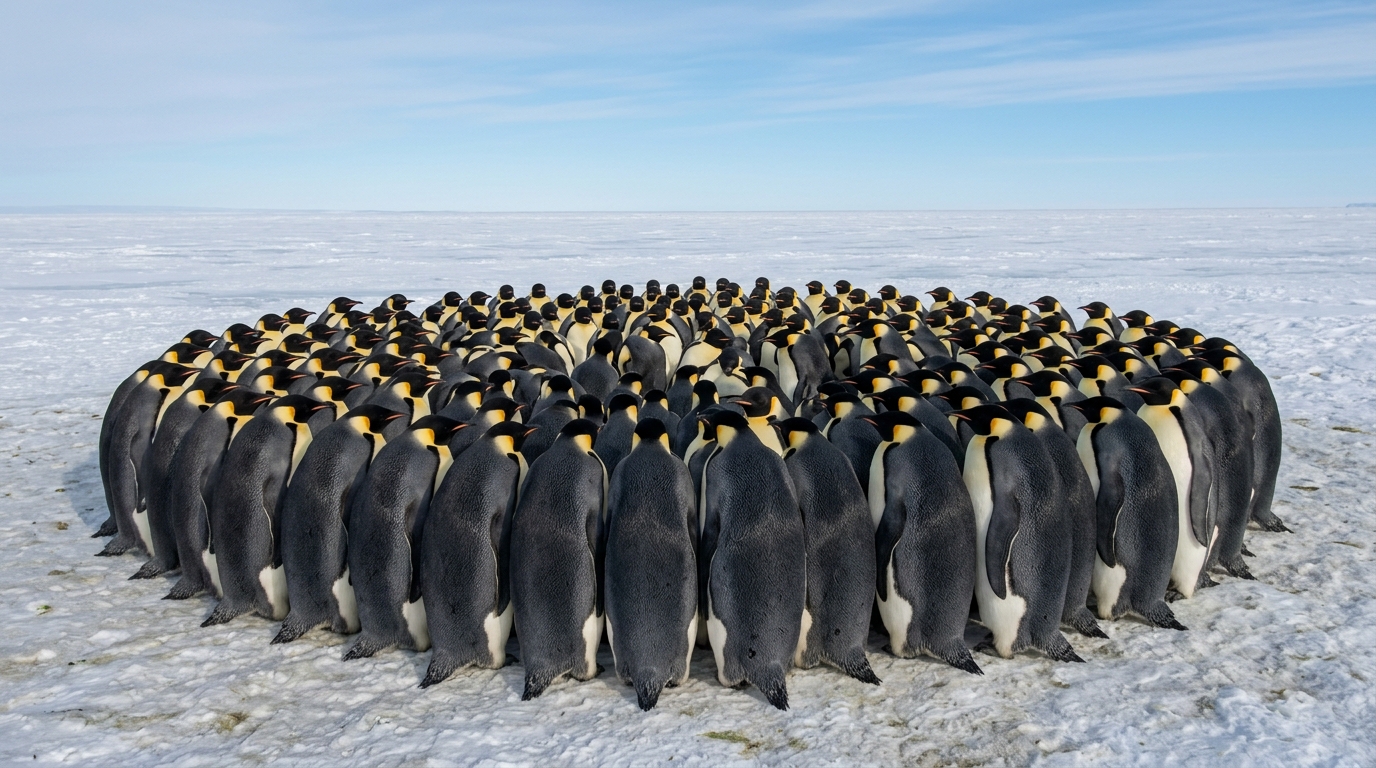
The photograph shows a large colony of emperor penguins (Aptenodytes forsteri) huddling tightly together on Antarctic sea ice during winter, when air temperatures fall below −40 °C and wind speeds exceed 100 km h⁻¹.
a
Identify the type of behavioural adaptation shown in the photograph. [1]
b
Explain how this behaviour increases the survival rate of emperor penguins in Antarctic winter conditions. [1]

Solutions
2QuestionAdaptation to Changing EnvironmentsAssessment Practice
4 marks~6 minCriterion A
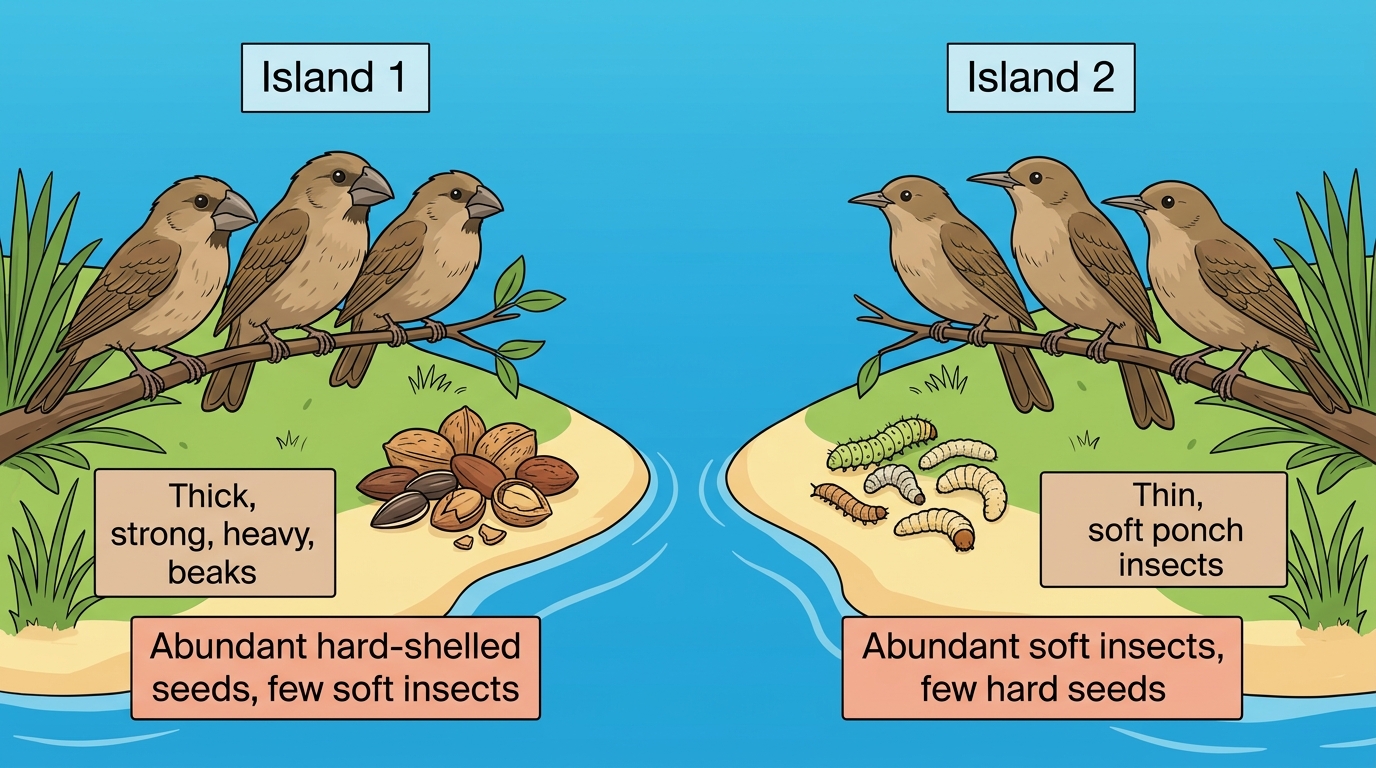
Two populations of the same bird species live on separate islands. Island 1 has abundant hard-shelled seeds and very few insects. Island 2 has abundant soft-bodied insects and very few hard seeds. Over many generations, the populations have developed distinctly different beak morphologies.
a
Identify the beak morphology present on Island 1 and explain how it increases the survival rate of birds in that environment. [2]
b
The two island populations were once a single interbreeding population. Analyse how the different food sources on each island could have driven the divergence in beak morphology over successive generations. [2]
Solutions
3QuestionAdaptation to Changing EnvironmentsAssessment Practice
5 marks~8 minCriterion D
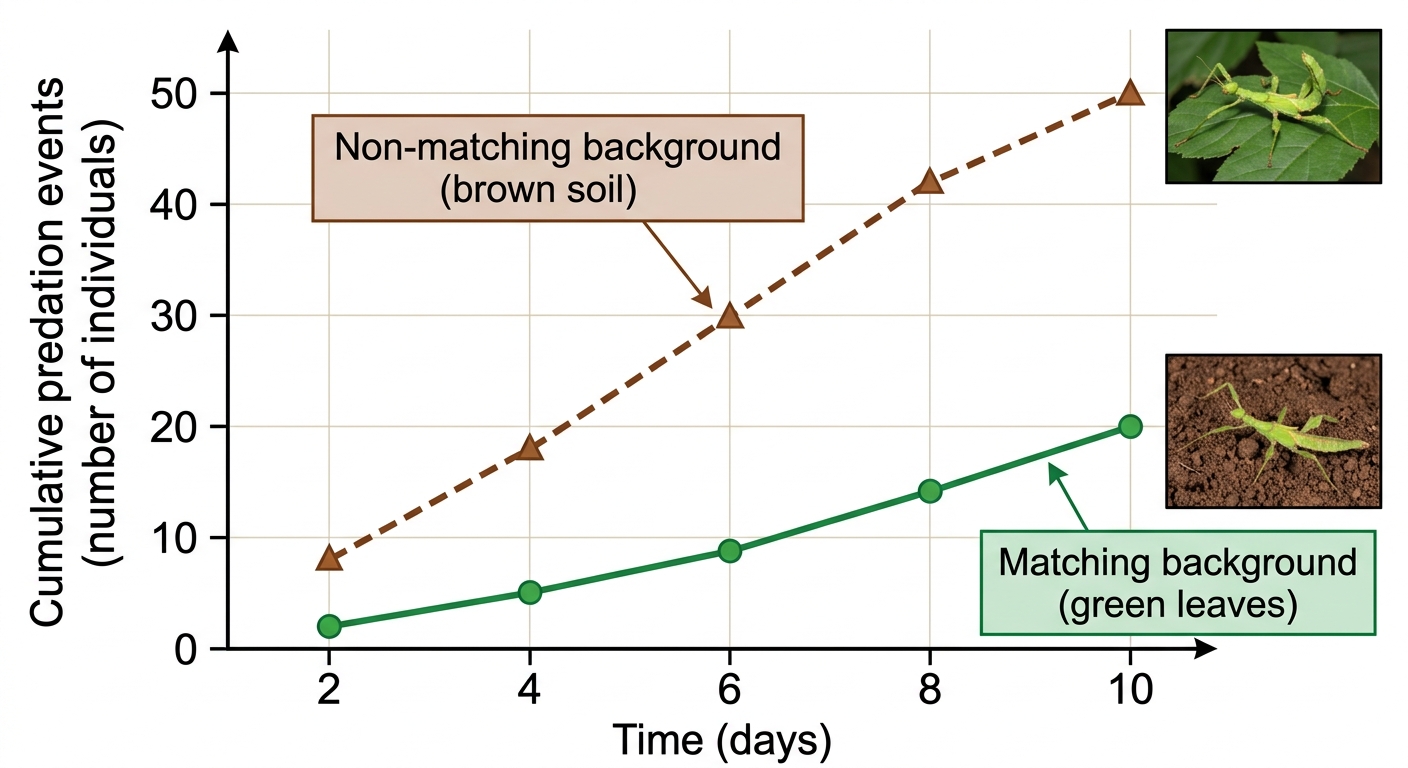
In a controlled experiment, 50 stick insects (Extatosoma tiaratum) were placed on a matching background (green leaves) and 50 on a non-matching background (brown soil). Cumulative predation events were recorded over 10 days.
| Day 2 | matching = 2 | non-matching = 8 |
|---|---|---|
| Day 4 | matching = 5 | non-matching = 18 |
| Day 6 | matching = 9 | non-matching = 30 |
| Day 8 | matching = 14 | non-matching = 42 |
| Day 10 | matching = 20 | non-matching = 50 |
a
State the total percentage of matching-background insects predated by Day 10. [1]
b
Explain how the data support the hypothesis that cryptic coloration provides a survival advantage. [2]
c
Evaluate the extent to which this experiment's design allows the conclusion to be applied to natural environments. [2]
Solutions
4QuestionAdaptation to Changing EnvironmentsAssessment Practice
5 marks~8 minCriterion C
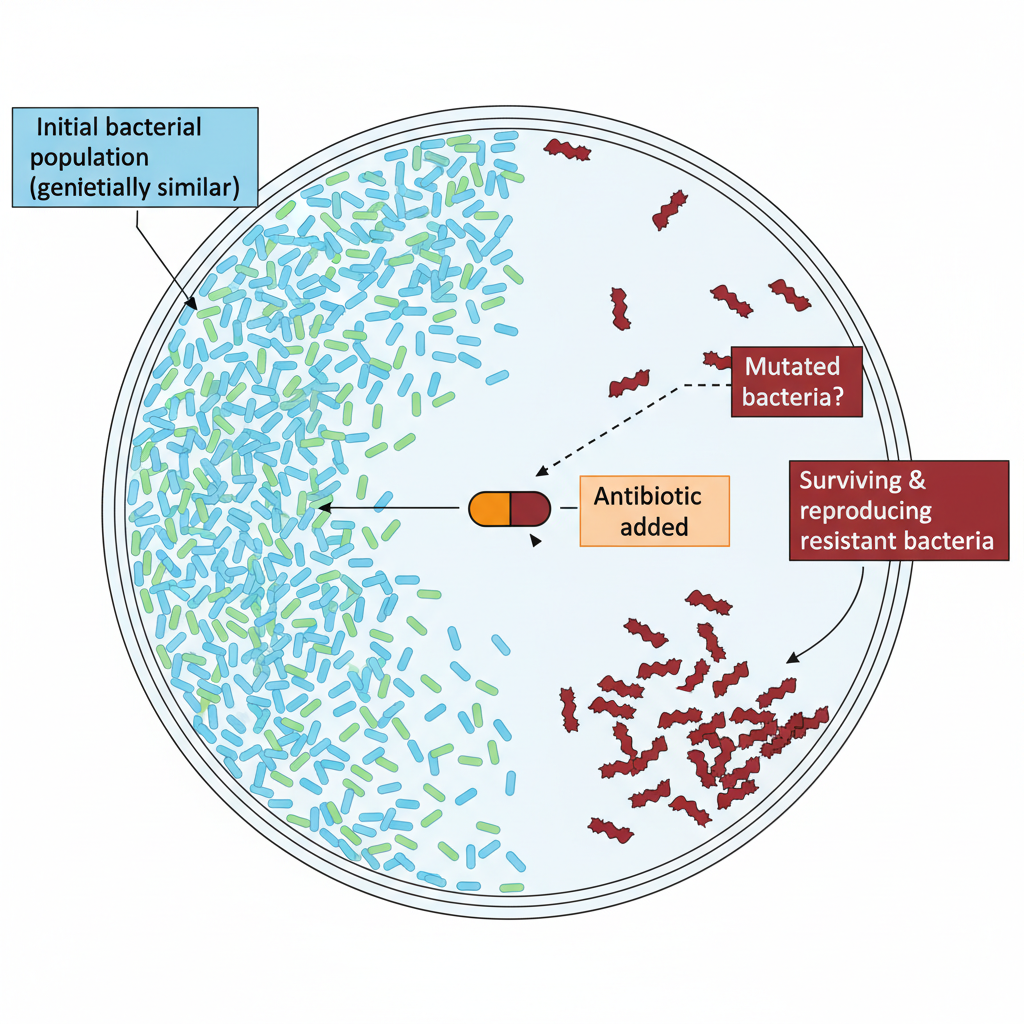
A student states: "When bacteria are exposed to an antibiotic, the antibiotic causes mutations in some bacterial cells, and those mutated cells survive and reproduce, leading to antibiotic resistance."
Hospitals worldwide report rising rates of antibiotic-resistant infections, making this mechanism clinically significant.
Hospitals worldwide report rising rates of antibiotic-resistant infections, making this mechanism clinically significant.
a
Identify the specific error in the student's statement. [1]
b
Explain the correct mechanism by which antibiotic resistance develops in a bacterial population. [2]
c
Evaluate how this mechanism illustrates the role of genetic variation and natural selection in adaptation to a changing environment. [2]
Solutions
5QuestionAdaptation to Changing EnvironmentsAssessment Practice
7 marks~11 minCriterion D
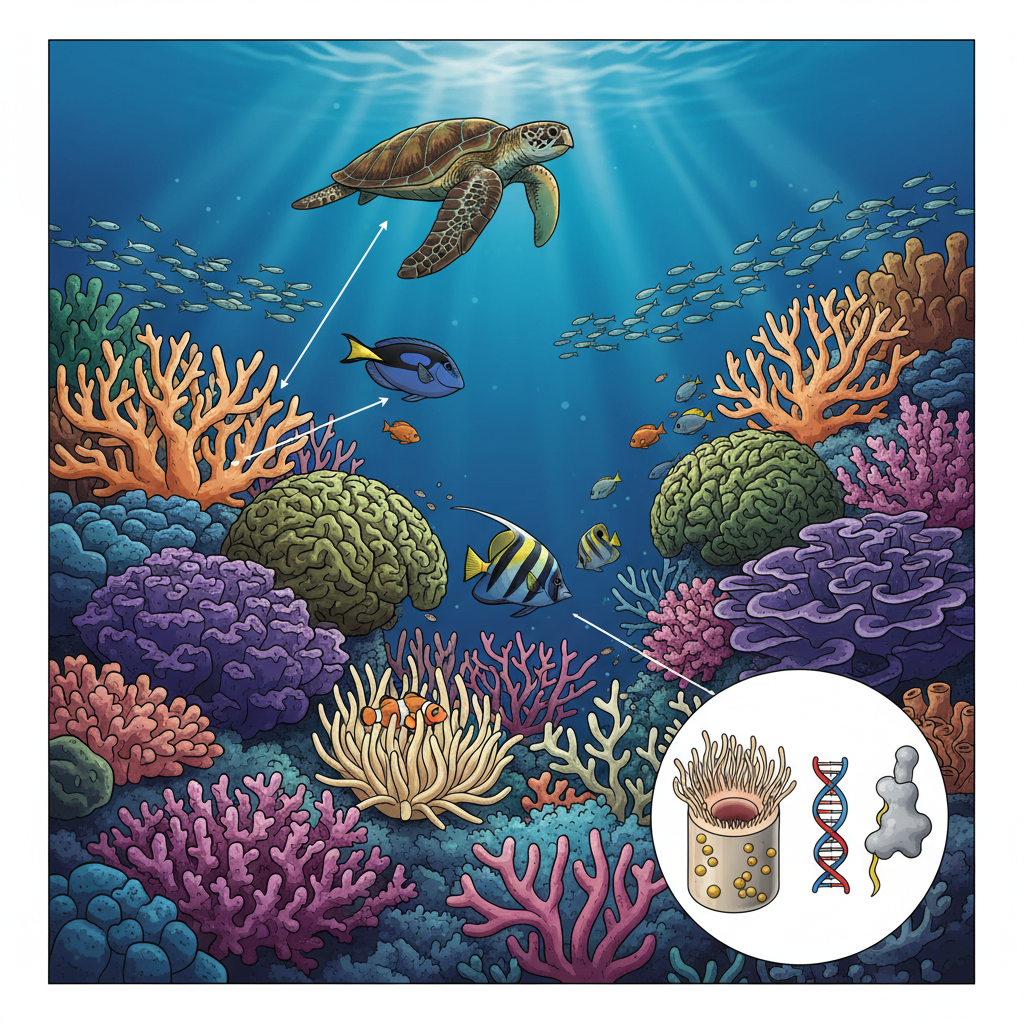
A conservation organisation is considering using CRISPR gene editing to introduce heat-tolerant genes from thermally resistant corals into Great Barrier Reef populations, aiming to improve survival under rising ocean temperatures. Critics warn of unintended ecological consequences, ethical concerns about overriding natural selection, and the difficulty of forecasting outcomes in a system already stressed by ocean acidification and bleaching events.
a
Discuss TWO potential ecological risks of releasing genetically modified corals into the reef ecosystem. [3]
b
Discuss ONE ethical concern raised by using CRISPR to deliberately alter the evolutionary trajectory of a wild coral population. [2]
c
Evaluate the limitations of predicting the long-term impacts of this intervention on reef biodiversity. [2]
Solutions
That's every free question here — 5 of 64.
+59 more questions, plus Mock Papers & Worksheets, are waiting in Premium.