You're viewing free preview questions — 5 questions previewing here — subscribe to unlock 111 more, plus the Full Question Bank, Mock Papers & Worksheets.Upgrade
Natural Selection — Free MYP5 Biology Practice Questions

1QuestionDifferential Reproduction and FitnessConcept Practice
2 marks~3 minCriterion A
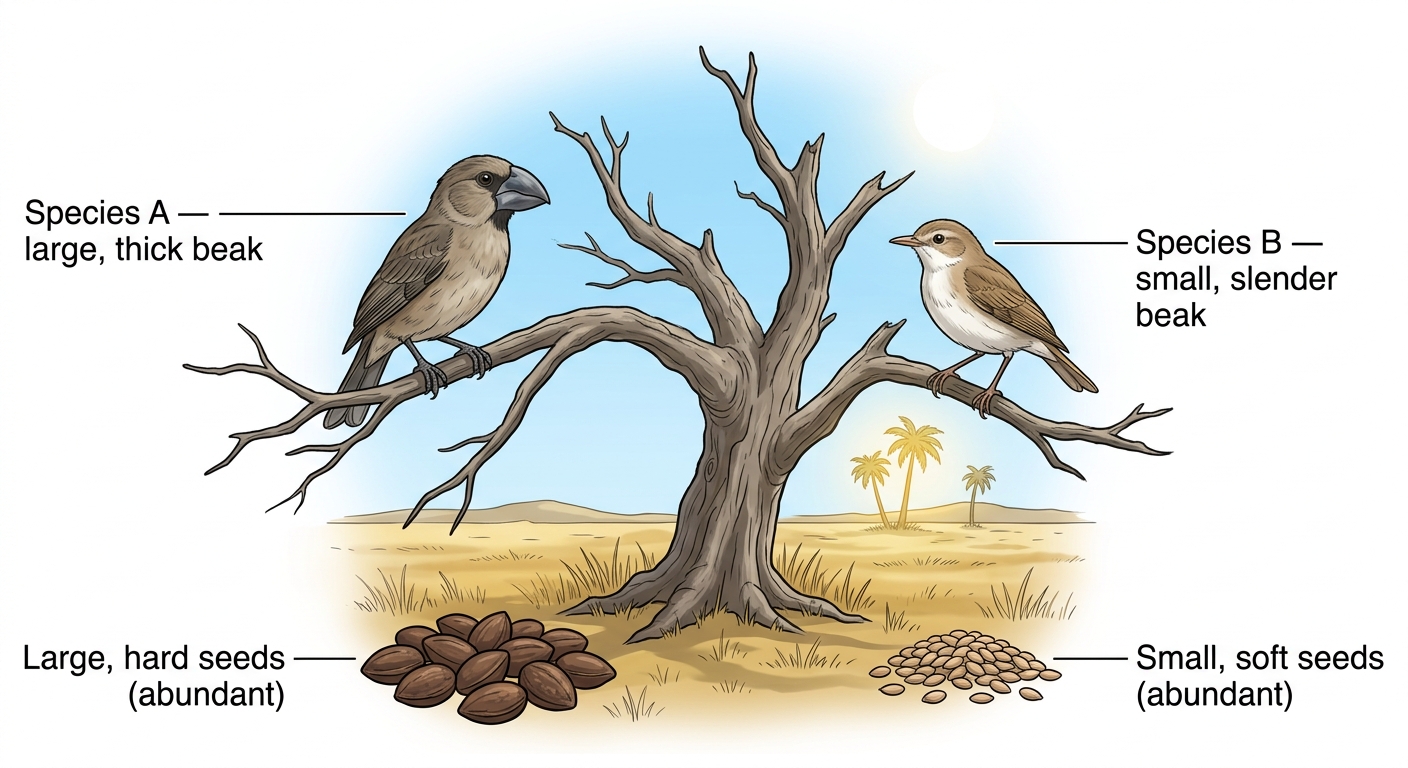
The diagram shows two bird species on an island. Species A has a large, thick beak and feeds on large, hard seeds. Species B has a small, slender beak and feeds on small, soft seeds. A prolonged drought causes small, soft seeds to become scarce, leaving large, hard seeds as the dominant food source.
a
Identify which species has a selective advantage in the post-drought environment and explain why. [1]
b
Explain how this selective advantage leads to differential reproduction, and what effect this has on the fitness of each species in the altered environment. [1]

Solutions
2QuestionDifferential Reproduction and FitnessAssessment Practice
3 marks~5 minCriterion A
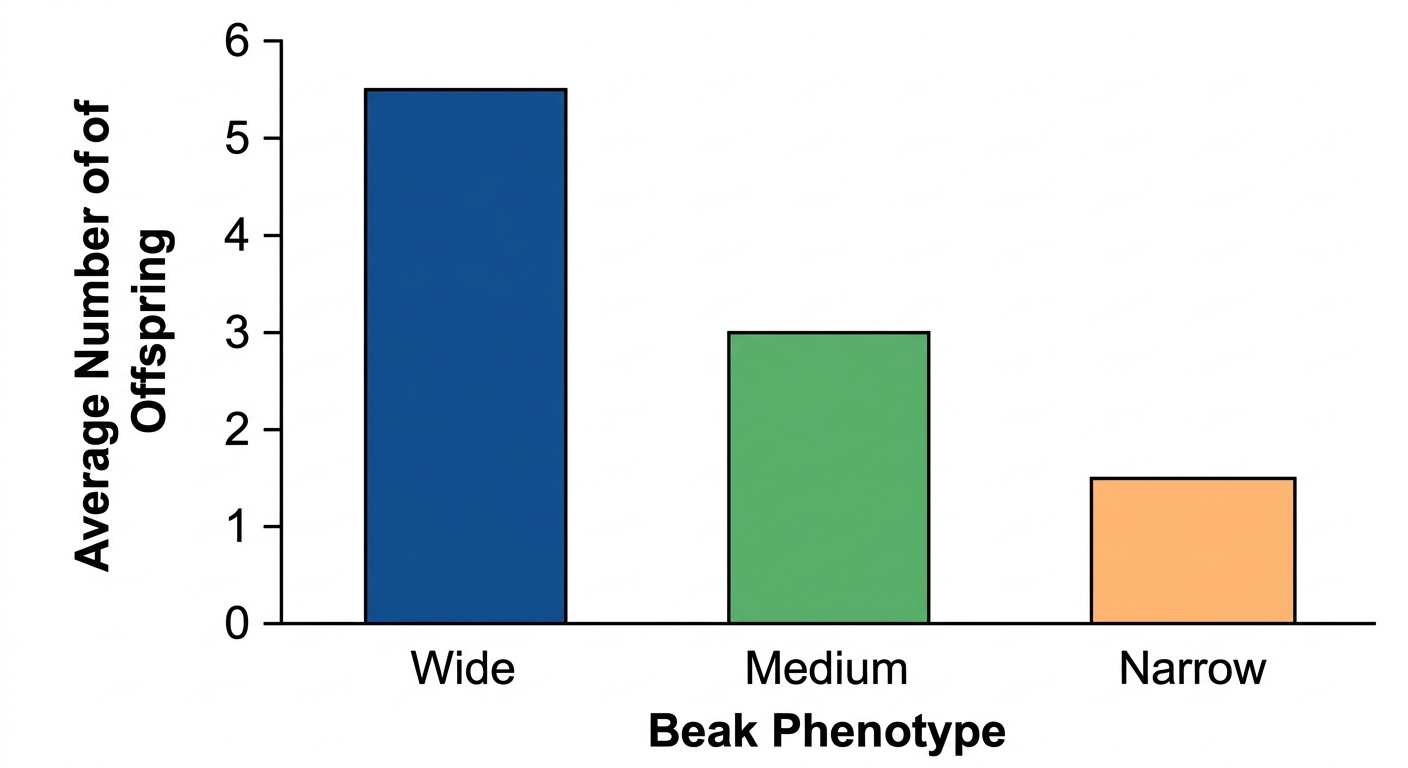
During a drought year on a Galápagos island, small soft seeds become scarce, leaving large hard seeds as the dominant food source. The bar chart below shows the average number of offspring produced by three beak phenotypes in a finch population during this drought year.
Beak phenotype — Average offspring produced
Wide: 5.5
Medium: 3.0
Narrow: 1.5
Beak phenotype — Average offspring produced
Wide: 5.5
Medium: 3.0
Narrow: 1.5
a
State which beak phenotype has the highest fitness during this drought year, and identify the average number of offspring it produces. [1]
b
Explain why wide-beaked finches are better able to survive and reproduce during a drought year. [1]
c
Analyse how the pattern of reproductive output shown in the data supports the concept of differential reproductive success as a mechanism of natural selection. [1]
Solutions
3QuestionRole of Environmental Factors in SelectionAssessment Practice
4 marks~6 minCriterion C
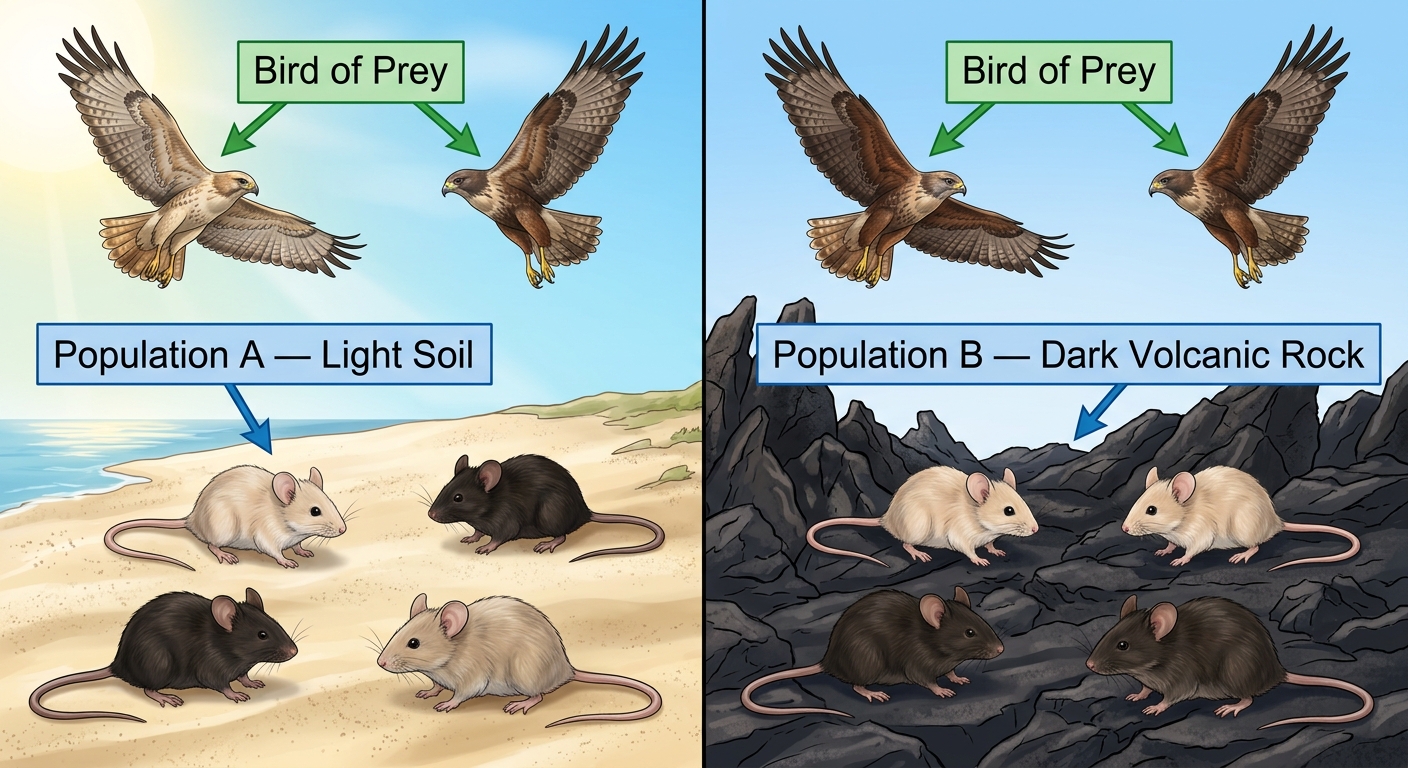
Two populations of mice live in different habitats. Population A inhabits light-coloured sandy soil; Population B inhabits dark volcanic rock. Both populations contain individuals with light fur and individuals with dark fur. Birds of prey hunt by sight in both habitats.
a
Identify which fur colour is favoured by natural selection in Population A and explain why individuals with that phenotype have greater reproductive success. [2]
b
A student claims that, over many generations, dark-fur alleles will eventually disappear entirely from Population A. Evaluate this claim, using your knowledge of natural selection and population genetics. [2]
Solutions
4QuestionDifferential Reproduction and FitnessAssessment Practice
6 marks~9 minCriterion D
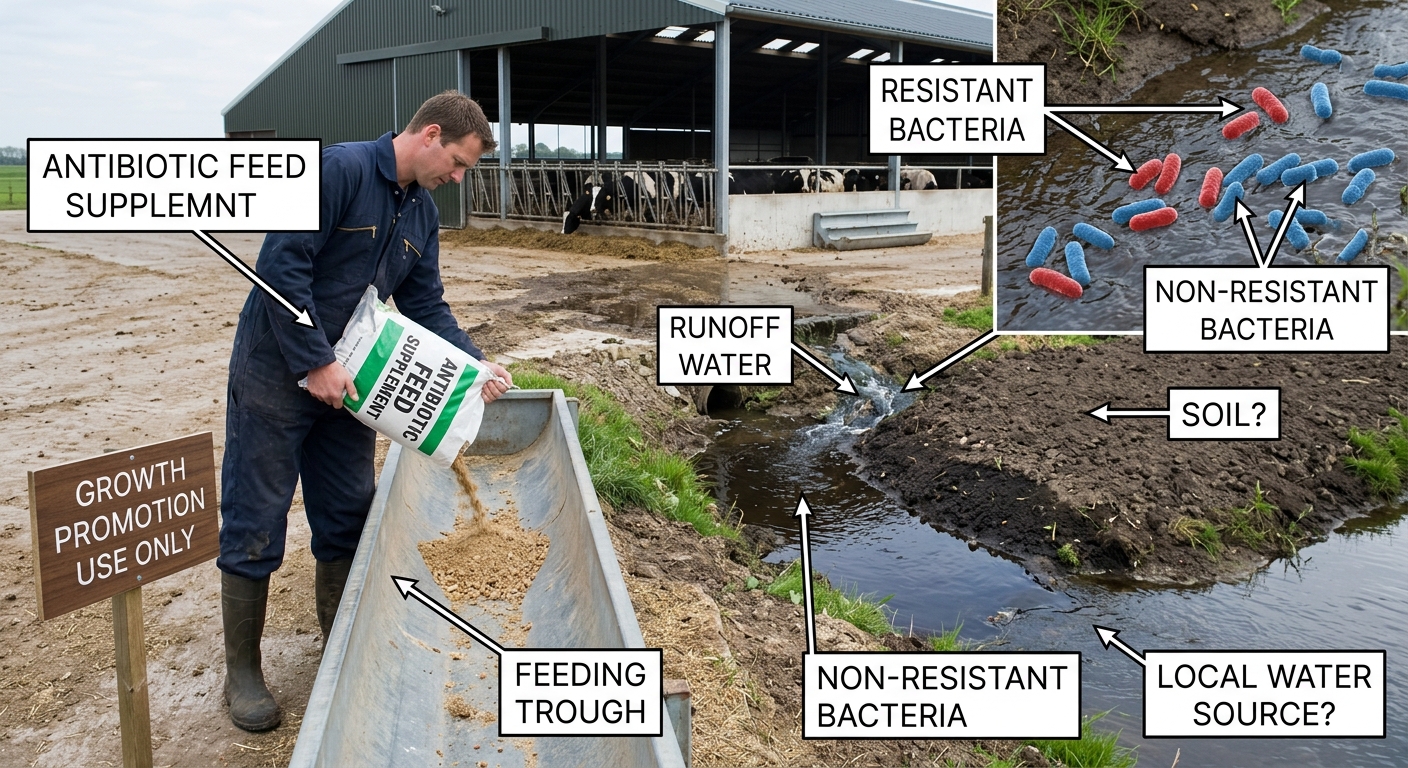
A farmer applies low-dose antibiotics as growth promoters in livestock. Resistant bacteria survive and reproduce at higher rates than non-resistant bacteria, generating a reservoir of antibiotic-resistant strains on the farm. Manure runoff carries these bacteria into adjacent soil and waterways.
a
Explain how antibiotic-resistant bacteria spread from the farm into surrounding soil and water sources. [2]
b
Apply your understanding of natural selection to explain why antibiotic-resistant bacterial populations are likely to increase further once they enter a contaminated local water supply. [2]
c
Evaluate the ethical tensions between the agricultural benefits of low-dose antibiotic use and the public health risks it creates for nearby communities. [2]
Solutions
5QuestionProcess of Natural Selection (Variation, Overproduction, Competition, Survival of the Fittest, Reproduction, Change Over Time)Assessment Practice
8 marks~12 minCriterion C
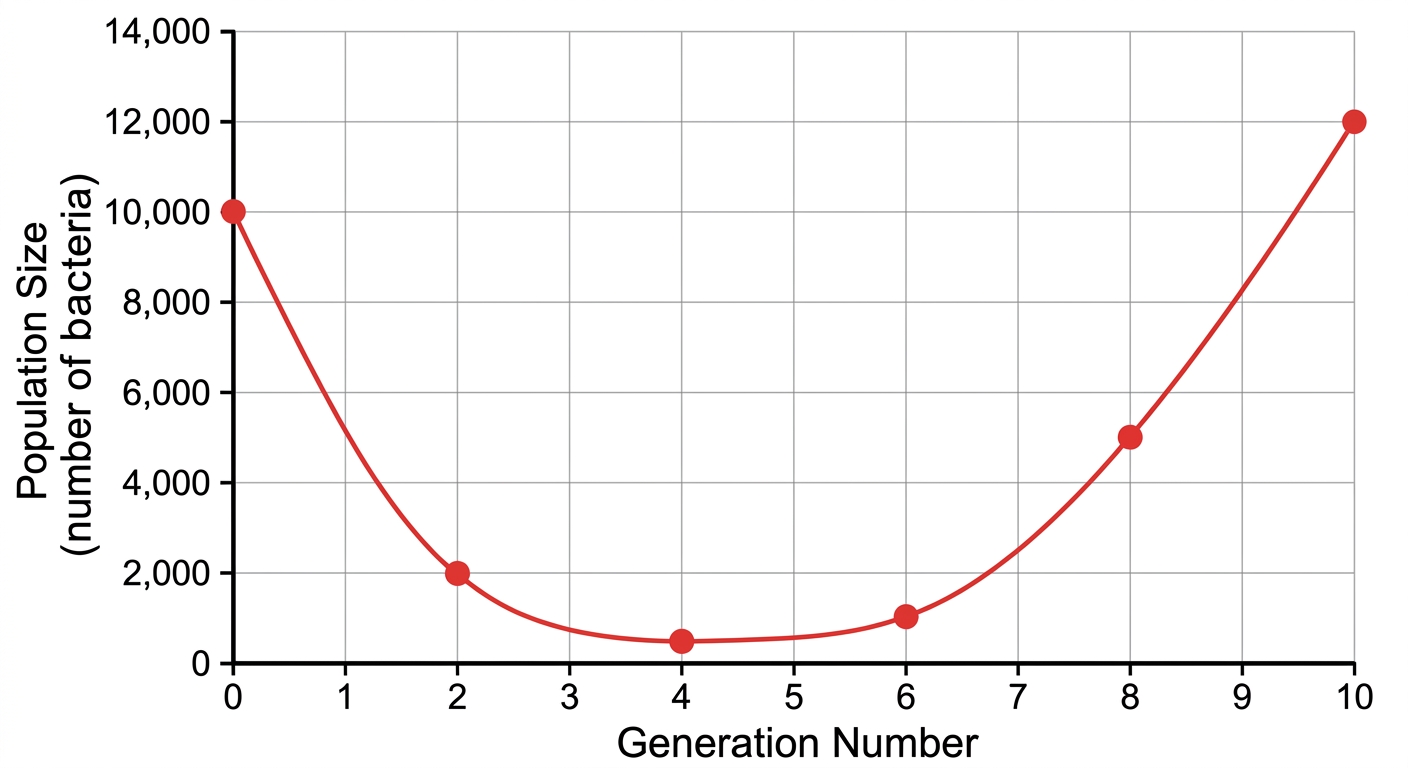
A population of 10,000 Escherichia coli bacteria was exposed to a sub-lethal concentration of the antibiotic ciprofloxacin. Population size was recorded every two generations over ten generations.
| Generation | 0 | 2 | 4 | 6 | 8 | 10 |
|---|---|---|---|---|---|---|
| Population size | 10 | 000 — 2 | 000 — 500 — 1 | 000 — 5 | 000 — 12 | 000 |
a
Describe the trend in population size across the ten generations. [2]
b
Explain how the observed population trend provides evidence for natural selection. In your answer, refer to variation, overproduction, competition, survival of the fittest, and reproduction. [4]
c
Evaluate whether mutation alone, without natural selection, could account for the speed and consistency of the population recovery seen after generation 4. [2]
Solutions
That's every free question here — 5 of 116.
+111 more questions, plus Mock Papers & Worksheets, are waiting in Premium.