You're viewing free preview questions — 5 questions previewing here — subscribe to unlock 39 more, plus the Full Question Bank, Mock Papers & Worksheets.Upgrade
Theory of Evolution (Charles Darwin) — Free MYP5 Biology Practice Questions

1QuestionDevelopment of the Theory of Evolution by Natural SelectionConcept Practice
2 marks~3 minCriterion A
Darwin observed that individuals within a population show heritable variation. Some variants survive and reproduce more successfully than others in a given environment — a process he called natural selection.
a
Identify one source of heritable variation in a population. [1]
b
Explain how natural selection acting on heritable variation can lead to a change in the characteristics of a population over many generations. [1]

Solutions
2QuestionVariation within PopulationsAssessment Practice
2 marks~3 minCriterion D
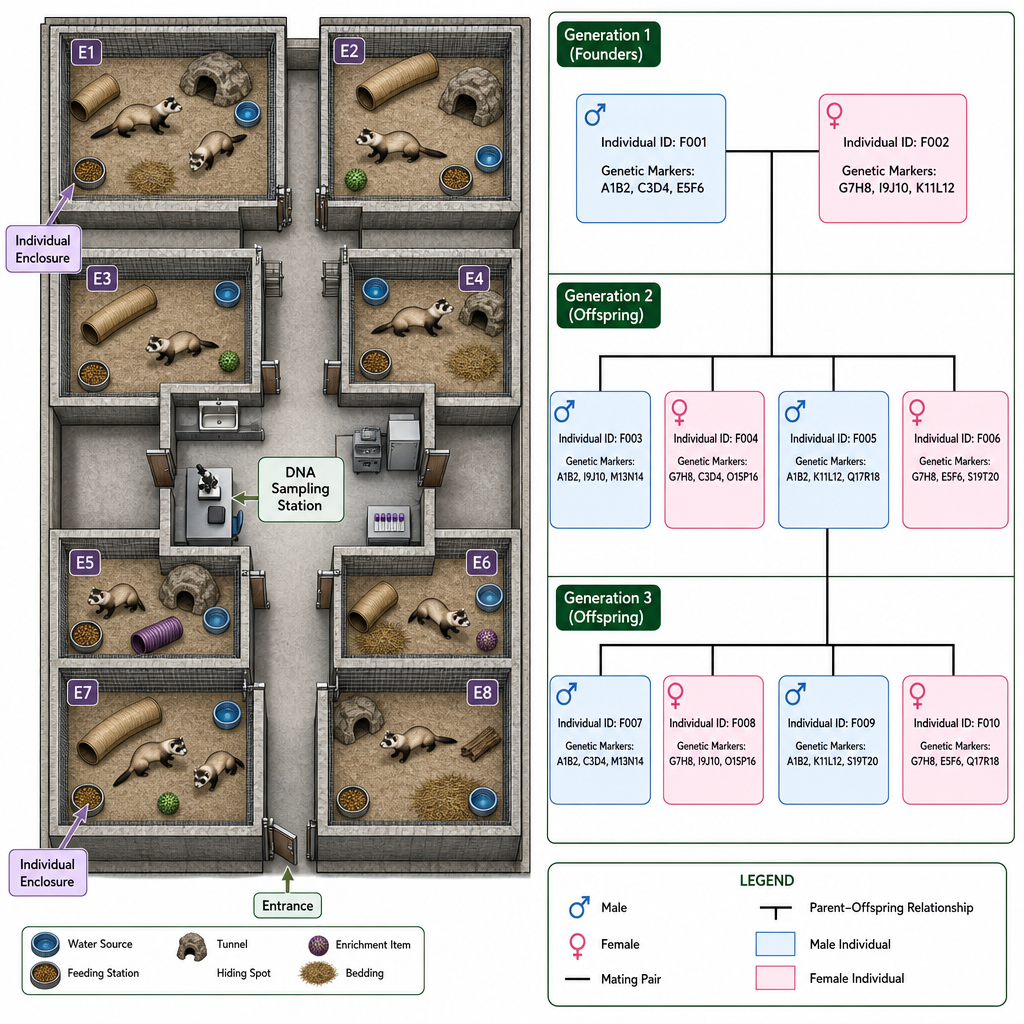
In captive breeding programmes for endangered species such as the California condor, conservation biologists use DNA markers to assess genetic variation across individuals. Breeding pairs are selected to maximise genetic diversity and minimise inbreeding depression within the captive population.
a
Outline how genetic variation data are used in this captive breeding programme to support species conservation. [1]
b
Describe one ethical issue that arises from humans controlling which individuals reproduce in this programme. [1]
Solutions
3QuestionVariation within PopulationsAssessment Practice
5 marks~8 minCriterion C
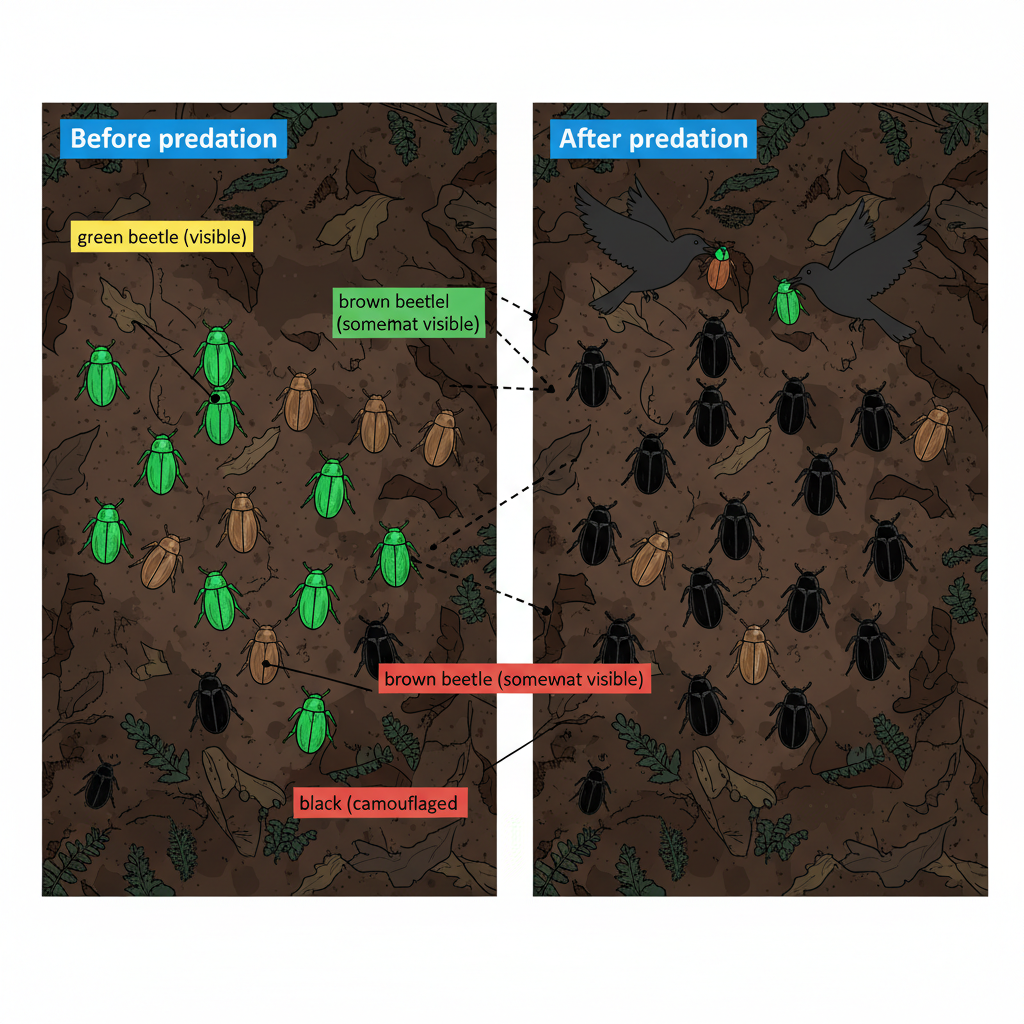
A population of beetles lives on a dark forest floor. Before a predation event, the population contains green, brown, and black individuals. After birds forage in the area, only black beetles remain; green and brown individuals have been consumed.
a
State what the left panel of the diagram reveals about variation in the beetle population before predation occurs. [1]
b
Explain how the diagram demonstrates that predation acts as a selective pressure rather than a cause of variation. [2]
c
Evaluate the assertion that variation within a population is influenced by predation pressure. [2]
---
---
Solutions
4QuestionDevelopment of the Theory of Evolution by Natural SelectionAssessment Practice
5 marks~8 minCriterion C
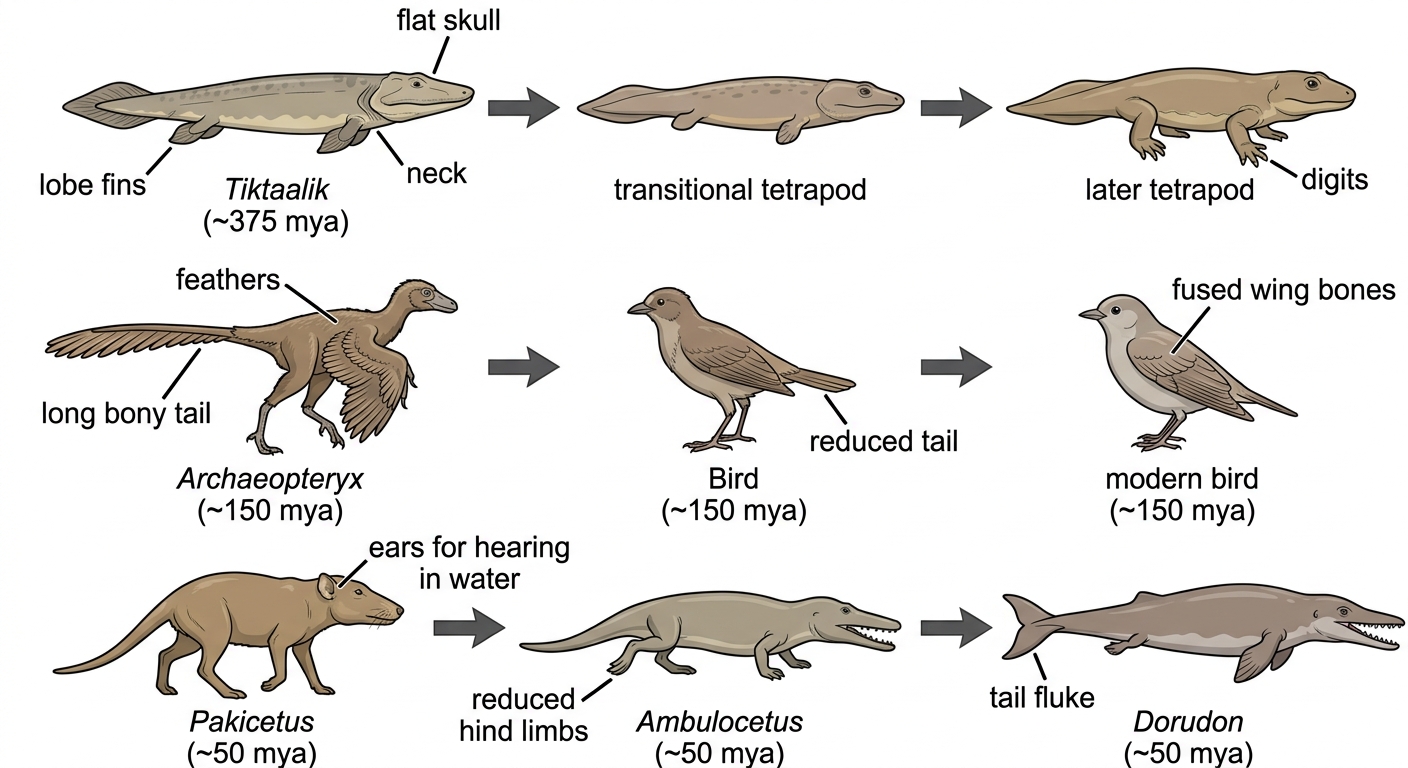
Three fossil sequences are described below.
Sequence 1 — Fish to tetrapod: Tiktaalik (375 Ma) possesses lobe fins, a flat skull, and a neck; later tetrapod fossils show limbs with digits.
Sequence 2 — Dinosaur to bird: Archaeopteryx (150 Ma) retains a long bony tail and clawed wings alongside feathers; later bird fossils show tail reduction and fused wing bones.
Sequence 3 — Land to sea: Pakicetus (50 Ma) is a terrestrial mammal with ears adapted for underwater hearing; later whale fossils (Ambulocetus, Dorudon) show progressively reduced hind limbs and developed tail flukes.
Sequence 1 — Fish to tetrapod: Tiktaalik (375 Ma) possesses lobe fins, a flat skull, and a neck; later tetrapod fossils show limbs with digits.
Sequence 2 — Dinosaur to bird: Archaeopteryx (150 Ma) retains a long bony tail and clawed wings alongside feathers; later bird fossils show tail reduction and fused wing bones.
Sequence 3 — Land to sea: Pakicetus (50 Ma) is a terrestrial mammal with ears adapted for underwater hearing; later whale fossils (Ambulocetus, Dorudon) show progressively reduced hind limbs and developed tail flukes.
a
For one sequence of your choice, identify an anatomical feature that changes over time and explain how this supports Darwin's hypothesis of gradual change through natural selection. [2]
b
Evaluate whether the three sequences together provide convincing evidence for Darwin's hypothesis, considering both the support offered by the fossil record and the limitations imposed by its incompleteness. [3]
Solutions
5QuestionDevelopment of the Theory of Evolution by Natural SelectionAssessment Practice
7 marks~11 minCriterion A
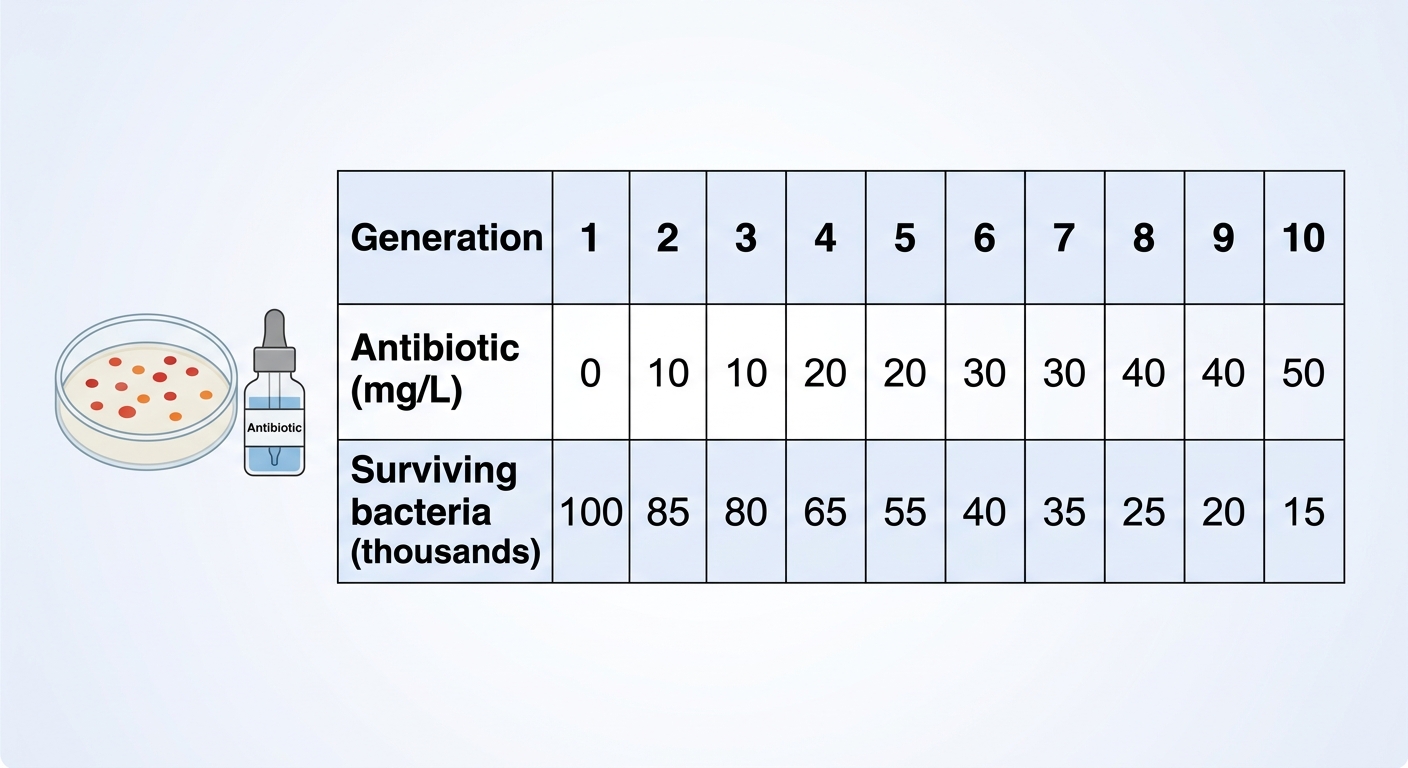
A culture of E. coli is exposed to increasing antibiotic concentrations over 10 generations. The data below show the conditions and outcomes for each generation.
| Generation | 1 | 2 | 3 | 4 | 5 | 6 | 7 | 8 | 9 | 10 |
|---|---|---|---|---|---|---|---|---|---|---|
| Antibiotic concentration (mg/L) | 0 | 10 | 10 | 20 | 20 | 30 | 30 | 40 | 40 | 50 |
| Surviving bacteria (thousands) | 100 | 85 | 80 | 65 | 55 | 40 | 35 | 25 | 20 | 15 |
a
Describe the pattern shown in the data, referring to both the number of surviving bacteria and the rate of change across generations. [2]
b
Explain how natural selection accounts for the pattern observed. In your answer, refer to variation, selection pressure, and heritability. [3]
c
The antibiotic concentration is increased to 60 mg/L in generation 11. Analyse whether the bacterial population is more or less likely to be eliminated compared with earlier generations, and justify your reasoning using evidence from the data. [2]
Solutions
That's every free question here — 5 of 44.
+39 more questions, plus Mock Papers & Worksheets, are waiting in Premium.