You're viewing free preview questions — 6 questions previewing here — subscribe to unlock 227 more, plus the Full Question Bank, Mock Papers & Worksheets.Upgrade
Back

Pathogens and Communicable Disease — Free MYP5 Biology Practice Questions

Free questions

Open in full, with answers, mark scheme and examiner insights.

Question 1Criterion A · Band 1-4 · Easy · 4 marksrevisionprep.com

Pathogen-Host Interactions

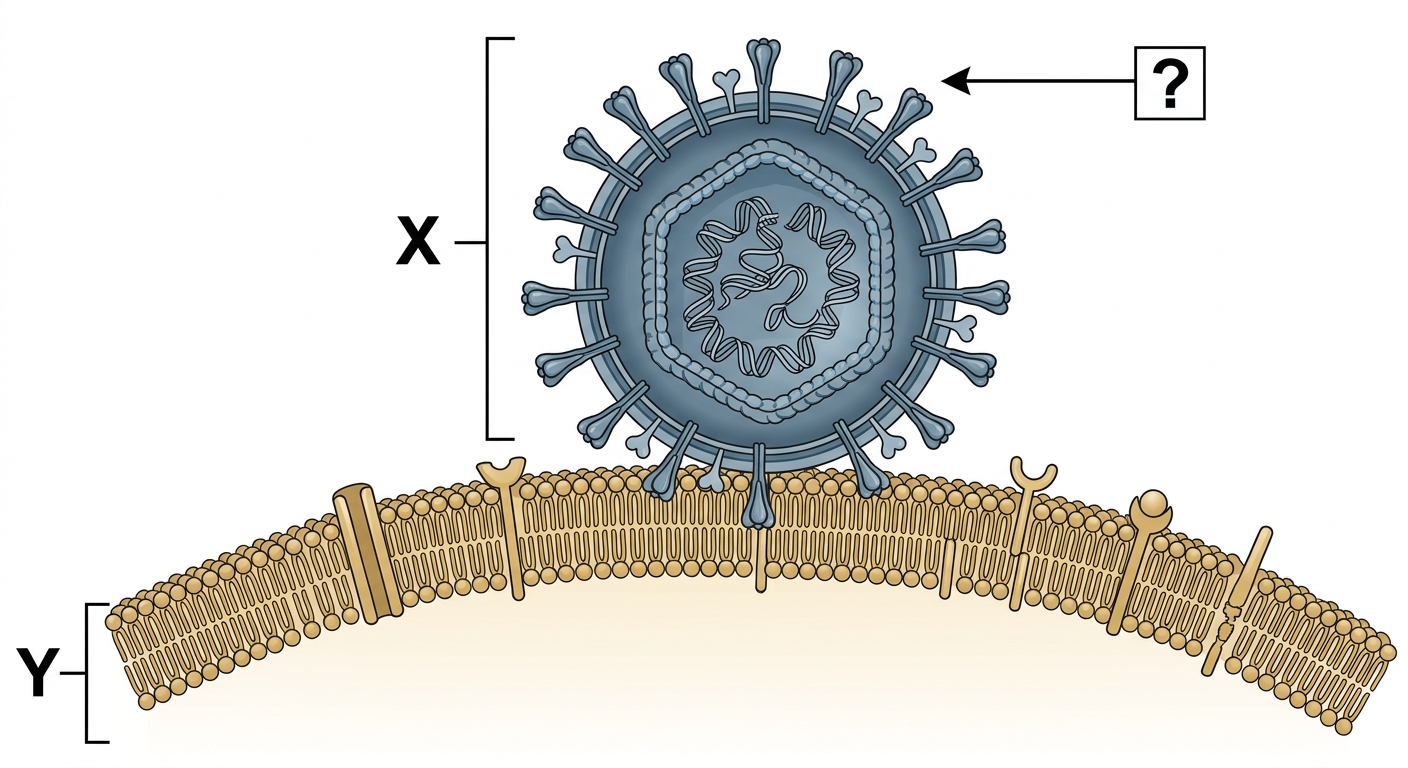
The diagram shows a virus attaching to a host cell. X labels the whole virus particle and Y labels the host cell membrane.
Question diagram
(a)
Identify the structures on the outside of the virus that make contact with the host cell membrane. [1]Criterion A (i) · Level 1-2
(b)
Explain how these structures allow the virus to attach only to particular host cells. [2]Criterion A (ii) · Level 3-4
(c)
Suggest what happens to the virus after it has attached to membrane Y. [1]Criterion A (ii) · Level 3-4

revisionprep.com

Summary Answer

Not available for this question.

Model Answer

Not available for this question.

Marking Scheme

Not available for this question.

Examiner Insights

Not available for this question.

Question 2Criterion A · Band 1-4 · Easy · 4 marksrevisionprep.com

Prevention Methods

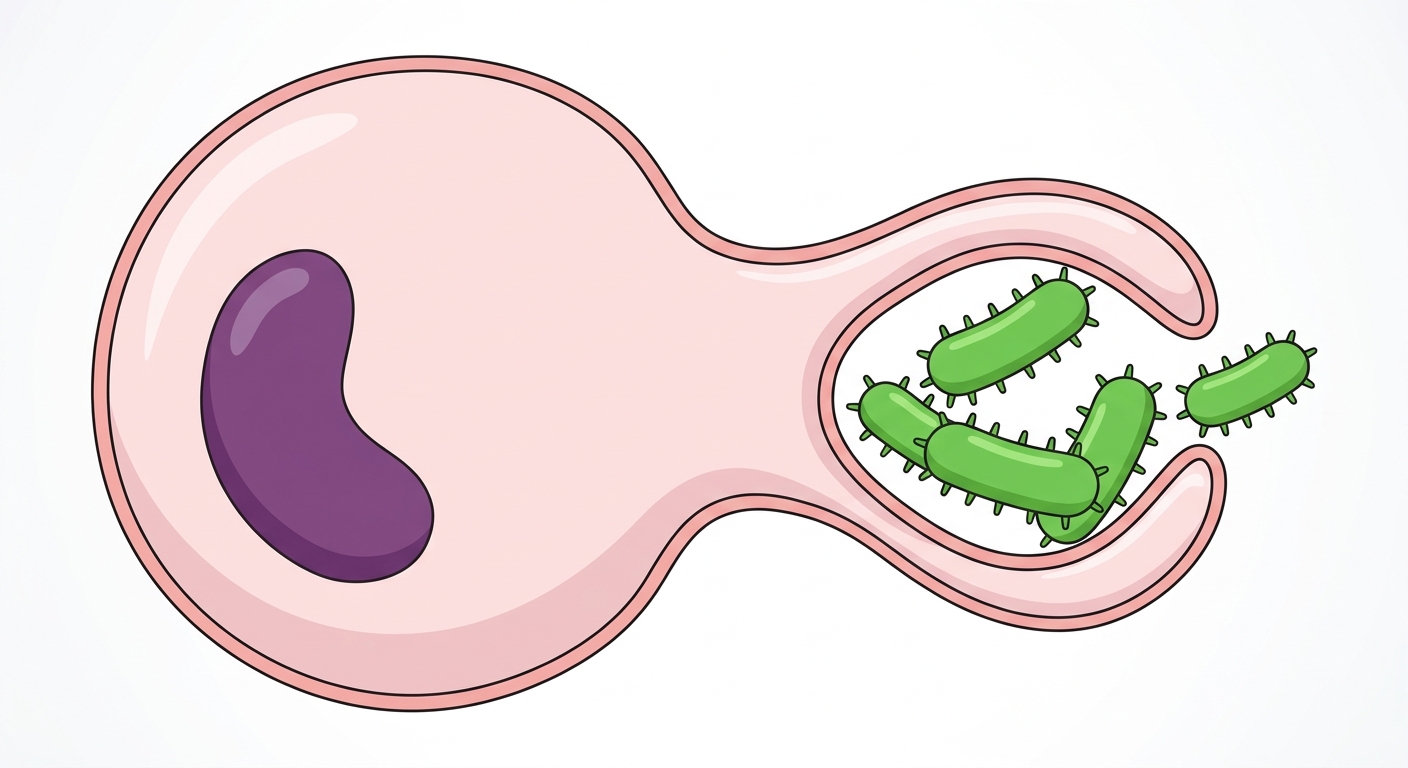
The diagram shows a phagocyte surrounding a group of bacteria.
Question diagram
(a)
Name the process shown. [1]Criterion A (i) · Level 1-2
(b)
Describe what happens to the bacteria after they are taken into the phagocyte. [2]Criterion A (i) · Level 3-4
(c)
Explain why this process is described as a non-specific defence. [1]Criterion A (i) · Level 3-4

revisionprep.com

Summary Answer

Not available for this question.

Model Answer

Not available for this question.

Marking Scheme

Not available for this question.

Examiner Insights

Not available for this question.

Question 3Criterion C + A · Band 1-6 · Medium · 5 marksrevisionprep.com

Types of pathogens: bacteria, viruses, fungi, protists and parasites

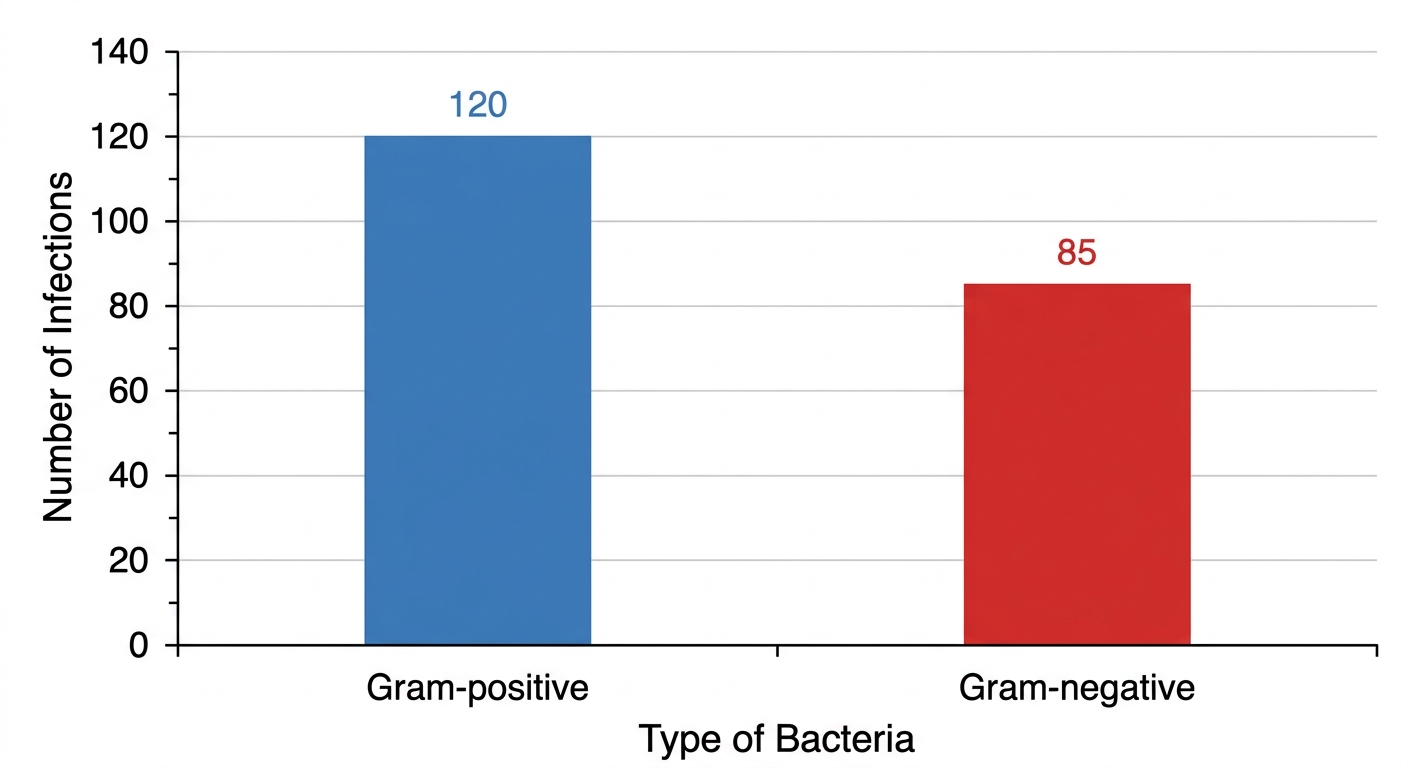
The bar chart shows the number of bacterial infections recorded in a hospital in one year, sorted by type of bacteria.

Gram-negative bacteria have a thin cell wall surrounded by an extra outer membrane. Many antibiotics cannot pass through this outer membrane.
Question diagram
(a)
Calculate how many more infections were caused by Gram-positive bacteria than by Gram-negative bacteria. [1]Criterion C (ii) · Level 1-2
(b)
Calculate the percentage of all recorded infections that were caused by Gram-negative bacteria. [2]Criterion C (i) · Level 3-4
(c)
Explain why the hospital treats Gram-negative bacteria as the greater threat, even though they caused fewer infections. [2]Criterion A (iii) · Level 5-6

revisionprep.com

Summary Answer

Not available for this question.

Model Answer

Not available for this question.

Marking Scheme

Not available for this question.

Examiner Insights

Not available for this question.

Question 4Criterion A · Band 3-6 · Medium · 4 marksrevisionprep.com

Structure and Characteristics of Bacteria (Ex: Cholera)
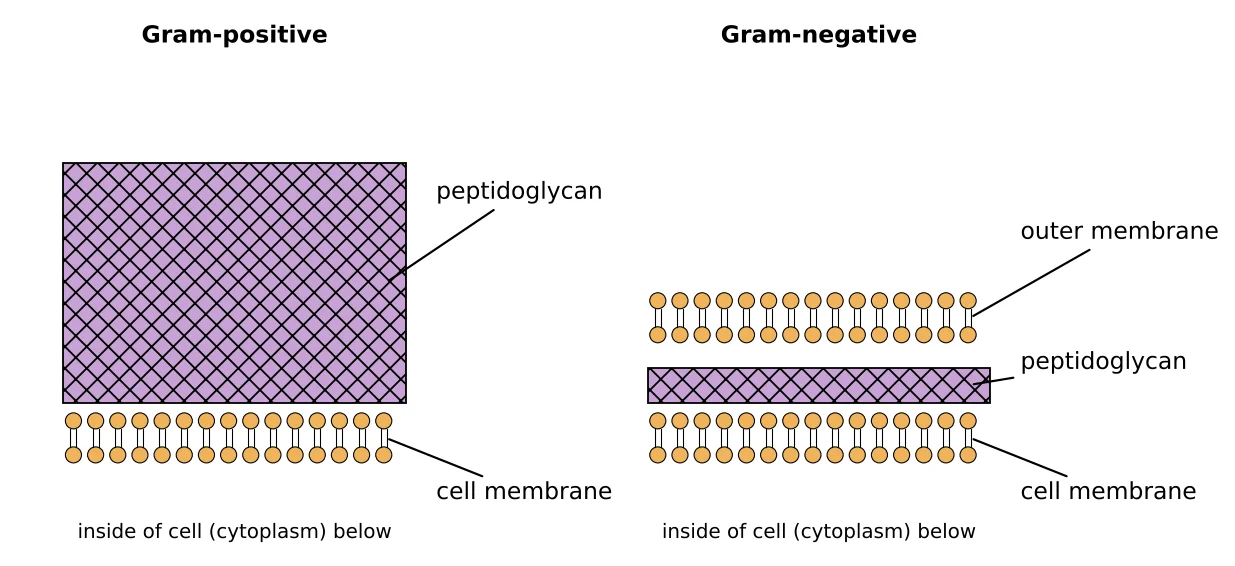
The diagram shows the cell wall layers of a Gram-positive bacterium and a Gram-negative bacterium. Vibrio cholerae is Gram-negative.
Question diagram
(a)
Using the diagram, describe two differences between the cell wall layers of the two types of bacteria. [2]Criterion A (i) · Level 3-4
(b)
Tears contain lysozyme, an enzyme that breaks down the peptidoglycan of bacterial cell walls. Suggest which type of bacterium is better protected from lysozyme, and explain why. [2]Criterion A (ii) · Level 5-6

revisionprep.com

Summary Answer

Not available for this question.

Model Answer

Not available for this question.

Marking Scheme

Not available for this question.

Examiner Insights

Not available for this question.

Question 5Criterion B · Band 3-8 · Challenge · 7 marksrevisionprep.com

Structure and Replication of Viruses (Ex: Flu)

Bacteriophages infect bacteria. When phages are added to a 'lawn' of bacteria growing on an agar plate, each phage that infects a cell destroys the bacteria around it, leaving a clear spot called a plaque. Counting plaques shows how many active phages were present. A student wants to investigate how temperature affects the ability of phages to infect bacteria. A phage suspension can be kept at a chosen temperature for 10 minutes before being added to a plate.
(a)
Formulate a hypothesis for this investigation and explain it using your knowledge of virus structure. [2]Criterion B (ii) · Level 5-6
(b)
Explain how the independent variable will be changed, how the dependent variable will be measured, and how two variables will be controlled. [4]Criterion B (iii) · Level 7-8
(c)
Suggest one safety precaution for this investigation. [1]Criterion B (iv) · Level 3-4

revisionprep.com

Summary Answer

Not available for this question.

Model Answer

Not available for this question.

Marking Scheme

Not available for this question.

Examiner Insights

Not available for this question.

Question 6Criterion D · Band 3-8 · Challenge · 7 marksrevisionprep.com

Modes of Transmission of Pathogens

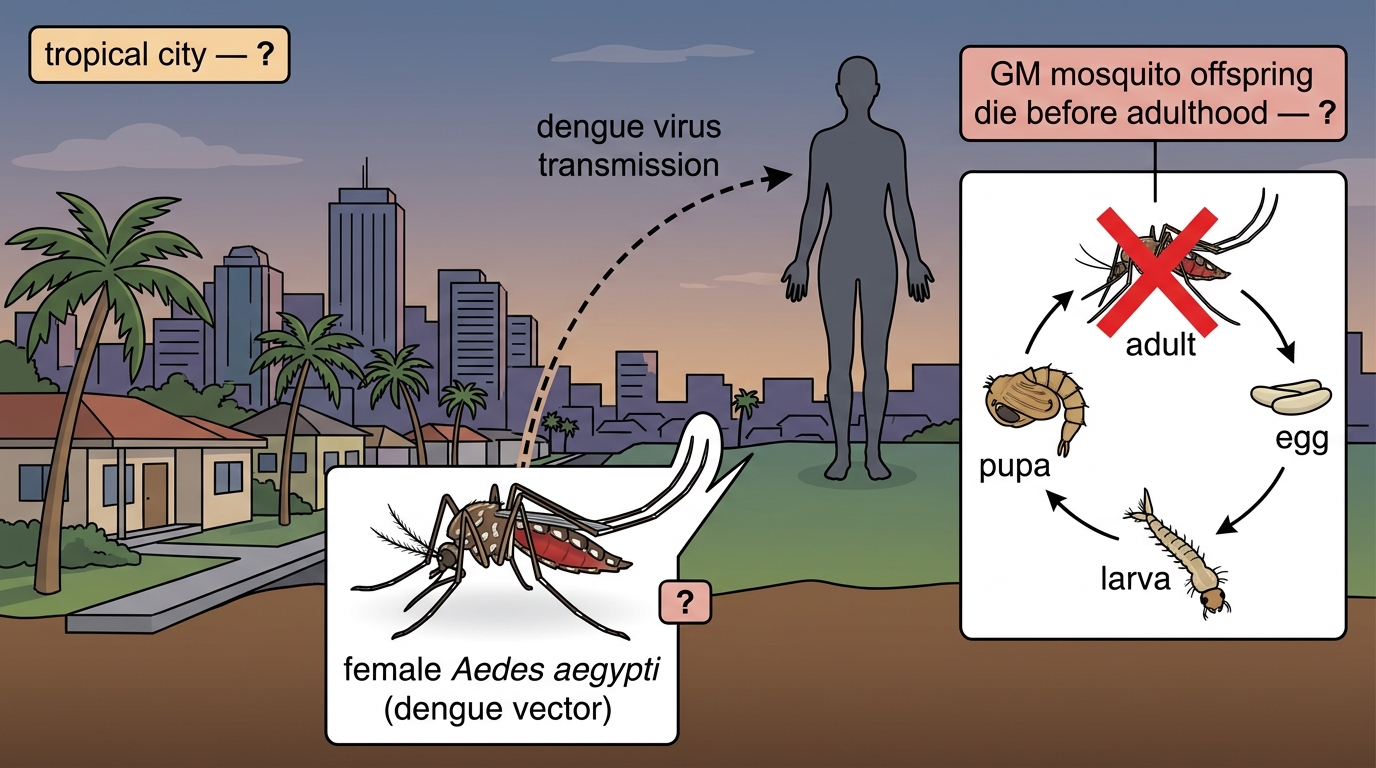
A city plans to reduce dengue fever by releasing genetically modified (GM) male Aedes aegypti mosquitoes. Their offspring die before becoming adults, so the mosquito population falls over several generations.
Question diagram
(a)
Explain why reducing the number of Aedes mosquitoes reduces dengue cases. [2]Criterion D (i) · Level 3-4
(b)
Describe one possible ecological risk of greatly reducing a mosquito population. [2]Criterion D (ii) · Level 5-6
(c)
Discuss whether the city should release the GM mosquitoes, considering health, environmental and social perspectives. [3]Criterion D (ii), D (iii) · Level 7-8

revisionprep.com

Summary Answer

Not available for this question.

Model Answer

Not available for this question.

Marking Scheme

Not available for this question.

Examiner Insights

Not available for this question.

That's every free question here — 6 of 233.

+227 more questions, plus Mock Papers & Worksheets, are waiting in Premium.

Upgrade