You're viewing free preview questions — 6 questions previewing here — subscribe to unlock 75 more, plus the Full Question Bank, Mock Papers & Worksheets.Upgrade
Back

Vaccination — Free MYP5 Biology Practice Questions

Free questions

Open in full, with answers, mark scheme and examiner insights.

Question 1Criterion A · Band 1-4 · Easy · 4 marksrevisionprep.com

Types of Vaccines (Examples of vaccines)
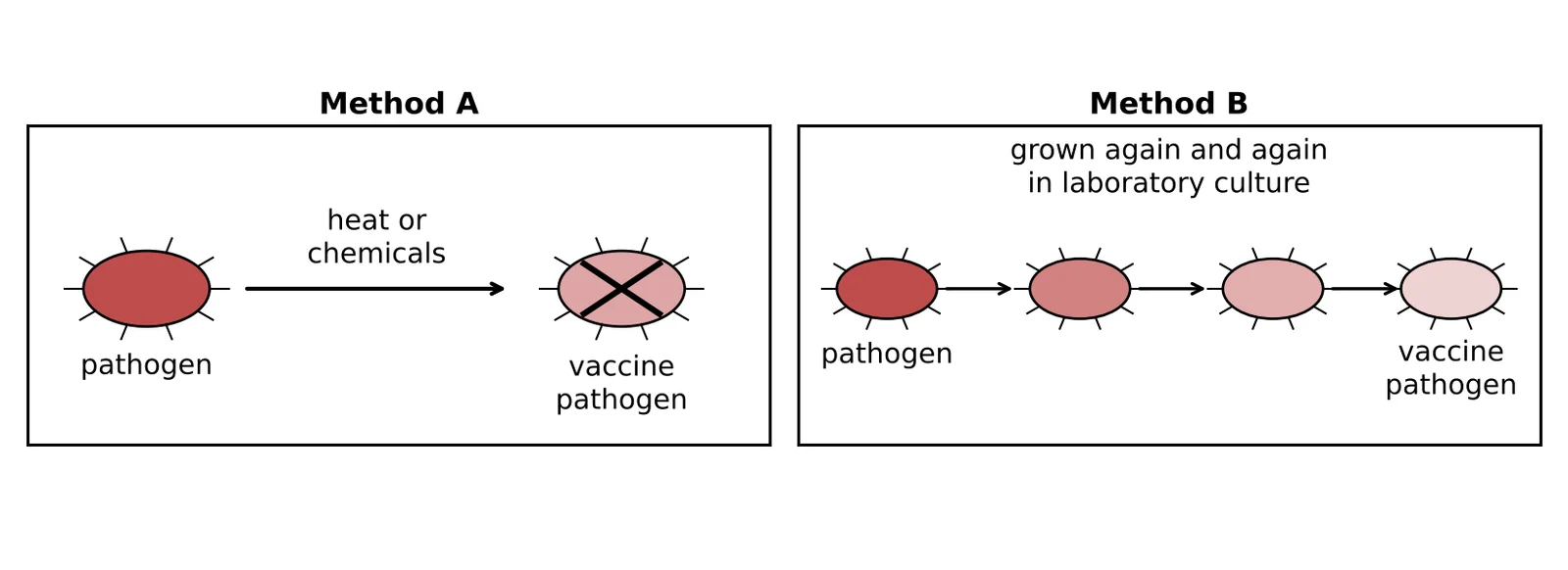
The diagram shows two ways of preparing a vaccine. In A the pathogen is treated with heat or chemicals. In B the pathogen is grown again and again in the laboratory until it becomes very weak.
Question diagram
(a)
Identify the type of vaccine produced by method A. [1]Criterion A (i) · Level 1-2
(b)
Identify the type of vaccine produced by method B. [1]Criterion A (i) · Level 1-2
(c)
Suggest why a vaccine made by method A usually needs more doses than a vaccine made by method B. [2]Criterion A (ii) · Level 3-4

revisionprep.com

Summary Answer

Not available for this question.

Model Answer

Not available for this question.

Marking Scheme

Not available for this question.

Examiner Insights

Not available for this question.

Question 2Criterion A · Band 1-4 · Easy · 5 marksrevisionprep.com

Herd Immunity and Disease Prevention

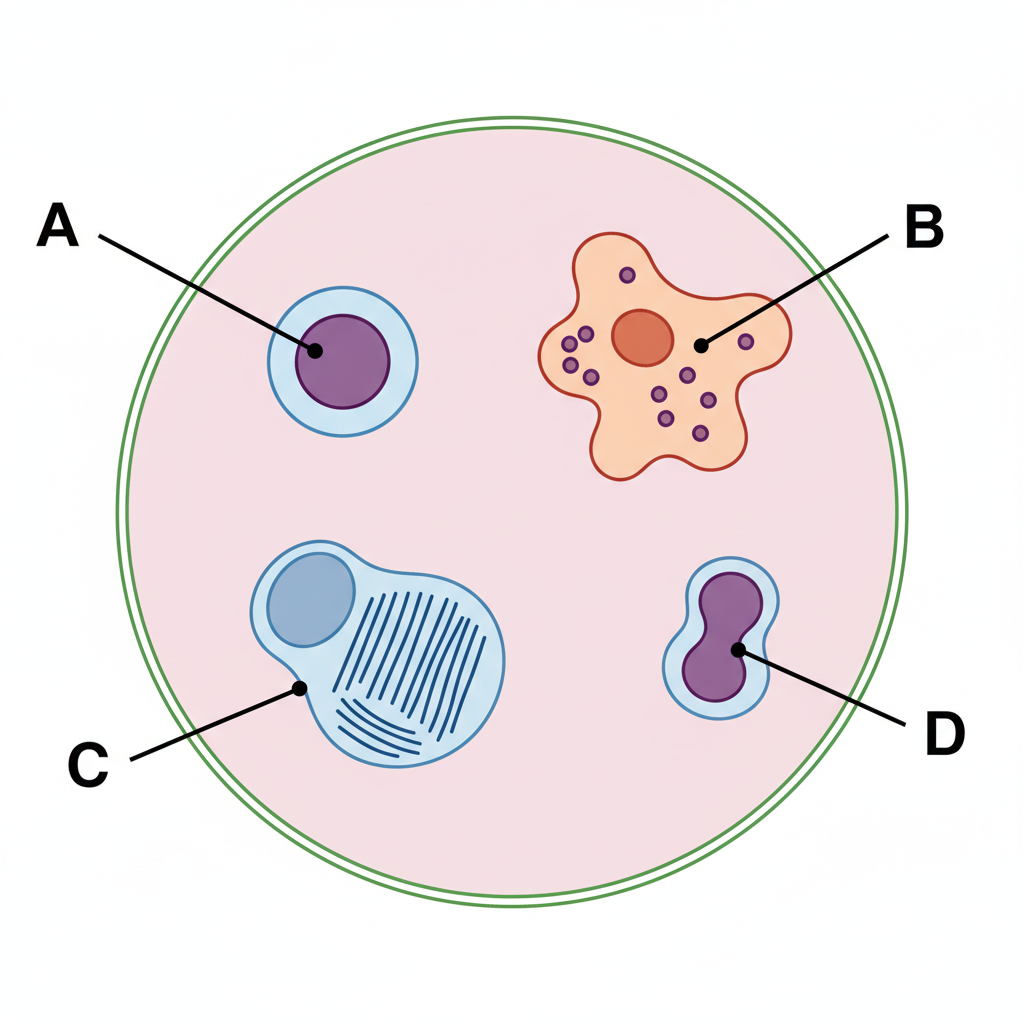
The diagram shows four white blood cells, A to D, in a blood sample taken two weeks after a person was vaccinated.

Cell A: small cell with a large, round nucleus
Cell B: irregular shape, with engulfed material inside
Cell C: large cytoplasm packed with rough endoplasmic reticulum
Cell D: small cell with a lobed nucleus
Question diagram
(a)
Cell B contains engulfed material. State the type of cell B is and its role. [1]Criterion A (i) · Level 1-2
(b)
Cell C develops from a lymphocyte such as cell A. State the name of cell C and what it produces. [1]Criterion A (i) · Level 1-2
(c)
Suggest why cell C contains so much rough endoplasmic reticulum. [1]Criterion A (ii) · Level 3-4
(d)
Explain why a vaccinated person's body can respond to an infection much faster than an unvaccinated person's, with reference to the cells in the diagram. [2]Criterion A (ii) · Level 3-4

revisionprep.com

Summary Answer

Not available for this question.

Model Answer

Not available for this question.

Marking Scheme

Not available for this question.

Examiner Insights

Not available for this question.

Question 3Criterion D + C · Band 3-6 · Medium · 7 marksrevisionprep.com

Types of Vaccines (Examples of vaccines)
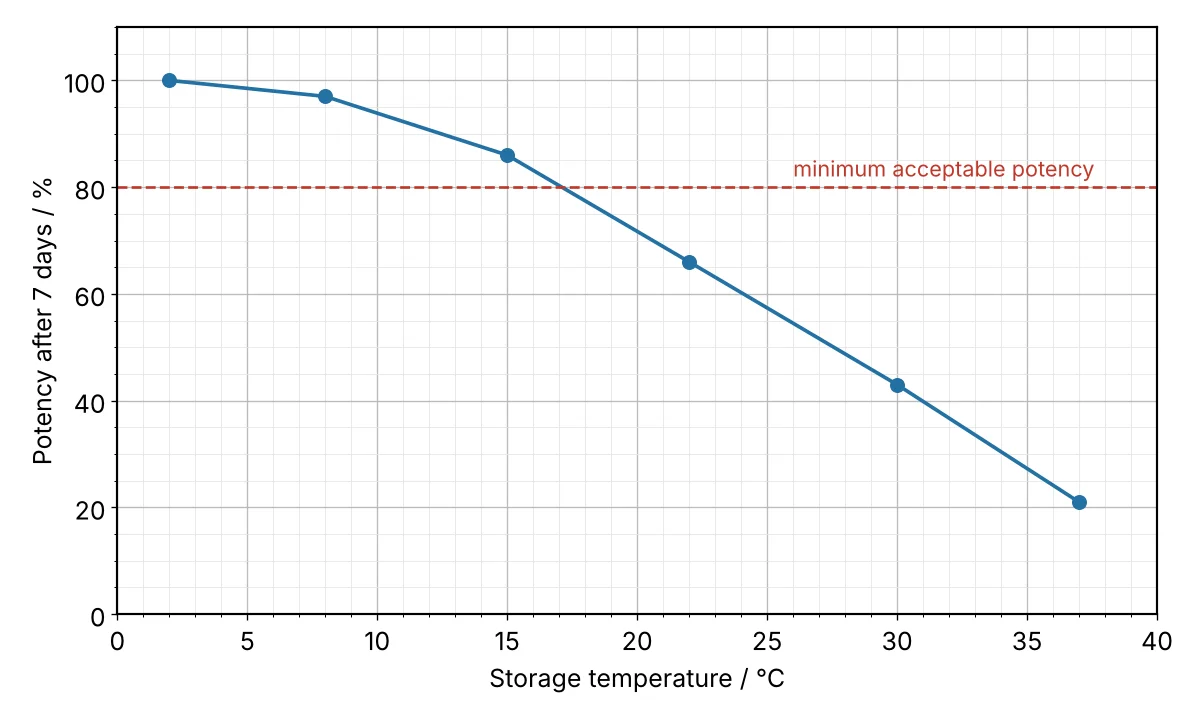
Samples of a live attenuated measles vaccine were stored for 7 days at different temperatures. The potency (the percentage of the vaccine's weakened viruses still able to reproduce) was then measured. The graph shows the results.
Question diagram
(a)
Describe the relationship between storage temperature and potency shown in the graph. [2]Criterion C (ii) · Level 3-4
(b)
Using the graph, determine the highest storage temperature at which the vaccine stays at or above the minimum acceptable potency. [1]Criterion C (ii) · Level 3-4
(c)
Many clinics in hot countries have no reliable electricity. Discuss how these results affect measles vaccination programmes in such places. [4]Criterion D (ii), D (i) · Level 5-6

revisionprep.com

Summary Answer

Not available for this question.

Model Answer

Not available for this question.

Marking Scheme

Not available for this question.

Examiner Insights

Not available for this question.

Question 4Criterion C + D · Band 3-6 · Medium · 8 marksrevisionprep.com

Herd Immunity and Disease Prevention

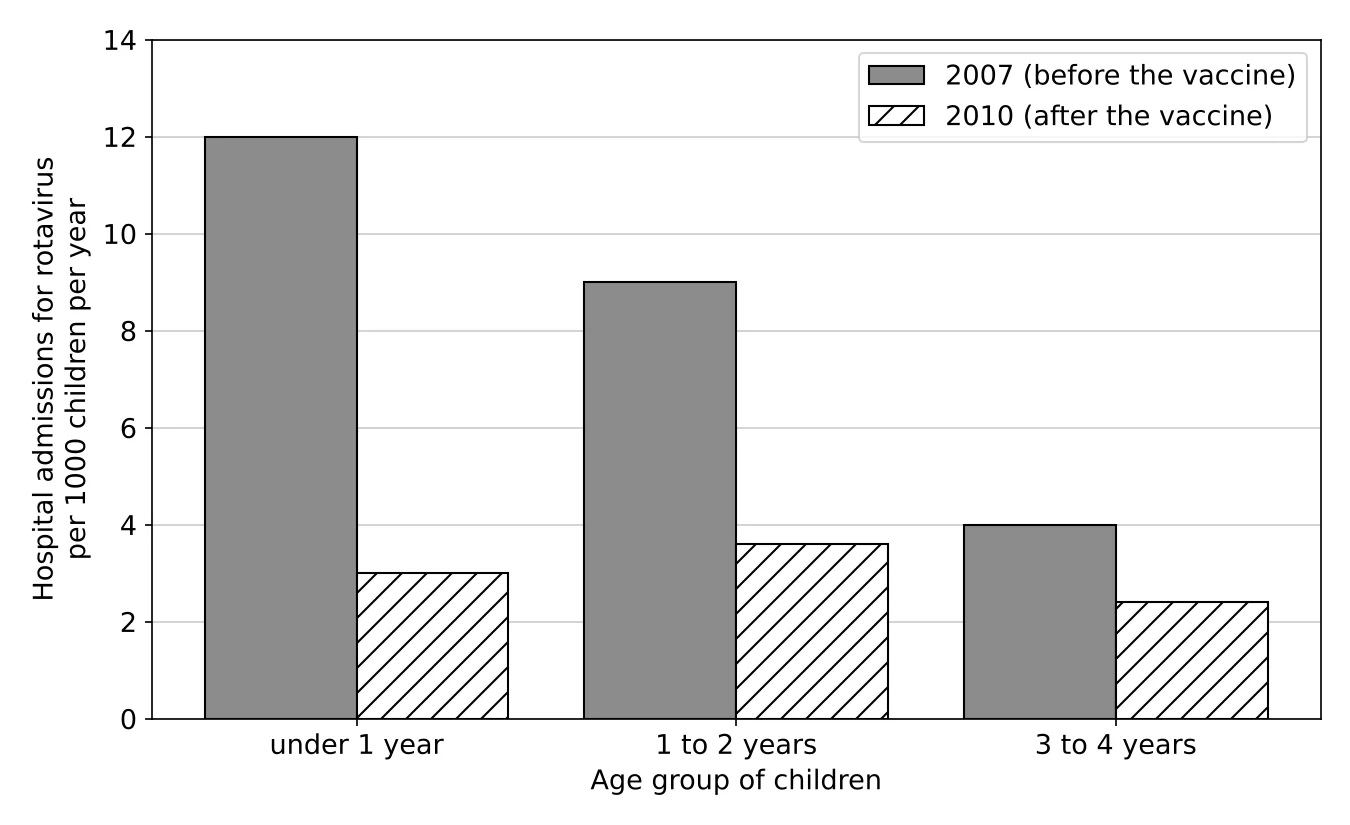
In one country a rotavirus vaccine was added to the infant schedule in 2008. It is given only to babies aged 6 to 24 weeks, so the children aged 3 to 4 in 2010 had not been vaccinated. The bar chart shows hospital admissions for rotavirus diarrhoea in 2007 and 2010 (hypothetical data).
Question diagram
(a)
Calculate the percentage decrease in admissions for children aged 3 to 4 years between 2007 and 2010. [2]Criterion C (i) · Level 3-4
(b)
Explain why admissions fell in children aged 3 to 4 years even though none of them had been vaccinated. [2]Criterion C (ii) · Level 5-6
(c)
The vaccine costs about USD 6 per child. Discuss whether a low-income country with limited health funds should introduce it, considering economic and social perspectives. [4]Criterion D (ii), D (iii) · Level 5-6

revisionprep.com

Summary Answer

Not available for this question.

Model Answer

Not available for this question.

Marking Scheme

Not available for this question.

Examiner Insights

Not available for this question.

Question 5Criterion B · Band 3-8 · Challenge · 8 marksrevisionprep.com

How Vaccination Works

Doctors notice that older adults seem to catch influenza more often than younger adults, even after vaccination. A research team plans to investigate whether age affects the antibody response to the influenza vaccine, using healthy volunteers and blood tests.
(a)
Write a research question for this investigation. [1]Criterion B (i) · Level 3-4
(b)
Formulate a hypothesis and explain it using scientific reasoning. [2]Criterion B (ii) · Level 5-6
(c)
Identify the independent and dependent variables, and explain how two control variables would be controlled. [3]Criterion B (iii) · Level 5-6
(d)
Explain why the team should measure each volunteer's antibody level before vaccination as well as after, and how they would collect sufficient data. [2]Criterion B (iii) · Level 7-8

revisionprep.com

Summary Answer

Not available for this question.

Model Answer

Not available for this question.

Marking Scheme

Not available for this question.

Examiner Insights

Not available for this question.

Question 6Criterion A + D · Band 1-8 · Challenge · 10 marksrevisionprep.com

Importance of Vaccination

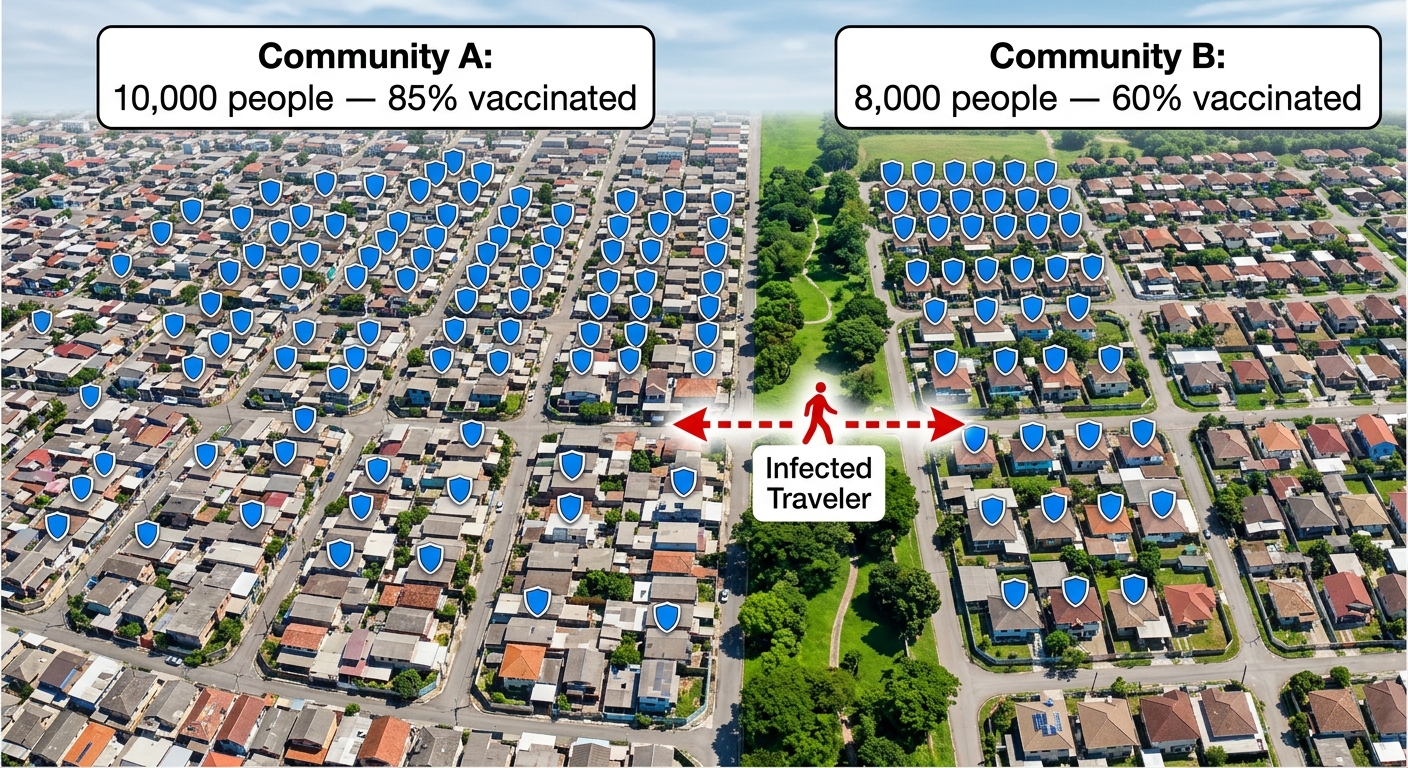
The image shows two neighbouring communities. Community A has 10 000 people with 85% measles vaccination coverage. Community B has 8000 people with 60% coverage because of vaccine hesitancy. An infected traveller visits both. The herd immunity threshold for measles is 92 to 95%.
Question diagram
(a)
Calculate the number of unvaccinated people in each community. [2]Criterion A (ii) · Level 1-2
(b)
Explain why community A may still have an outbreak, despite 85% coverage. [2]Criterion A (i) · Level 3-4
(c)
Describe two effects that a large outbreak in community B could have on the local health service. [2]Criterion D (i) · Level 3-4
(d)
Evaluate the use of a single herd immunity threshold to predict outbreaks in these communities. [4]Criterion A (iii) · Level 7-8

revisionprep.com

Summary Answer

Not available for this question.

Model Answer

Not available for this question.

Marking Scheme

Not available for this question.

Examiner Insights

Not available for this question.

That's every free question here — 6 of 81.

+75 more questions, plus Mock Papers & Worksheets, are waiting in Premium.

Upgrade