You're viewing free preview questions — 4 questions previewing here — subscribe to unlock 63 more, plus the Full Question Bank, Mock Papers & Worksheets.Upgrade
Chemical Formulas and Equations — Free MYP5 Chemistry Practice Questions

1QuestionIdentifying Reactants and ProductsConcept Practice
4 marks~6 minCriterion A
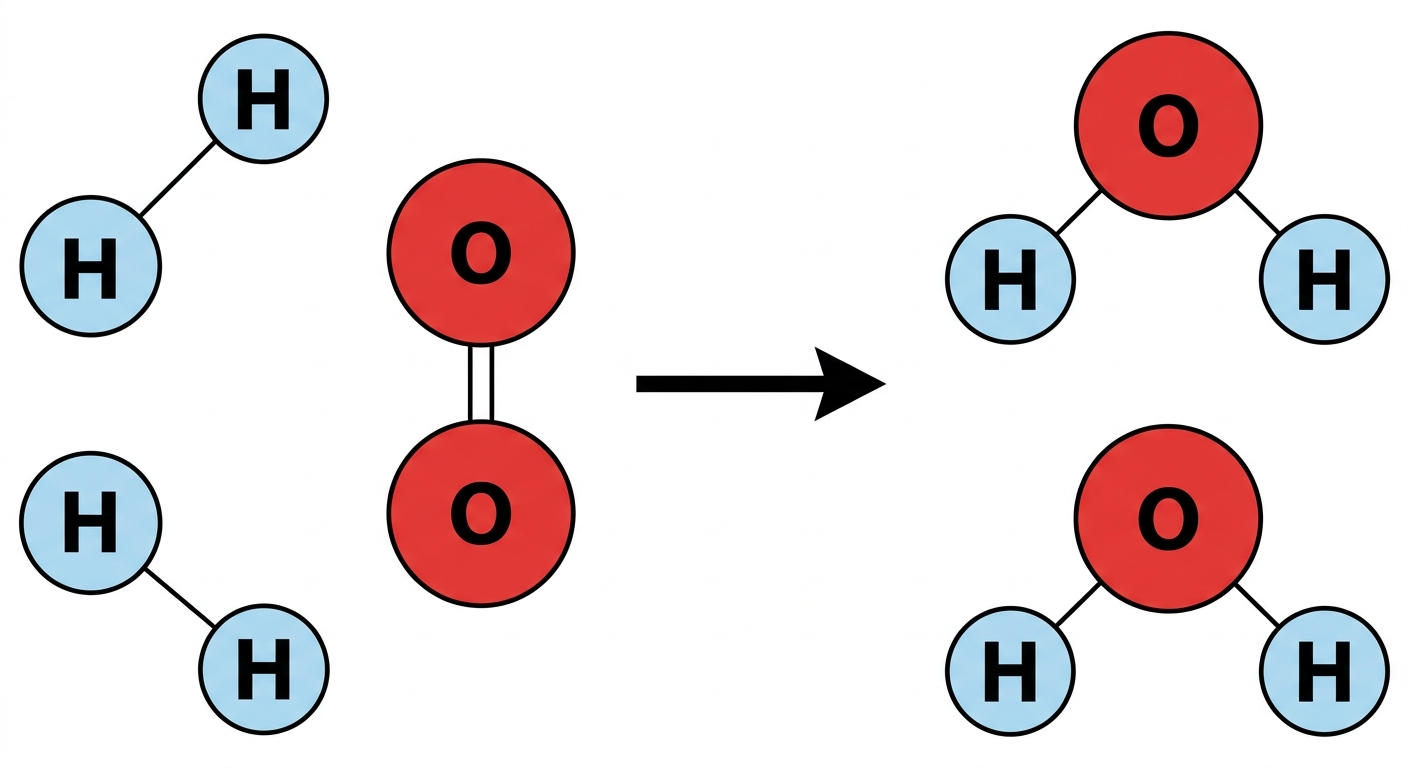
The diagram below shows a chemical reaction between hydrogen and oxygen.
a
Identify the reactants and the product in this reaction. [1]
b
Deduce the balanced chemical equation for this reaction, using the molecular counts shown in the diagram. [1]
c
Analyse how the arrangement of atoms changes during this reaction, and explain what this tells you about whether mass is conserved. [2]

Solutions
2QuestionWord Equations and Symbol EquationsAssessment Practice
3 marks~5 minCriterion C
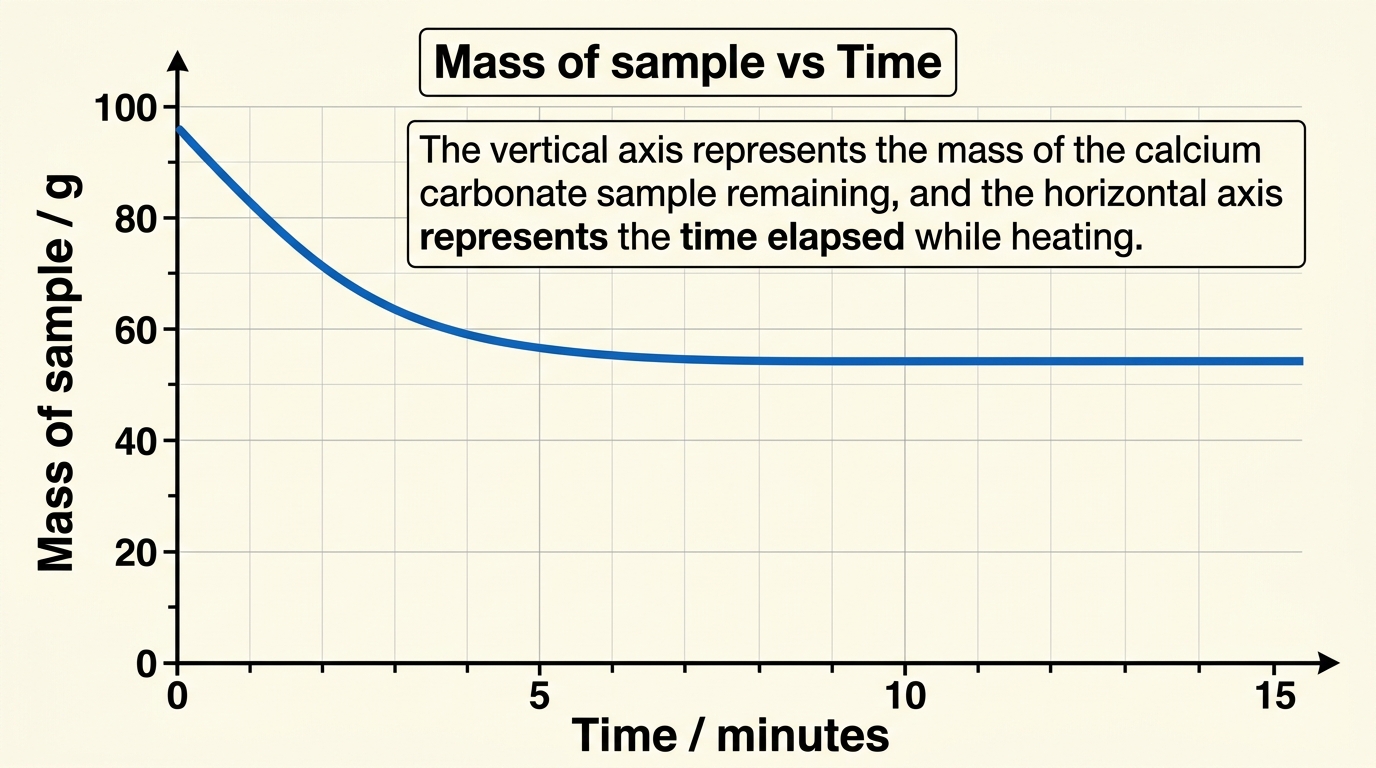
When calcium carbonate is heated, it undergoes thermal decomposition:
The graph below shows the mass of a sample recorded at regular intervals during heating.
The graph below shows the mass of a sample recorded at regular intervals during heating.
a
Describe the trend in the rate of reaction as time progresses. [1]
b
Explain why the rate of reaction decreases as heating continues. [1]
c
The graph shows the mass becoming constant before all the fuel in the burner is consumed. Analyse what this indicates about the sample, and explain why no further mass change occurs even though heating continues. [1]
Solutions
3QuestionWriting Chemical Formulas of CompoundsAssessment Practice
6 marks~9 minCriterion D
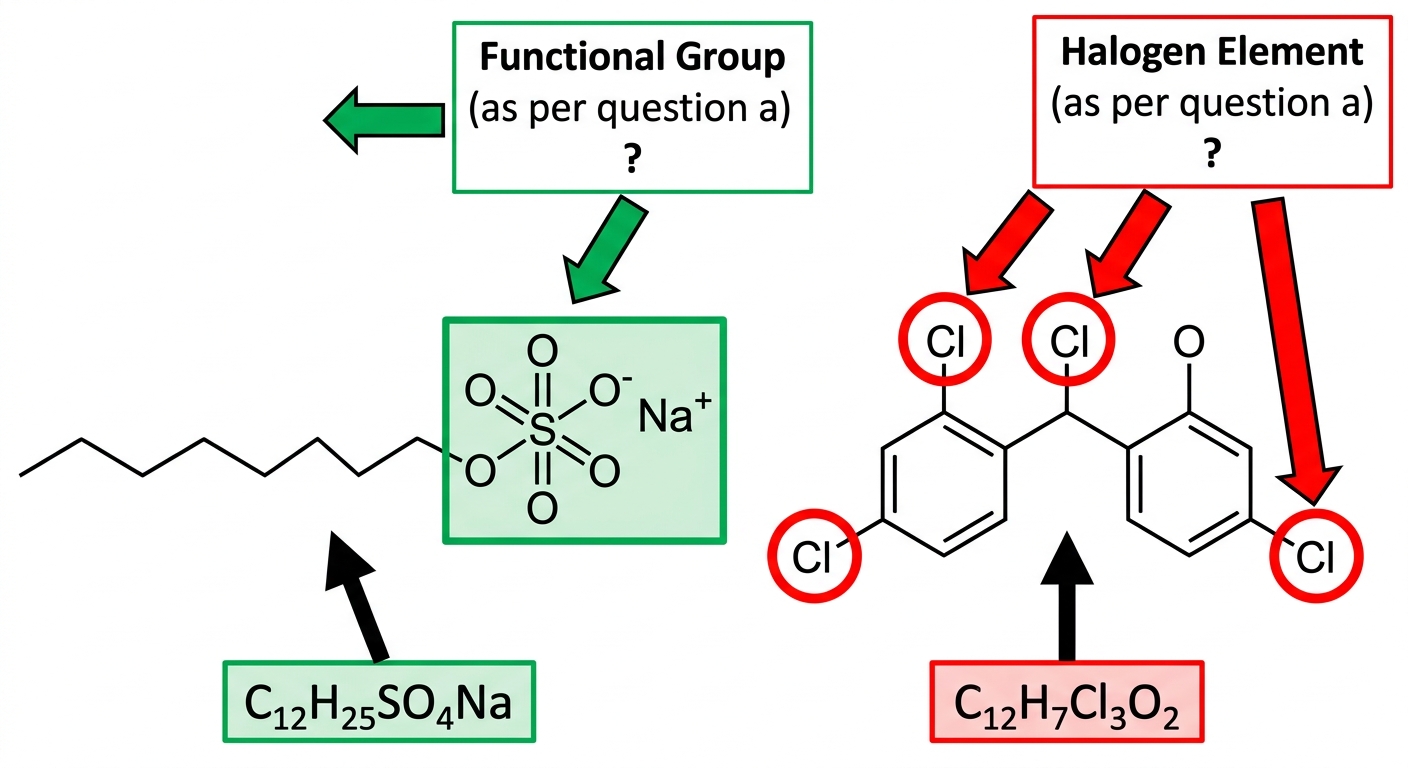
Two ingredients commonly found in personal care products are listed below.
Sodium lauryl sulfate (SLS):
Triclosan:
Sodium lauryl sulfate (SLS):
Triclosan:
a
Identify the functional group present in SLS and the halogen element present in triclosan. [2]
b
Deduce how the molecular structure of each compound influences its persistence in the environment. Refer to specific structural features in your answer. [2]
c
Evaluate the limitations of current safety assessments for triclosan, considering its potential for bioaccumulation and endocrine disruption. [2]
Solutions
4QuestionState Symbols in Chemical ReactionsAssessment Practice
8 marks~12 minCriterion B
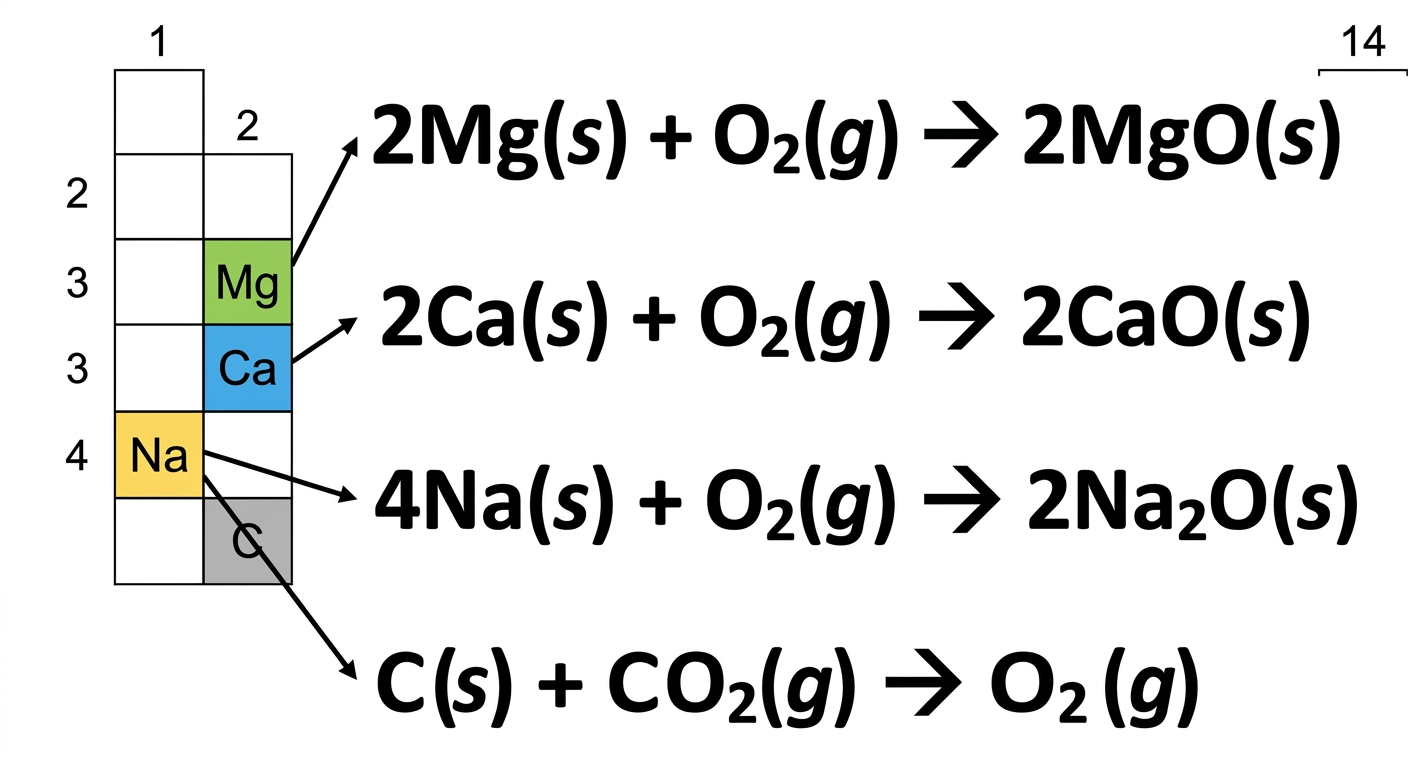
Consider the following balanced equations for the reactions of elements with oxygen:
a
Identify the pattern in the state symbols of the products, linking each product's state to the position of the reacting element in the periodic table. [2]
b
Deduce the state symbol of barium oxide (BaO), the product formed when barium reacts with oxygen. Justify your answer using the pattern identified in (a) and barium's position in the periodic table. [2]
c
Discuss how the bonding and structure of BaO and CO2 differ, and explain how these differences account for the contrast in their physical states at room temperature. [4]
Solutions
That's every free question here — 4 of 67.
+63 more questions, plus Mock Papers & Worksheets, are waiting in Premium.