You're viewing free preview questions — 4 questions previewing here — subscribe to unlock 148 more, plus the Full Question Bank, Mock Papers & Worksheets.Upgrade
Reactivity Series and Reaction Predictions — Free MYP5 Chemistry Practice Questions

1QuestionCorrosion and Methods of preventionConcept Practice
2 marks~3 minCriterion A
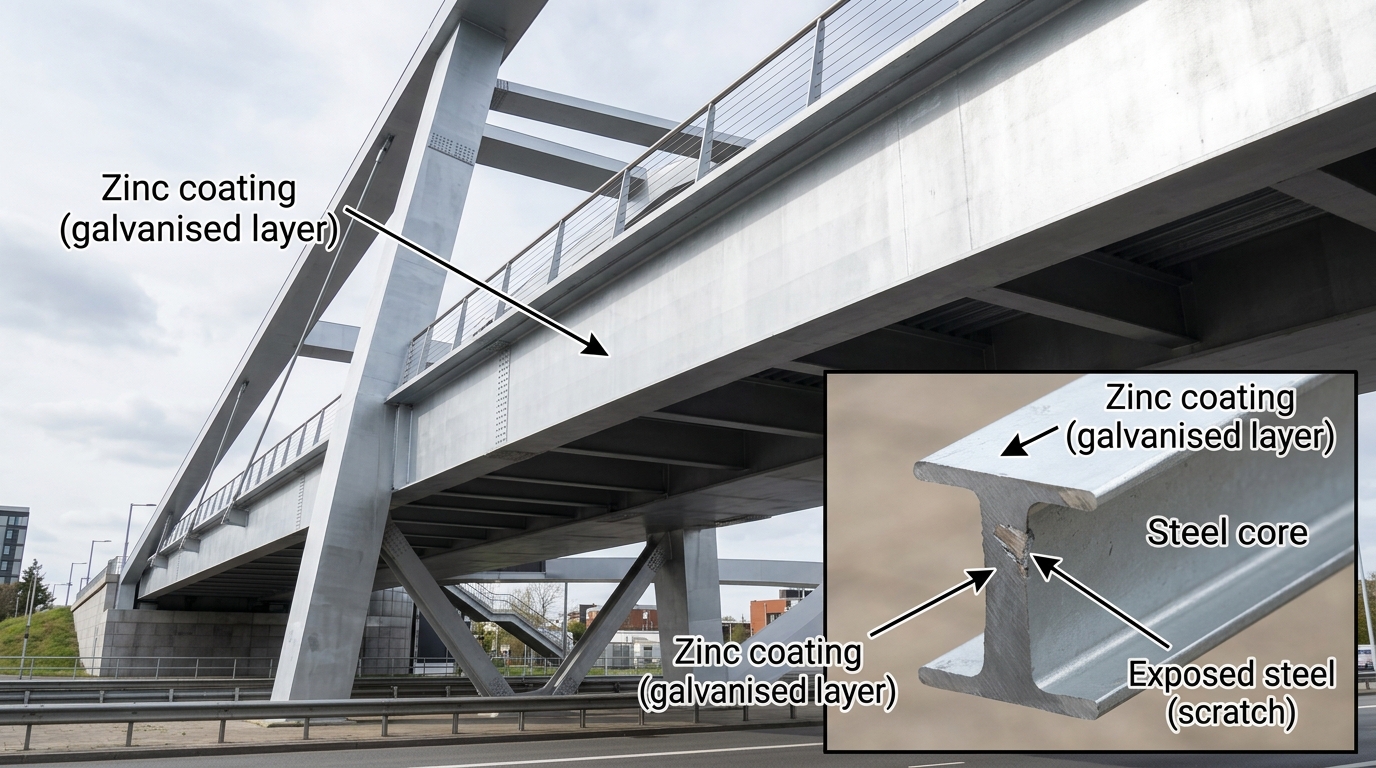
Steel structural frameworks in modern buildings are often galvanised to extend their service life.
a
Identify one architectural application of galvanised steel and explain how the zinc coating protects the underlying steel from corrosion. [1]
b
Describe one limitation of galvanising that an architect or engineer must consider when selecting it as a corrosion-prevention method. [1]

Solutions
2QuestionElectrochemical CellsAssessment Practice
3 marks~5 minCriterion B
The table below shows data recorded from five electrochemical cells, each formed by connecting two different metal–metal ion half-cells.
Difference in between the two metals (V): 0.10, 0.30, 0.50, 0.70, 0.90
Measured cell potential (V): 0.15, 0.45, 0.75, 1.05, 1.35
Difference in between the two metals (V): 0.10, 0.30, 0.50, 0.70, 0.90
Measured cell potential (V): 0.15, 0.45, 0.75, 1.05, 1.35
a
Describe the trend shown by the data. [1]
b
Explain why a greater difference in between two metals produces a higher cell potential. [1]
c
A student claims that doubling the difference in will always double the cell potential. Analyse whether the data support this claim, and identify one real-world factor that could cause a deviation from this pattern. [1]
Solutions
3QuestionCorrosion and Methods of preventionAssessment Practice
4 marks~6 minCriterion D
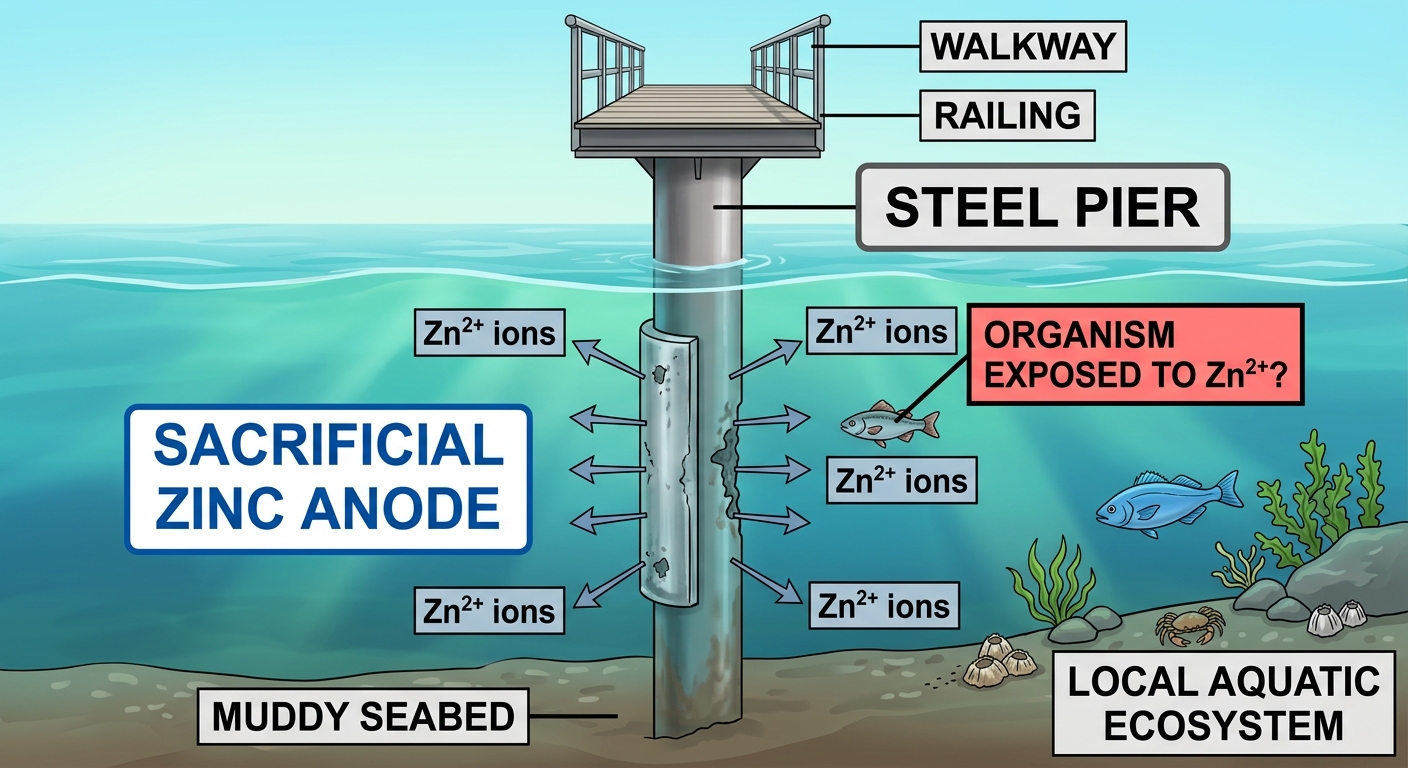
A coastal town attaches zinc blocks to steel piers to prevent corrosion. Over time, zinc blocks dissolve, releasing ions into the surrounding seawater. Marine biologists have recorded declining invertebrate populations near the piers and are concerned about long-term ecosystem health.
a
Explain why zinc protects the steel pier from corrosion. [1]
b
Explain how ions released into seawater could harm aquatic organisms. [1]
c
Evaluate whether the protective benefit of sacrificial zinc anodes outweighs the environmental cost to the local marine ecosystem. [2]
Solutions
4QuestionCorrosion and Methods of preventionAssessment Practice
6 marks~9 minCriterion C
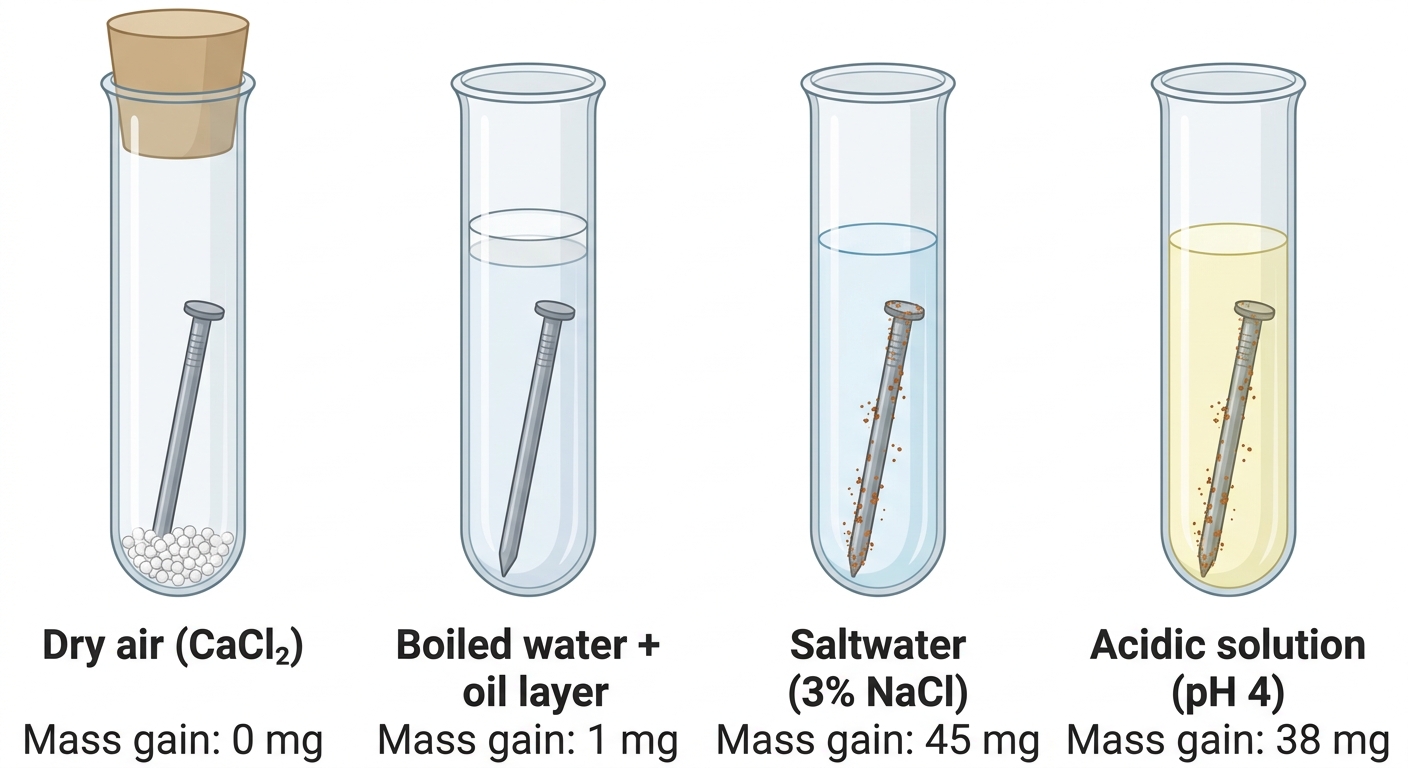
A student investigates rusting by placing identical iron nails in four environments for 5 days, then measuring mass gain.
Hypothesis: both oxygen and water are necessary for iron to rust.
| Environment | Mass gain: |
|---|---|
| Dry air (calcium chloride desiccant) | 0 mg |
| Boiled water with oil layer | 1 mg |
| Saltwater (3% NaCl) | 45 mg |
| Acidic solution (pH 4) | 38 mg |
Hypothesis: both oxygen and water are necessary for iron to rust.
a
Identify which two environments act as controls for the hypothesis and state the variable each one eliminates. [2]
b
Explain why the saltwater environment produces a greater mass gain than the acidic solution, despite both containing oxygen and water. [2]
c
Evaluate the validity of the hypothesis using all four results. In your response, account for the 1 mg anomaly and discuss whether ions change the fundamental requirements for rusting. [2]
Solutions
That's every free question here — 4 of 152.
+148 more questions, plus Mock Papers & Worksheets, are waiting in Premium.