You're viewing free preview questions — 4 questions previewing here — subscribe to unlock 77 more, plus the Full Question Bank, Mock Papers & Worksheets.Upgrade
Combustion of fuels and pollutant formation — Free MYP5 Chemistry Practice Questions

1QuestionComplete vs incomplete combustionConcept Practice
2 marks~3 minCriterion A
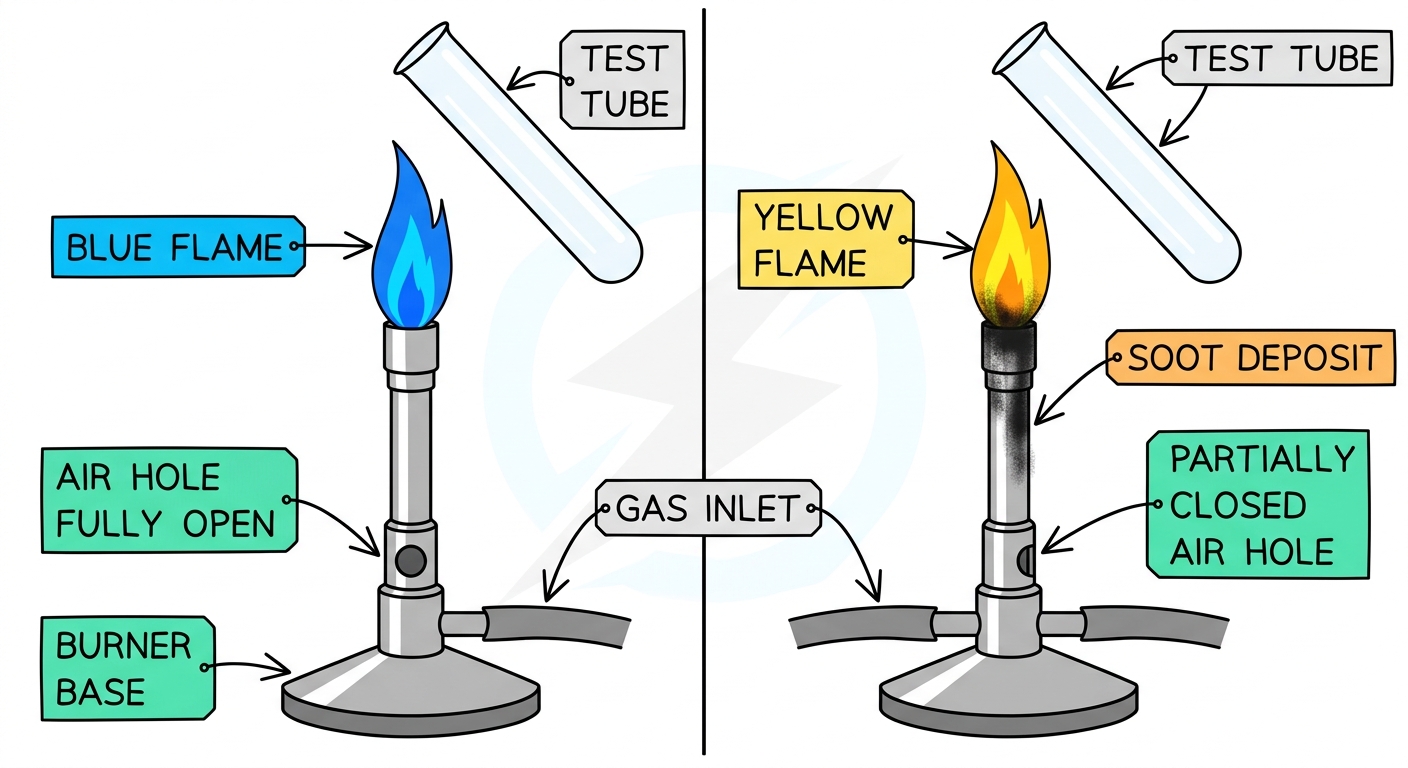
A Bunsen burner produces a blue flame when the air hole is fully open and a yellow flame when the air hole is partially closed. Soot deposits are visible near the yellow flame.
a
Identify the black substance deposited as soot. [1]
b
Explain why soot forms when the air hole is partially closed rather than fully open. [1]

Solutions
2QuestionFormation of carbon monoxide and sootAssessment Practice
6 marks~9 minCriterion C
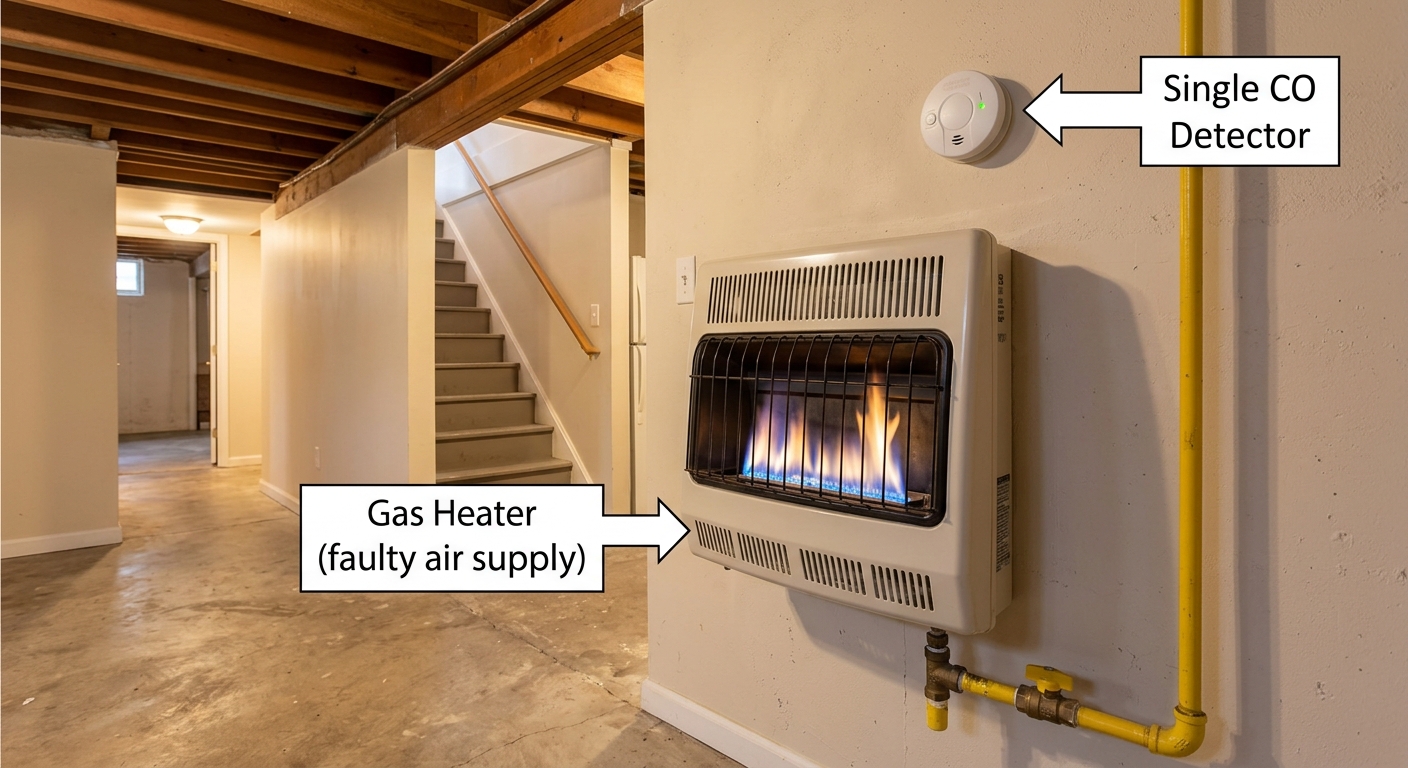
A family installs a gas heater that burns methane (). A blocked air vent restricts the oxygen supply, causing incomplete combustion and producing carbon monoxide () rather than carbon dioxide ().
a
Explain why a restricted oxygen supply leads to the formation of instead of during combustion. Include the balanced chemical equation for the incomplete combustion of methane producing and water (). [2]
b
Explain how inhaled carbon monoxide affects the ability of blood to transport oxygen to body tissues. [2]
c
The family installs a single detector in the basement. Analyse the limitations of this safety arrangement for a multi-storey house and justify a specific improvement to their safety plan. [2]
Solutions
3QuestionComplete vs incomplete combustionConcept Practice
2 marks~3 minCriterion B
Four trials of burning methane () are conducted, each using 5.0 g of fuel. The oxygen-to-fuel ratio is varied across trials.
| Trial | 1 | 2 | 3 | 4 |
|---|---|---|---|---|
| Oxygen-to-fuel ratio | 1.5:1 | 2.0:1 | 2.5:1 | 3.0:1 |
| Flame colour | yellow | orange-yellow | blue-yellow | blue |
| Soot produced | heavy | moderate | slight | none |
a
Deduce the relationship between oxygen-to-fuel ratio and soot production shown by these results. [1]
b
Identify the controlled variable and the manipulated variable in this experiment. [1]
Solutions
4QuestionComplete vs incomplete combustionAssessment Practice
8 marks~12 minCriterion D
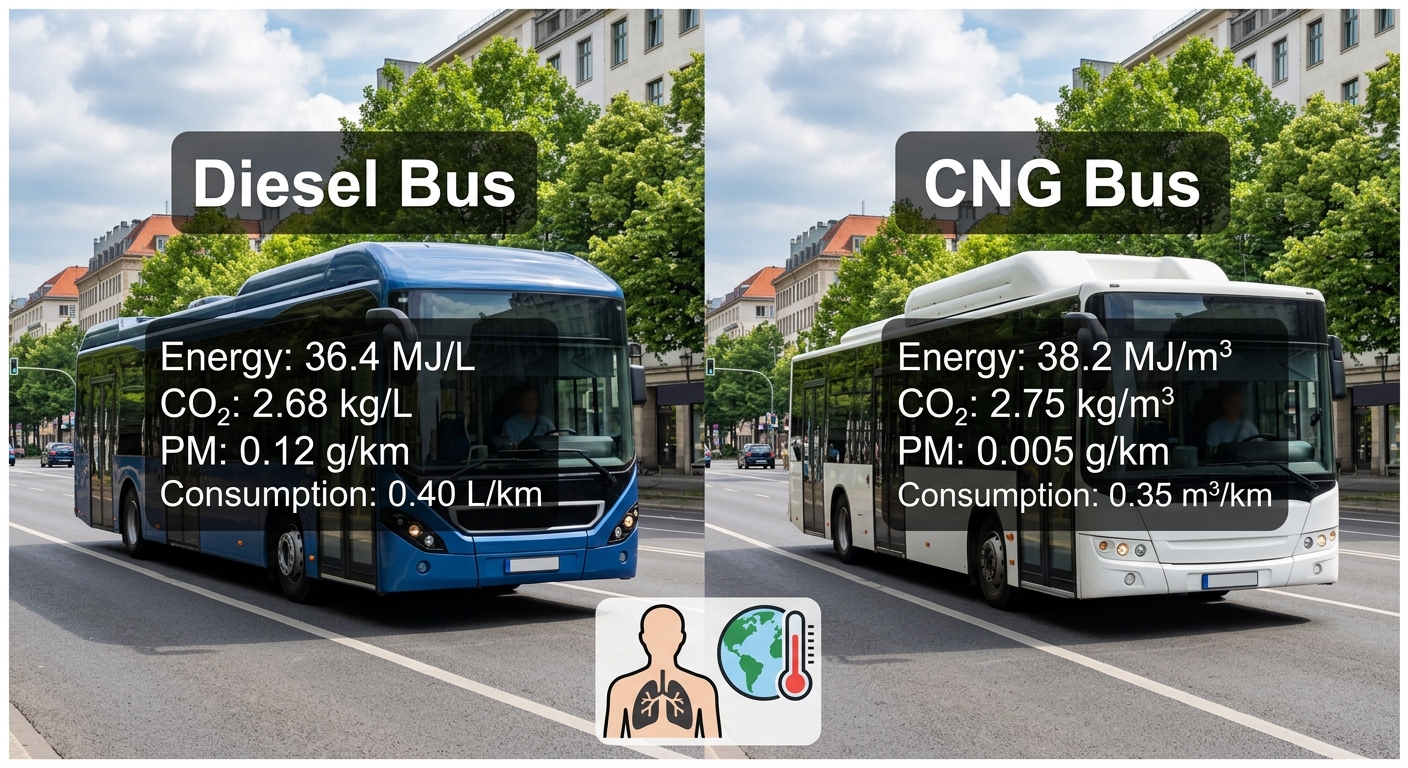
A city council is considering replacing its diesel bus fleet with compressed natural gas (CNG) buses. The following data are available.
Diesel: energy content ; CO emission factor ; particulate matter (PM) emission factor ; fuel consumption .
CNG: energy content ; CO emission factor ; PM emission factor ; fuel consumption .
Diesel: energy content ; CO emission factor ; particulate matter (PM) emission factor ; fuel consumption .
CNG: energy content ; CO emission factor ; PM emission factor ; fuel consumption .
a
Calculate the CO emissions per kilometre for each fuel type. [2]
b
Using your results from (a) and the PM data, deduce which fuel type produces more energy per unit of CO emitted, and explain what this reveals about the relative carbon intensity of each fuel. [2]
c
Evaluate whether the council should switch to CNG buses, considering both the societal benefit from reduced PM emissions and the environmental impact of CO emissions. In your evaluation, identify and discuss two limitations of the data model provided. [4]
Solutions
That's every free question here — 4 of 81.
+77 more questions, plus Mock Papers & Worksheets, are waiting in Premium.