You're viewing free preview questions — 4 questions previewing here — subscribe to unlock 82 more, plus the Full Question Bank, Mock Papers & Worksheets.Upgrade
Composition of the Atmosphere — Free MYP5 Chemistry Practice Questions

1QuestionCarbon dioxide and its role in natural cyclesConcept Practice
2 marks~3 minCriterion A
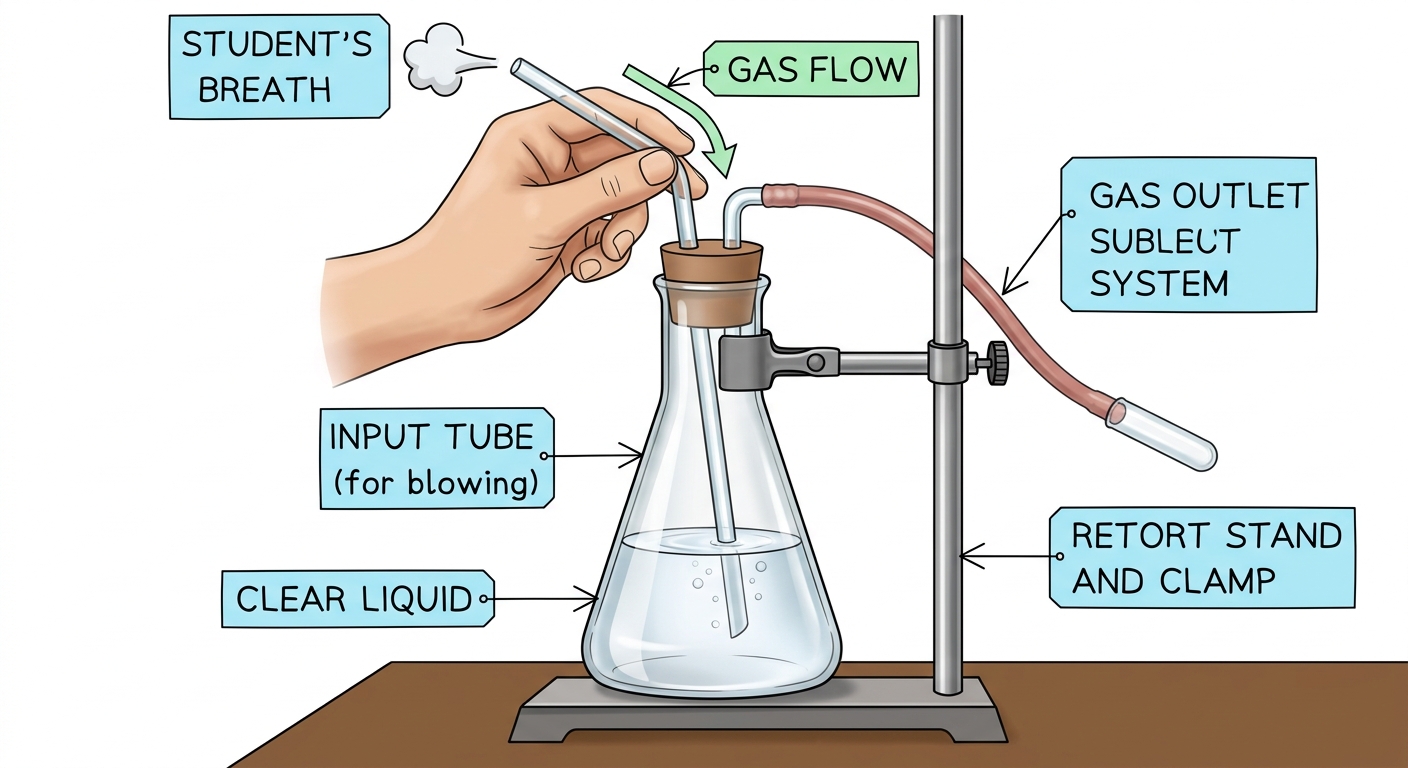
A student exhales through a straw into a flask containing a clear, colourless solution of limewater (). After two minutes, the solution turns cloudy.
a
Identify the gas being tested for in this experiment. [1]
b
The cloudiness results from a precipitation reaction. Write the balanced chemical equation for this reaction, and deduce what the cloudy precipitate tells you about the composition of exhaled air compared to inhaled air. [1]

Solutions
2QuestionLayers of the atmosphere (troposphere, stratosphere, etc.)Assessment Practice
2 marks~3 minCriterion D
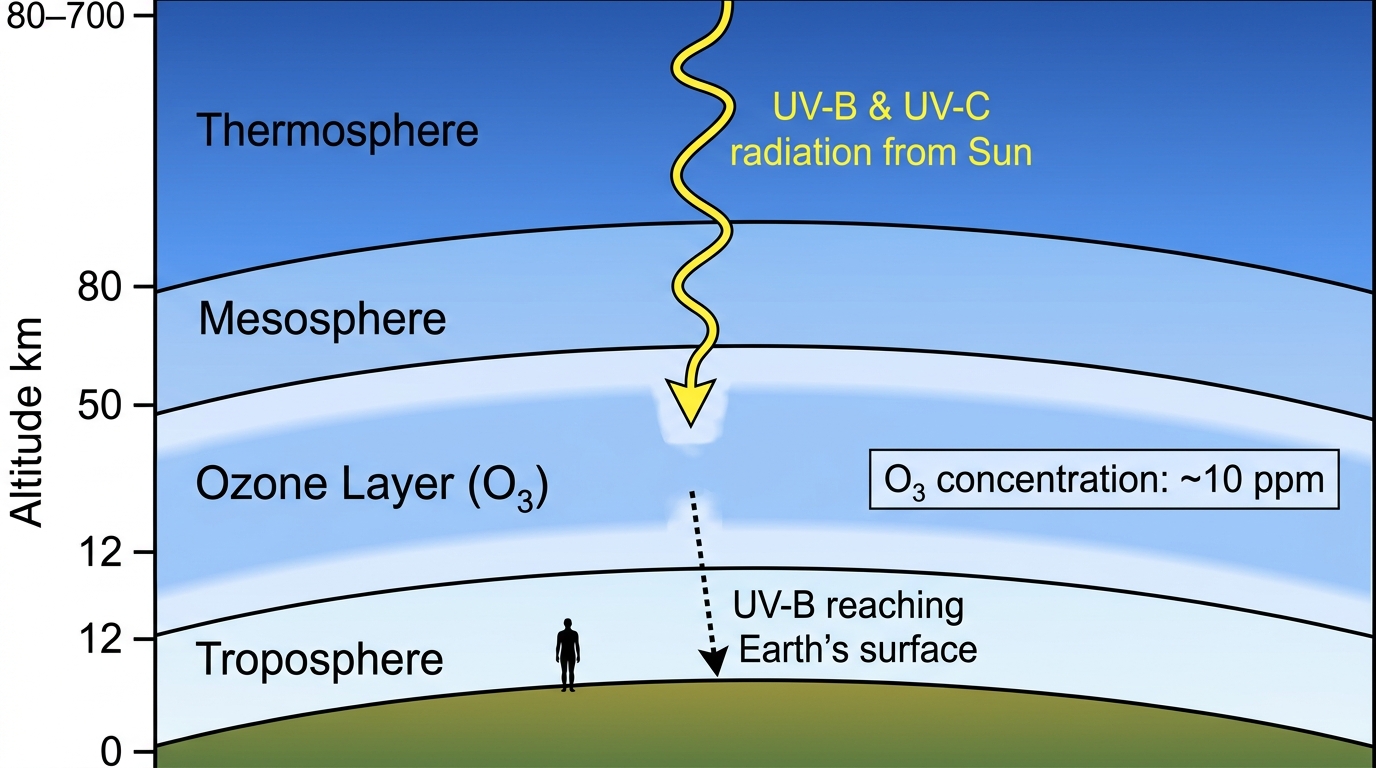
Chlorofluorocarbons (CFCs) released at ground level slowly migrate to the stratosphere, where UV radiation breaks them down, releasing chlorine radicals that catalytically destroy ozone molecules.
a
Explain one impact of stratospheric ozone depletion on human health. [1]
b
Identify one limitation of using laboratory data to predict the rate of ozone depletion in the real atmosphere. [1]
Solutions
3QuestionCarbon dioxide and its role in natural cyclesAssessment Practice
6 marks~9 minCriterion C
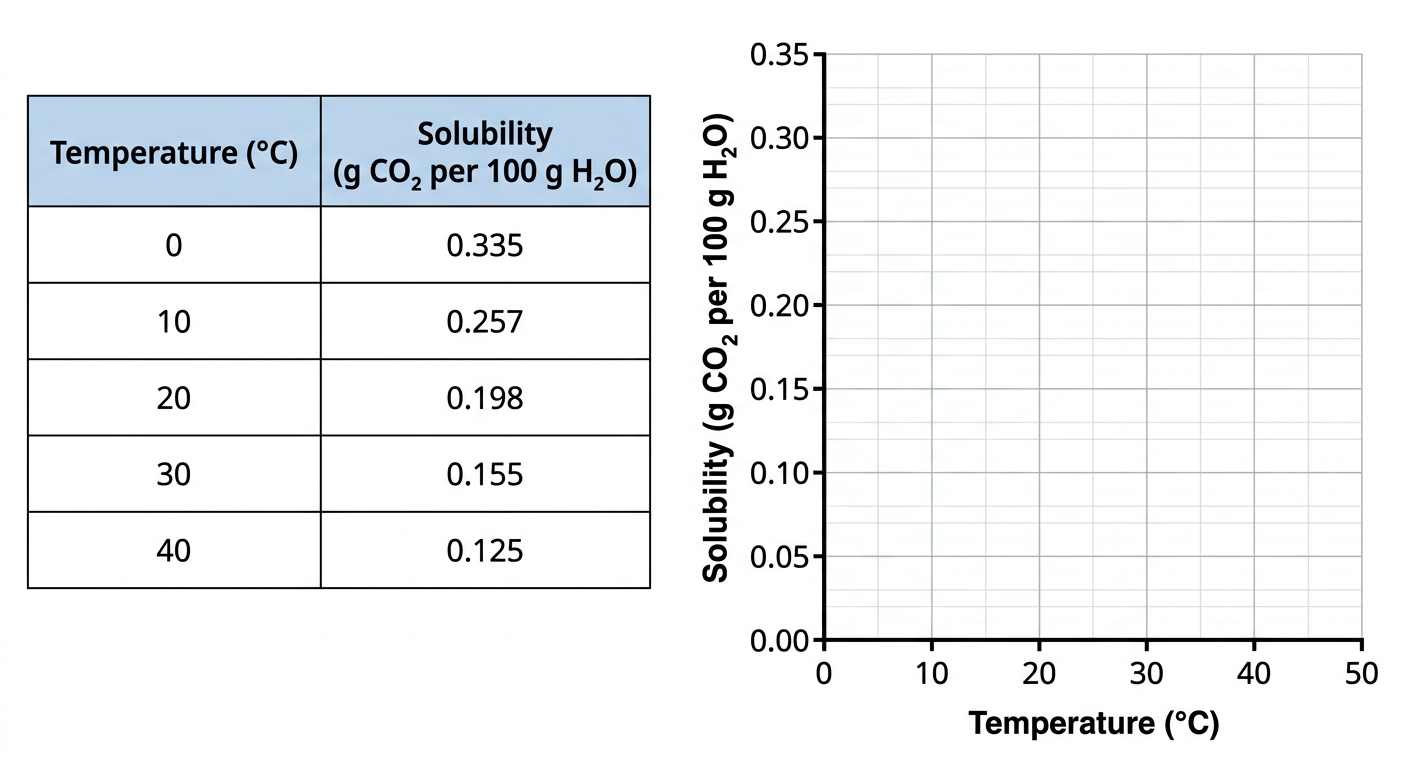
The table below shows the solubility of carbon dioxide () in water at constant pressure (1 atm).
| Temperature (°C) | 0 | 10 | 20 | 30 | 40 |
|---|---|---|---|---|---|
| Solubility (g per 100 g ) | 0.335 | 0.257 | 0.198 | 0.155 | 0.125 |
a
Describe the trend in solubility of as temperature increases from 0°C to 40°C, including reference to specific values. [2]
b
Explain, using intermolecular forces and energy, why increasing temperature produces this trend. [2]
c
A scientist claims that warming ocean surface water from 20°C to 40°C will release significantly more into the atmosphere than warming it from 0°C to 20°C. Evaluate this claim using the data provided. [2]
Solutions
4QuestionRole of oxygen in respiration and combustionAssessment Practice
3 marks~5 minCriterion B
When 10 g samples of three fuels are completely burned in excess oxygen, the following data are recorded.
Fuel — Carbon atoms per molecule — Mass of produced (g)
Fuel — Carbon atoms per molecule — Mass of produced (g)
| Ethanol () | 2 | 19.1 |
|---|---|---|
| Propane () | 3 | 30.0 |
| Butane () | 4 | 30.4 |
a
Calculate the mass of produced per gram of fuel for each of the three fuels. [1]
b
Identify the trend in your calculated values as the number of carbon atoms per molecule increases. [1]
c
Explain why fuels with a greater number of carbon atoms per molecule produce more per gram of fuel during complete combustion. [1]
Solutions
That's every free question here — 4 of 86.
+82 more questions, plus Mock Papers & Worksheets, are waiting in Premium.