You're viewing free preview questions — 4 questions previewing here — subscribe to unlock 78 more, plus the Full Question Bank, Mock Papers & Worksheets.Upgrade
Changes of state and energy transfer — Free MYP5 Chemistry Practice Questions

1QuestionConstant temperature during phase changesConcept Practice
2 marks~3 minCriterion A
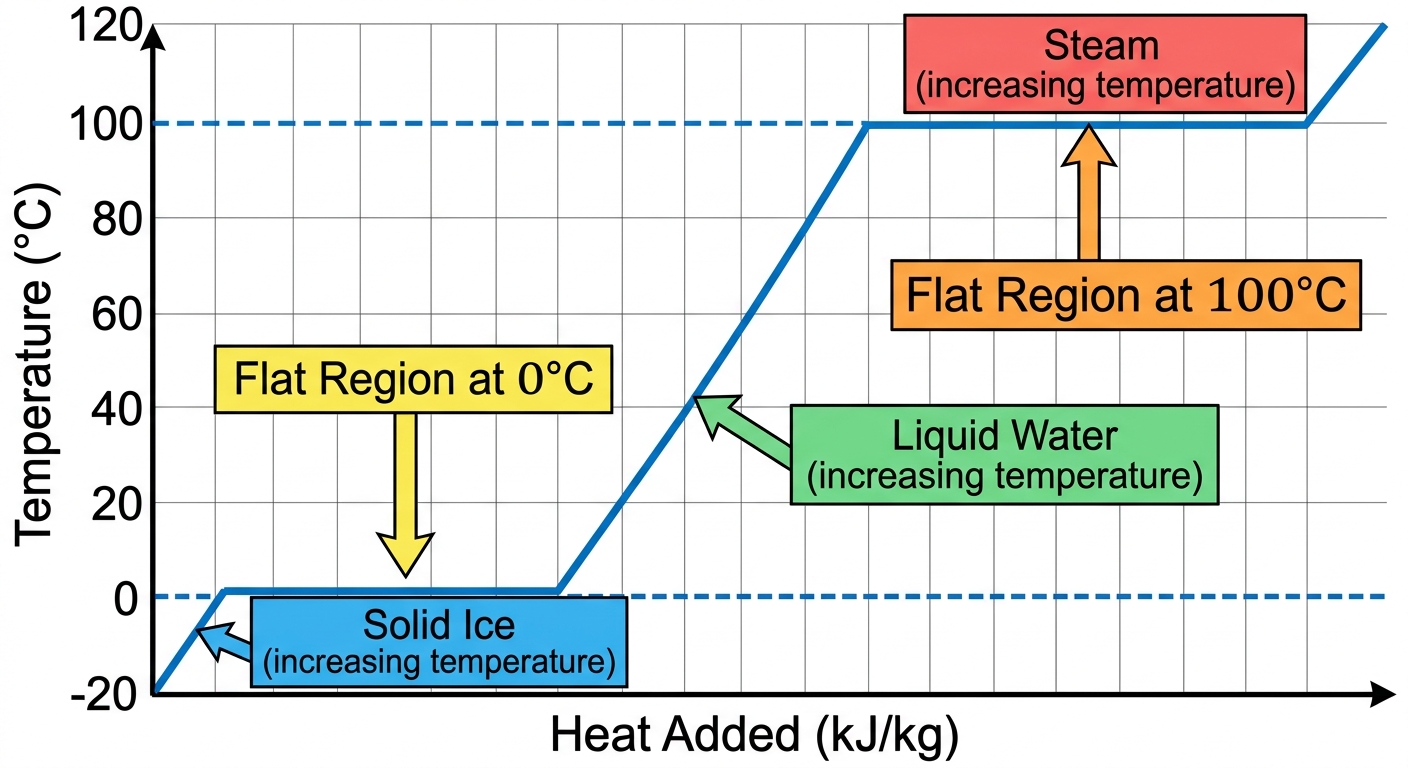
The heating curve for water shows two flat regions — one at and one at .
a
State what the term "latent heat of fusion" refers to in the context of the flat region at . [1]
b
Explain why the kinetic energy of water molecules remains constant during the flat region at , even though energy is continuously being supplied. [1]

Solutions
2QuestionMelting, freezing, boiling, condensation, sublimationAssessment Practice
5 marks~8 minCriterion C
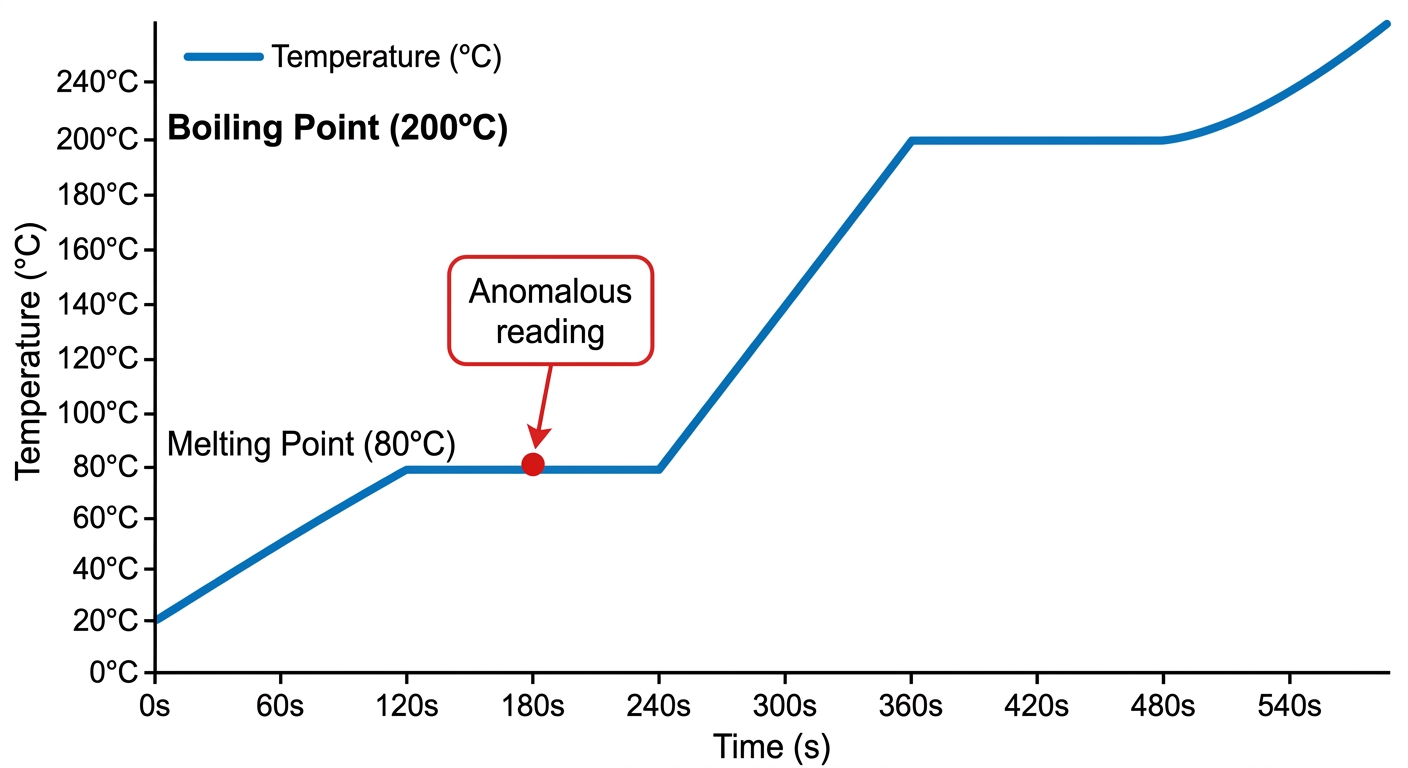
A student heats a pure solid substance from room temperature to above its boiling point, recording temperature every 30 seconds. The substance melts at and boils at .
Temperature data collected:
- to s: temperature rises from to (solid phase)
- to s: temperature remains at , except at s where is recorded
- to s: temperature rises from to (liquid phase)
- to s: temperature remains at (boiling plateau)
- After s: temperature rises (gas phase)
Temperature data collected:
- to s: temperature rises from to (solid phase)
- to s: temperature remains at , except at s where is recorded
- to s: temperature rises from to (liquid phase)
- to s: temperature remains at (boiling plateau)
- After s: temperature rises (gas phase)
a
Identify the anomalous reading and state why it is inconsistent with the data collected during the melting plateau. [2]
b
Explain, in terms of particles and energy transfer, why temperature remains constant throughout the melting plateau. [2]
c
The boiling plateau also shows a constant temperature. Evaluate whether the energy transfer occurring at the boiling plateau is the same as, or different from, that occurring at the melting plateau, and justify your reasoning. [1]
Solutions
3QuestionConstant temperature during phase changesAssessment Practice
6 marks~9 minCriterion D
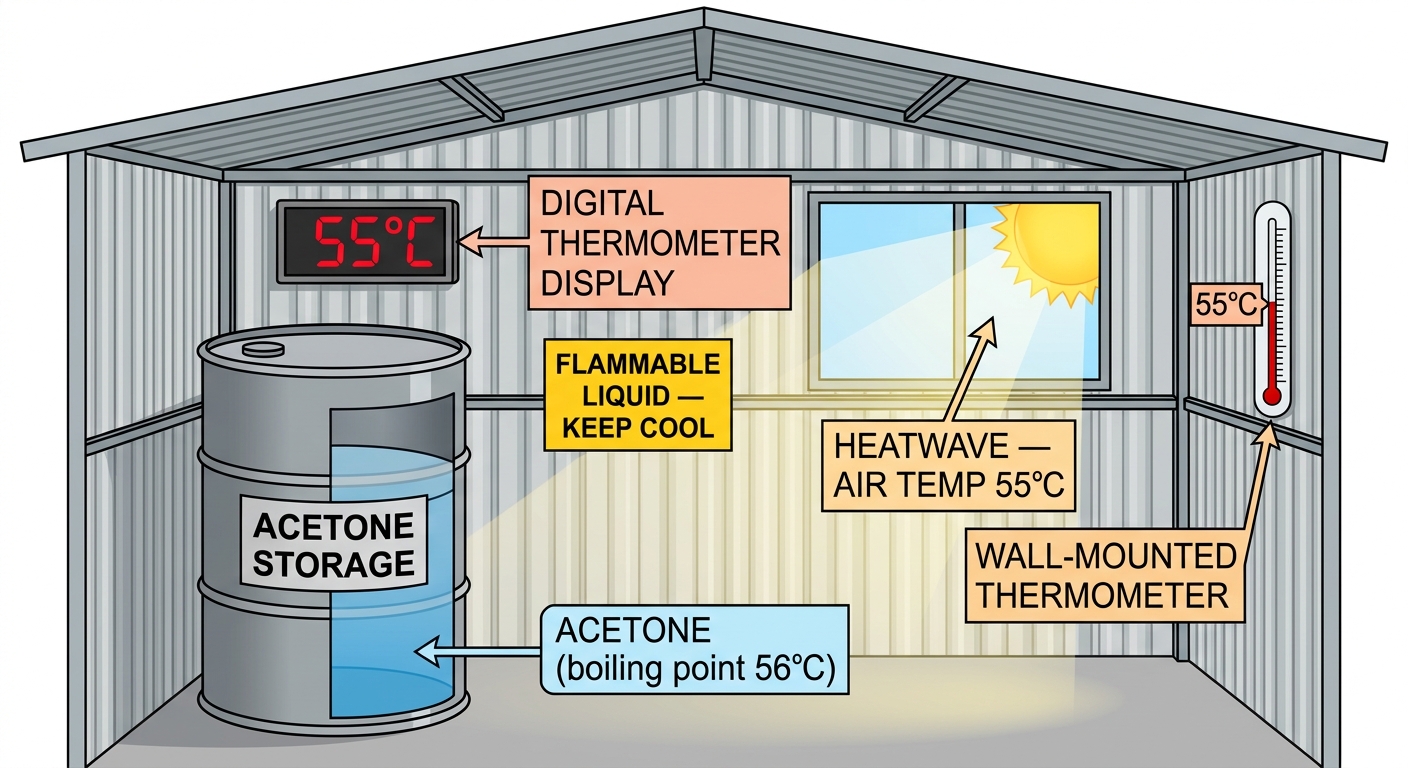
A factory uses acetone (boiling point 56 °C) to clean metal parts. During a summer heatwave, the storage shed reaches 55 °C. The acetone remains liquid despite being only 1 °C below its boiling point.
a
Explain why the acetone does not boil at 55 °C. In your answer, refer to vapour pressure and the energy required for the phase change. [2]
b
A temperature spike raises the shed to 70 °C, causing rapid vaporisation of the acetone. Discuss the health risks to workers and one environmental consequence of this event. [3]
c
Evaluate one assumption made in part (b) and assess how relaxing that assumption changes the severity of the risk. [1]
Solutions
4QuestionEnergy transfer during state changes (heating/cooling curves)Assessment Practice
5 marks~8 minCriterion B
A group of students heats separate 10 g samples of stearic acid from to at three different rates, recording temperature every 30 seconds.
| Heating rate () | 0.5 | 1.0 | 2.0 |
|---|---|---|---|
| Plateau duration (min) | 8.0 | 4.0 | 2.0 |
a
Deduce the relationship between heating rate and plateau duration. [1]
b
Justify a prediction for the plateau duration at a heating rate of . [2]
c
Analyse how the fixed latent heat of fusion of stearic acid accounts for the plateau durations observed at different heating rates. [2]
Solutions
That's every free question here — 4 of 82.
+78 more questions, plus Mock Papers & Worksheets, are waiting in Premium.