State of Matter - Solids, Liquids, Gases — Free MYP5 Chemistry Practice Questions

1QuestionProperties of solids, liquids, and gases (shape, volume, compressibility)Concept Practice
2 marks~3 minCriterion A
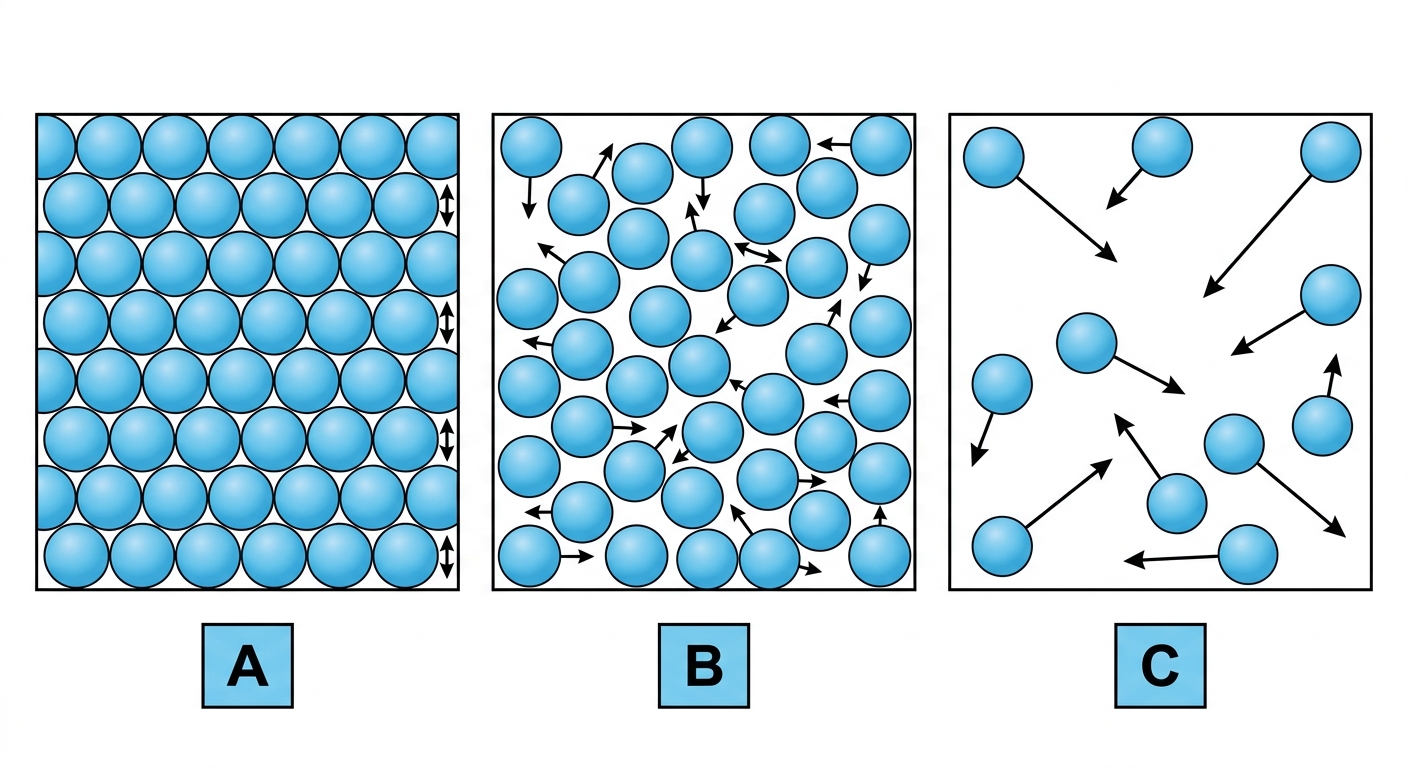
The diagram below shows particle arrangements in three states of matter, labelled A (solid), B (liquid), and C (gas).
a
Describe the arrangement, spacing, and movement of particles in a solid, a liquid, and a gas. [1]
b
Explain how the differences in particle behaviour account for the compressibility of each state. [1]

Solutions
2QuestionReal-life examples and state identificationAssessment Practice
2 marks~3 minCriterion D
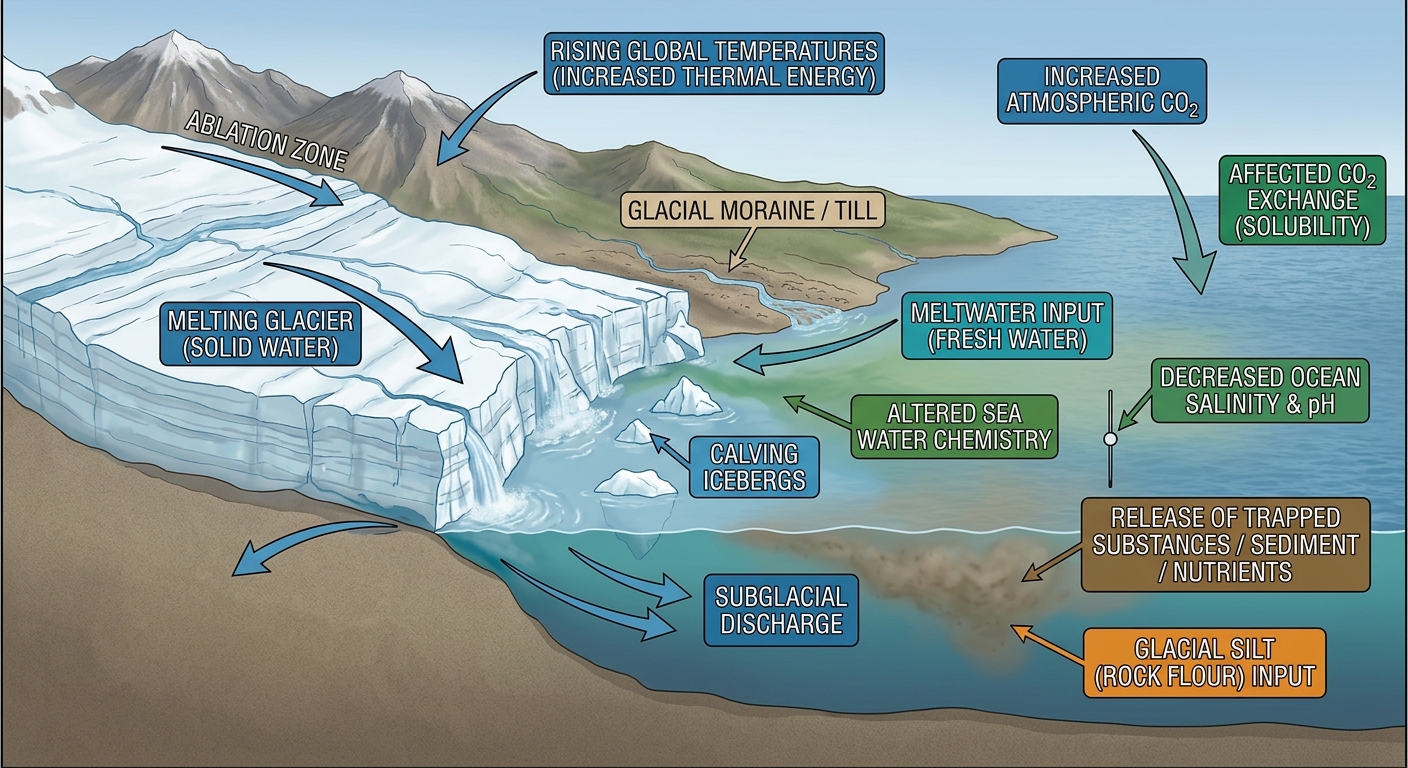
As global temperatures rise, glaciers (solid ) melt at accelerating rates. Ancient ice can trap gases and dissolved substances within its crystal structure over thousands of years.
Explain one chemistry-related environmental impact that results from the melting of glaciers. [2]
Explain one chemistry-related environmental impact that results from the melting of glaciers. [2]
Solutions
3QuestionStrength of intermolecular forcesConcept Practice
2 marks~3 minCriterion A
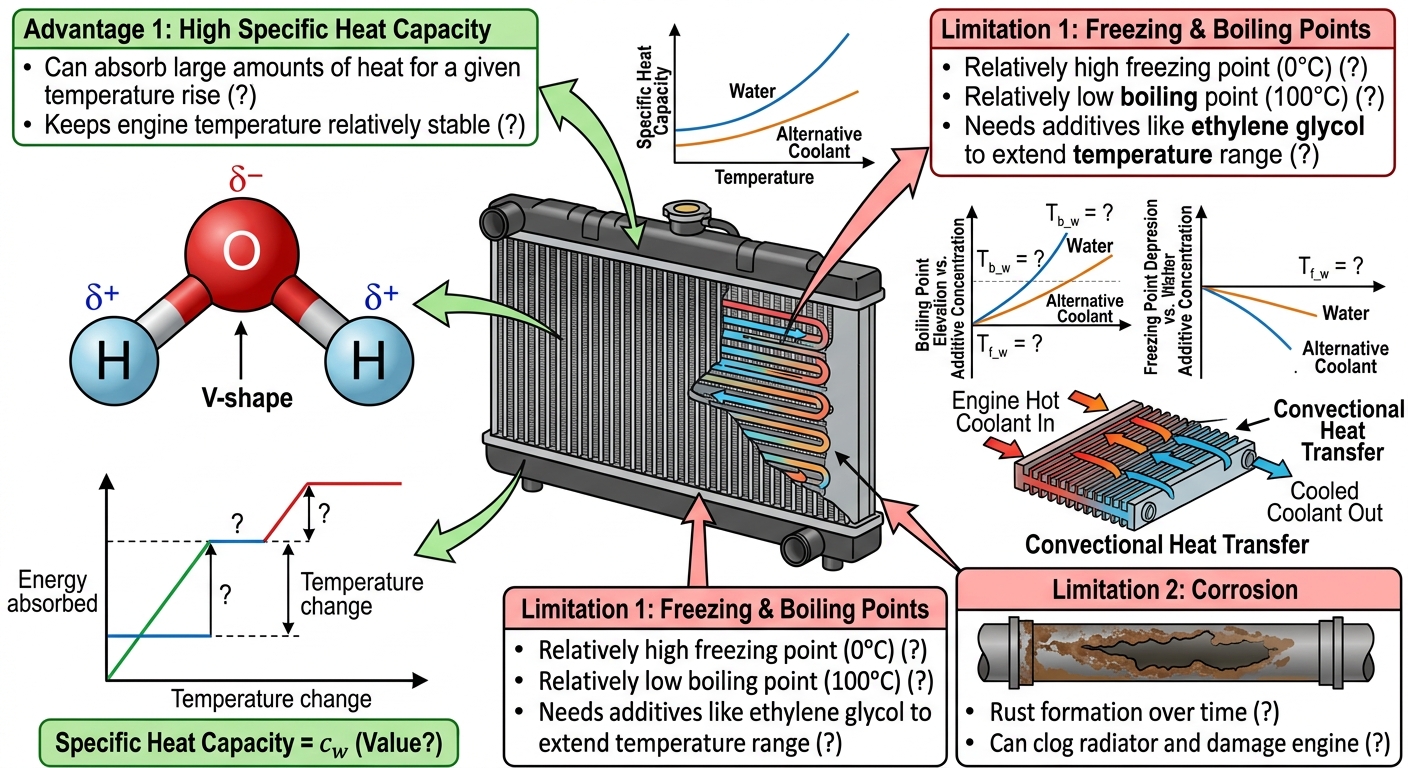
Car engines operate at temperatures that can exceed 90 °C. Engineers use water as a coolant in radiator systems because of its molecular properties.
a
Explain why water's molecular structure makes it an effective coolant. [1]
b
State one limitation of using pure water as a coolant in a car radiator. [1]
Solutions
4QuestionDensity differences between statesAssessment Practice
2 marks~3 minCriterion D
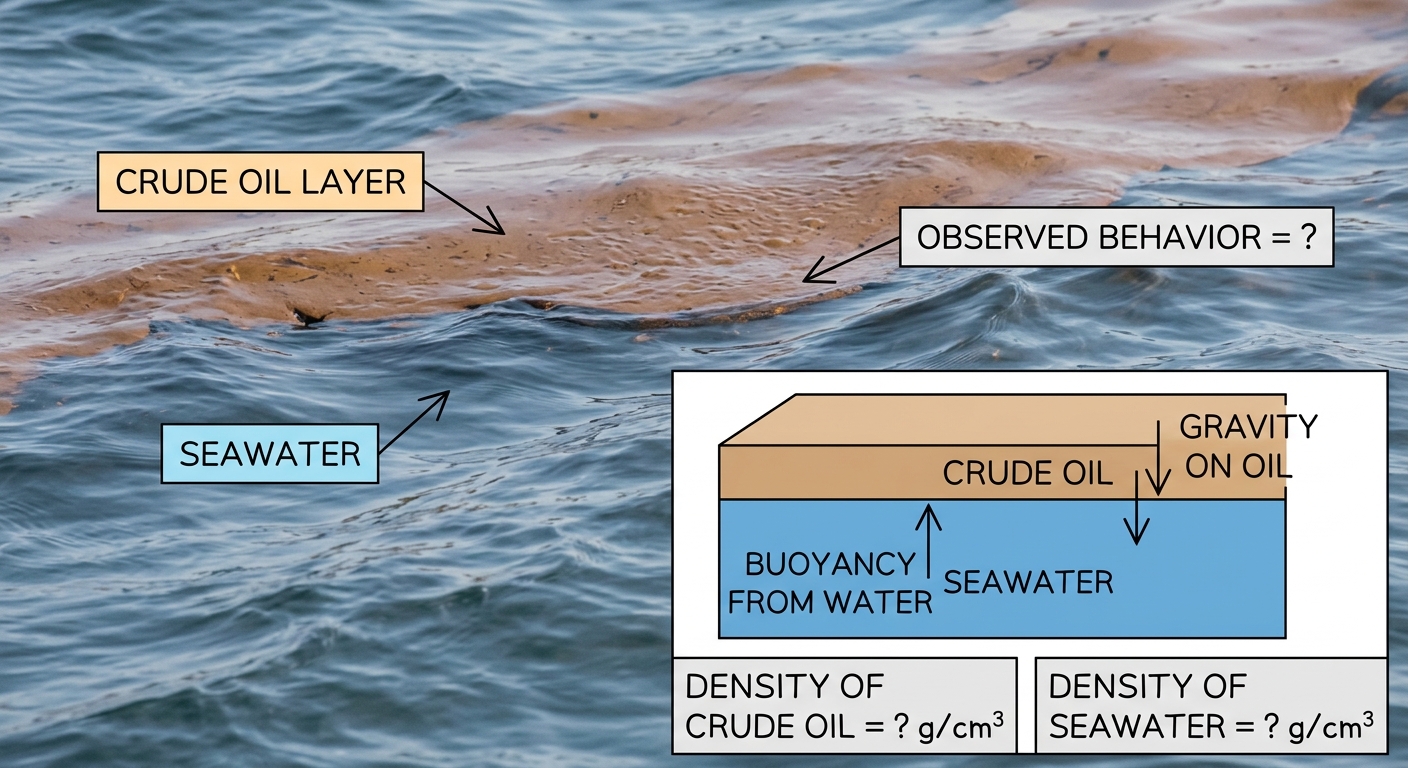
During the 2010 Deepwater Horizon spill, crude oil (density ≈ 850 kg m⁻³) floated on seawater (density ≈ 1025 kg m⁻³), forming a surface slick visible across thousands of square kilometres.
a
Describe one environmental impact of this density difference on marine ecosystems. [1]
b
Explain one limitation of using density difference alone to predict how the oil will behave in the ocean, and identify a specific factor that could cause the oil to behave differently from predictions. [1]
Solutions
5QuestionStrength of intermolecular forcesConcept Practice
2 marks~3 minCriterion A
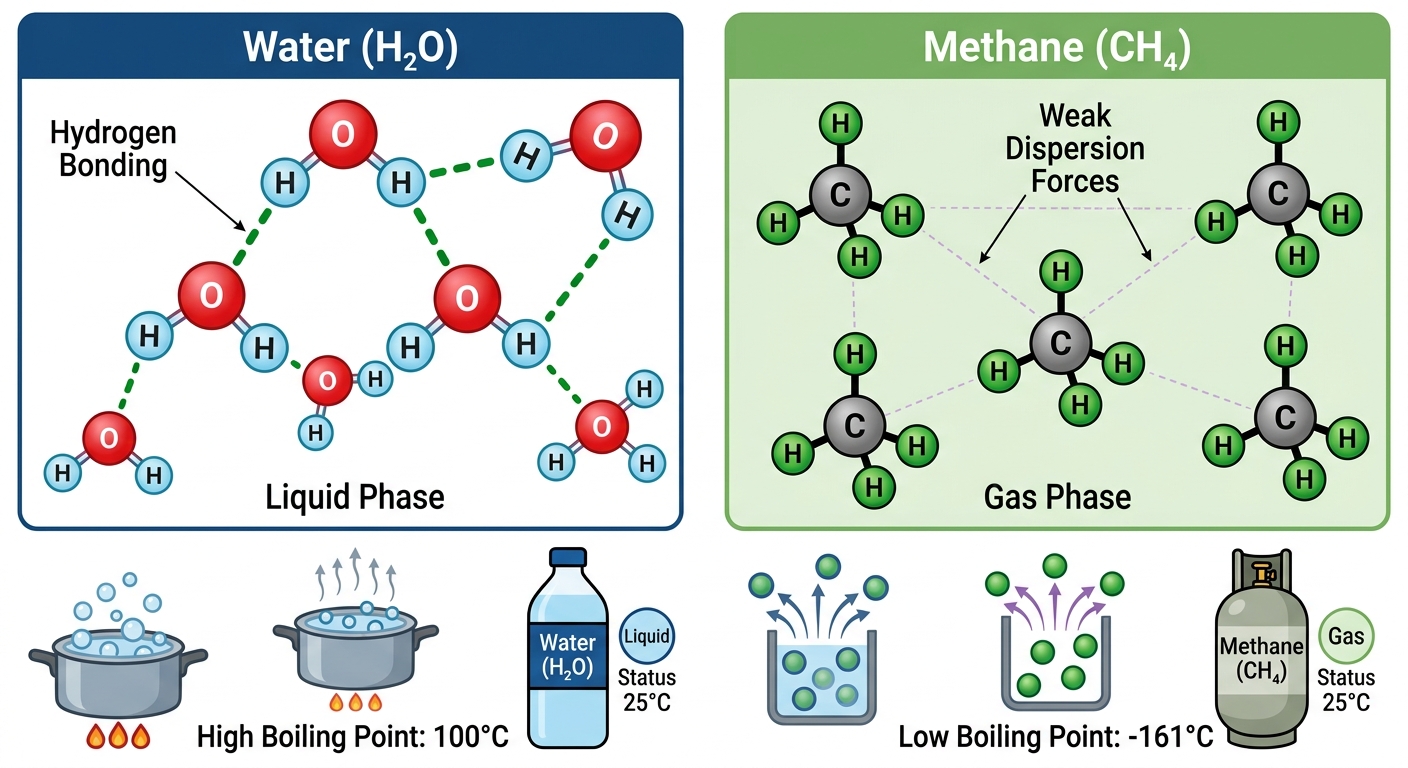
The boiling points and states at room temperature (25°C) for two substances are given below.
| Water (H₂O) | boiling point 100°C | liquid at 25°C |
|---|---|---|
| Methane (CH₄) | boiling point −161°C | gas at 25°C |
a
Deduce which substance has stronger intermolecular forces. Use the data to support your answer. [1]
b
State the type of intermolecular force present in each substance. [1]
Solutions
6QuestionProperties of solids, liquids, and gases (shape, volume, compressibility)Assessment Practice
2 marks~3 minCriterion D
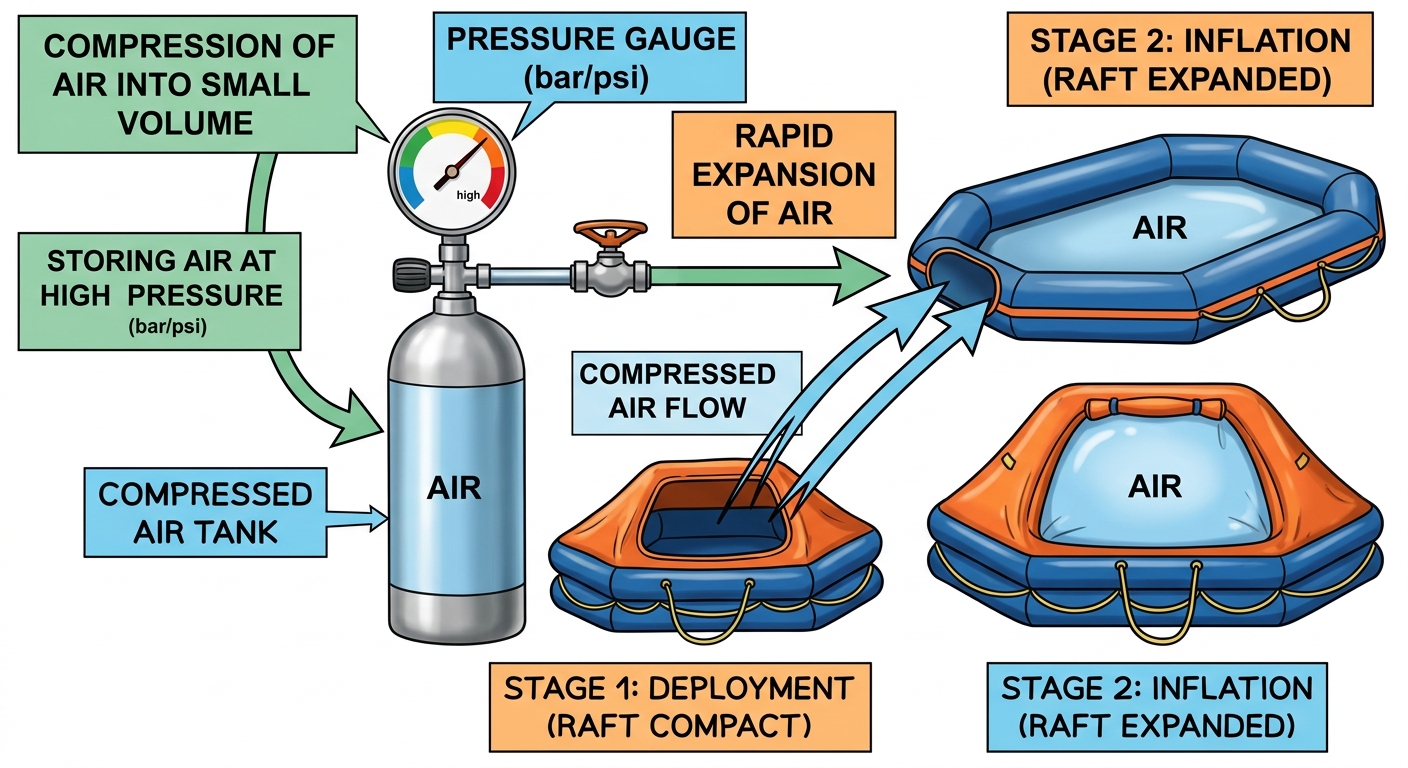
Compressed natural gas (CNG) is stored in reinforced cylinders at pressures up to 200 atm and used as fuel in buses and delivery vehicles.
a
Explain how the property of compressibility makes CNG a practical fuel for vehicles. [1]
b
Evaluate one safety limitation that must be managed when using CNG cylinders in this application. [1]
Solutions
7QuestionProperties of solids, liquids, and gases (shape, volume, compressibility)Concept Practice
2 marks~3 minCriterion A
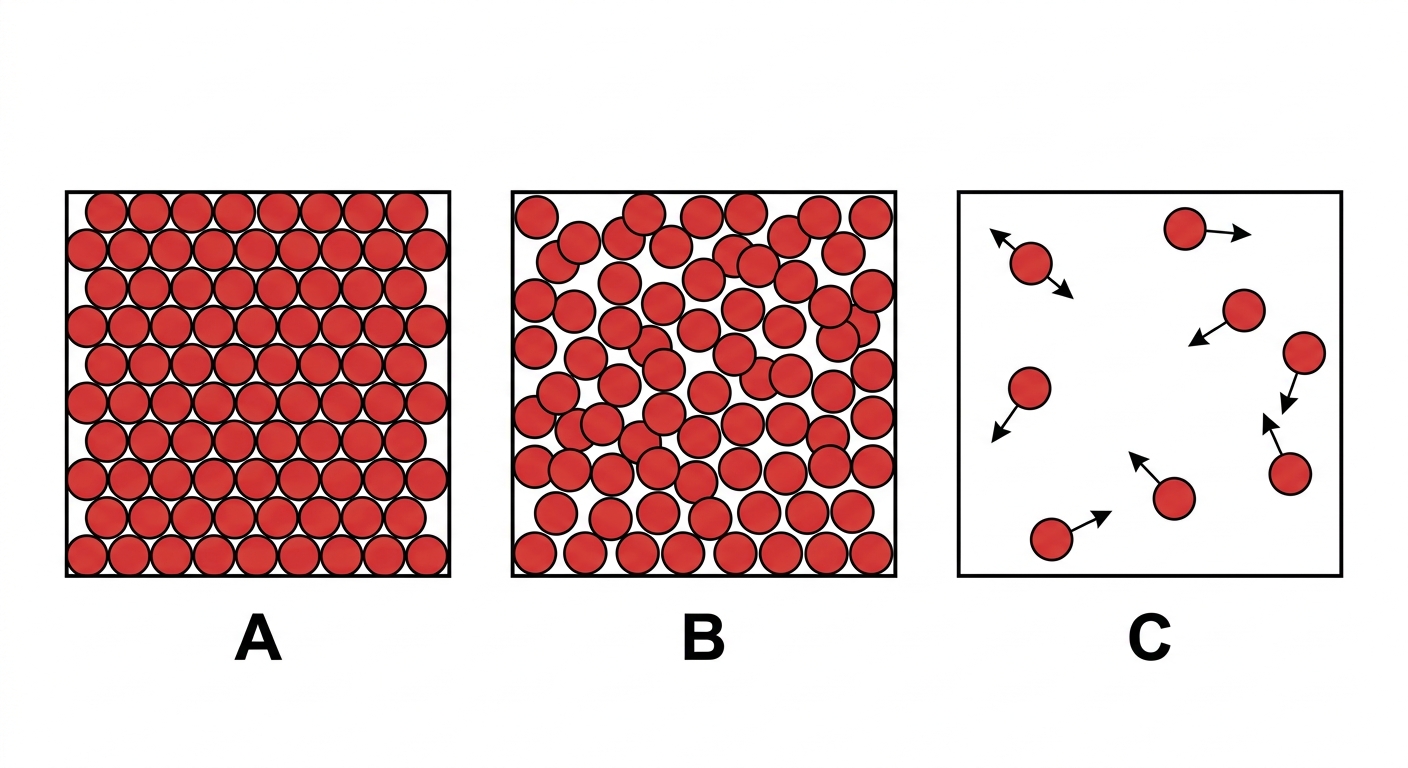
The diagram shows particle arrangements in three states of matter.
A: particles closely packed in a regular pattern.
B: particles closely packed but able to slide past each other.
C: particles far apart, moving randomly.
A: particles closely packed in a regular pattern.
B: particles closely packed but able to slide past each other.
C: particles far apart, moving randomly.
a
Identify which diagram represents a gas. [1]
b
Explain how the particle arrangement in a gas accounts for its compressibility. [1]
Solutions
8QuestionParticle arrangement in each stateAssessment Practice
2 marks~3 minCriterion A
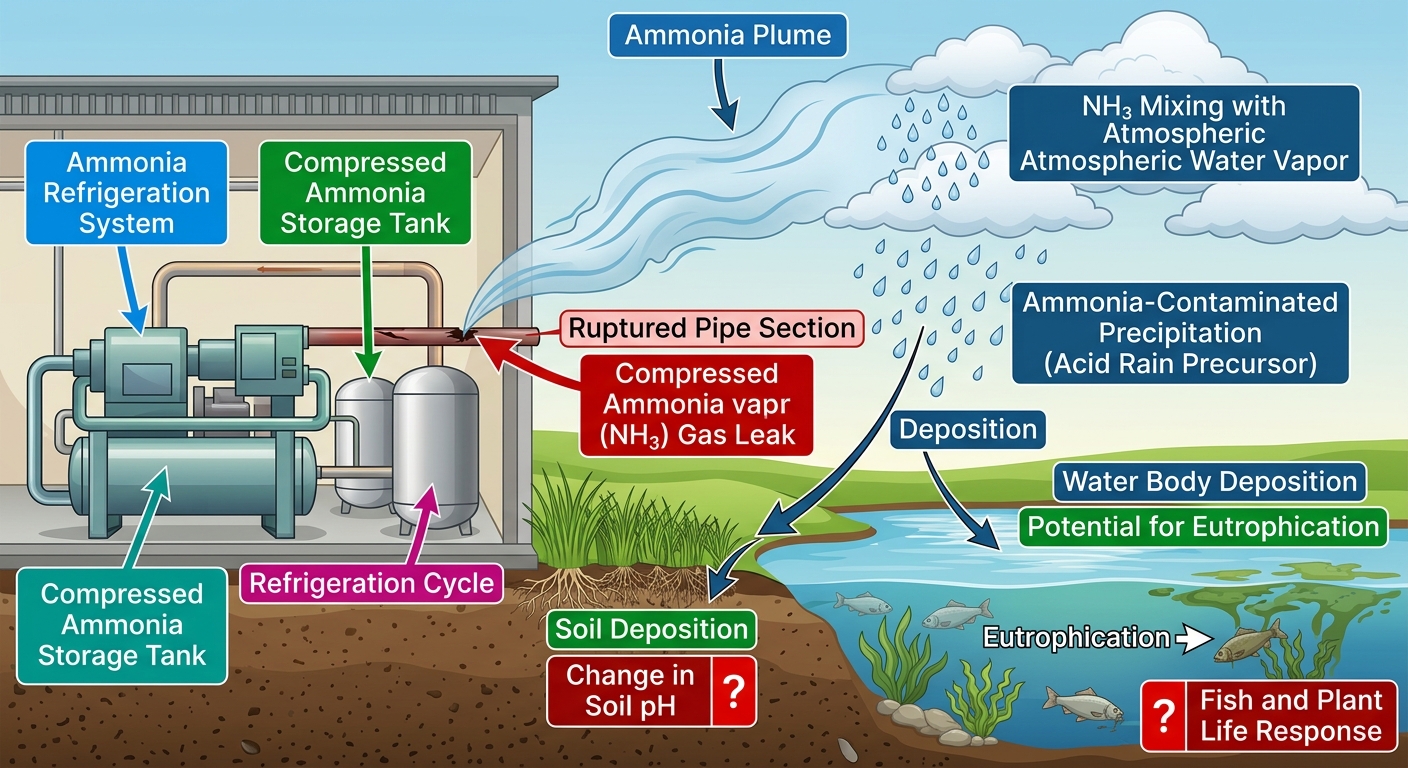
In 2023, a refrigeration plant in an industrial district reported a significant leak of compressed ammonia () gas into the surrounding atmosphere. Ammonia is highly soluble in water and reacts readily with atmospheric moisture.
Explain one environmental impact of this ammonia leak. [2]
Explain one environmental impact of this ammonia leak. [2]
Solutions
9QuestionDensity differences between statesConcept Practice
2 marks~3 minCriterion A
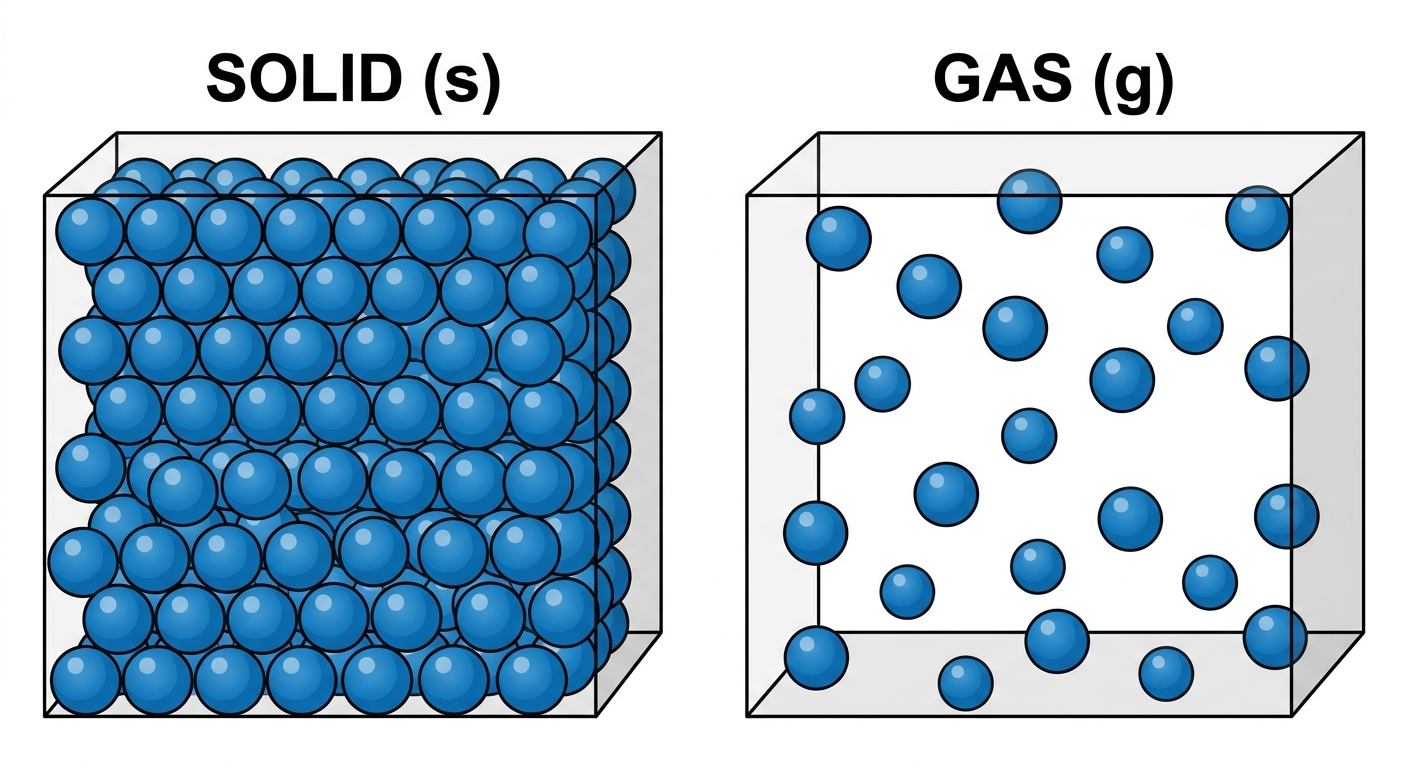
The diagram shows the particle arrangement of iodine in the solid state (s) and the gas state (g) at the same temperature.
a
Describe the arrangement and spacing of particles in solid iodine (s) and in iodine gas (g). [1]
b
Explain why iodine gas (g) has a significantly lower density than solid iodine (s), using the relationship . [1]
Solutions
10QuestionReal-life examples and state identificationAssessment Practice
3 marks~5 minCriterion A
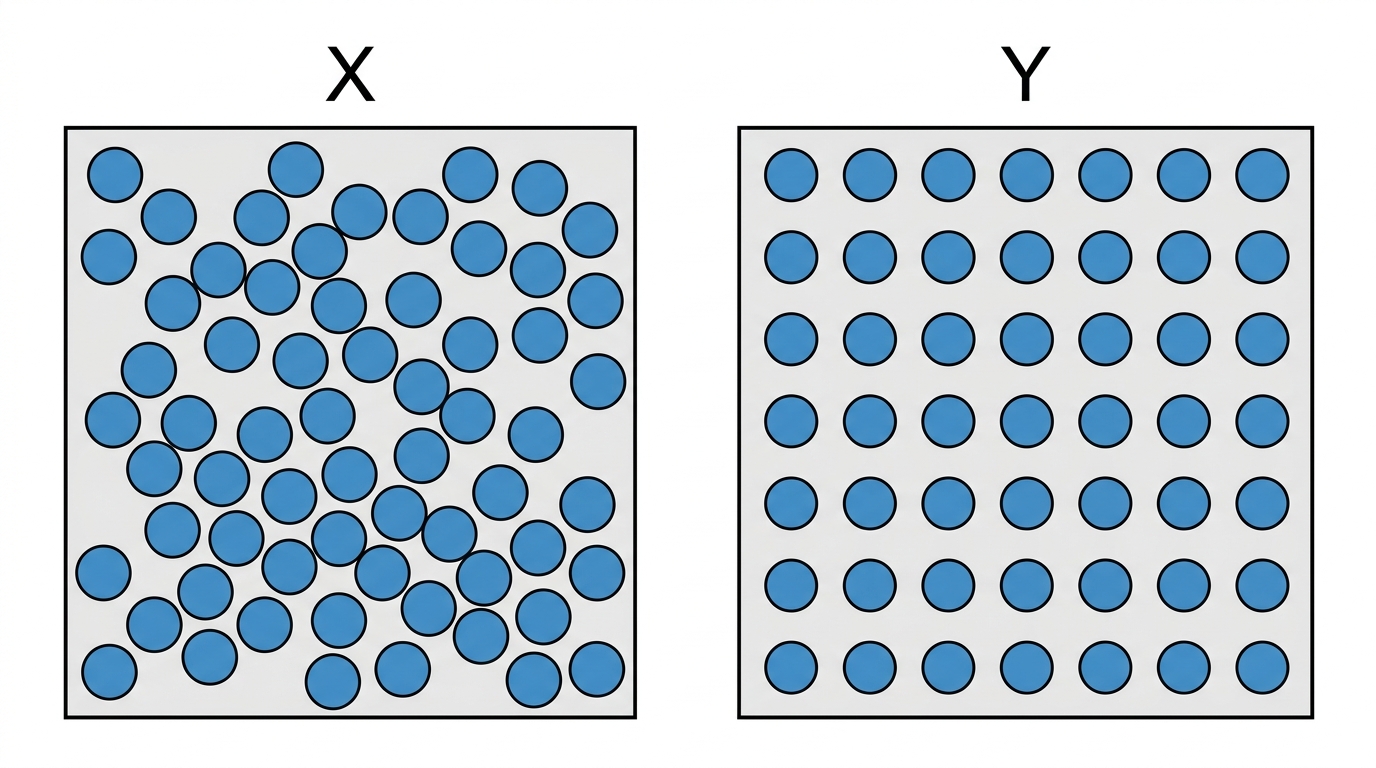
The diagram below shows the particle arrangements of two substances, X and Y.
X: particles are close together but irregularly arranged, with no fixed pattern.
Y: particles are arranged in a regular, repeating lattice structure.
X: particles are close together but irregularly arranged, with no fixed pattern.
Y: particles are arranged in a regular, repeating lattice structure.
a
Identify the state of matter of substance X and of substance Y. [1]
b
Explain how the particle arrangement and motion of Y account for its definite shape and fixed volume. [1]
c
Evaluate how the particle arrangement of X allows it to flow and take the shape of its container, while still maintaining a definite volume. [1]
Solutions
11QuestionDensity differences between statesConcept Practice
2 marks~3 minCriterion A
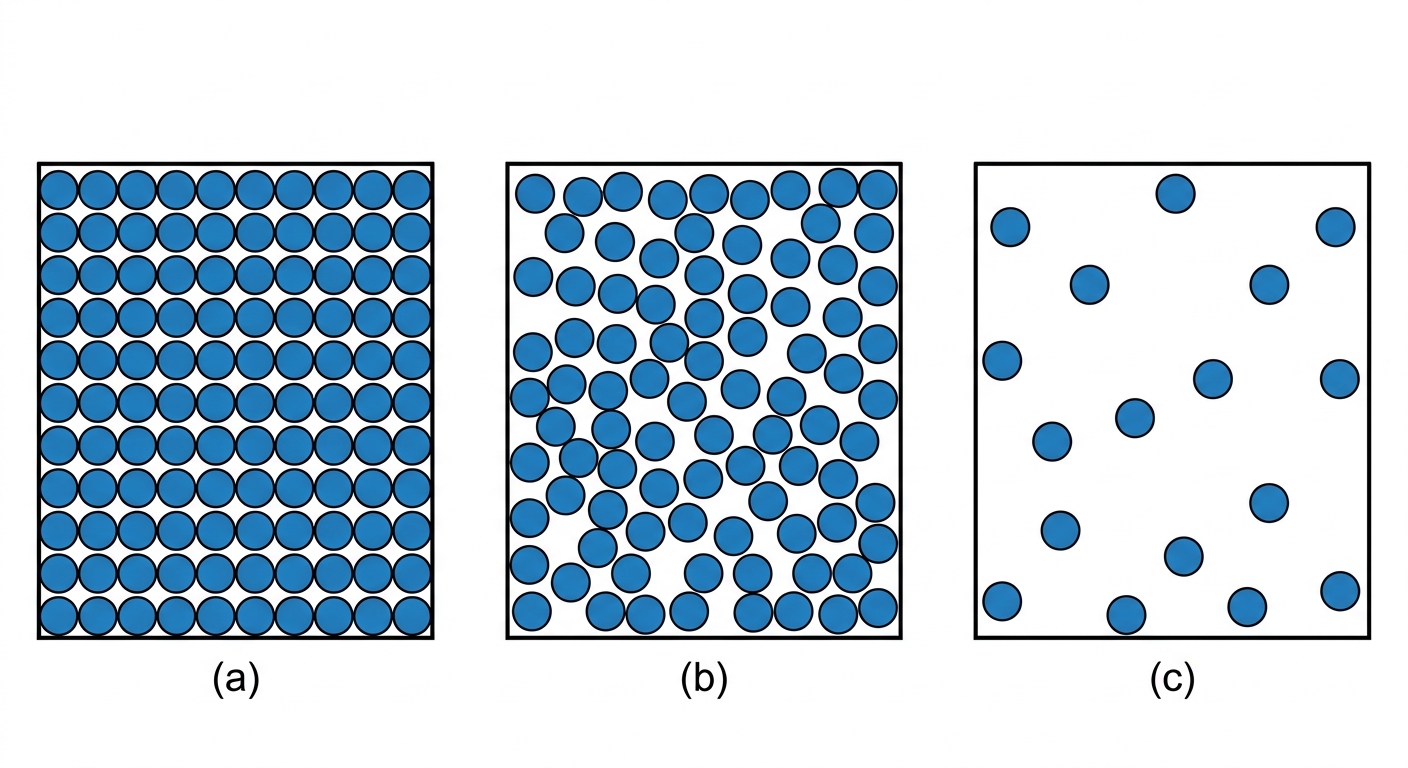
The diagram below shows particle arrangements in three states of matter.
Box (a): particles arranged in a regular, tightly packed pattern.
Box (b): particles close together but arranged irregularly, able to slide past one another.
Box (c): particles far apart, moving freely and randomly.
Box (a): particles arranged in a regular, tightly packed pattern.
Box (b): particles close together but arranged irregularly, able to slide past one another.
Box (c): particles far apart, moving freely and randomly.
a
Identify which box represents the state with the highest density. [1]
b
Explain why that state has the highest density, using particle spacing in your answer. [1]
Solutions
12QuestionStrength of intermolecular forcesAssessment Practice
3 marks~5 minCriterion A
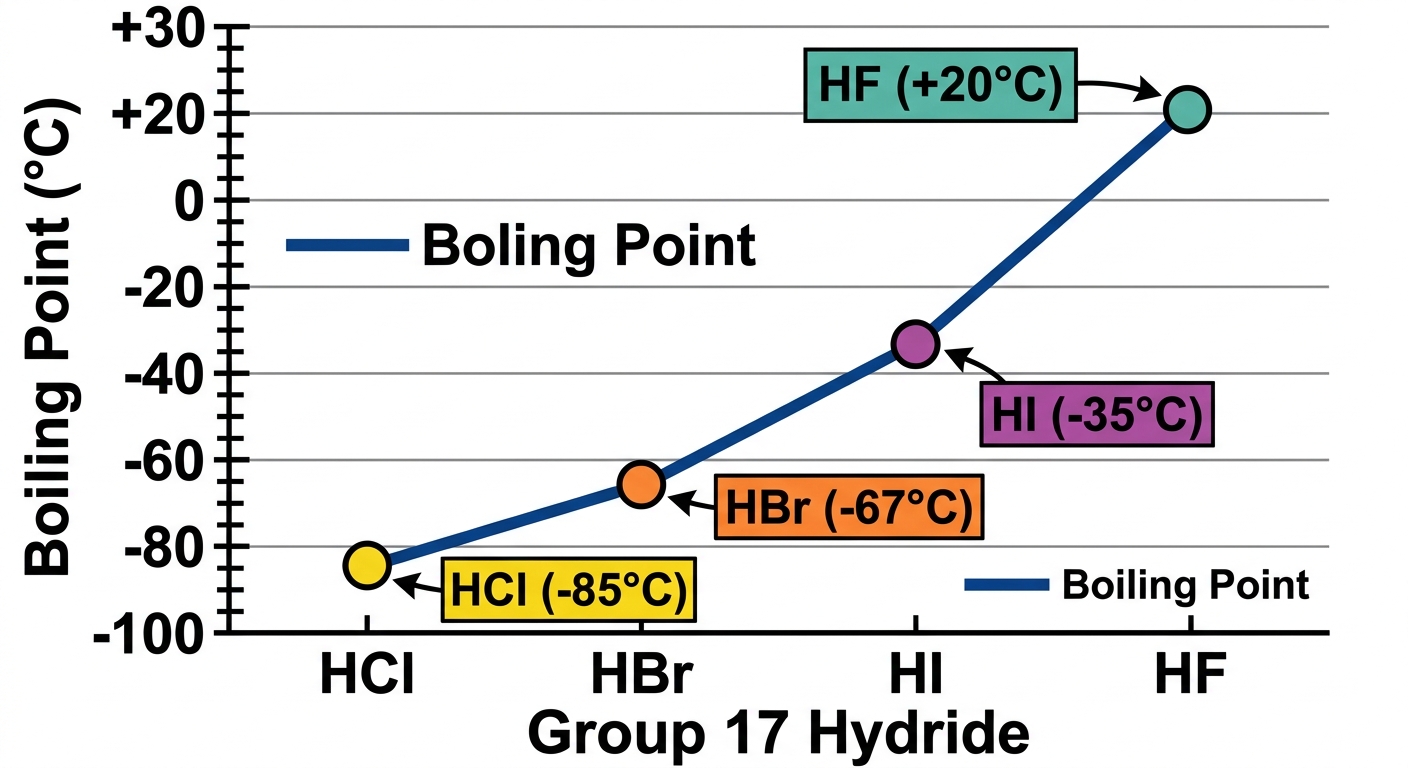
The boiling points of the Group 17 hydrides are listed below.
| Hydride | HF | HCl | HBr | HI |
|---|---|---|---|---|
| Boiling point (°C) | 19.5 | −85.1 | −66.8 | −35.4 |
a
State the trend in boiling points from HCl to HI. [1]
b
Explain why boiling points increase from HCl to HI in terms of intermolecular forces. [1]
c
Analyse why HF has a significantly higher boiling point than would be predicted from the trend shown by HCl, HBr, and HI. [1]
Solutions
13QuestionReal-life examples and state identificationConcept Practice
3 marks~5 minCriterion A
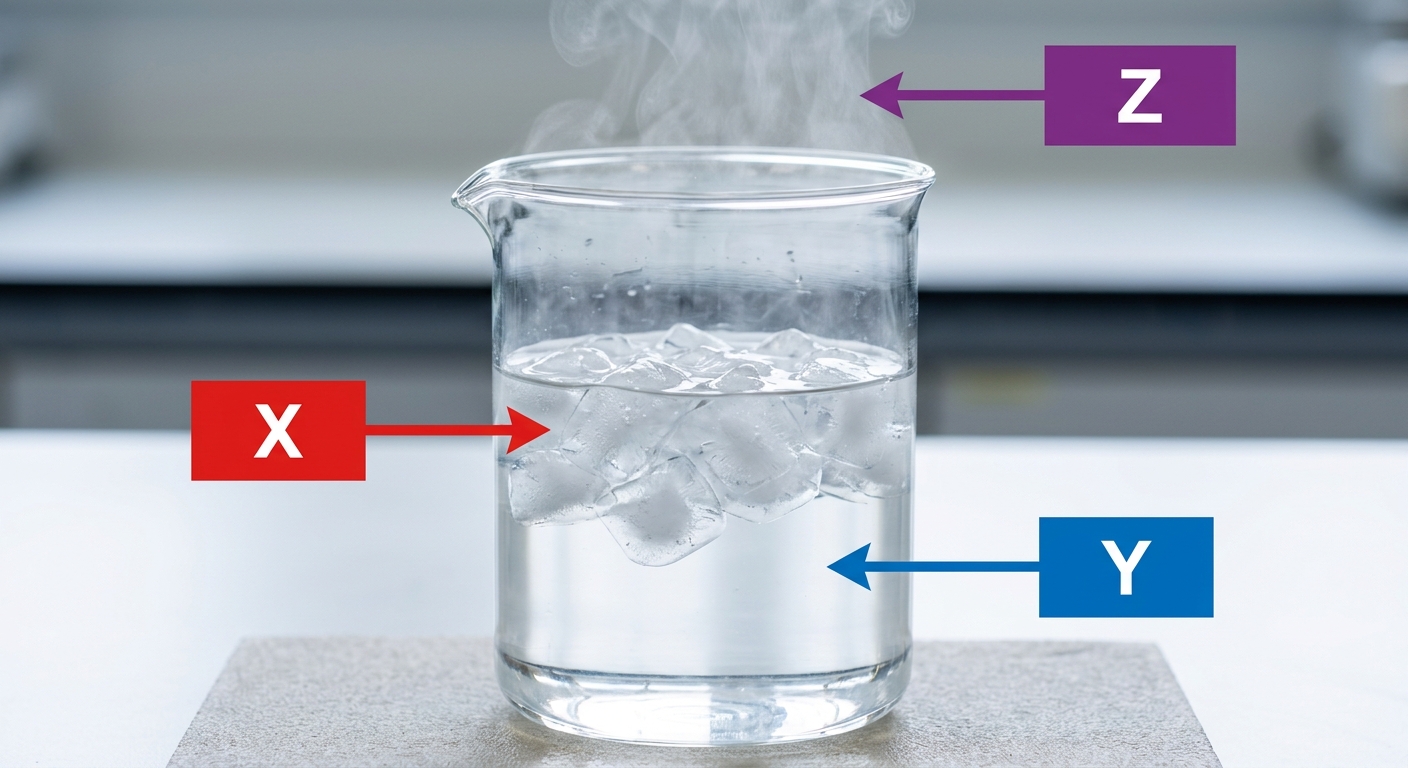
The diagram shows a beaker containing ice cubes floating in liquid water, with steam rising above the water surface. Three regions are labelled: X (ice cubes), Y (liquid water), and Z (steam).
a
State the state of matter represented by each labelled region, X, Y, and Z. [1]
b
Identify one visible property shown in the diagram that distinguishes region X (solid) from region Y (liquid). [1]
c
Explain why region Z behaves differently from regions X and Y in terms of particle arrangement and movement. [1]
Solutions
14QuestionDensity differences between statesAssessment Practice
3 marks~5 minCriterion A
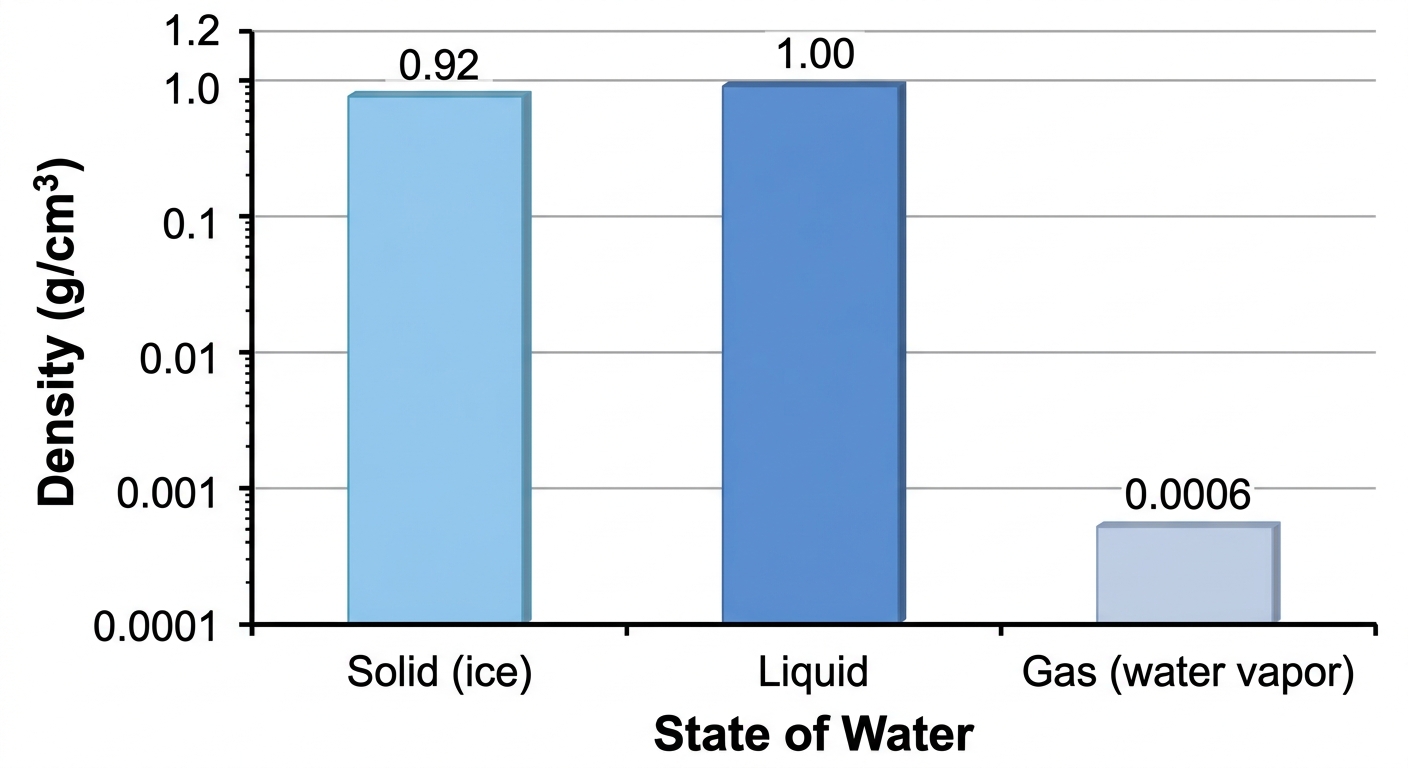
The bar chart below shows the density of water in three states at 0 °C.
State — Density (g/cm³)
Solid (ice): 0.92
Liquid water: 1.00
Water vapour: 0.0006
State — Density (g/cm³)
Solid (ice): 0.92
Liquid water: 1.00
Water vapour: 0.0006
a
State which two values in the chart show anomalous behaviour compared with the expected solid–liquid–gas density trend. [1]
b
Using the particle model, explain how particle spacing and arrangement account for the density difference between ice and liquid water. [1]
c
The density of water vapour (0.0006 g/cm³) is approximately 1700 times lower than that of liquid water (1.00 g/cm³). Analyse how the change in intermolecular forces and particle kinetic energy during vaporisation accounts for this dramatic difference in density. [1]
Solutions
15QuestionReal-life examples and state identificationConcept Practice
3 marks~5 minCriterion A
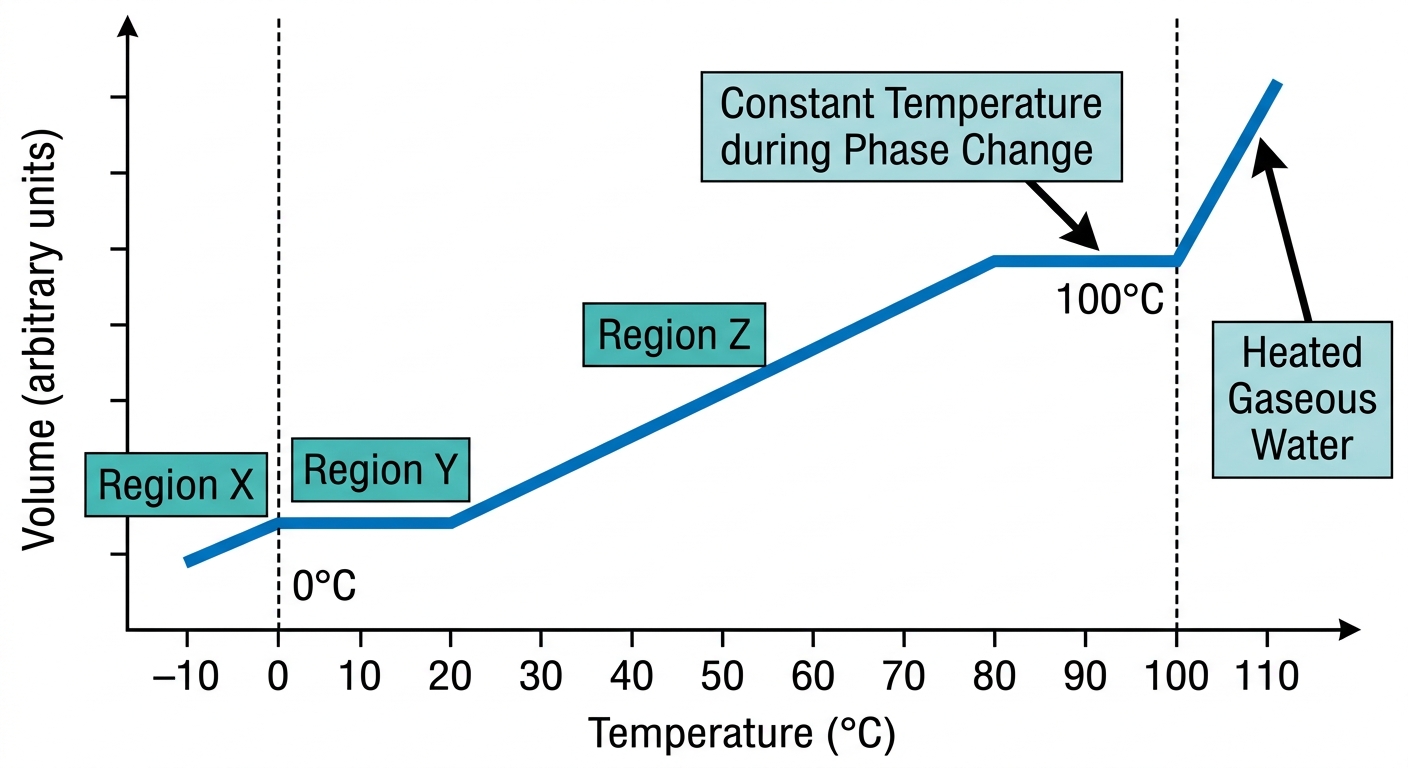
The graph below shows how the volume of a fixed mass of water changes as it is heated from −10 °C to 110 °C. Three regions are labelled: Region X (−10 °C to 0 °C), Region Y (horizontal segment at 0 °C), and Region Z (0 °C to 100 °C).
a
Identify the state of matter of the water in Region X. [1]
b
Explain what is happening to the water particles during Region Y. In your answer, refer to both the arrangement and the energy of the particles. [2]
Solutions
16QuestionProperties of solids, liquids, and gases (shape, volume, compressibility)Assessment Practice
3 marks~5 minCriterion C
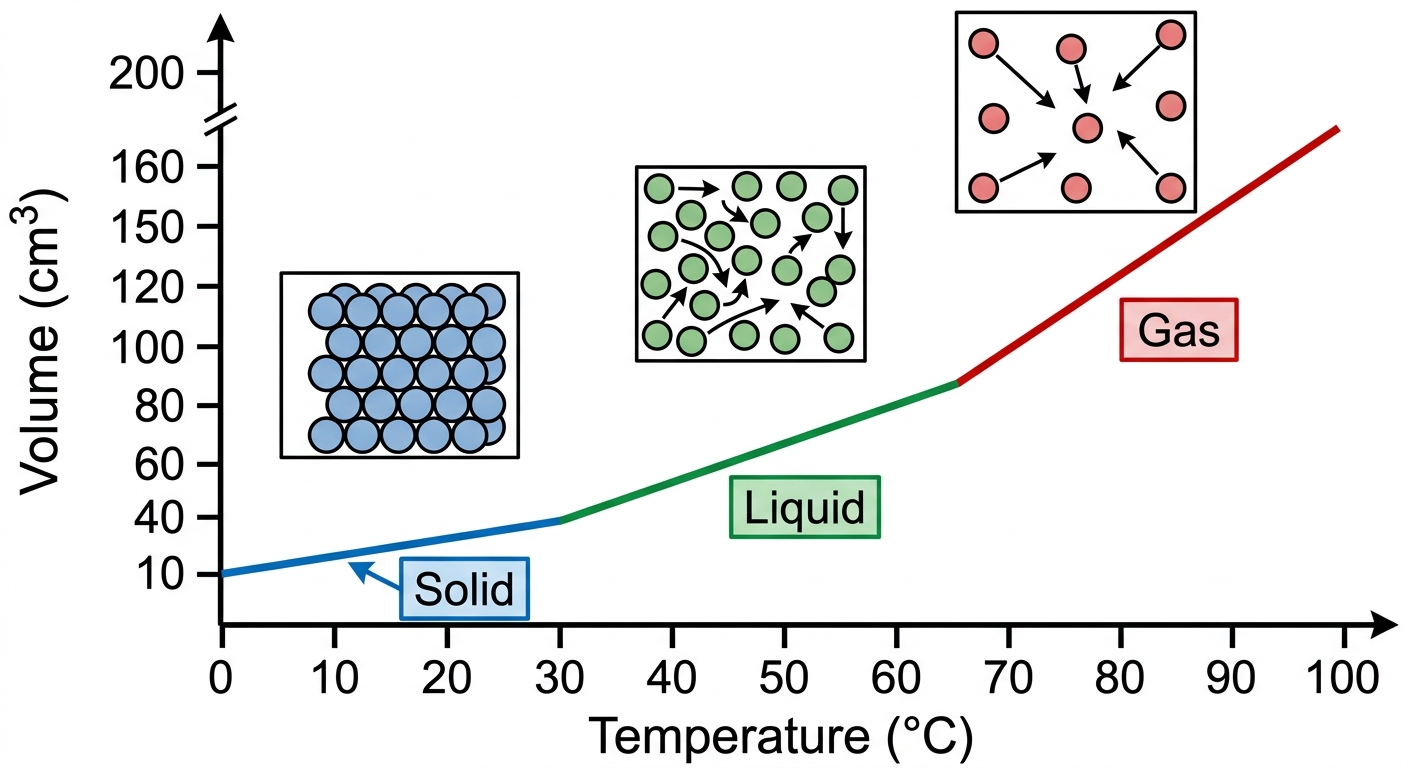
The graph below shows how the volume of a fixed mass of a substance changes as it is heated at constant pressure, passing through melting and then vaporisation.
a
State what happens to particle spacing as a substance changes from solid to liquid to gas. [1]
b
Explain why a gas is significantly more compressible than a liquid, using particle spacing. [1]
c
The graph shows a much larger volume increase during vaporisation than during melting. Analyse what this difference reveals about the relative compressibility of liquids and gases, and justify why solids are considered almost incompressible. [1]
Solutions
17QuestionParticle arrangement in each stateConcept Practice
3 marks~5 minCriterion A
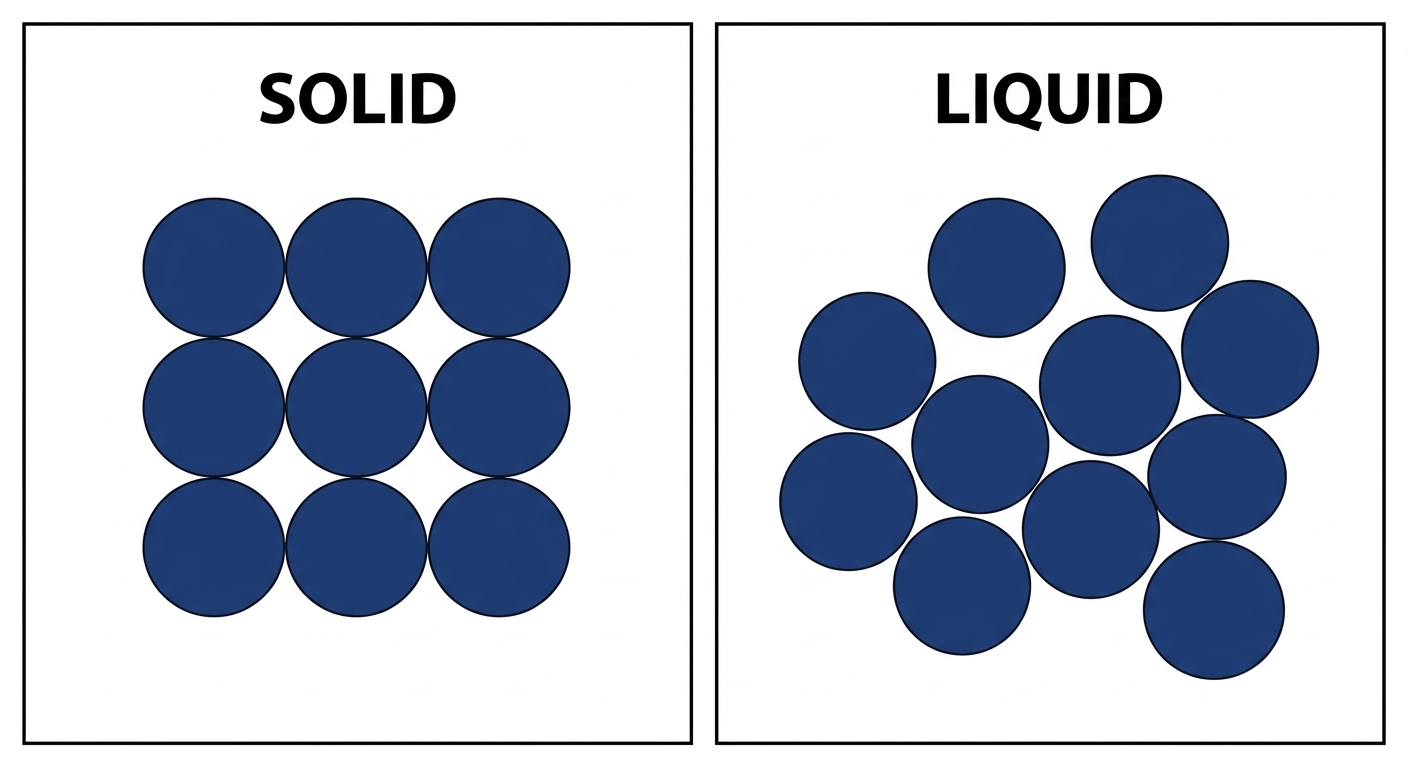
The diagram below shows the particle arrangement in a solid (left) and a liquid (right) of the same substance at the same temperature, with particles represented as small spheres.
a
Identify which state of matter has stronger intermolecular forces. [1]
b
Explain why the solid maintains a fixed shape while the liquid is able to flow, using your understanding of particle arrangement and intermolecular forces. [2]
Solutions
18QuestionStrength of intermolecular forcesAssessment Practice
4 marks~6 minCriterion A
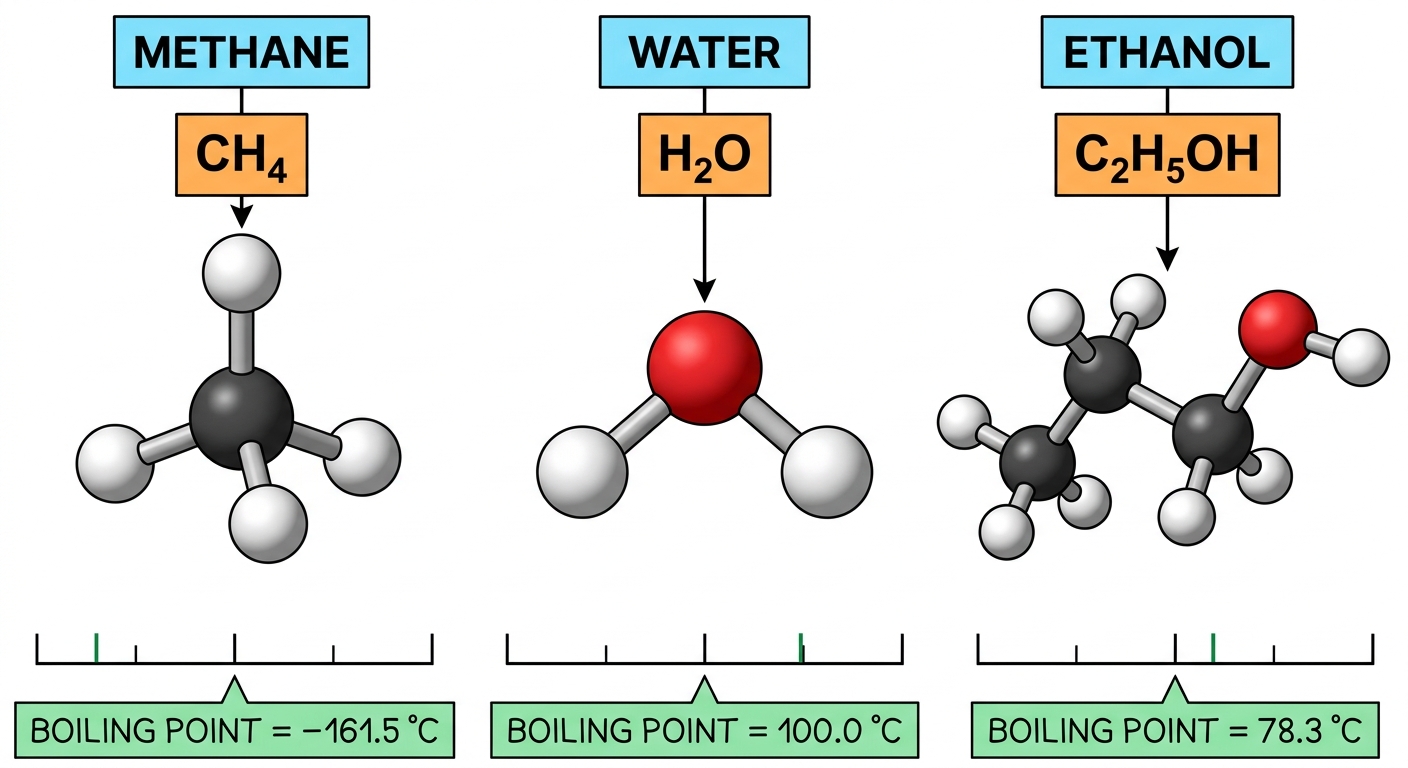
Three pure substances are listed below with their molecular formulas and boiling points.
| Substance | Formula | Boiling point |
|---|---|---|
| Methane | ||
| Water | ||
| Ethanol |
a
Identify the intermolecular force(s) present in each substance. [2]
b
Explain why water has a higher boiling point than ethanol, even though both substances exhibit hydrogen bonding. [2]
Solutions
19QuestionParticle arrangement in each stateConcept Practice
3 marks~5 minCriterion A
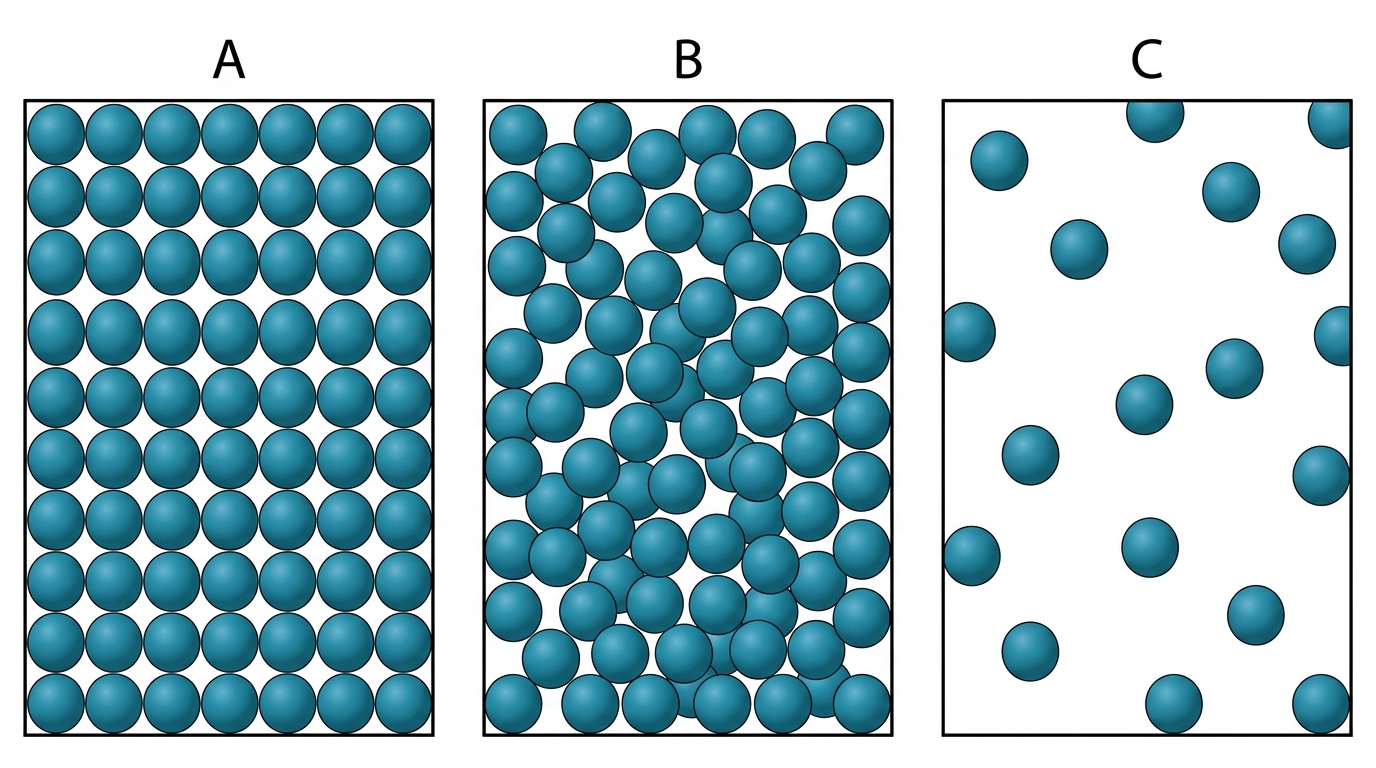
Three particle diagrams represent different states of matter.
Diagram A: particles arranged in a regular, repeating lattice with fixed positions.
Diagram B: particles closely packed but in a random, irregular arrangement.
Diagram C: particles widely spaced with large gaps between them.
Diagram A: particles arranged in a regular, repeating lattice with fixed positions.
Diagram B: particles closely packed but in a random, irregular arrangement.
Diagram C: particles widely spaced with large gaps between them.
a
Identify the state of matter shown in each diagram. Write your answer as: A: [state], B: [state], C: [state]. [1]
b
Explain why the particles in Diagram B can flow but cannot be compressed significantly. [1]
c
Analyse how the particle arrangement in Diagram C accounts for the fact that gases fill any container they occupy. [1]
Solutions
20QuestionReal-life examples and state identificationAssessment Practice
4 marks~6 minCriterion A
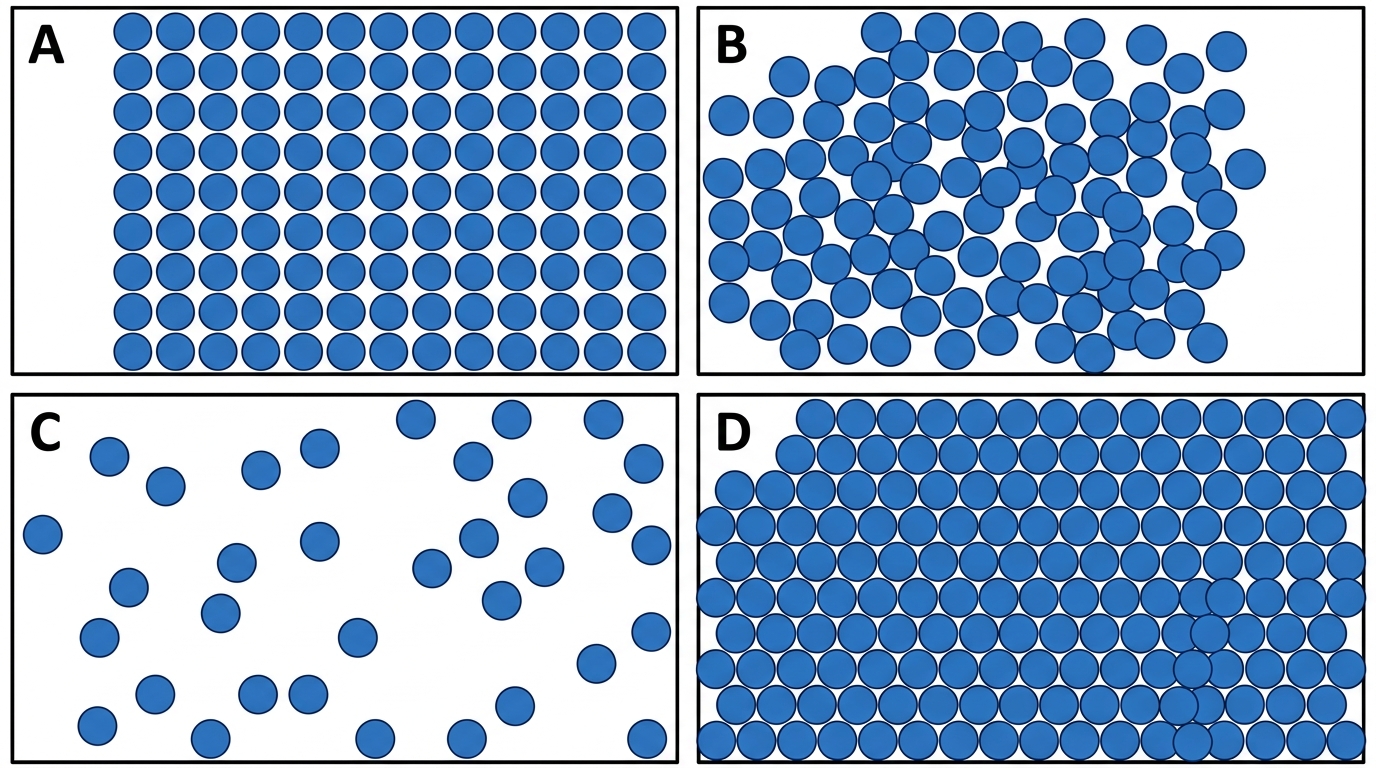
The diagrams below show particle arrangements in four substances at room temperature.
Diagram A: particles closely packed in a regular, fixed pattern.
Diagram B: particles closely packed but able to slide past each other.
Diagram C: particles far apart, moving rapidly in all directions.
Diagram D: particles closely packed in a regular, fixed pattern, more tightly packed than in Diagram A.
Diagram A: particles closely packed in a regular, fixed pattern.
Diagram B: particles closely packed but able to slide past each other.
Diagram C: particles far apart, moving rapidly in all directions.
Diagram D: particles closely packed in a regular, fixed pattern, more tightly packed than in Diagram A.
a
Identify which diagram represents a gas. [1]
b
Diagram D represents a substance that is denser than the solid in Diagram A. Deduce the state of matter of the substance in Diagram D, and explain one limitation of using particle diagrams alone to distinguish between the two solids. [2]
c
Bromine is a liquid at room temperature (melting point −7 °C, boiling point 59 °C) but becomes a gas when heated above 59 °C. Explain, using particle behaviour, why bromine transitions from the arrangement in Diagram B to the arrangement in Diagram C as it is heated. [1]
Solutions
Showing 20 of 87 free questions