RevisionPrep
Log inGo Premium

Chemistry

Free Version

Rates, Energy Changes and Equilibrium

5 subtopics · 353 exam-style questions

“Pick a subtopic to start practising.”
Collision Theory and activation energyFactors affecting rate: temperature, concentration, surface area and catalystsEnergy profiles and bond energiesEndothermic and exothermic reactionsReversible Reactions and Equilibrium (qualitative)

Sample questions from Rates, Energy Changes and Equilibrium

  1. Endothermic and exothermic reactions[4 marks]
    Chemical reactions are classified by the direction in which energy is transferred.

    (a) Define the term exothermic reaction. [1]

    (b) Define the term endothermic reaction. [1]

    (c) Explain why the products of an exothermic reaction store less chemical energy than the reactants. [2]
    Practise this subtopic
  2. Energy profiles and bond energies[4 marks]
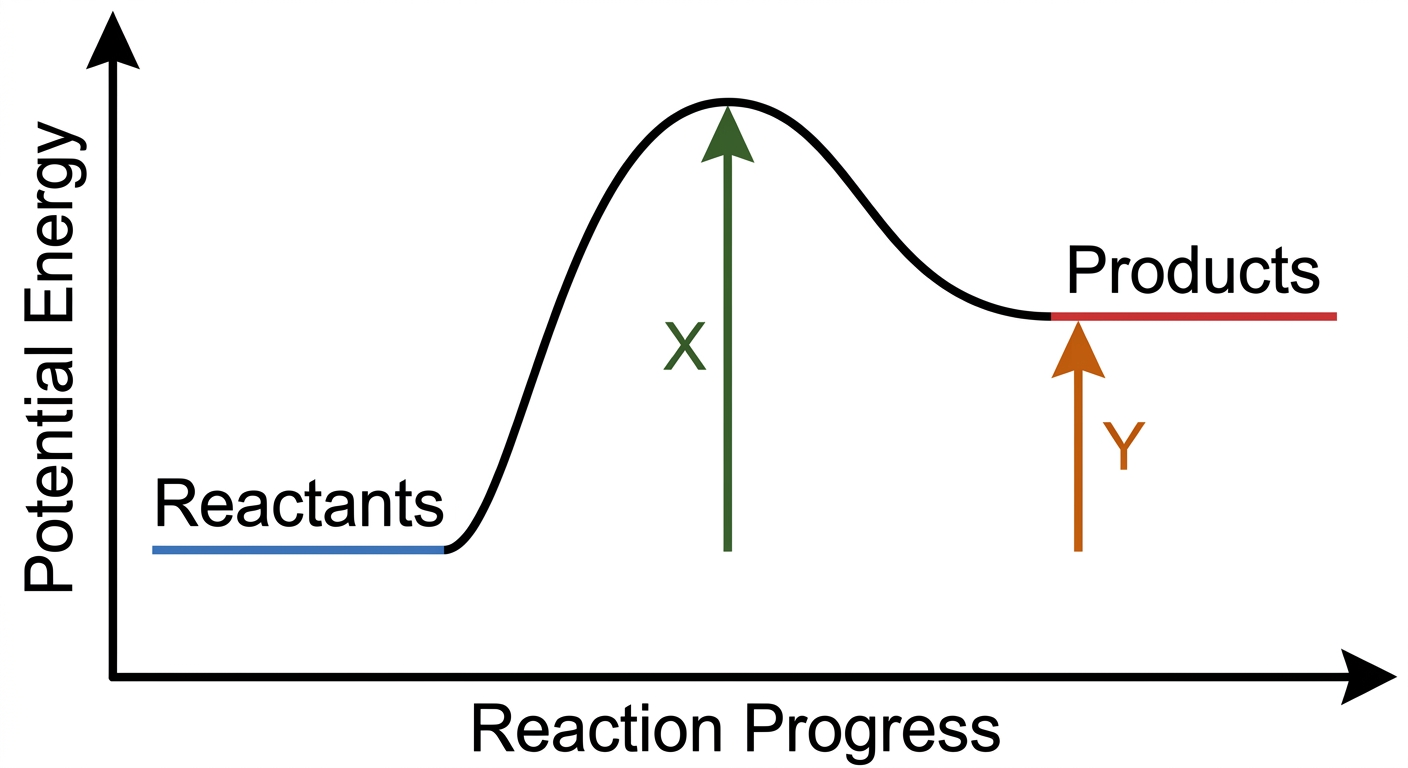
    The diagram shows the energy profile for a reaction. Arrow X runs from the reactants to the peak. Arrow Y runs from the reactants to the products.

    (a) Identify the quantities represented by arrow X and arrow Y. [2]

    (b) State whether the reaction is exothermic or endothermic, and explain how the diagram shows this. [2]
    Diagram for a Energy profiles and bond energies practice questionPractise this subtopic
  3. Collision Theory and activation energy[6 marks]
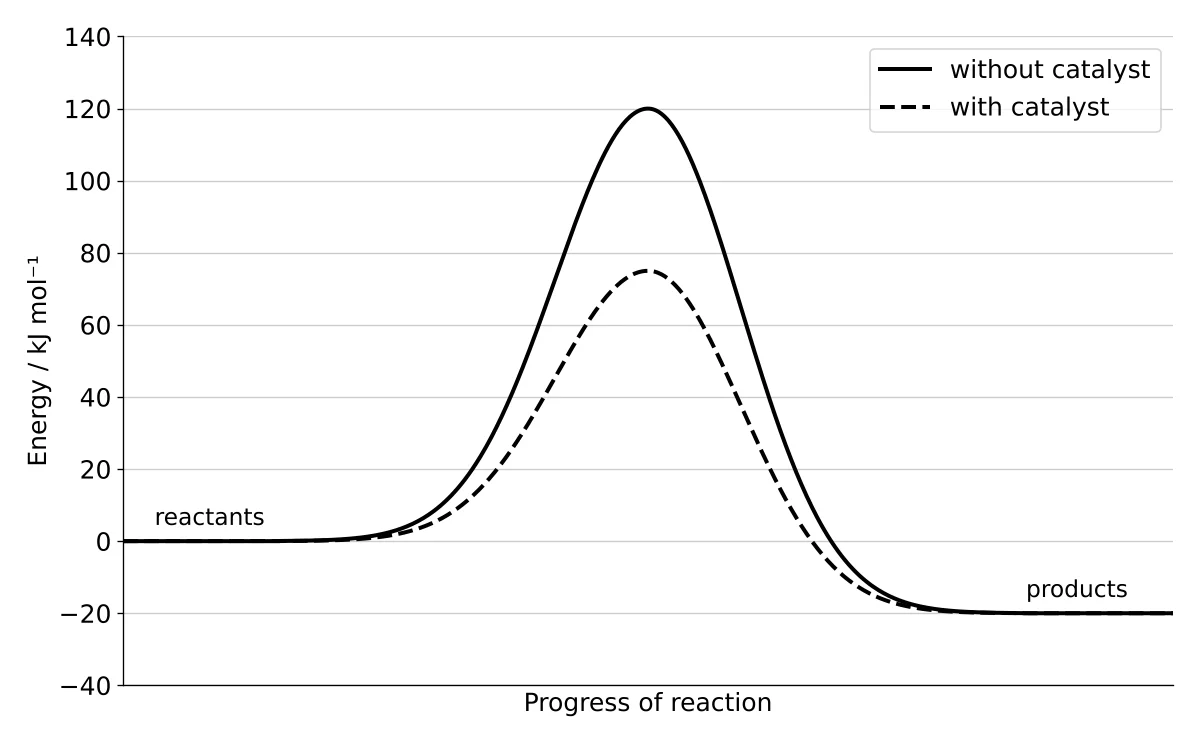
    The energy profile shows the same reaction with and without a catalyst.

    (a) Determine the activation energy for the reaction without a catalyst and with the catalyst. [2]

    (b) Determine the enthalpy change, ΔH, for the reaction. [1]

    (c) Explain, using collision theory, why the catalysed reaction is faster at the same temperature. [2]

    (d) A student claims that the catalyst makes the reaction more exothermic. Use the diagram to evaluate this claim. [1]
    Diagram for a Collision Theory and activation energy practice questionPractise this subtopic
  4. Factors affecting rate: temperature, concentration, surface area and catalysts[3 marks]
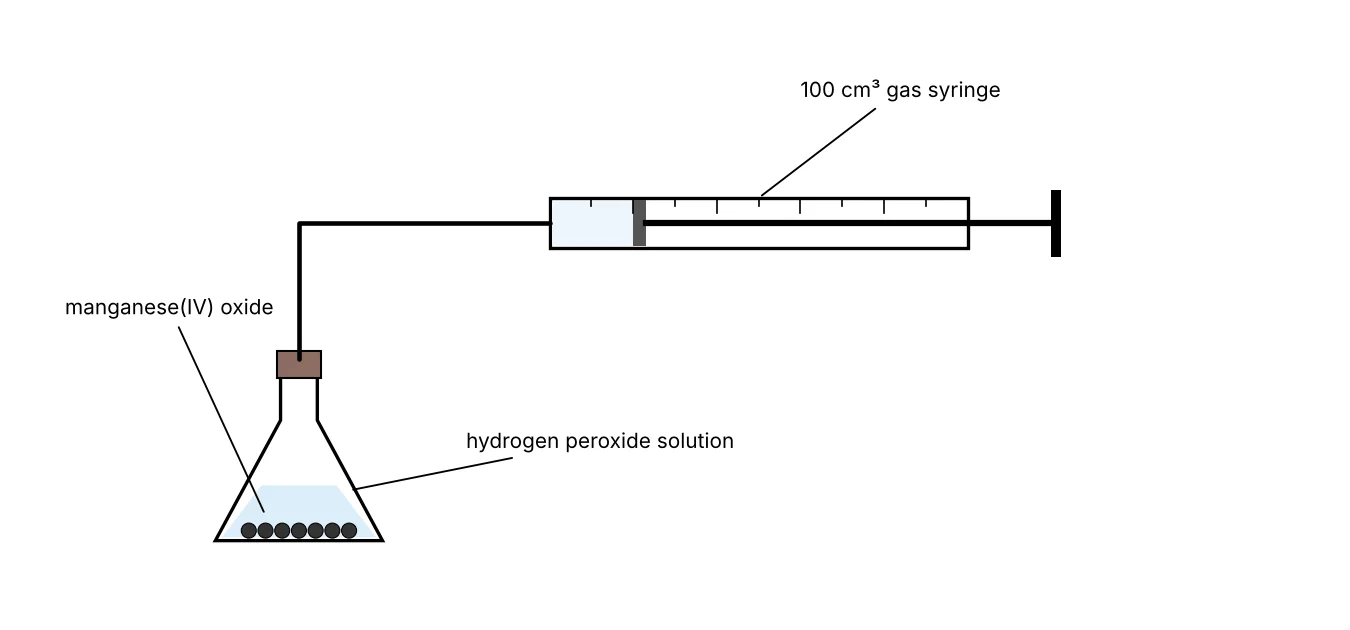
    A student plans to plot a graph of the volume of oxygen against time for the decomposition of hydrogen peroxide with a catalyst. A 100 cm³ gas syringe is available.

    The diagram shows the apparatus.

    (a) State the independent and dependent variables for this plot. [1]

    (b) Explain how the student will know that the reaction has finished. [1]

    (c) Suggest how the student should choose the amount of hydrogen peroxide, given the gas syringe used. [1]
    Diagram for a Factors affecting rate: temperature, concentration, surface area and catalysts practice questionPractise this subtopic
  5. Reversible Reactions and Equilibrium (qualitative)[6 marks]
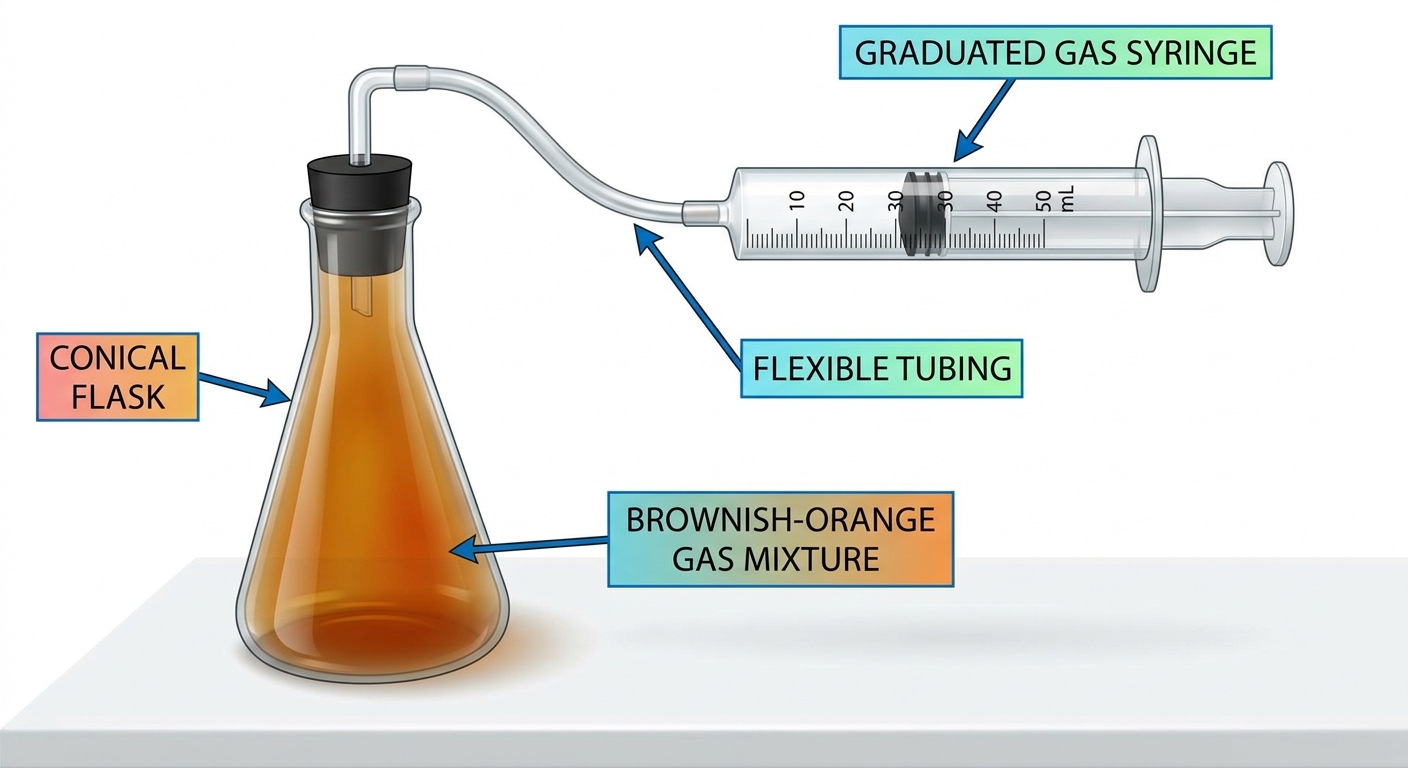
    A conical flask containing a mixture of brown nitrogen dioxide and colourless dinitrogen tetroxide is connected by tubing to a gas syringe, as shown. The plunger can move, but no gas can escape.

    2NO2(g)⇌N2O4(g)\mathrm{2NO_2(g) \rightleftharpoons N_2O_4(g)}

    (a) Explain why the apparatus is a closed system even though the plunger can move. [2]

    (b) The apparatus is left at constant temperature and the colour stops changing. Explain why the colour stays constant even though reactions are still taking place. [2]

    (c) The stopper is removed for a few minutes and then replaced. Predict and explain how the brown colour in the flask changes. [2]
    Diagram for a Reversible Reactions and Equilibrium (qualitative) practice questionPractise this subtopic
  6. Endothermic and exothermic reactions[4 marks]
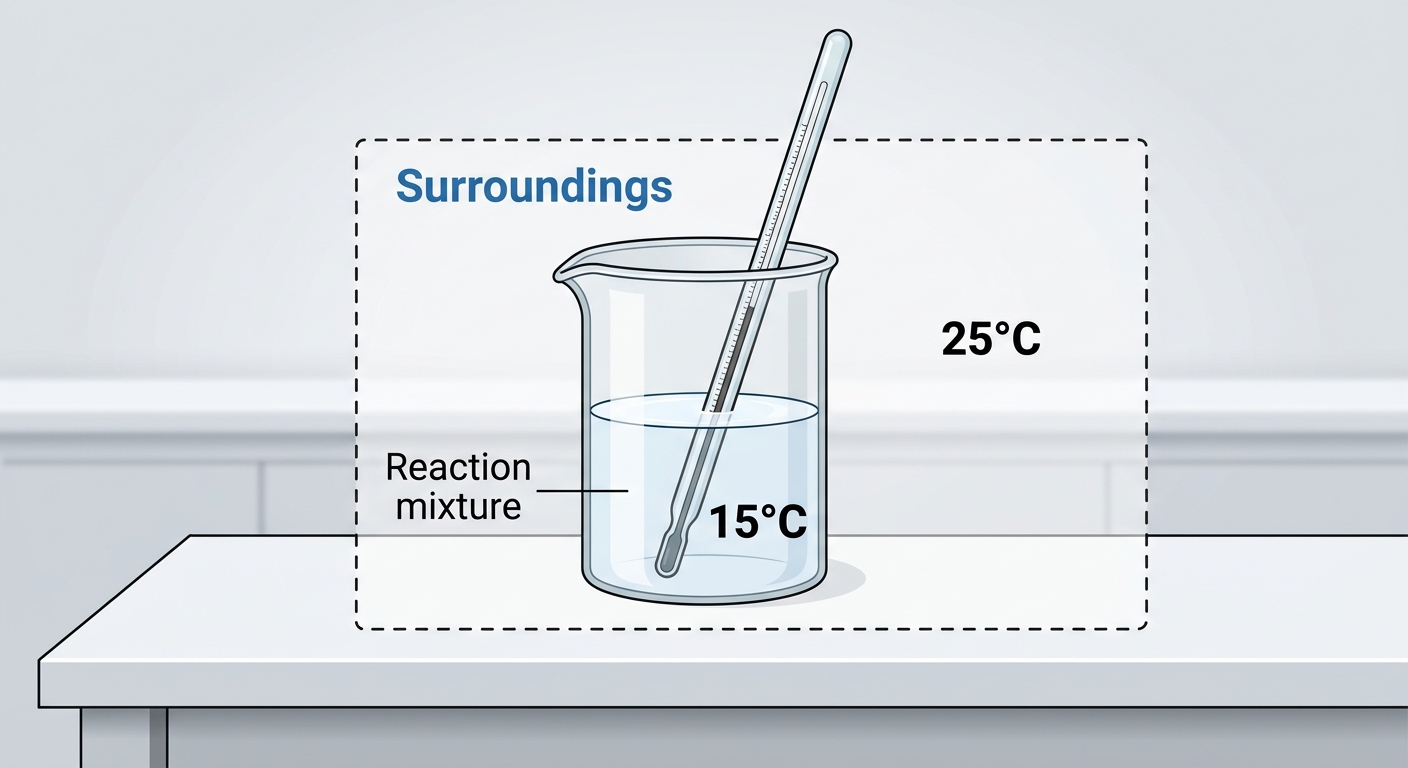
    The diagram shows ammonium nitrate dissolving in water in a beaker. The reaction mixture is at 15 °C and the air around it is at 25 °C.

    (a) Identify the system and the surroundings in this experiment. [2]

    (b) Deduce the direction of energy transfer between the system and the surroundings. Justify your answer using the temperatures. [2]
    Diagram for a Endothermic and exothermic reactions practice questionPractise this subtopic

Every question, revision note and worksheet for Rates, Energy Changes and Equilibrium — with Premium.

Unlock Full Access