You're viewing free preview questions — 6 questions previewing here — subscribe to unlock 74 more, plus the Full Question Bank, Mock Papers & Worksheets.Upgrade
Back

Collision Theory and activation energy — Free MYP5 Chemistry Practice Questions

Free questions

Open in full, with answers, mark scheme and examiner insights.

Question 1Criterion A · Band 1-4 · Easy · 6 marksrevisionprep.com

Basics of Collision Theory

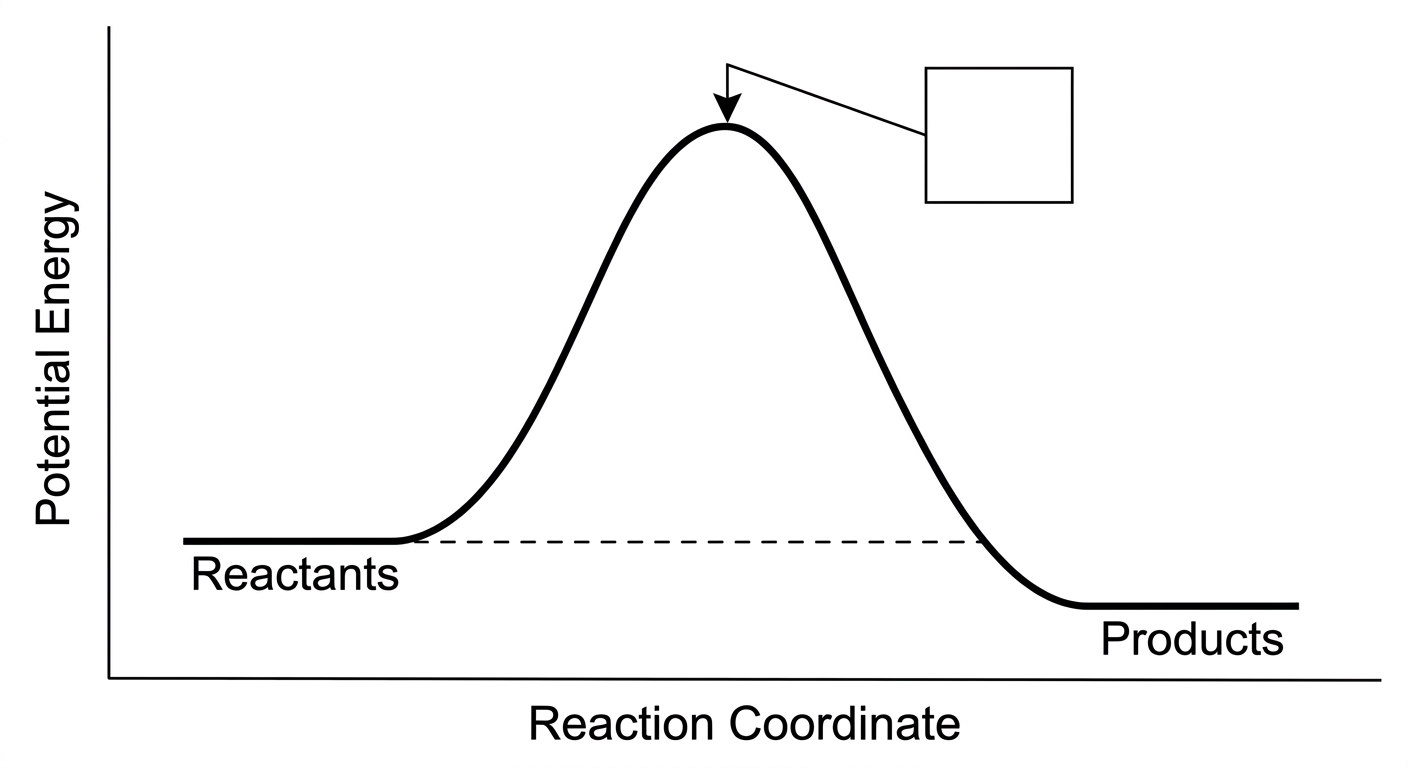
The diagram shows the energy profile for a reaction. The box points to the highest point on the curve.
Question diagram
(a)
Identify what the highest point of the curve, marked by the box, represents. [1]Criterion A (i) · Level 1-2
(b)
Deduce whether the reaction is exothermic or endothermic. Give a reason based on the diagram. [2]Criterion A (ii) · Level 3-4
(c)
Describe how you would mark the activation energy on this diagram. [1]Criterion A (i) · Level 1-2
(d)
Explain, in terms of collisions, why reactant particles with less energy than the height of this peak above the reactants do not form products. [2]Criterion A (ii) · Level 3-4

revisionprep.com

Summary Answer

Not available for this question.

Model Answer

Not available for this question.

Marking Scheme

Not available for this question.

Examiner Insights

Not available for this question.

Question 2Criterion A · Band 3-4 · Easy · 6 marksrevisionprep.com

Definition of activation energy

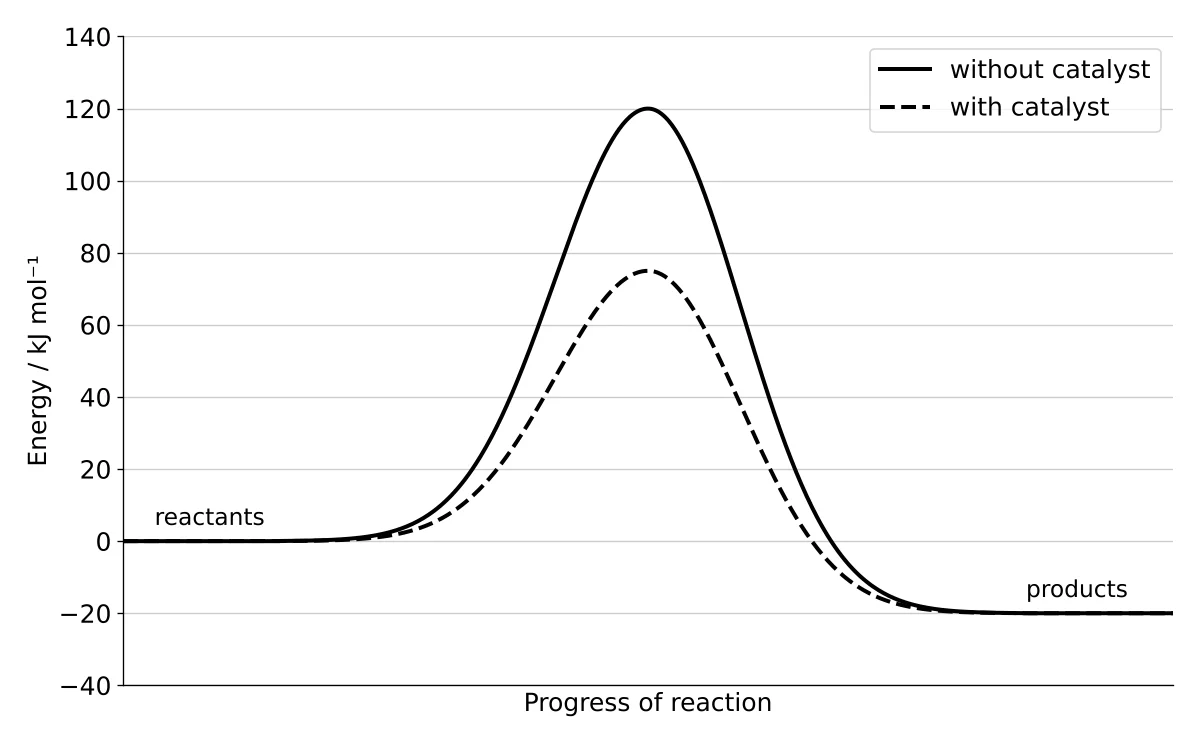
The energy profile shows the same reaction with and without a catalyst.
Question diagram
(a)
Determine the activation energy for the reaction without a catalyst and with the catalyst. [2]Criterion A (ii) · Level 3-4
(b)
Determine the enthalpy change, ΔH, for the reaction. [1]Criterion A (ii) · Level 3-4
(c)
Explain, using collision theory, why the catalysed reaction is faster at the same temperature. [2]Criterion A (i) · Level 3-4
(d)
A student claims that the catalyst makes the reaction more exothermic. Use the diagram to evaluate this claim. [1]Criterion A (iii) · Level 3-4

revisionprep.com

Summary Answer

Not available for this question.

Model Answer

Not available for this question.

Marking Scheme

Not available for this question.

Examiner Insights

Not available for this question.

Question 3Criterion C + A · Band 3-6 · Medium · 8 marksrevisionprep.com

Basics of Collision Theory

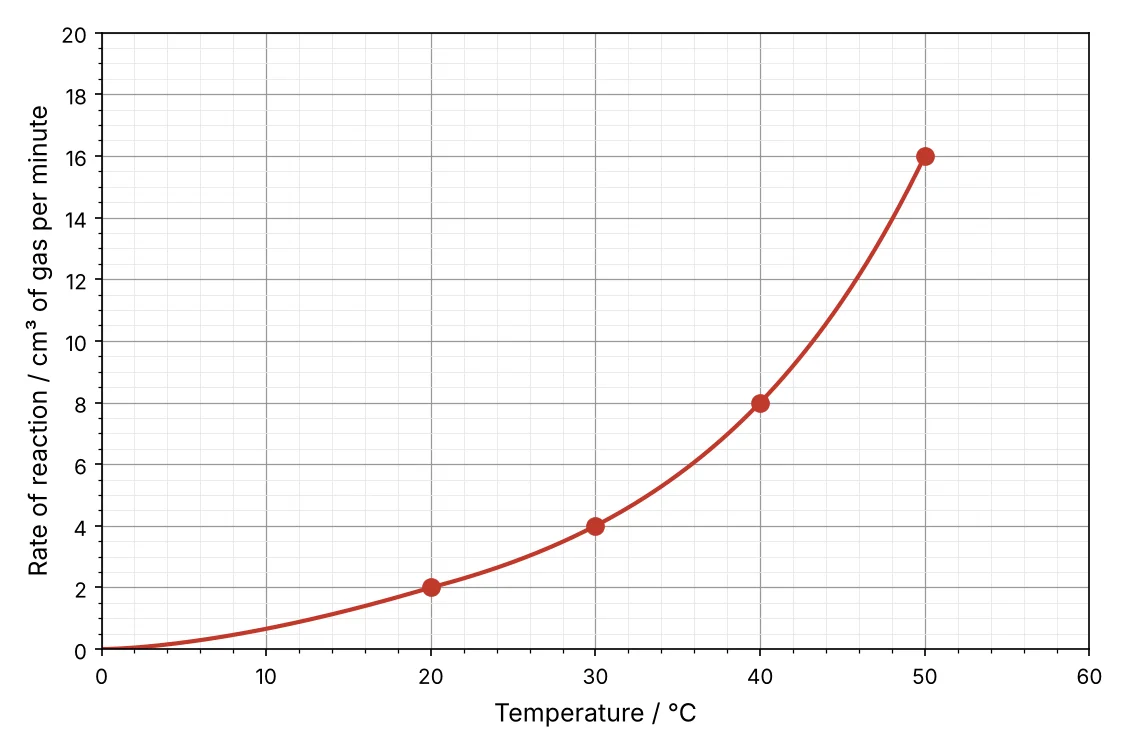
The graph shows how the rate of reaction between magnesium ribbon and hydrochloric acid changes with temperature. The concentration of acid and the mass of magnesium were kept the same in every experiment. The student plotted points at 20, 30, 40 and 50 °C and then drew a curve through the origin.
Question diagram
(a)
Describe the pattern shown by the four plotted points. [2]Criterion C (ii) · Level 3-4
(b)
Use the pattern to predict the rate at 60 °C. [1]Criterion C (ii) · Level 3-4
(c)
Explain, using collision theory, why the rate increases as the temperature increases. Refer to two separate effects. [3]Criterion A (i) · Level 5-6
(d)
Evaluate the student's decision to draw the curve through (0, 0). [2]Criterion C (iv) · Level 5-6

revisionprep.com

Summary Answer

Not available for this question.

Model Answer

Not available for this question.

Marking Scheme

Not available for this question.

Examiner Insights

Not available for this question.

Question 4Criterion B · Band 3-6 · Medium · 8 marksrevisionprep.com

Energy distribution of particles (qualitative graph)

Indigestion tablets fizz when dropped into water because an acid and a carbonate in the tablet react to release carbon dioxide. A student wants to investigate how the temperature of the water affects the rate of this reaction.
(a)
Write a research question for this investigation. [1]Criterion B (i) · Level 3-4
(b)
Formulate a hypothesis and explain it using the energy distribution of the particles. [2]Criterion B (ii) · Level 5-6
(c)
Describe how the temperature will be changed and how the rate of reaction will be measured. [2]Criterion B (iii) · Level 5-6
(d)
Identify two control variables and describe how each will be controlled. [2]

(e) Explain how the student will make sure that enough reliable data are collected. [1]
Criterion B (iii) · Level 5-6

revisionprep.com

Summary Answer

Not available for this question.

Model Answer

Not available for this question.

Marking Scheme

Not available for this question.

Examiner Insights

Not available for this question.

Question 5Criterion A · Band 3-8 · Challenge · 8 marksrevisionprep.com

Conditions for successful collisions (energy + orientation)
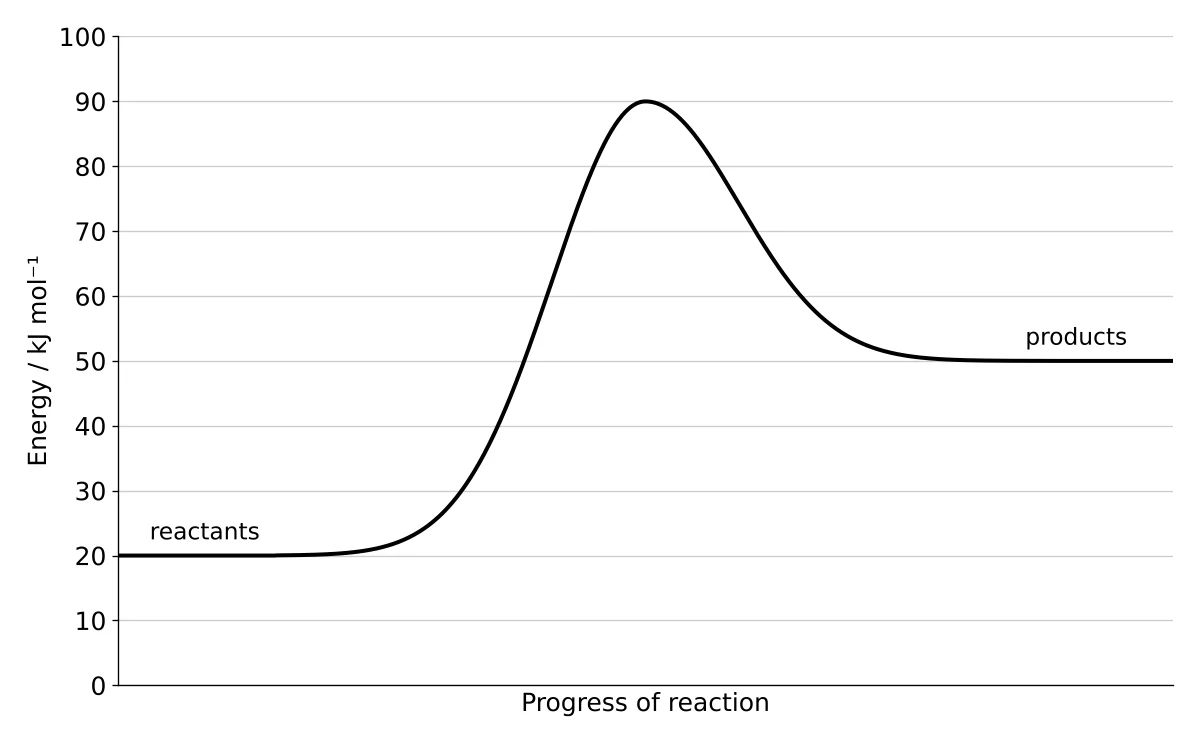
The energy profile for a reaction is shown.
Question diagram
(a)
Use the diagram to determine the activation energy of the reaction. [1]Criterion A (ii) · Level 3-4
(b)
Determine the enthalpy change, ΔH, and deduce whether the reaction is exothermic or endothermic. [2]Criterion A (ii) · Level 3-4
(c)
Explain why this reaction is slow at room temperature but becomes faster when the mixture is heated. [2]Criterion A (ii) · Level 5-6
(d)
A student says: "Endothermic reactions cannot happen at room temperature." Evaluate this statement. [3]Criterion A (iii) · Level 7-8

revisionprep.com

Summary Answer

Not available for this question.

Model Answer

Not available for this question.

Marking Scheme

Not available for this question.

Examiner Insights

Not available for this question.

Question 6Criterion D + A · Band 3-8 · Challenge · 6 marksrevisionprep.com

Effect of activation energy on reaction rate
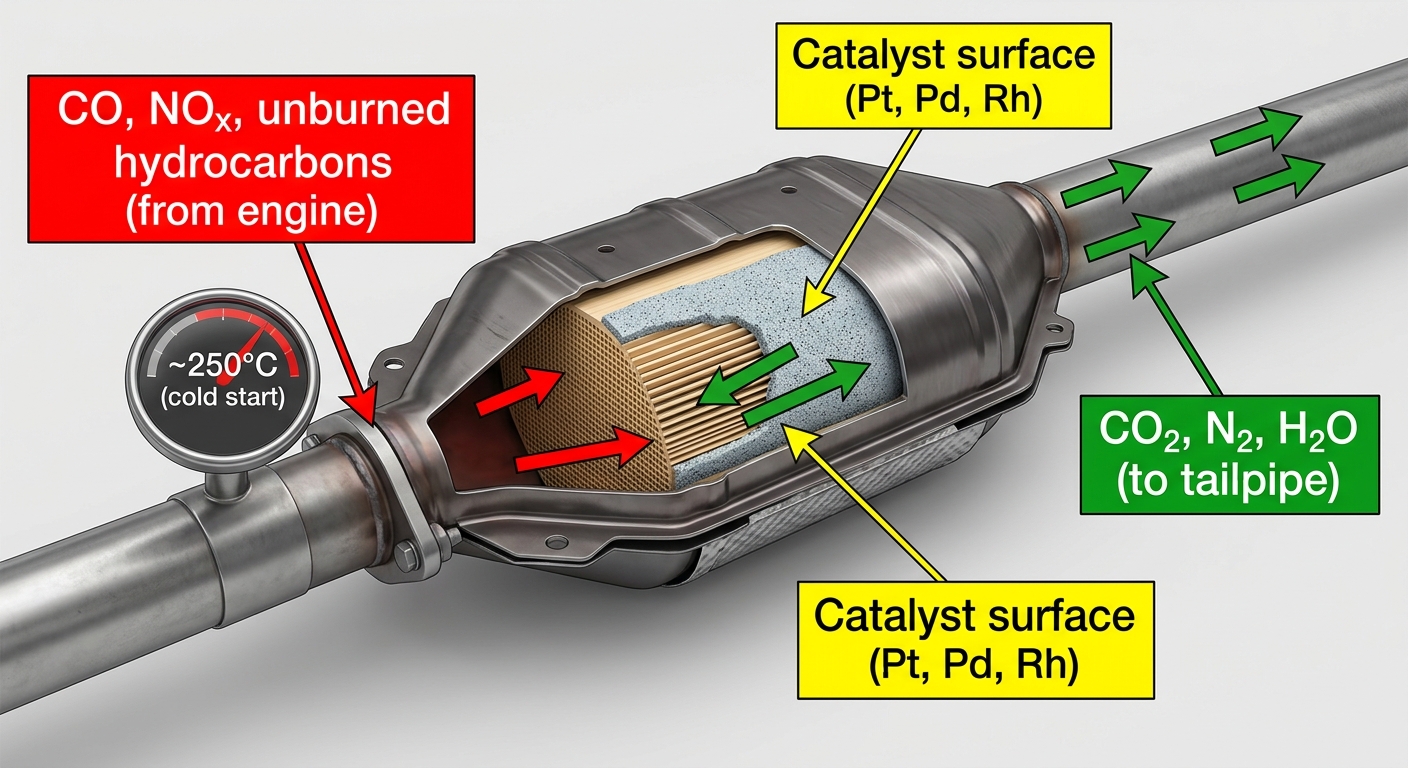
A catalytic converter contains a ceramic honeycomb coated with platinum, palladium and rhodium. It works well only when it is hot. For the first minute or two after a cold start, the converter is at a much lower temperature and most of the carbon monoxide and nitrogen oxides pass through unchanged.
Question diagram
(a)
Explain how the metals in the converter increase the rate of the reactions that remove carbon monoxide and nitrogen oxides. [2]Criterion A (i) · Level 3-4
(b)
Explain, using collision theory, why the converter removes very little pollution just after a cold start. [2]Criterion D (i) · Level 5-6
(c)
One solution is to heat the converter electrically before the engine starts. Evaluate this solution. [2]Criterion D (ii) · Level 7-8

revisionprep.com

Summary Answer

Not available for this question.

Model Answer

Not available for this question.

Marking Scheme

Not available for this question.

Examiner Insights

Not available for this question.

That's every free question here — 6 of 80.

+74 more questions, plus Mock Papers & Worksheets, are waiting in Premium.

Upgrade