You're viewing free preview questions — 6 questions previewing here — subscribe to unlock 59 more, plus the Full Question Bank, Mock Papers & Worksheets.Upgrade
Back

Endothermic and exothermic reactions — Free MYP5 Chemistry Practice Questions

Free questions

Open in full, with answers, mark scheme and examiner insights.

Question 1Criterion A · Band 1-4 · Easy · 4 marksrevisionprep.com

Definition of endothermic vs exothermic reactions

Chemical reactions are classified by the direction in which energy is transferred.
(a)
Define the term exothermic reaction. [1]Criterion A (i) · Level 1-2
(b)
Define the term endothermic reaction. [1]Criterion A (i) · Level 1-2
(c)
Explain why the products of an exothermic reaction store less chemical energy than the reactants. [2]Criterion A (i) · Level 3-4

revisionprep.com

Summary Answer

Not available for this question.

Model Answer

Not available for this question.

Marking Scheme

Not available for this question.

Examiner Insights

Not available for this question.

Question 2Criterion A · Band 1-4 · Easy · 4 marksrevisionprep.com

Energy transfer between system and surroundings
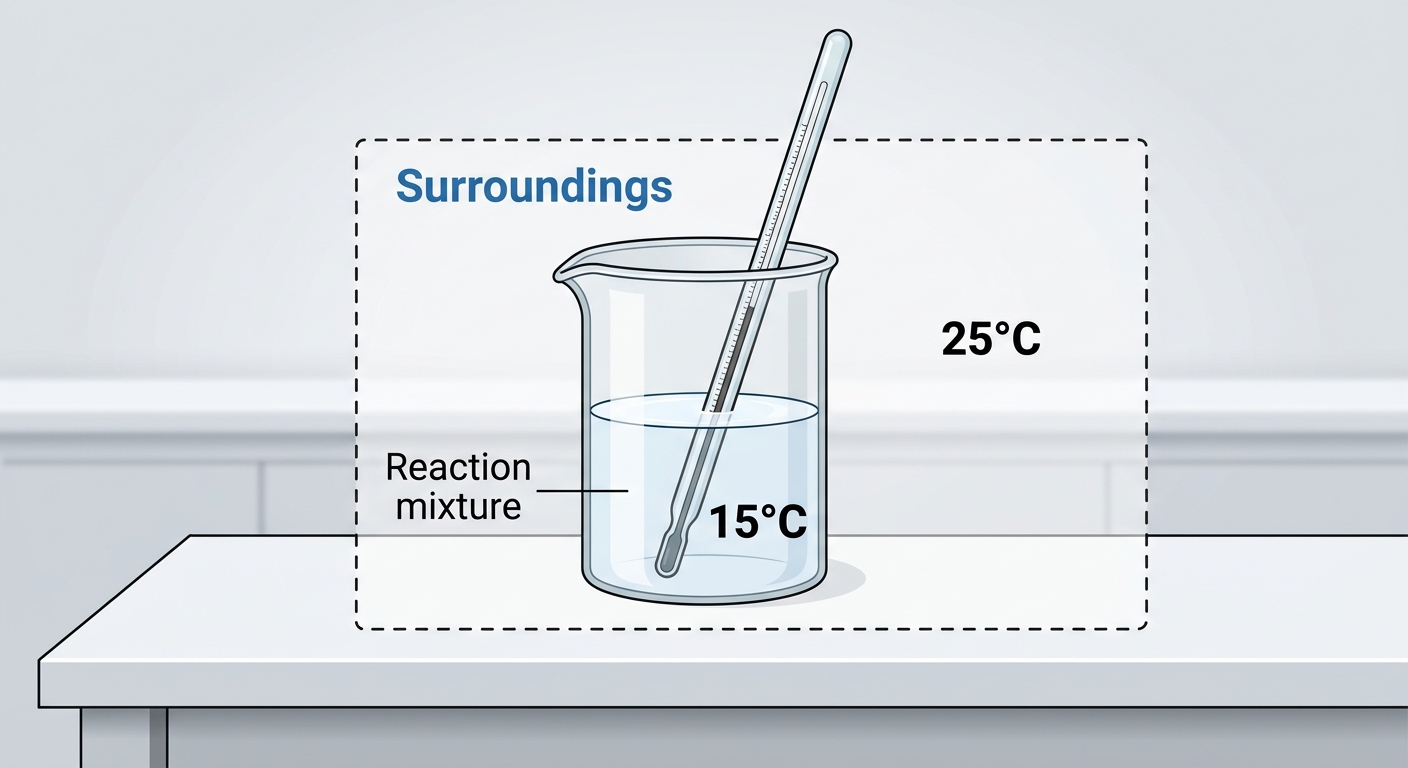
The diagram shows ammonium nitrate dissolving in water in a beaker. The reaction mixture is at 15 °C and the air around it is at 25 °C.
Question diagram
(a)
Identify the system and the surroundings in this experiment. [2]Criterion A (i) · Level 1-2
(b)
Deduce the direction of energy transfer between the system and the surroundings. Justify your answer using the temperatures. [2]Criterion A (ii) · Level 3-4

revisionprep.com

Summary Answer

Not available for this question.

Model Answer

Not available for this question.

Marking Scheme

Not available for this question.

Examiner Insights

Not available for this question.

Question 3Criterion A · Band 3-6 · Medium · 5 marksrevisionprep.com

Definition of endothermic vs exothermic reactions
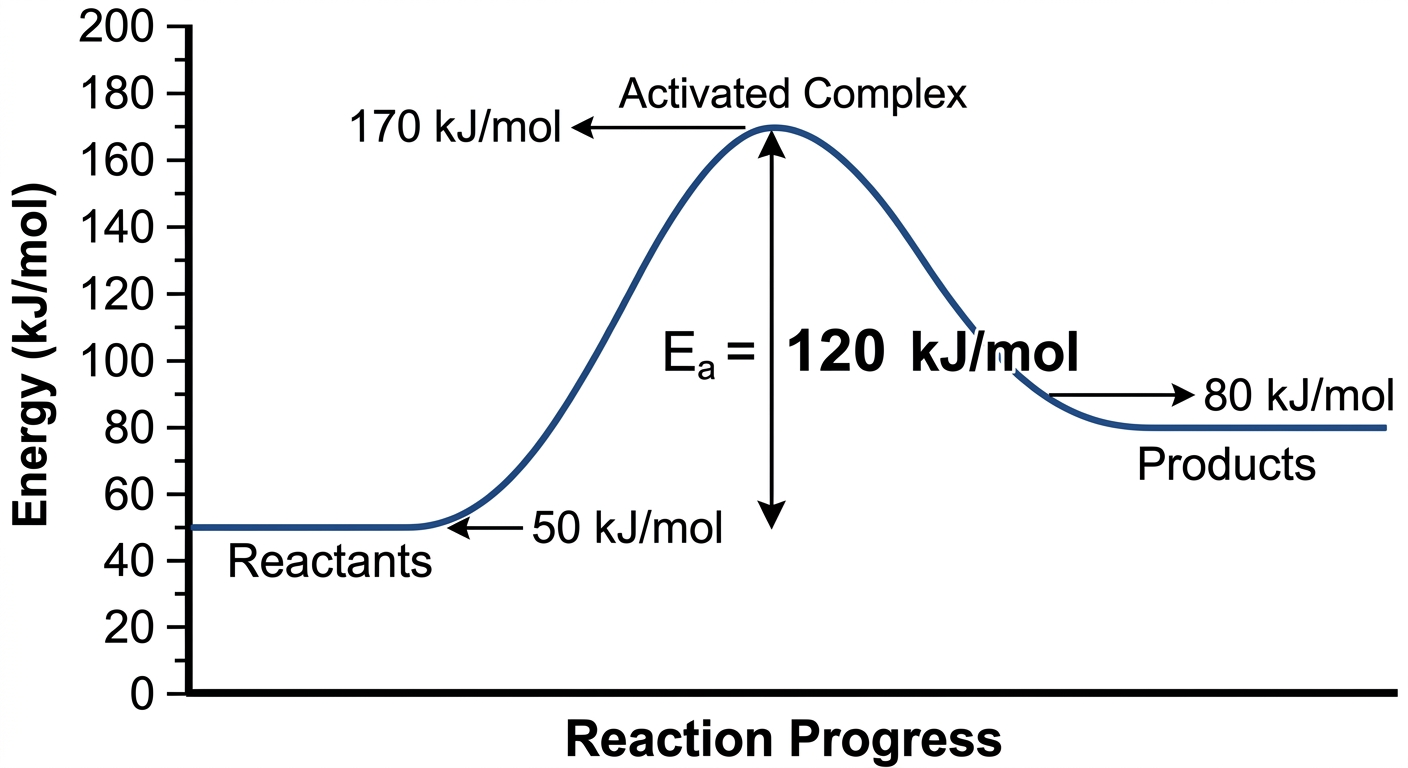
The energy profile shows a reaction. The energies of the reactants, the products and the top of the curve are labelled.
Question diagram
(a)
Determine the overall energy change, ΔE, for the reaction, including its sign. [1]Criterion A (ii) · Level 3-4
(b)
Deduce whether the reaction is exothermic or endothermic. Justify your answer using the profile. [2]Criterion A (i) · Level 3-4
(c)
The vertical arrow for Eₐ on the profile is drawn incorrectly. State where the lower end of the arrow should be and explain why. [2]Criterion A (iii) · Level 5-6

revisionprep.com

Summary Answer

Not available for this question.

Model Answer

Not available for this question.

Marking Scheme

Not available for this question.

Examiner Insights

Not available for this question.

Question 4Criterion C · Band 3-6 · Medium · 7 marksrevisionprep.com

Temperature changes during reactions

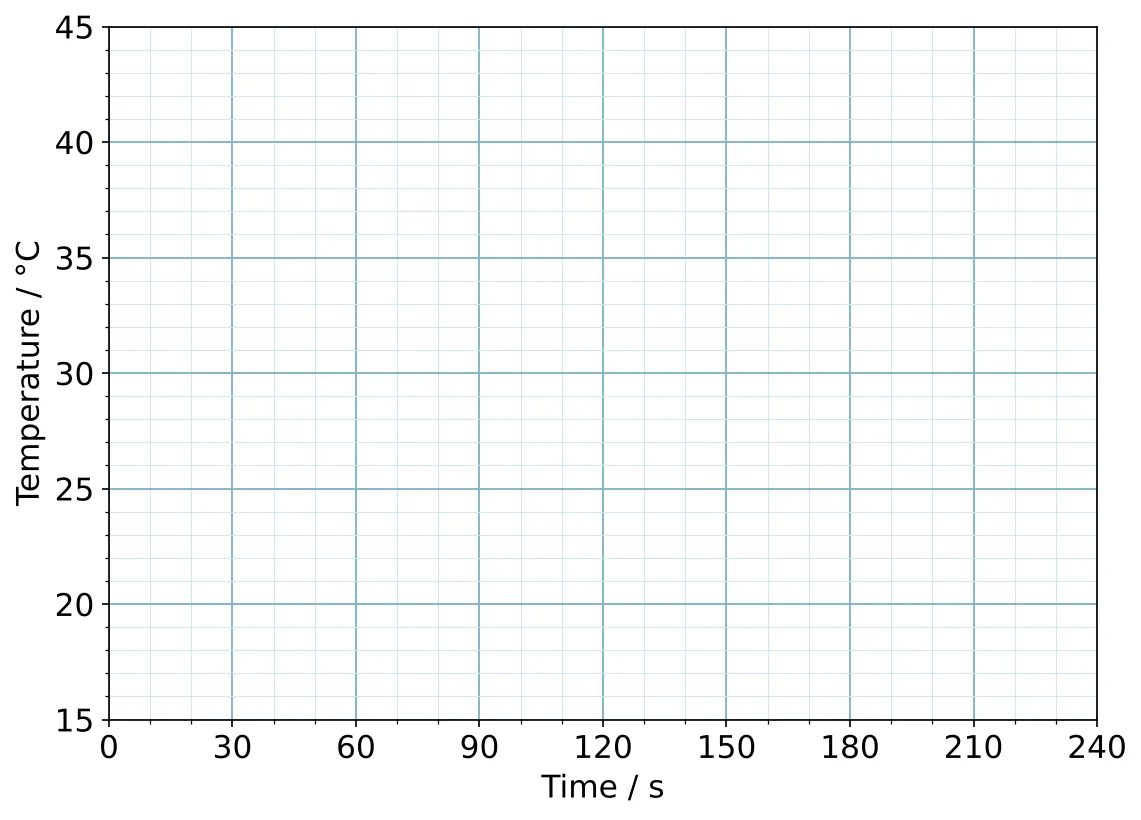
A student added excess zinc powder to 50 cm³ of 0.50 mol dm⁻³ copper(II) sulfate solution in a polystyrene cup and recorded the temperature.

Time / s0306090120150180210240
Temperature / °C21.030.537.040.541.541.040.239.338.5


Assume the solution has a mass of 50 g and a specific heat capacity of 4.18 J g⁻¹ °C⁻¹.
Question diagram
(a)
Plot the data on the grid and draw a smooth curve. [3]Criterion C (i) · Level 3-4
(b)
Use your graph to state the maximum temperature and determine the temperature rise. [2]Criterion C (ii) · Level 3-4
(c)
Calculate the energy released by the reaction. [2]Criterion C (i) · Level 5-6

revisionprep.com

Summary Answer

Not available for this question.

Model Answer

Not available for this question.

Marking Scheme

Not available for this question.

Examiner Insights

Not available for this question.

Question 5Criterion D + A · Band 1-8 · Challenge · 11 marksrevisionprep.com

Examples (combustion vs thermal decomposition)
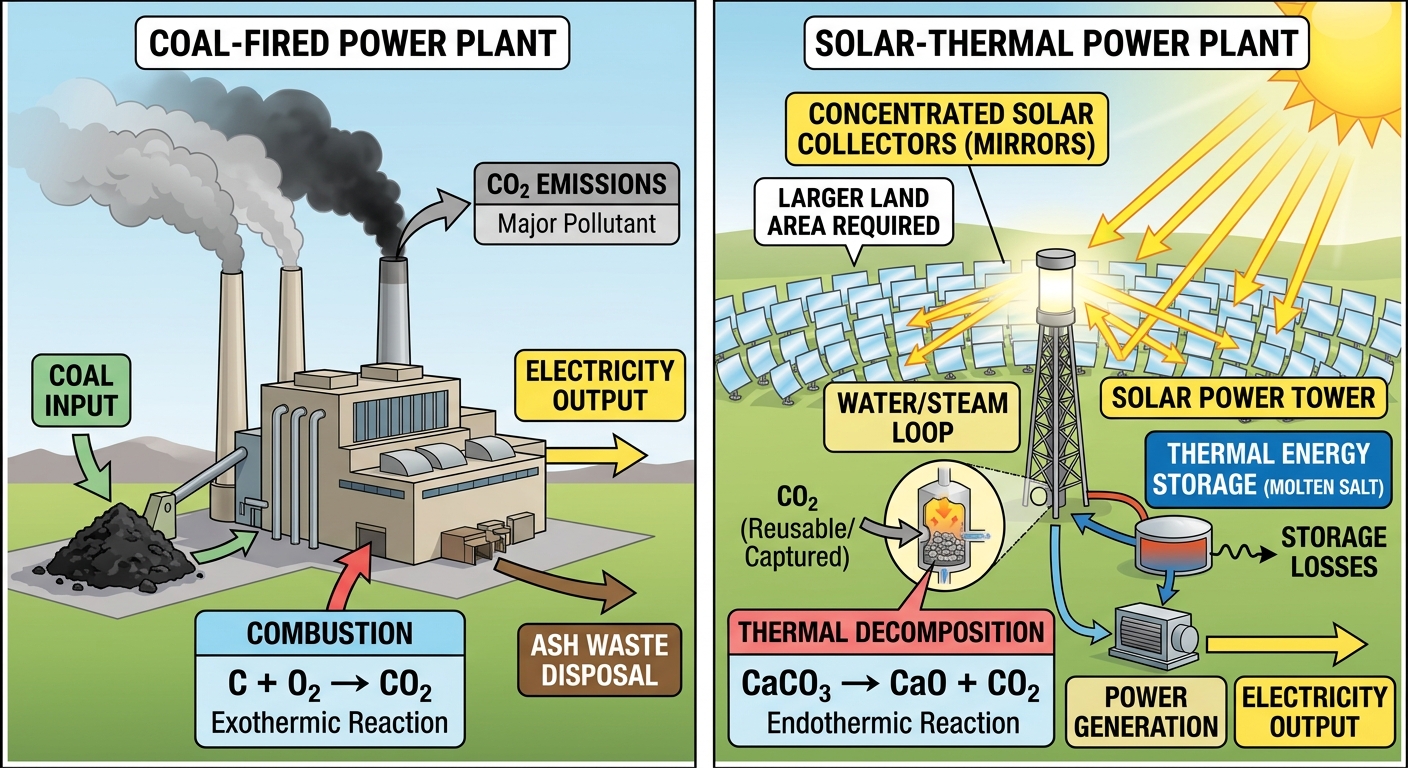
A government is comparing two power stations. The first burns coal: C(s) + O₂(g) → CO₂(g), ΔH negative. The second uses mirrors to concentrate sunlight onto calcium carbonate, decomposing it: CaCO₃(s) → CaO(s) + CO₂(g), ΔH positive. At night, the stored calcium oxide and carbon dioxide are recombined to release heat that generates electricity.
Question diagram
(a)
State what the sign of ΔH shows about the energy transfer in each reaction. [2]Criterion A (i) · Level 1-2
(b)
Explain how the solar plant stores energy from sunlight in chemicals and releases it at night. [3]Criterion A (ii) · Level 5-6
(c)
Discuss two implications, from different perspectives, of choosing the solar plant instead of the coal plant. [6]Criterion D (ii), D (iii) · Level 7-8

revisionprep.com

Summary Answer

Not available for this question.

Model Answer

Not available for this question.

Marking Scheme

Not available for this question.

Examiner Insights

Not available for this question.

Question 6Criterion B · Band 3-8 · Challenge · 10 marksrevisionprep.com

Identifying reaction type from descriptions or data

Four unlabelled white solids, P, Q, R and S, are known to be ammonium nitrate, potassium chloride, calcium chloride and sodium hydroxide. A data book gives the temperature change when 2.0 g of each dissolves in 25 cm³ of water:

Ammonium nitrate: −6 °C
Potassium chloride: −4 °C
Calcium chloride: +13 °C
Sodium hydroxide: +19 °C

A student plans to identify each solid by dissolving it and measuring the temperature change.
(a)
Formulate a prediction that would allow the student to identify each solid, and explain the scientific reasoning behind it. [2]Criterion B (ii) · Level 5-6
(b)
State the independent and dependent variables. [2]Criterion B (iii) · Level 3-4
(c)
Explain how two control variables would be kept constant. [2]Criterion B (iii) · Level 5-6
(d)
The values for ammonium nitrate and potassium chloride differ by only 2 °C. Explain how the student would collect data reliable enough to tell these two solids apart. [2]

(e) Describe one safety precaution needed in this investigation. [2]
Criterion B (iii) · Level 7-8

revisionprep.com

Summary Answer

Not available for this question.

Model Answer

Not available for this question.

Marking Scheme

Not available for this question.

Examiner Insights

Not available for this question.

That's every free question here — 6 of 65.

+59 more questions, plus Mock Papers & Worksheets, are waiting in Premium.

Upgrade