You're viewing free preview questions — 4 questions previewing here — subscribe to unlock 56 more, plus the Full Question Bank, Mock Papers & Worksheets.Upgrade
Factorization Techniques — Free MYP5 Mathematics (Extended) Practice Questions

1QuestionChoosing Appropriate Factorization MethodsConcept Practice
2 marks~3 minCriterion A
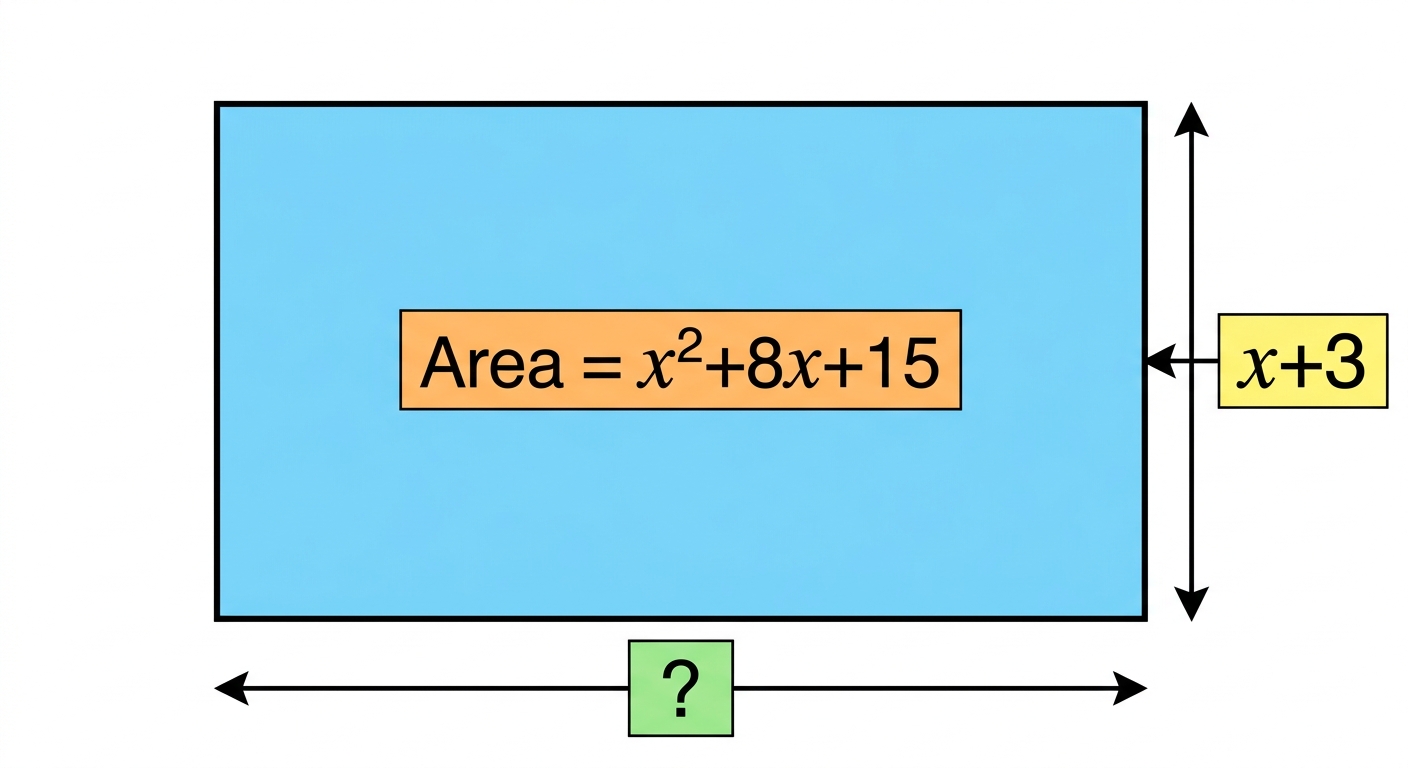
A landscape architect is designing a rectangular garden bed. The area of the bed is given by square metres, where . One side of the bed measures metres.
a
Factorise . [1]
b
The architect needs the missing side to be longer than 7 metres when . Justify whether this condition is met. [1]

Solutions
2QuestionChoosing Appropriate Factorization MethodsAssessment Practice
2 marks~3 minCriterion D
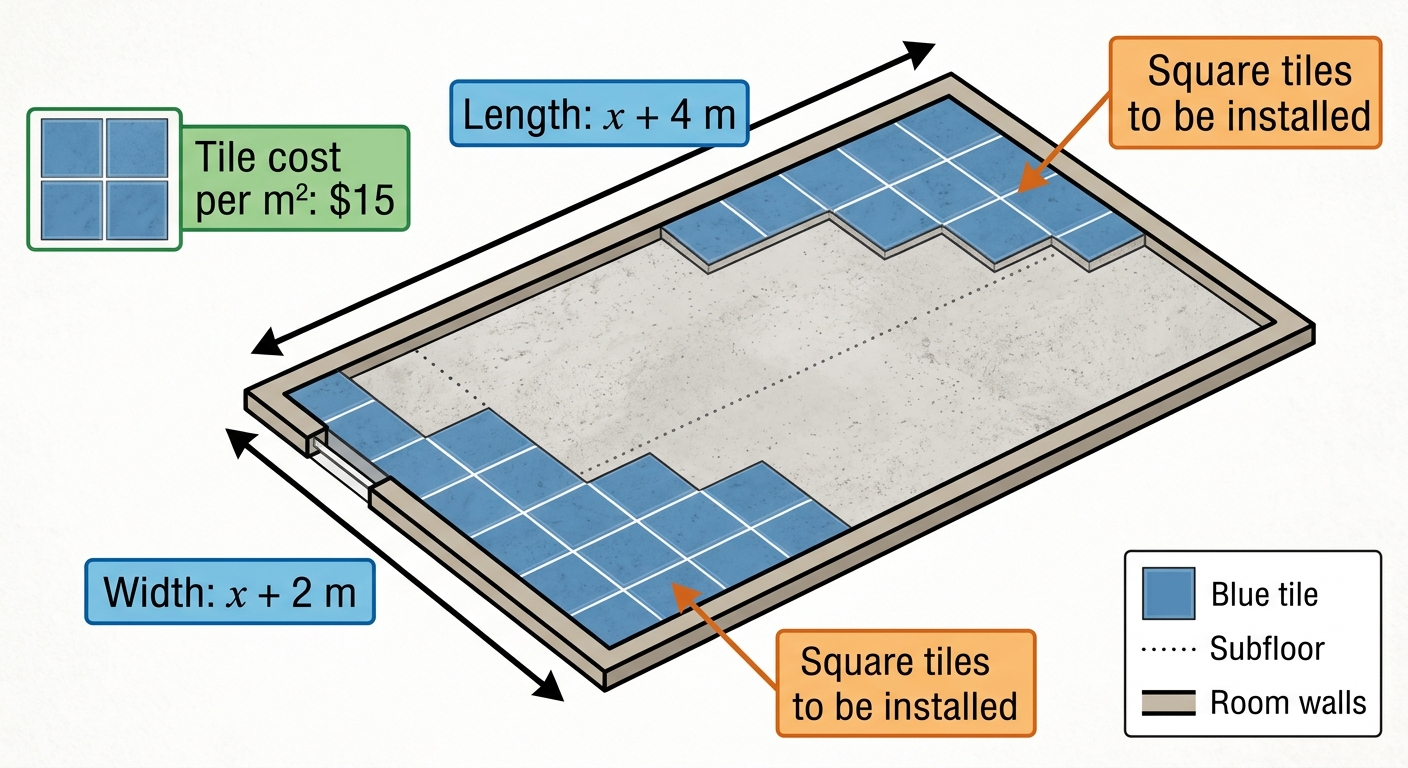
A homeowner plans to tile a rectangular floor with length metres and width metres. Tiles cost 15 dollars per square metre.
a
Show that the total tiling cost, in dollars, is . [1]
b
The homeowner has a budget of 300 dollars and estimates . Advise the homeowner whether to proceed with the purchase, giving one mathematical reason why the actual cost could differ from this estimate. [1]
Solutions
3QuestionFactoring Difference of SquaresAssessment Practice
4 marks~6 minCriterion C
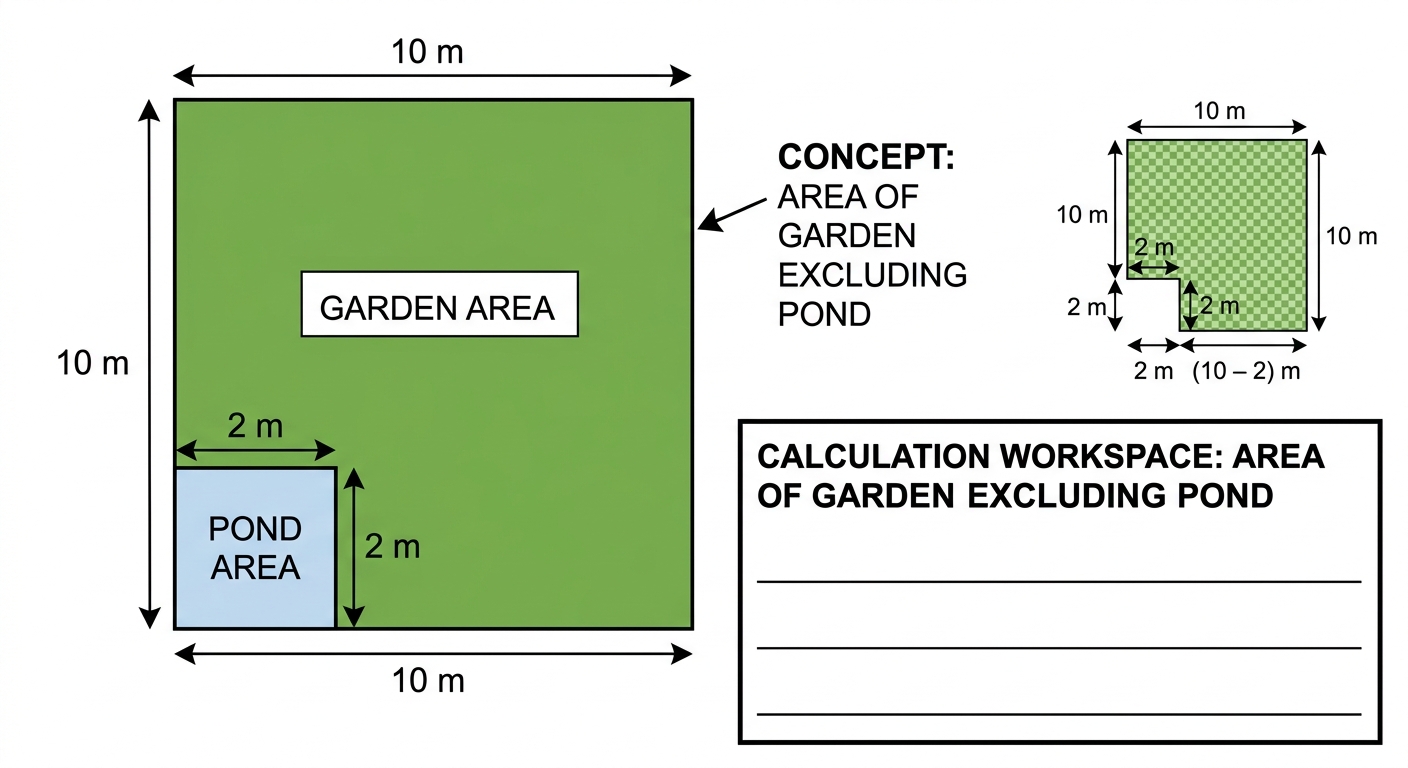
A landscape designer plans a square garden with side length m. A square pond with side length m will be placed in one corner. The remaining garden area (excluding the pond) is modelled using the identity .
a
Show that the area of the garden excluding the pond is , using the difference of squares identity. [1]
b
The pond's side length is remeasured as m. Calculate the revised area and deduce the percentage change from the original result. [1]
c
The designer considers replacing the square pond with a circular pond of diameter m. Advise the designer whether the difference of squares identity remains a valid model and whether the area calculation must be adjusted. [2]
Solutions
4QuestionFactoring Difference of SquaresAssessment Practice
6 marks~9 minCriterion B
Consider the following numerical pattern:
1.
2.
3.
1.
2.
3.
a
Calculate using the same method. Show all steps. [2]
b
Deduce a general formula for in terms of and , and apply it to factorise completely. [2]
c
A student claims that cannot be factorised because it contains both a variable term and a constant. Justify whether this claim is correct. [2]
Solutions
That's every free question here — 4 of 60.
+56 more questions, plus Mock Papers & Worksheets, are waiting in Premium.