You're viewing free preview questions — 4 questions previewing here — subscribe to unlock 96 more, plus the Full Question Bank, Mock Papers & Worksheets.Upgrade
Laws of Exponents and Algebraic Manipulation — Free MYP5 Mathematics (Extended) Practice Questions

1QuestionNegative and Zero ExponentsConcept Practice
2 marks~3 minCriterion A
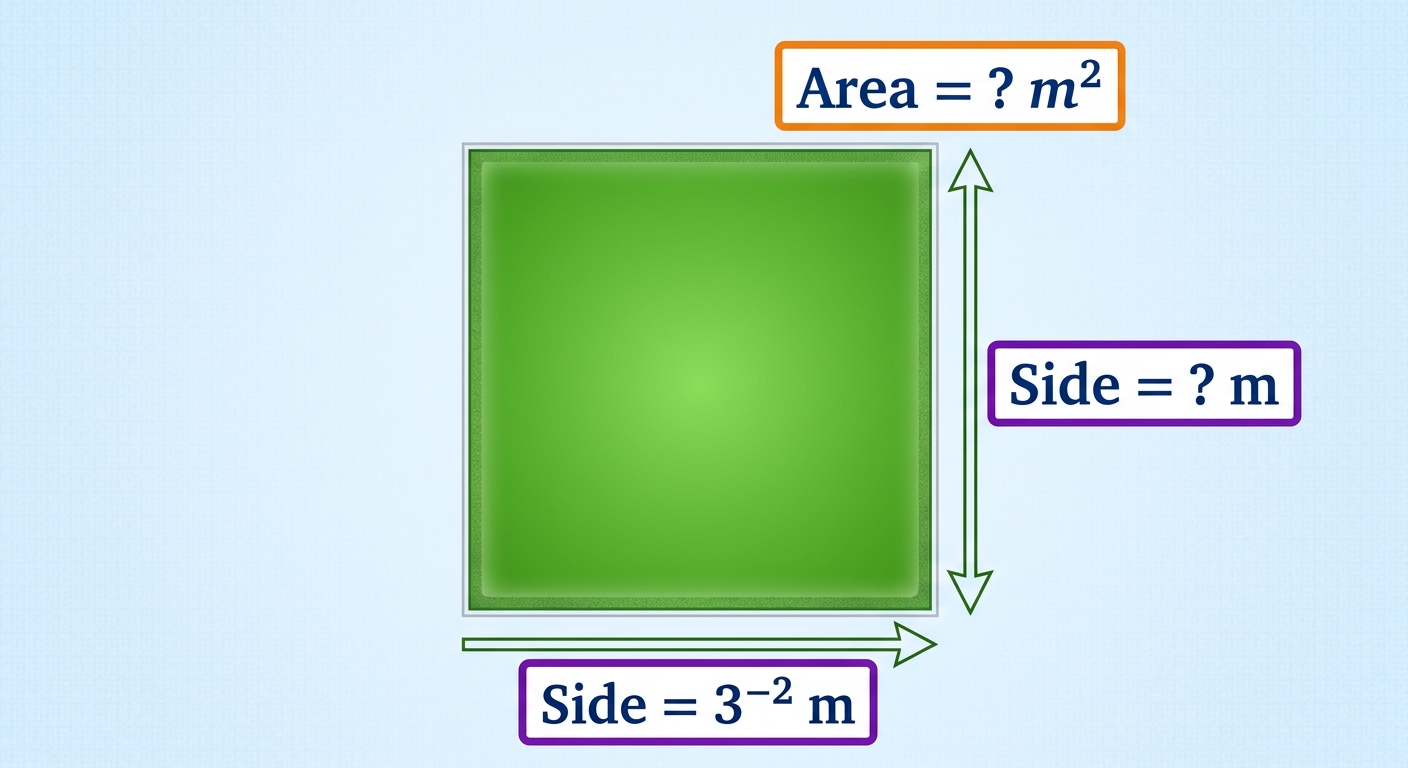
A nanoscale sensor chip contains a square circuit element with side length m.
a
Calculate the area of the circuit element, expressing your answer as a simplified fraction. [1]
b
A second square element has an area of m. Deduce whether its side length is greater than, equal to, or less than that of the first element, justifying your answer using index notation. [1]

Solutions
2QuestionNegative and Zero ExponentsAssessment Practice
2 marks~3 minCriterion C
A car currently has a value of 8000 dollars. Its value depreciates at a constant rate of 10% per year, modelled by , where is the value after years, is the initial value, and is the annual depreciation rate.
a
Calculate the value of the car 2 years ago. [1]
b
A buyer argues that this model overestimates how much the car was worth 2 years ago. Critique this claim, with reference to both the mathematical result and the real-world depreciation pattern. [1]

Solutions
3QuestionNegative and Zero ExponentsAssessment Practice
4 marks~6 minCriterion B
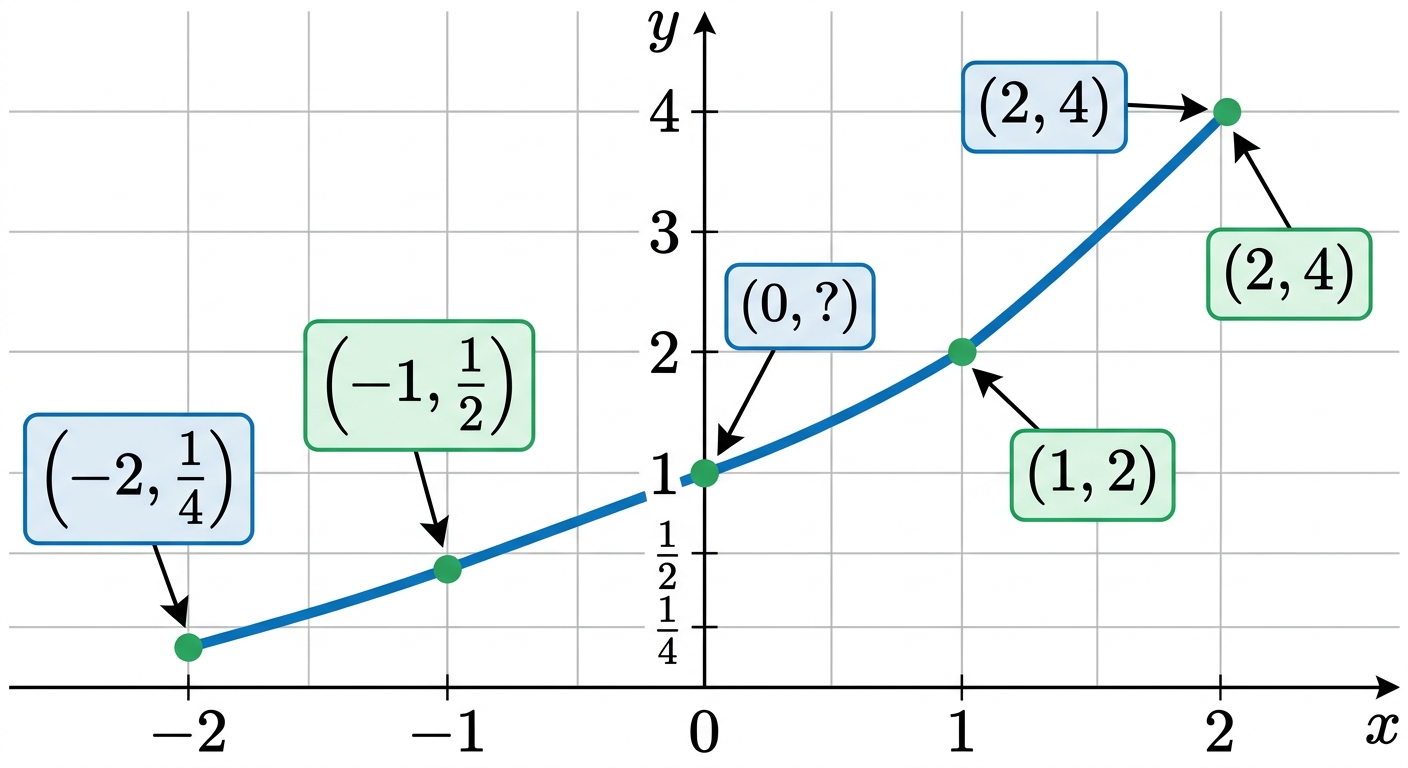
A population of bacteria doubles every hour. A scientist models the population using , where is the number of hours elapsed (negative values represent time before observation began) and is the population in millions.
Selected values from the model:
: , , , ,
(millions): , , , ,
Selected values from the model:
: , , , ,
(millions): , , , ,
a
Explain how the pattern in the table demonstrates that . [2]
b
A second bacterial strain follows and a third follows . Evaluate and , justifying your answers using the zero exponent rule. [1]
c
The scientist claims the population at is "effectively zero" because no growth has yet occurred. Assess whether the mathematical model supports or contradicts this claim, and interpret what means in this context. [1]
Solutions
4QuestionNegative and Zero ExponentsAssessment Practice
6 marks~9 minCriterion D
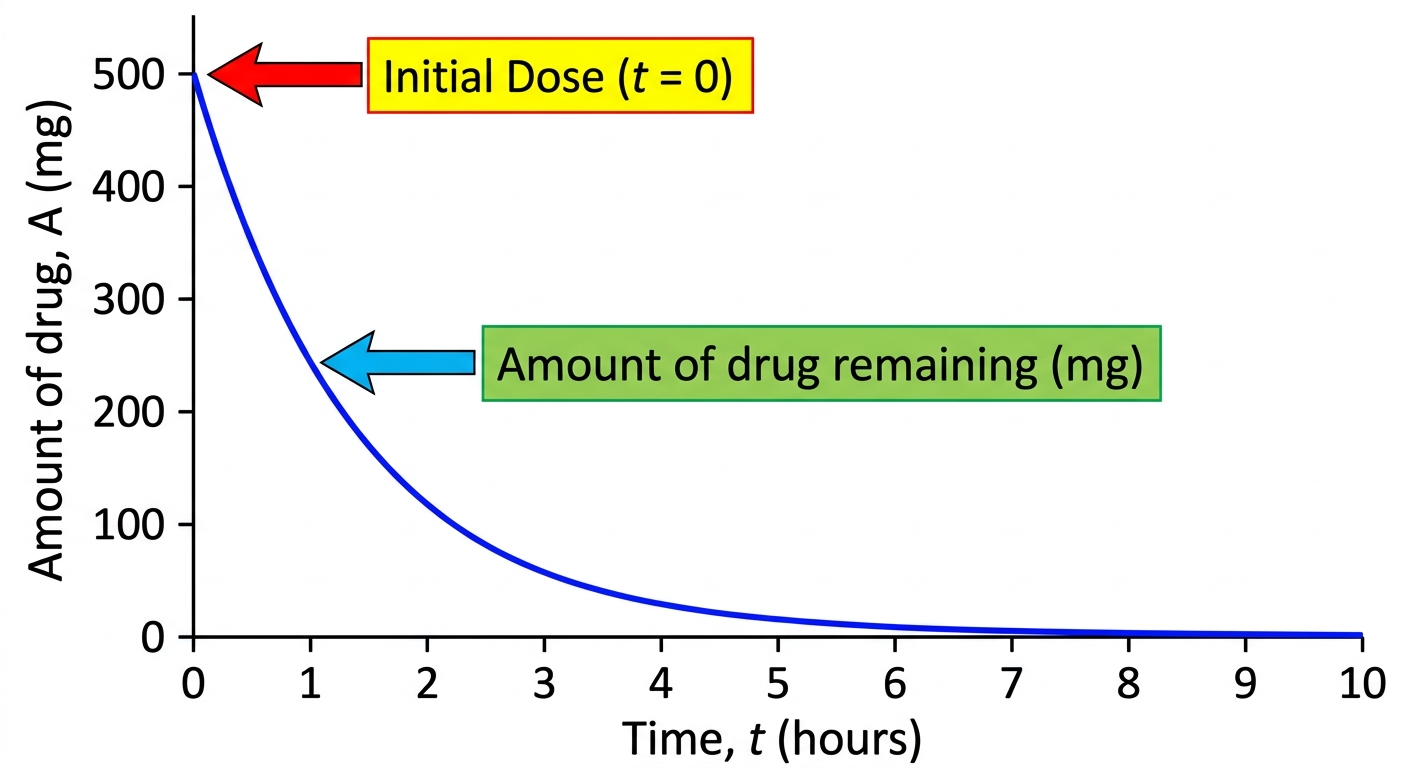
A patient receives a 500 mg dose of a drug. The amount of drug remaining in the body after hours is modelled by
where is measured in mg. A second dose may be given once falls below 100 mg.
where is measured in mg. A second dose may be given once falls below 100 mg.
a
Show that the amount of drug remaining after 3 hours is 62.5 mg. [2]
b
Deduce, using your result from part (a), whether a second dose can be given at hours. Justify your answer in the context of the model. [1]
c
Advise a clinician whether the model alone is sufficient to determine the safe timing of a second dose. In your response, discuss at least two real-world limitations and explain how neglecting these limitations could affect patient safety. [3]
Solutions
That's every free question here — 4 of 100.
+96 more questions, plus Mock Papers & Worksheets, are waiting in Premium.