You're viewing free preview questions — 4 questions previewing here — subscribe to unlock 71 more, plus the Full Question Bank, Mock Papers & Worksheets.Upgrade
Special Identities and Common Patterns — Free MYP5 Mathematics (Extended) Practice Questions

1QuestionPerfect Square IdentitiesConcept Practice
2 marks~3 minCriterion A
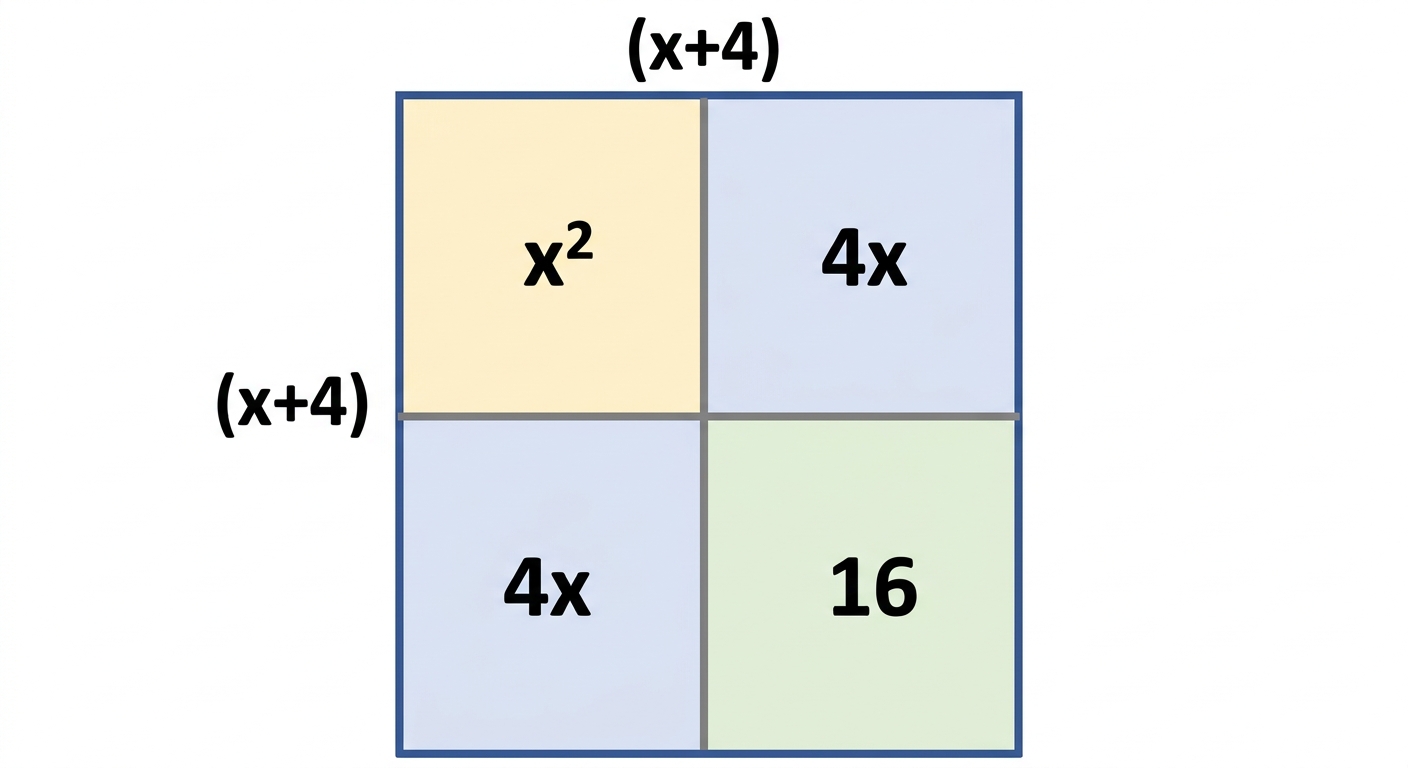
A square tile has side length cm. The tile is divided into four rectangular regions with areas , , , and cm² respectively.
Show that the total area of the tile can be written as . [2]
Show that the total area of the tile can be written as . [2]

Solutions
2QuestionDifference of Squares IdentityAssessment Practice
2 marks~3 minCriterion C
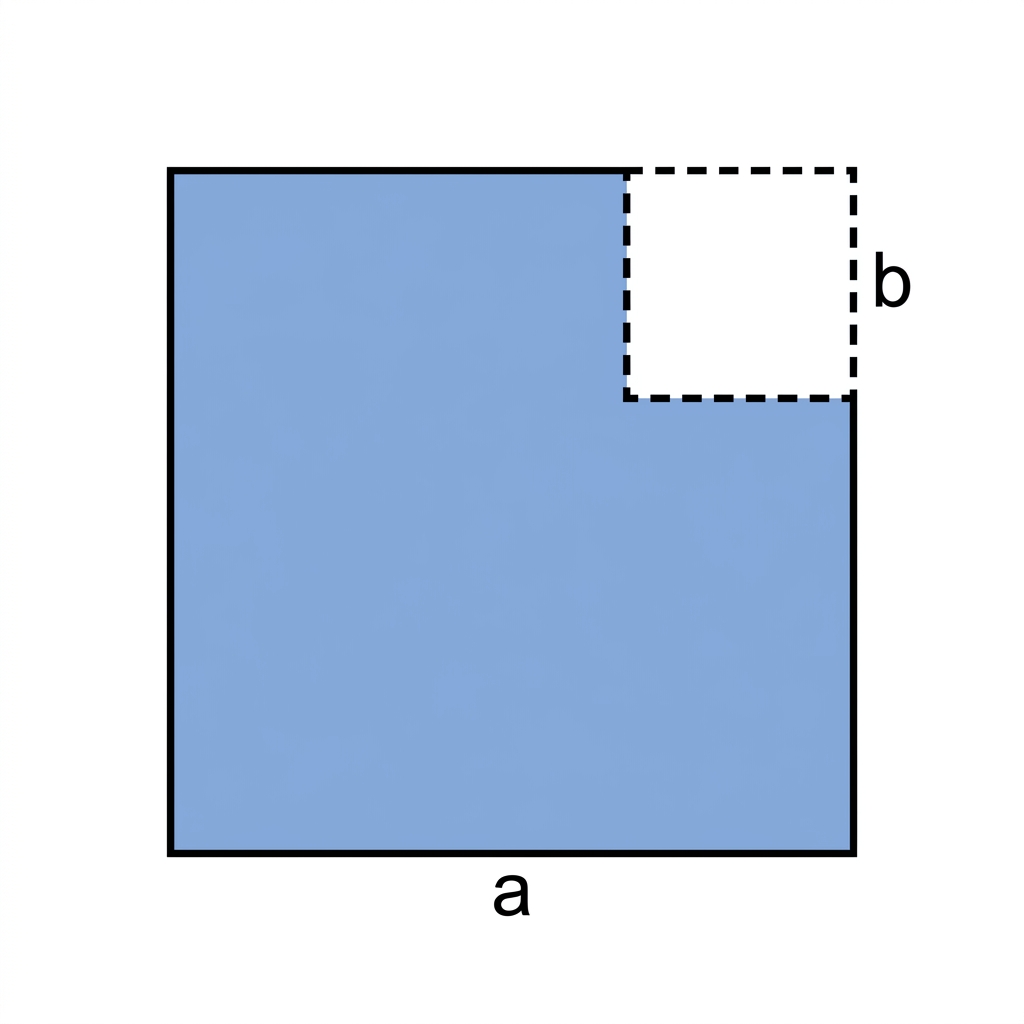
An architect is designing a square patio of side length metres. A square planter of side length metres is removed from one corner, creating an L-shaped paved area (see diagram).
a
Write down an expression for the area of the L-shaped paved region, then show that it factorizes to . [1]
b
The architect states: "The paved area can always be calculated by multiplying the sum and difference of the two side lengths." Justify whether this statement is mathematically valid for all values . [1]
Solutions
3QuestionDeriving Identities from Expansion and FactorizationAssessment Practice
6 marks~9 minCriterion D
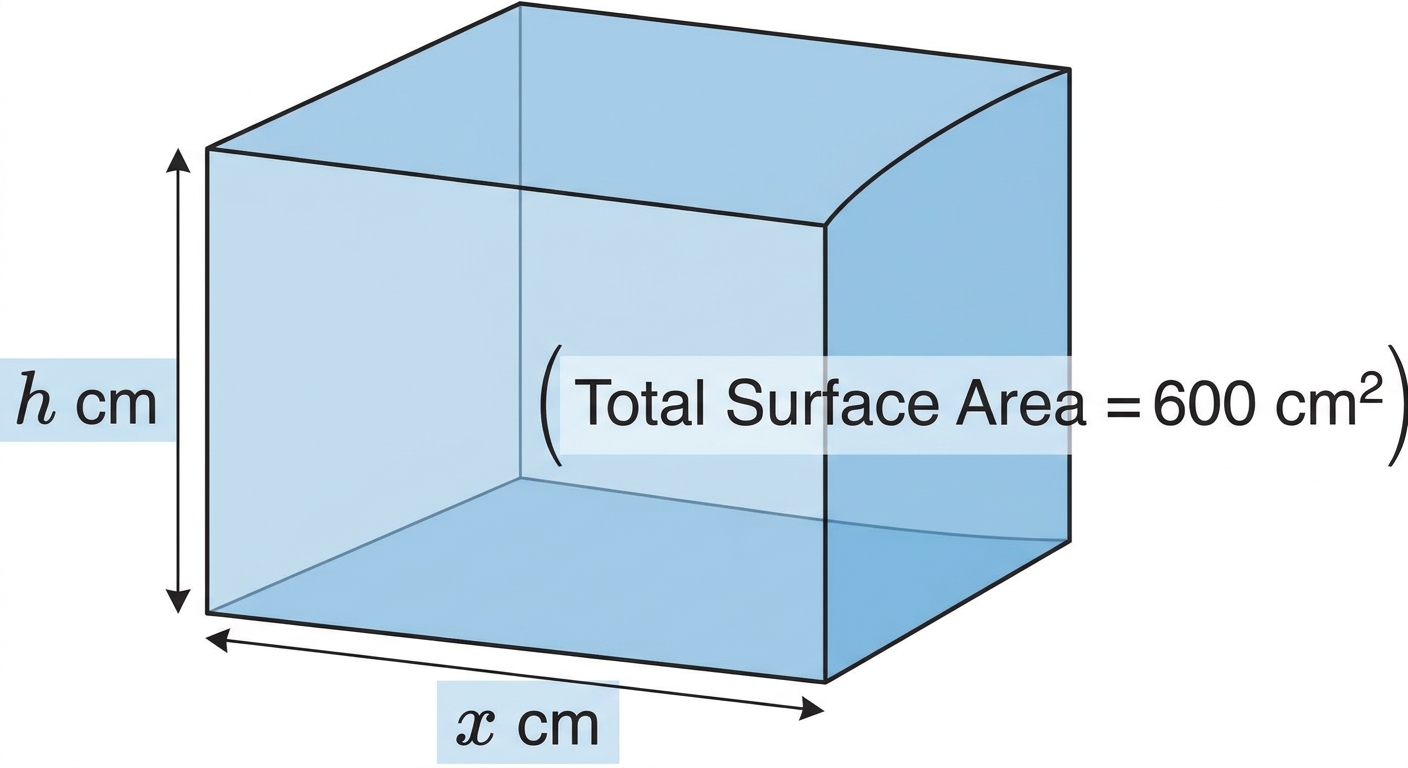
A packaging company designs square-based open-top boxes with a fixed total surface area of 600 cm². The side length of the square base is cm and the height is cm, giving:
a
Using the identity , show that [2]
b
For cm, deduce the exact side length and the exact volume [2]
c
The company can only manufacture to the nearest millimetre. Advise the production manager whether cm is suitable for manufacture at this precision, and what action to take if is changed to 8 cm. [2]
Solutions
4QuestionDeriving Identities from Expansion and FactorizationAssessment Practice
3 marks~5 minCriterion B
A garden designer models rectangular planting beds using binomial products. She observes the following pattern when expanding :
The designer plans a bed modelled by , where represents a length in metres.
The designer plans a bed modelled by , where represents a length in metres.
a
Deduce the coefficient of and the constant term in the expansion of . [1]
b
Construct the fully expanded form of . [1]
c
The designer states: "Because the constant term is negative, no positive value of can make this expression equal to zero." Critique this statement, using the roots of the expression to support your reasoning. [1]
Solutions
That's every free question here — 4 of 75.
+71 more questions, plus Mock Papers & Worksheets, are waiting in Premium.