You're viewing free preview questions — 4 questions previewing here — subscribe to unlock 218 more, plus the Full Question Bank, Mock Papers & Worksheets.Upgrade
Composite Functions — Free MYP5 Mathematics (Extended) Practice Questions

1Questionf(g(x)) conceptConcept Practice
2 marks~3 minCriterion A
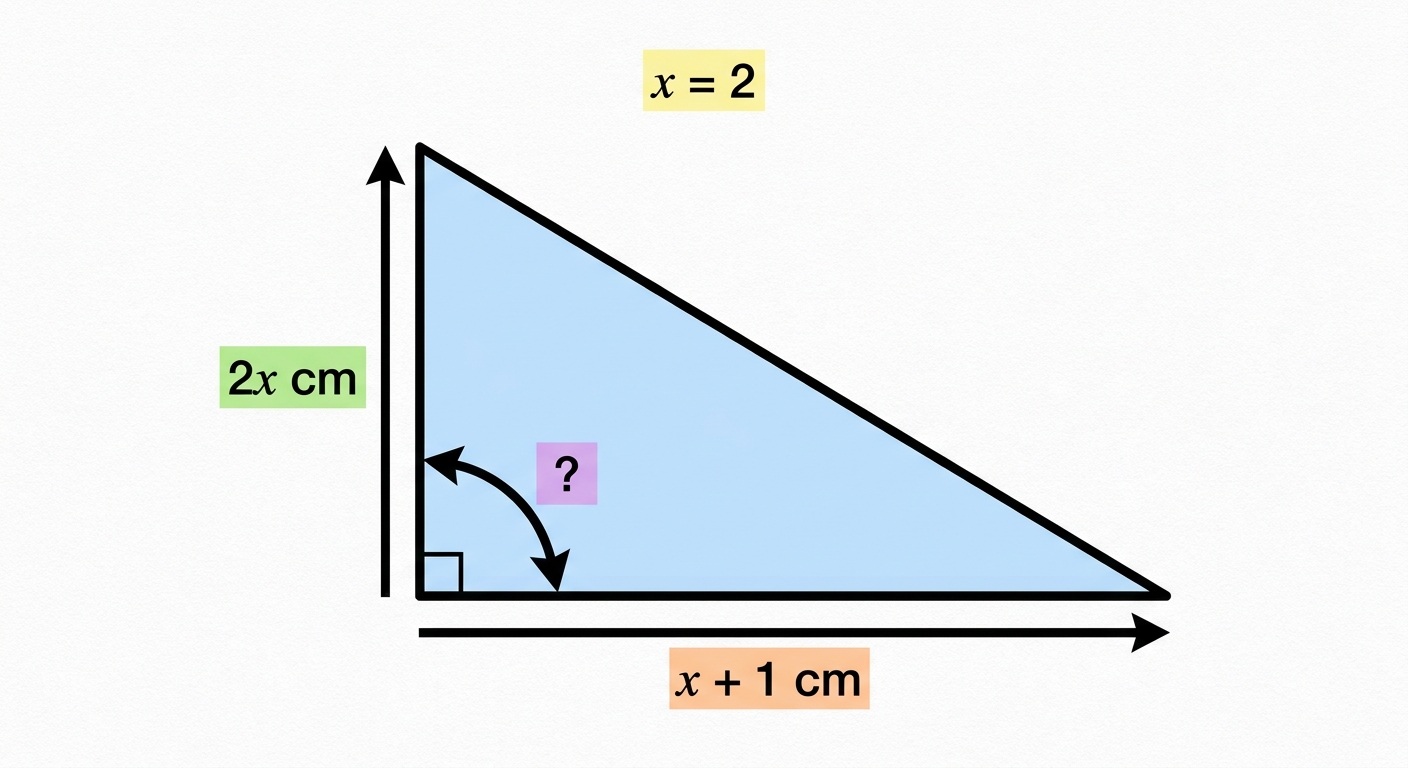
A construction team is installing a ramp for accessibility compliance. The ramp forms a right triangle: the horizontal base measures m and the vertical rise measures m, where .
Building regulations require that the ramp angle (opposite the vertical rise) must not exceed to be approved.
Building regulations require that the ramp angle (opposite the vertical rise) must not exceed to be approved.
a
Calculate the value of . [1]
b
Advise the construction team whether the ramp should be approved, justifying your answer using your result from part (a). [1]

Solutions
2QuestionInterpret compositeAssessment Practice
2 marks~3 minCriterion D
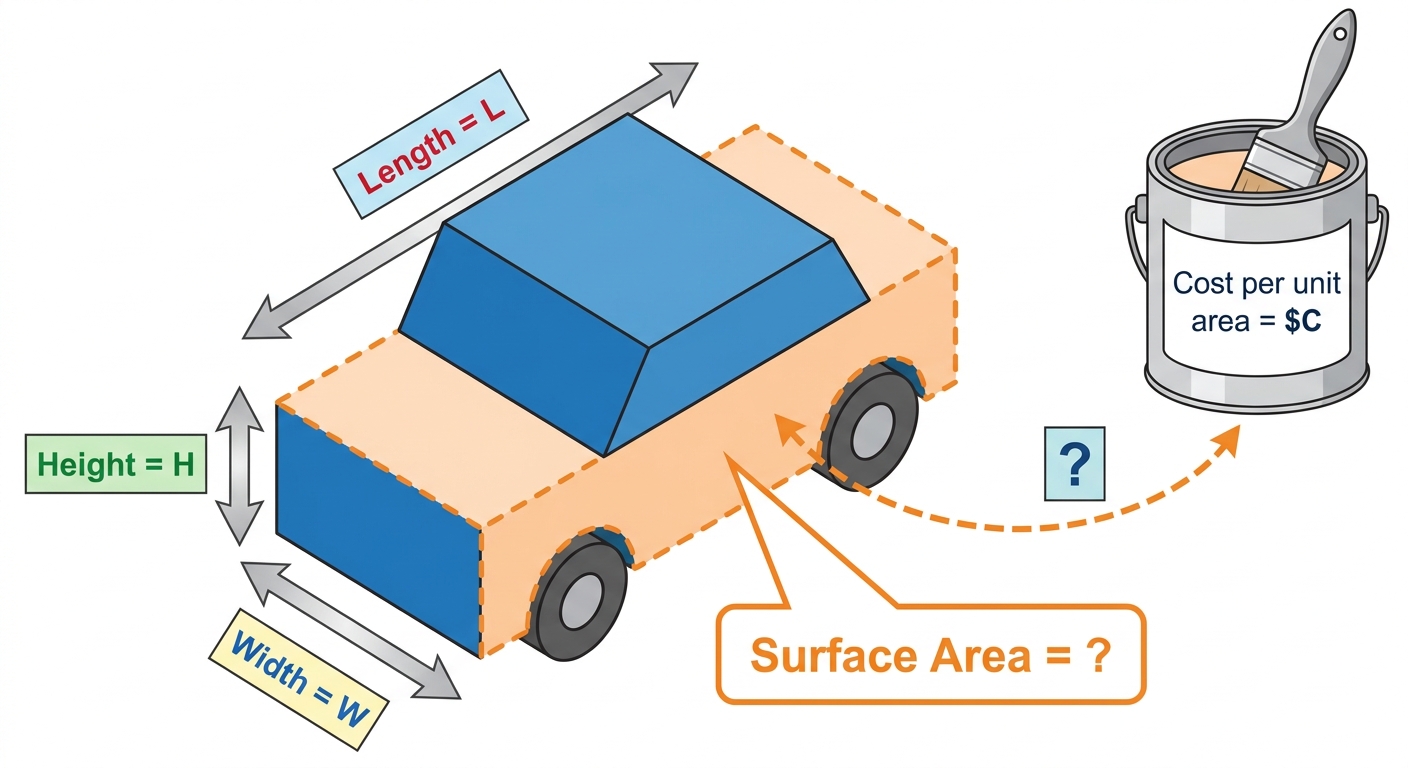
A toy factory models the painting cost (in dollars) of a car as a function of its surface area (in cm²), and the surface area as a function of a single dimension (in cm), such that and .
a
Explain how the composite function models the total painting cost in terms of dimension , showing the chain of dependence . [1]
b
Interpret what a doubling of dimension means for the painting cost, and justify whether this composite model is sufficient for a factory manager to use when pricing larger car models. [1]
Solutions
3QuestionEvaluate compositeConcept Practice
2 marks~3 minCriterion C
A delivery company charges a handling fee then applies a distance multiplier. The handling fee function is and the distance multiplier is , where is the base cost in dollars.
a
Calculate and for . [1]
b
A customer claims the order of operations does not affect the final charge. Justify whether this claim is correct, using your results from part (a). [1]
Solutions
4QuestionEvaluate compositeAssessment Practice
8 marks~12 minCriterion B
A computer simulation models the spread of a notification through a network. At each step, every active node activates exactly one new node and remains active. The number of active nodes at step is modelled by , applied repeatedly from . The sequence is defined by for all positive integers .
a
Calculate the first five terms of the sequence. [2]
b
Deduce a formula for in terms of , showing clearly how the pattern in part (a) leads to your general expression. [2]
c
Prove by mathematical induction that your formula holds for all positive integers . [2]
d
The network has a capacity of 1000 active nodes. Using your formula, advise the network administrator at which step they should intervene to prevent the capacity being exceeded, justifying your answer with reference to the simulation. [2]
Solutions
That's every free question here — 4 of 222.
+218 more questions, plus Mock Papers & Worksheets, are waiting in Premium.