You're viewing free preview questions — 4 questions previewing here — subscribe to unlock 35 more, plus the Full Question Bank, Mock Papers & Worksheets.Upgrade
Angle Properties of Polygons — Free MYP5 Mathematics (Extended) Practice Questions

1QuestionInterior and Exterior Angles of PolygonsConcept Practice
2 marks~3 minCriterion A
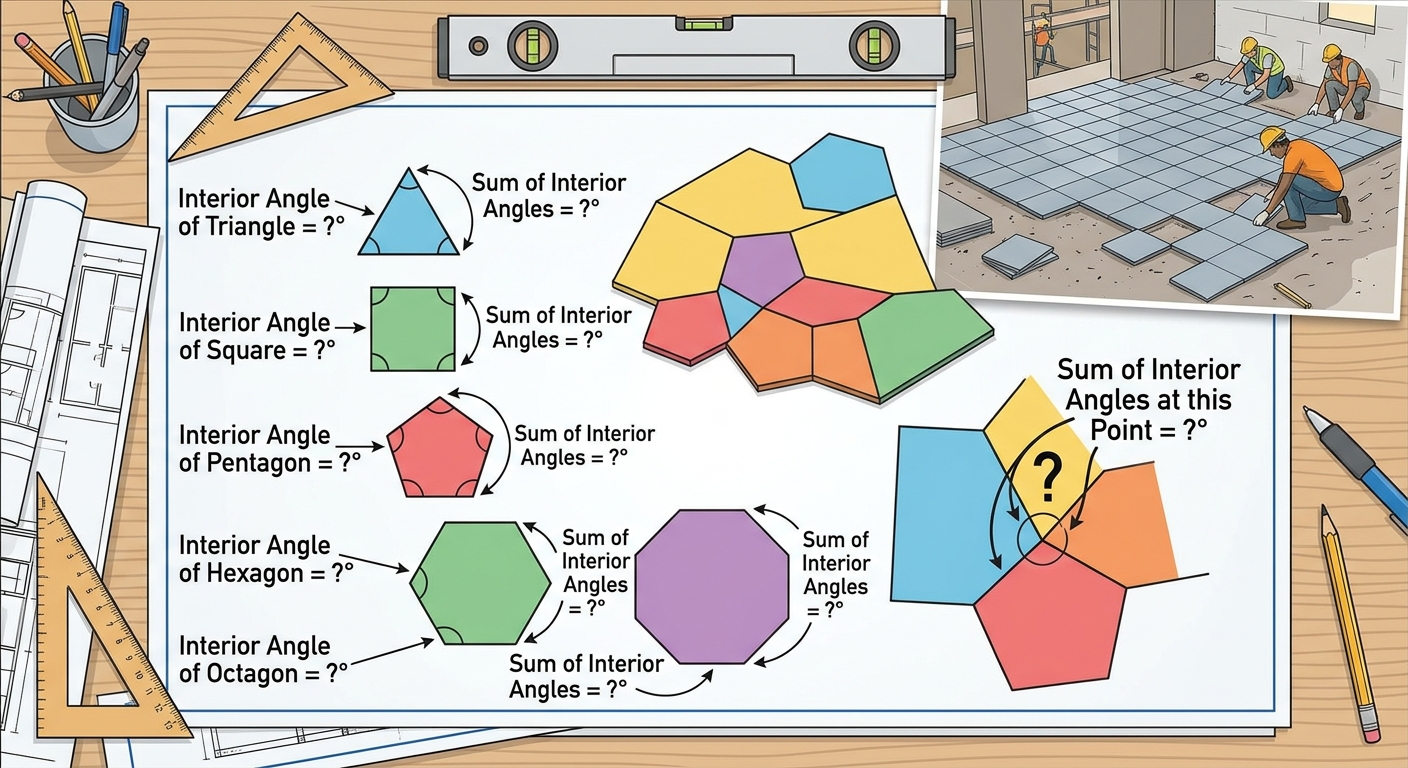
A landscape architect is designing a public courtyard floor using a single type of regular polygon as the tile shape.
a
Explain why a regular hexagon can tile a floor without gaps or overlaps, referring to its interior angle. [1]
b
Discuss one limitation of restricting the tile design to a single type of regular polygon. [1]

Solutions
2QuestionParallel Lines and TransversalsAssessment Practice
2 marks~3 minCriterion C
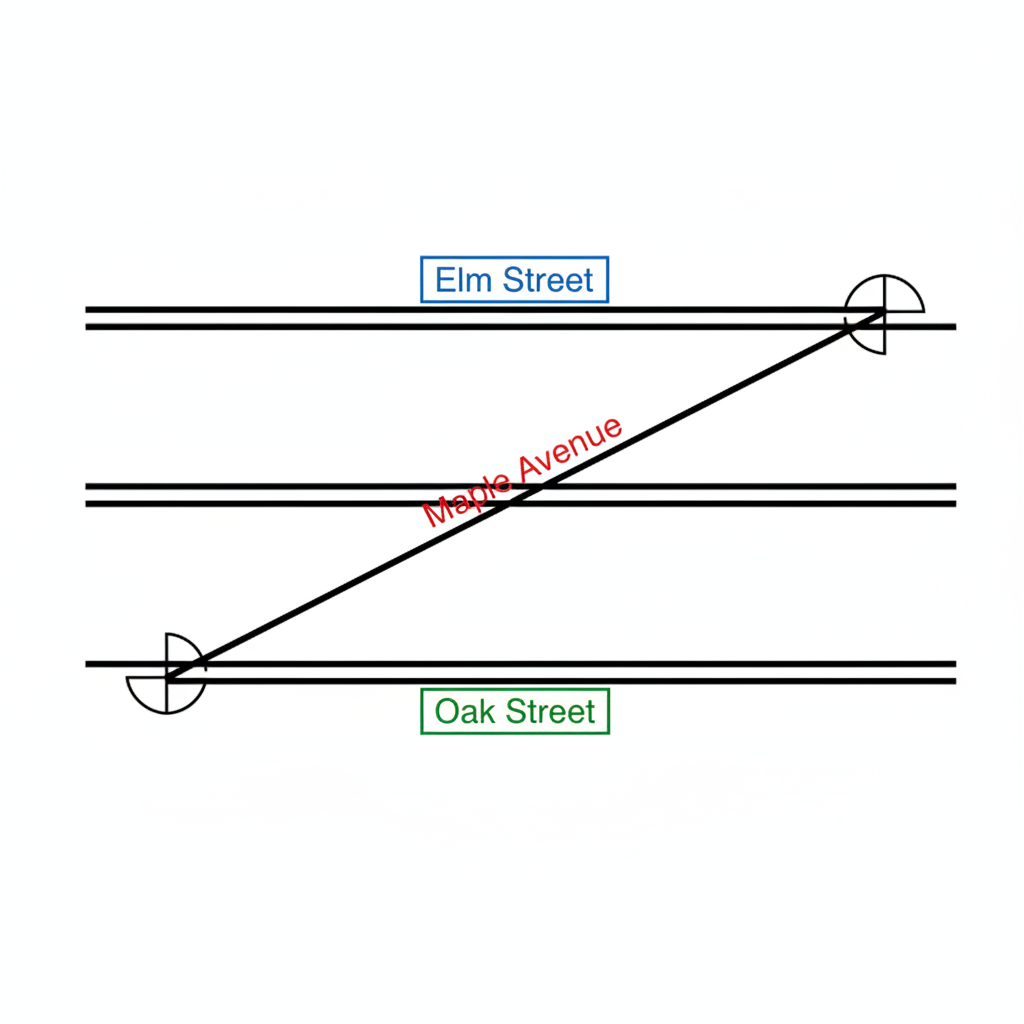
Elm Street and Oak Street are parallel. Maple Avenue crosses both streets as a transversal, forming eight angles at the two intersections. At the intersection with Elm Street, the angle on the upper-right measures .
a
State the measure of the corresponding angle at the intersection with Oak Street. [1]
b
A city planner claims that Maple Avenue crosses both streets "at the same angle," using this as evidence that the streets are parallel. Justify whether this claim constitutes valid geometric evidence of parallelism. [1]
Solutions
3QuestionParallel Lines and TransversalsAssessment Practice
4 marks~6 minCriterion D
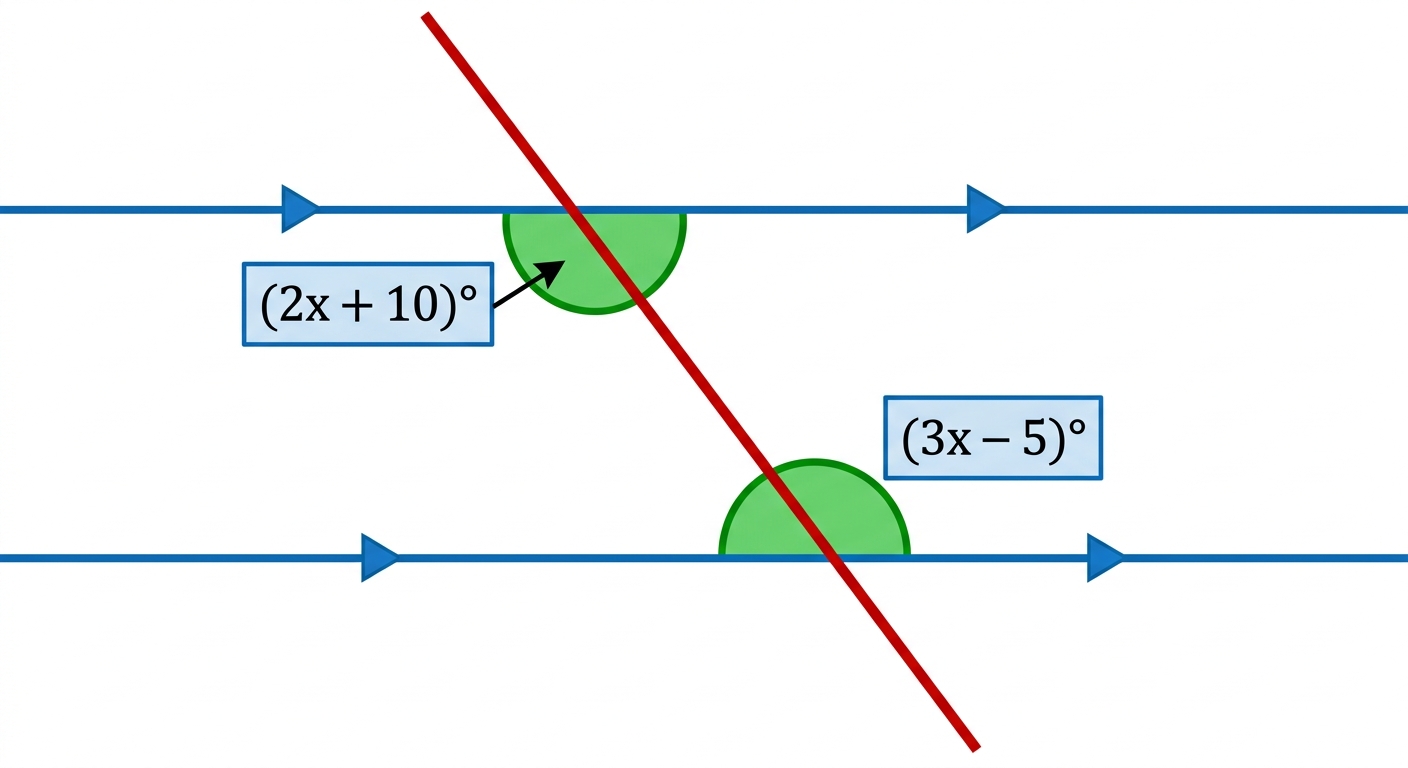
A road engineer is designing two parallel lanes of a highway intersected by a slip road acting as a transversal. The angle formed between the slip road and the near lane is . The corresponding angle at the far lane is .
a
Deduce an equation relating the two angles and solve for . [2]
b
Justify whether the slip road crosses both lanes at an acute or obtuse angle, using the calculated angle measure. [1]
c
The highway design requires that no approach angle exceeds for driver safety. Advise the engineer whether this design should be approved. [1]
Solutions
4QuestionInterior and Exterior Angles of PolygonsAssessment Practice
12 marks~18 minCriterion B
A designer is tiling a floor using identical regular polygon tiles that fit together edge-to-edge with no gaps. For tiles to tessellate, the interior angle must divide exactly into 360°.
The interior angle of a regular -sided polygon is given by
and the sum of interior angles by degrees.
The interior angle of a regular -sided polygon is given by
and the sum of interior angles by degrees.
a
Calculate the sum of interior angles of a regular 20-sided polygon. [2]
b
Deduce a formula for the exterior angle of a regular -sided polygon in terms of , showing your reasoning clearly. [3]
c
A tile has an interior angle of 150°. Calculate the number of sides of this tile. [3]
d
Justify whether the 150° tile can tessellate a floor on its own, using your results from parts (b) and (c). [4]
Solutions
That's every free question here — 4 of 39.
+35 more questions, plus Mock Papers & Worksheets, are waiting in Premium.