You're viewing free preview questions — 4 questions previewing here — subscribe to unlock 89 more, plus the Full Question Bank, Mock Papers & Worksheets.Upgrade
Composite and Inverse Functions Introductory — Free MYP5 Mathematics (Extended) Practice Questions

1QuestionEvaluating Composite FunctionsAssessment Practice
2 marks~3 minCriterion A
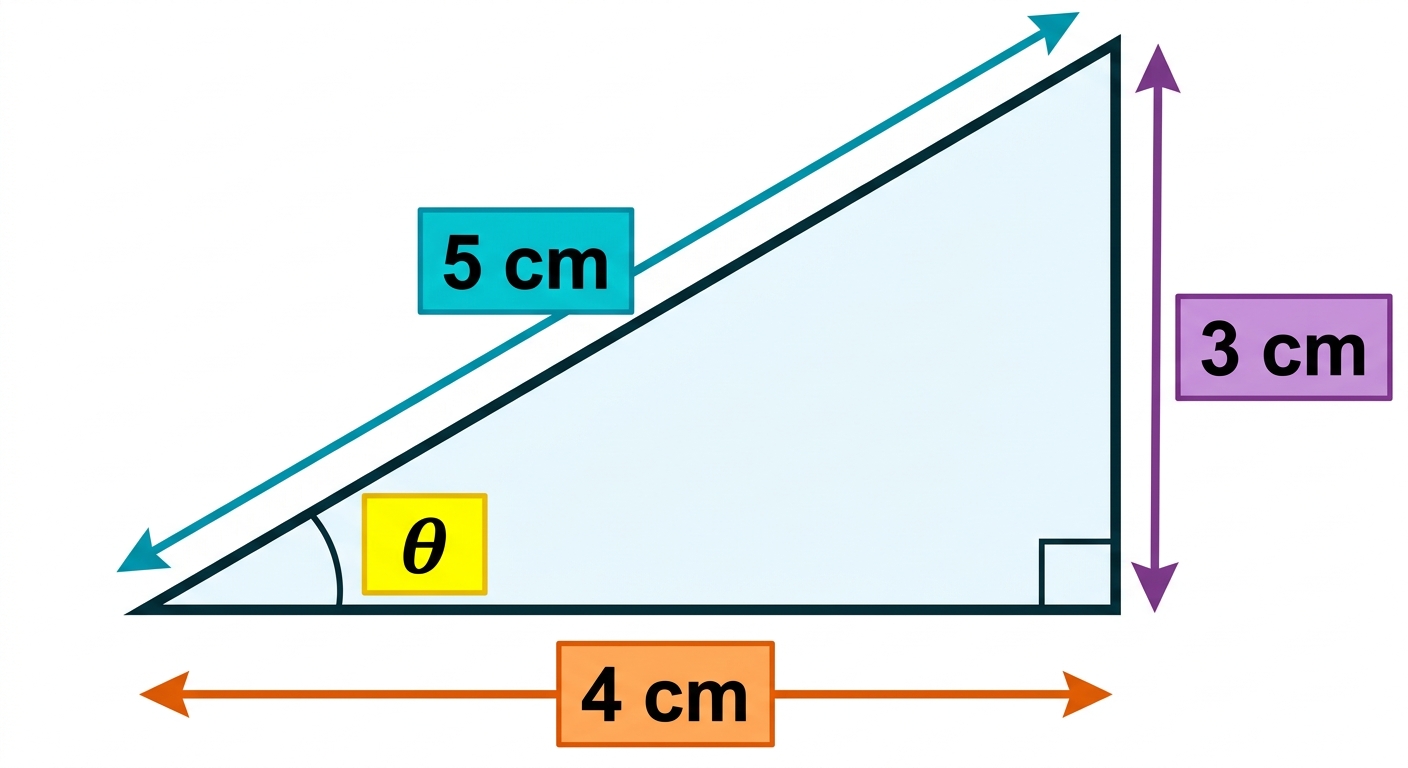
A surveyor uses a 3-4-5 right triangle to set a reference angle , where is the angle opposite the side of length 3.
The functions and model how the surveyor adjusts bearing angles.
Calculate the value of , giving your answer to 3 significant figures. [2]
The functions and model how the surveyor adjusts bearing angles.
Calculate the value of , giving your answer to 3 significant figures. [2]

Solutions
2QuestionChecking if Two Functions Are InversesAssessment Practice
3 marks~5 minCriterion C
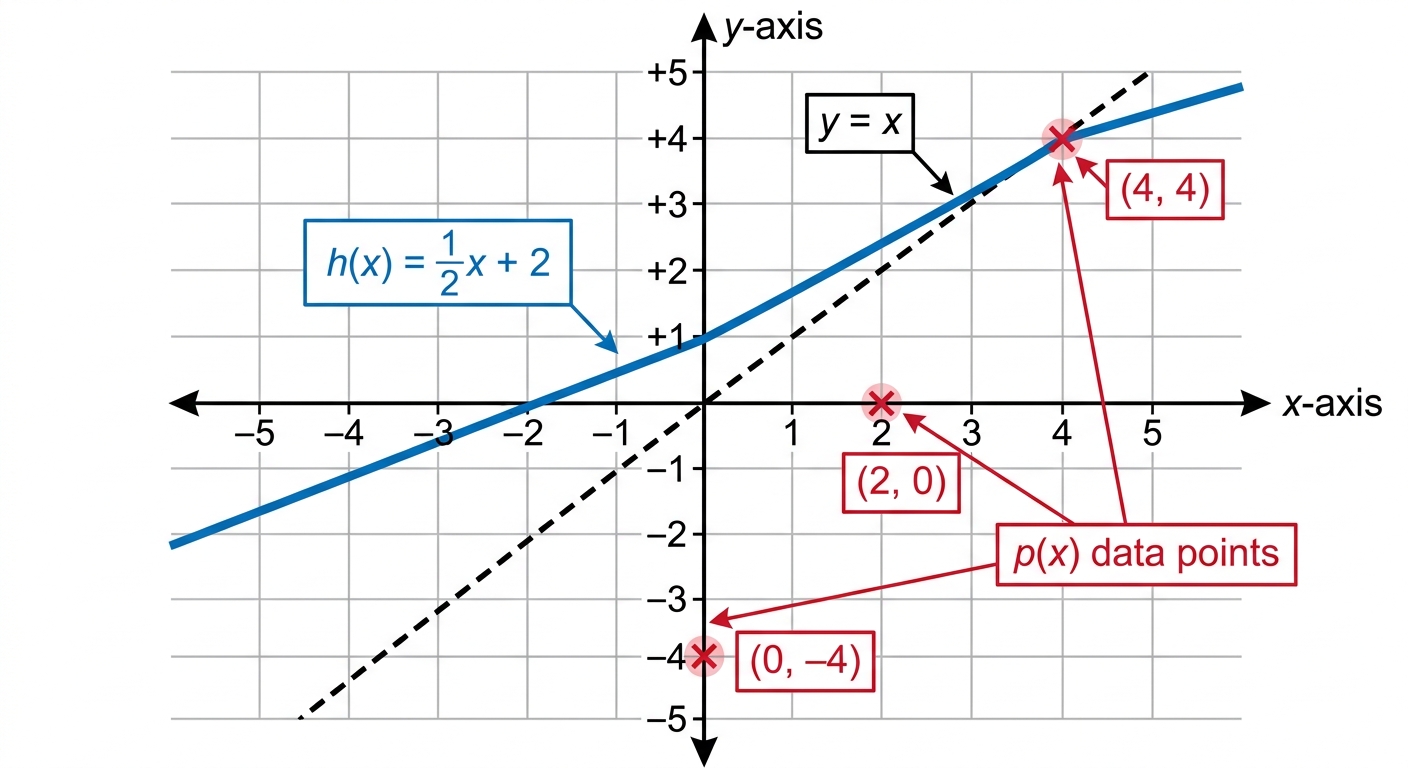
The graph shows (solid line), the line (dashed), and three points claimed to belong to a function : , , and .
a
Calculate the coordinates of the points on at , , and . [1]
b
Deduce the coordinates that the inverse of must pass through by reflecting your points from (a) across the line . [1]
c
Justify whether is the inverse of , referring to your results from (b). [1]
Solutions
3QuestionConcept of Inverse FunctionsAssessment Practice
6 marks~9 minCriterion D
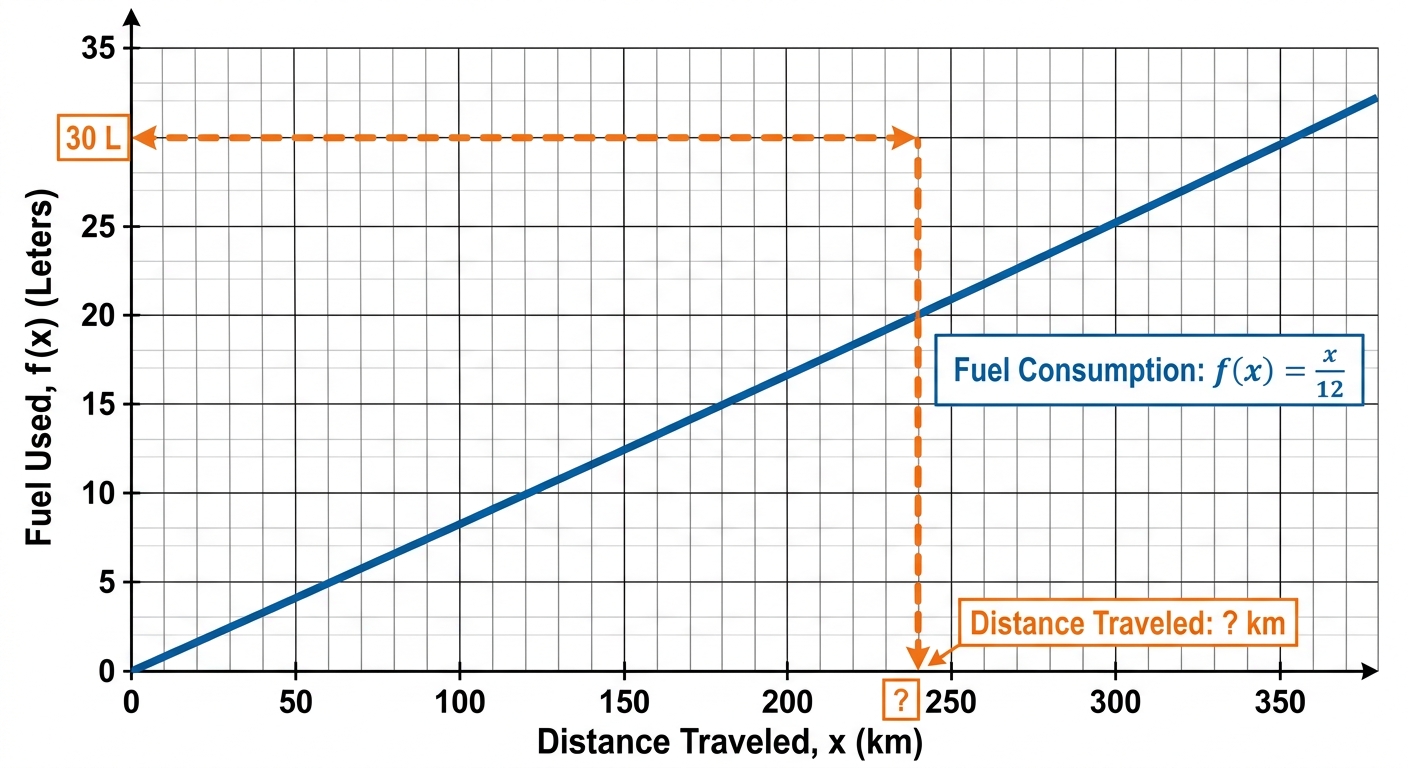
A car's fuel efficiency is modelled by the function
where is the distance travelled in kilometres (km) and is the fuel used in litres (L). The model assumes constant driving conditions throughout any journey.
where is the distance travelled in kilometres (km) and is the fuel used in litres (L). The model assumes constant driving conditions throughout any journey.
a
Determine the inverse function and explain what it represents in this context. [2]
b
A driver has 30 L of fuel available. Using , calculate the maximum distance the driver can travel. [2]
c
The driver plans a 400 km motorway journey followed by a 20 km urban leg. Advise the driver whether 35 L of fuel is sufficient for the full journey, justifying your answer with reference to the model's assumption of constant driving conditions. [2]
Solutions
4QuestionEvaluating Composite FunctionsAssessment Practice
6 marks~9 minCriterion B
A computer simulation models the spread of a digital signal through a network. At each step, the signal passes through two filters in sequence: filter doubles the strength, then filter adds 1 unit. Formally, and , giving composite function . The simulation begins at strength and updates by .
a
Calculate , , , and . [2]
b
Deduce a general formula for in terms of . [2]
c
The network has a maximum capacity of 1000 units. Justify whether this capacity is exceeded within the first 8 steps of the simulation. [2]
Solutions
That's every free question here — 4 of 93.
+89 more questions, plus Mock Papers & Worksheets, are waiting in Premium.