You're viewing free preview questions — 4 questions previewing here — subscribe to unlock 129 more, plus the Full Question Bank, Mock Papers & Worksheets.Upgrade
Position Vectors and Displacement — Free MYP5 Mathematics (Extended) Practice Questions

1QuestionDefinition and Use of Position VectorsAssessment Practice
6 marks~9 minCriterion B
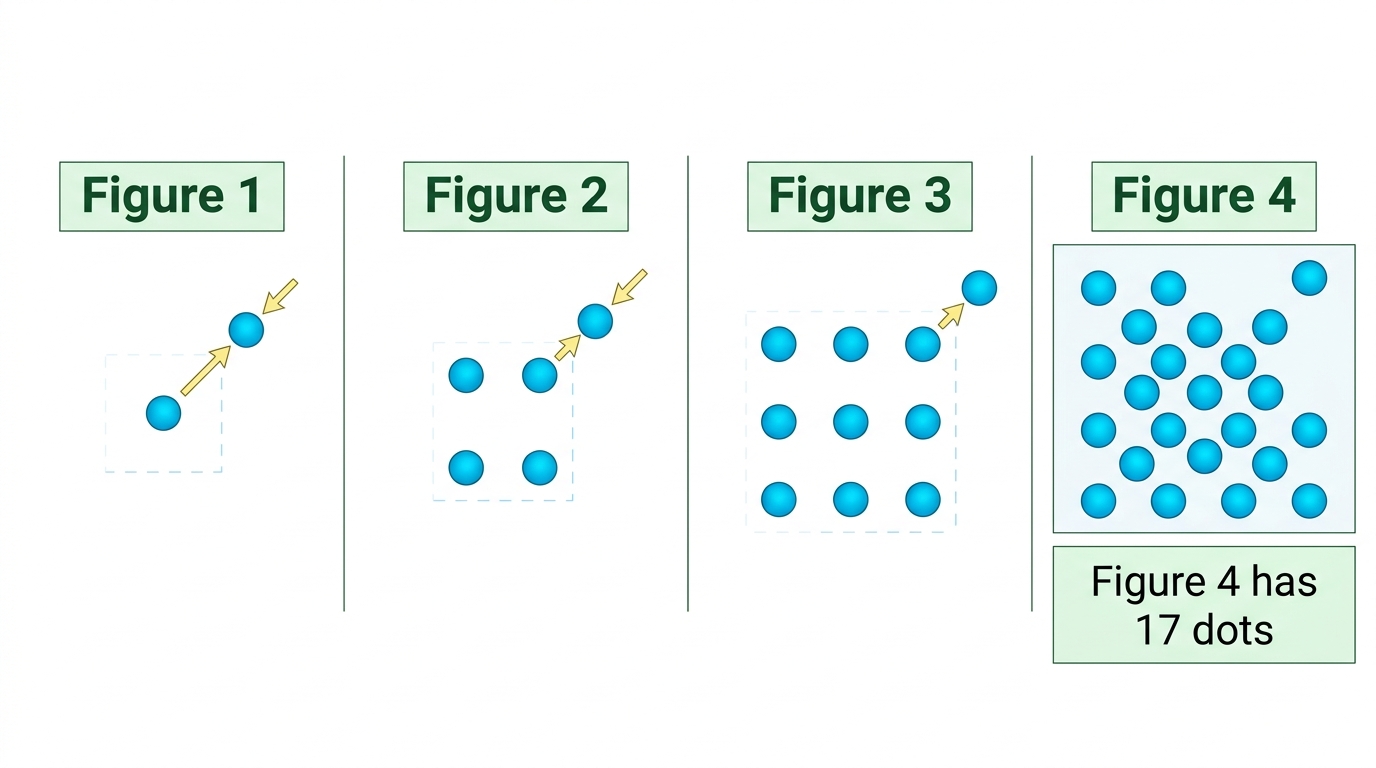
The diagram shows Figures 1, 2 and 3 of a pattern made from dots. In each figure, the dots form an square with one additional dot placed immediately to the right of the top-right corner dot. Figure 4 has 17 dots.
a
Write down the number of dots in Figure 5. [1]
b
Find a rule for the number of dots in Figure , in the form
where and are integers to be found. [2]
where and are integers to be found. [2]
c
Verify your rule for Figure 3, and justify why the rule must contain an term by referring to the structure of the pattern. [3]

Solutions
2QuestionDefinition and Use of Position VectorsAssessment Practice
6 marks~9 minCriterion C
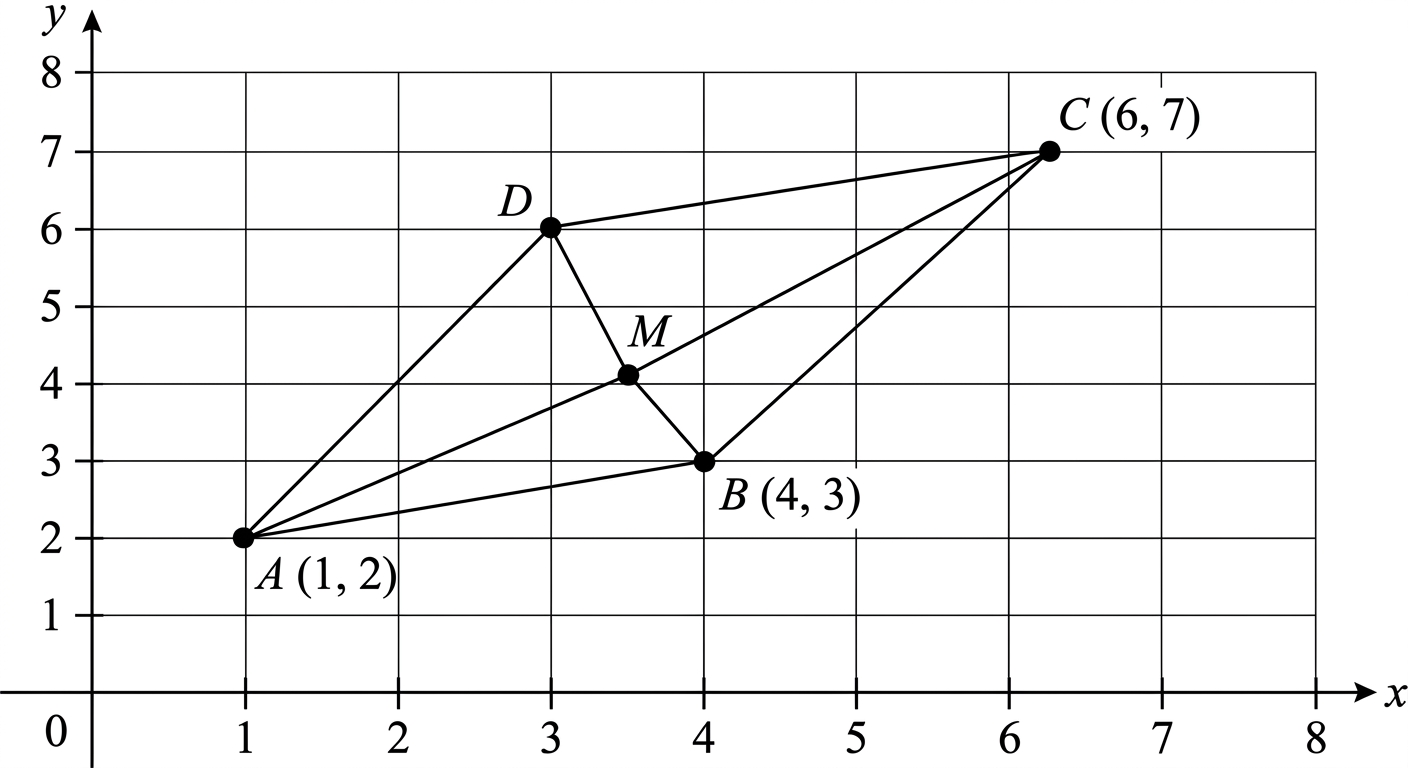
The diagram shows a coordinate grid with three vertices of a parallelogram , where , , and .
a
Find the coordinates of the fourth vertex , using the property that the diagonals of a parallelogram bisect each other. [2]
b
Show that the midpoints of diagonals and coincide, and state the coordinates of the common midpoint . [2]
c
A student claims: "The common midpoint is equidistant from all four vertices , , , and ."
Justify whether this claim is correct by calculating the exact distances , , , and , and comparing them. [2]
Justify whether this claim is correct by calculating the exact distances , , , and , and comparing them. [2]
Solutions
3QuestionDefinition and Use of Position VectorsAssessment Practice
6 marks~9 minCriterion A
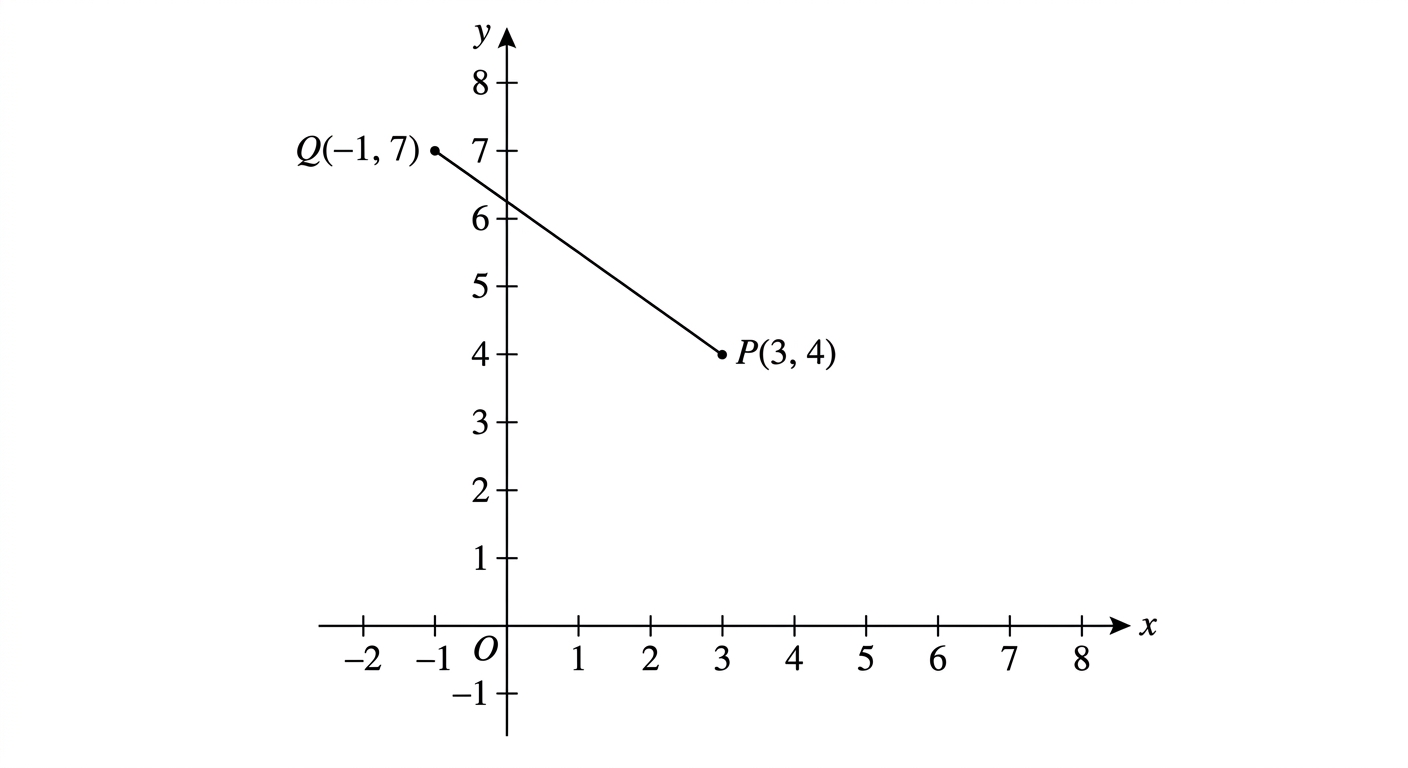
Points and are shown in the diagram.
a
Write down the distance , where is the origin. [1]
b
Find the coordinates of the midpoint of , and hence calculate the exact distance . [3]
c
Point lies on segment such that . Determine the coordinates of , then justify whether , , and are collinear. [2]
Solutions
4QuestionDefinition and Use of Position VectorsAssessment Practice
8 marks~12 minCriterion D
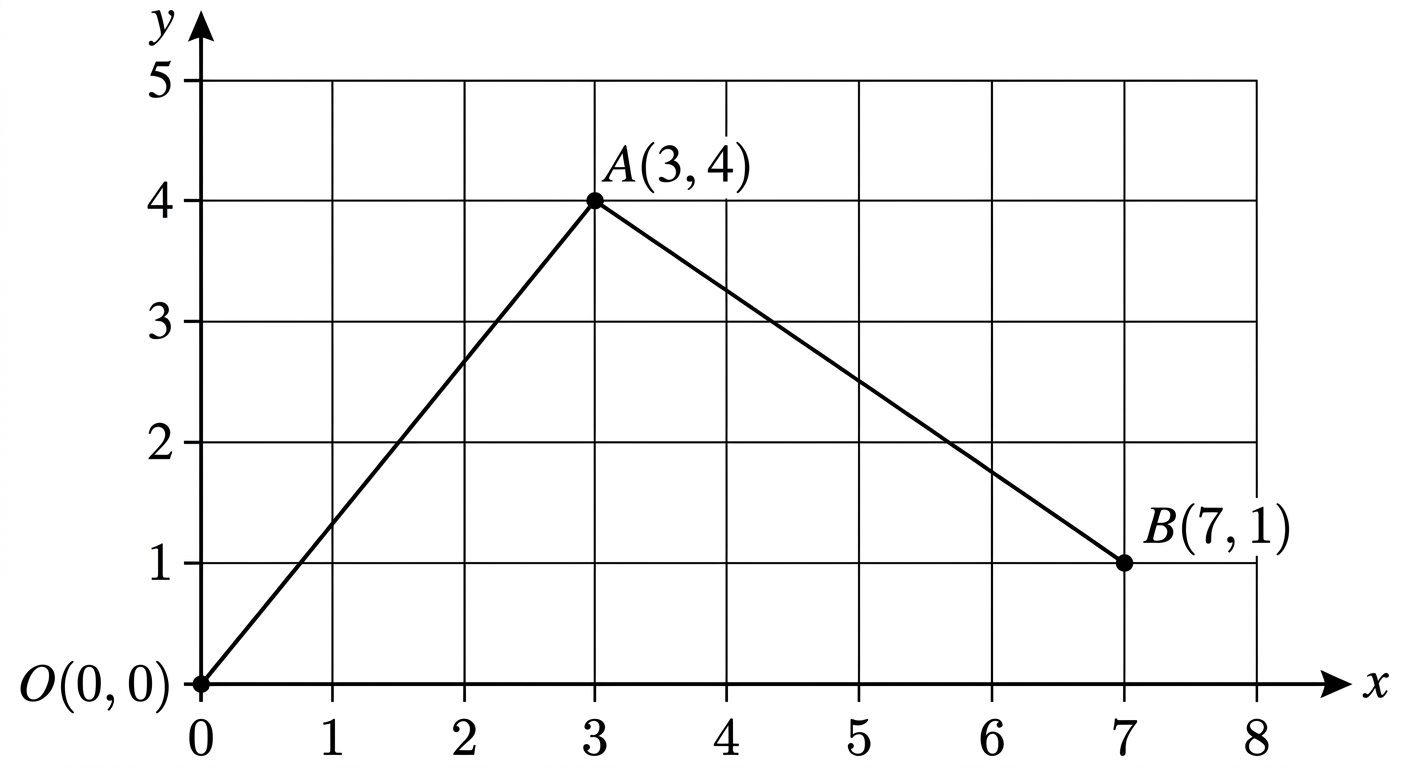
A drone delivery company plans routes on a coordinate grid where each unit represents 1 km. The launch point is at the origin . Waypoint is at coordinates and waypoint is at coordinates .
The diagram shows the positions of , and and the two-leg route .
The company models energy cost as proportional to total distance flown and charges customers 12 USD per km.
The diagram shows the positions of , and and the two-leg route .
The company models energy cost as proportional to total distance flown and charges customers 12 USD per km.
a
Calculate the total distance flown along the two-leg route . Give your answer in km. [2]
b
Find the percentage saving in distance if the direct route is used instead of the two-leg route. Give your answer to 3 significant figures. [3]
c
The straight-line distance from to is km. A rival company claims that flying the direct route always gives the shortest possible path between two points and should therefore always be used as a flight-planning rule. Assess whether this claim should be adopted as a general flight-planning rule, supporting your answer with both a mathematical argument and one real-world consideration. [3]
Solutions
That's every free question here — 4 of 133.
+129 more questions, plus Mock Papers & Worksheets, are waiting in Premium.