You're viewing free preview questions — 6 questions previewing here — subscribe to unlock 70 more, plus the Full Question Bank, Mock Papers & Worksheets.Upgrade
Back

Factorisation Techniques — Free MYP5 Mathematics (Standard) Practice Questions

Free questions

Open in full, with answers, mark scheme and examiner insights.

Question 1Criterion A + C · Band 3-4 · Easy · 6 marksrevisionprep.com

Grouping and Advanced Patterns

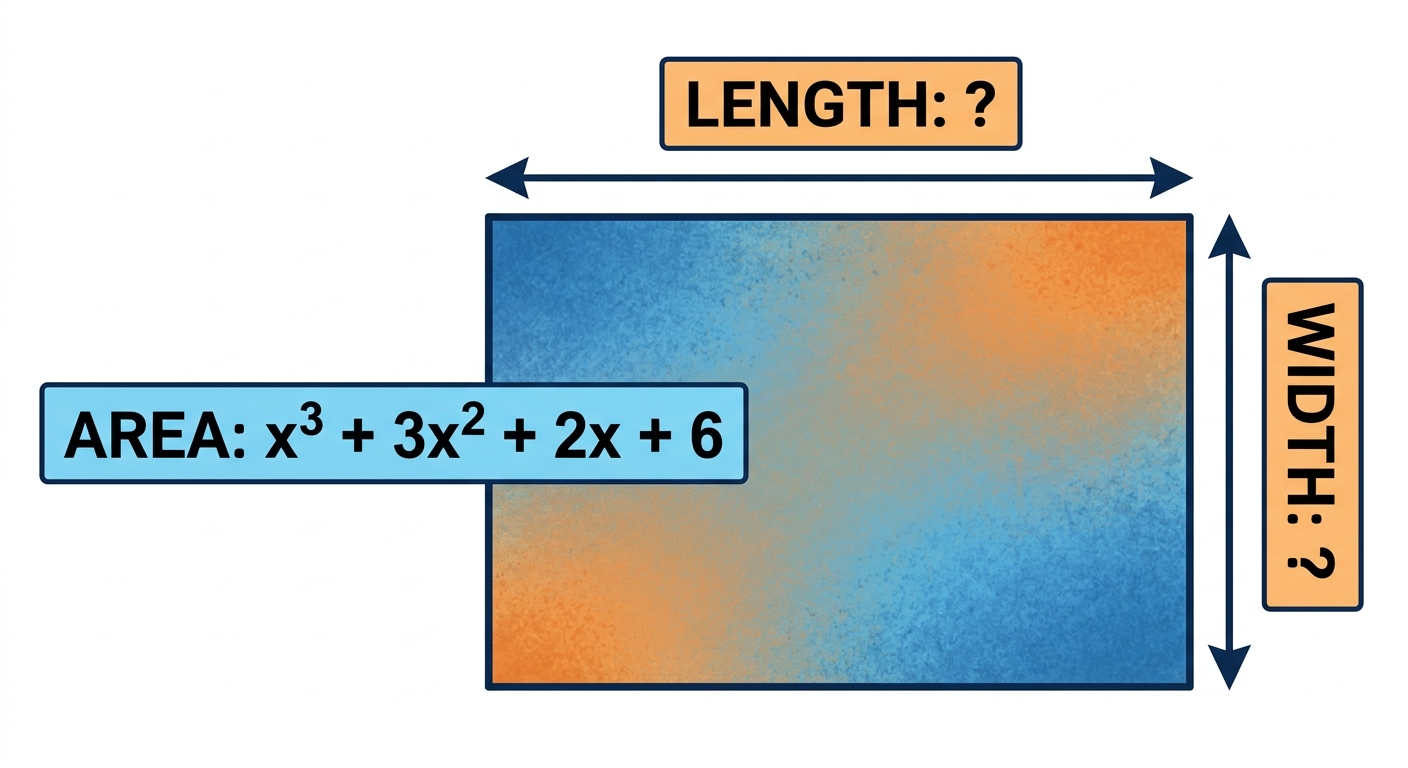
The area of the rectangle shown is (x3+3x2+2x+6)(x^3 + 3x^2 + 2x + 6) m2^2.
Question diagram
(a)
Factorise x3+3x2+2x+6x^3 + 3x^2 + 2x + 6 by grouping. [2]Criterion A (i), A (ii) · Level 3-4
(b)
Given that x=3x = 3, find the length and the width of the rectangle. [2]Criterion A (iii) · Level 3-4
(c)
Kaito groups the terms as (x3+2x)+(3x2+6)(x^3 + 2x) + (3x^2 + 6). Show that his grouping also works and gives the same factors. [2]Criterion C (iv) · Level 3-4

revisionprep.com

Summary Answer

Not available for this question.

Model Answer

Not available for this question.

Marking Scheme

Not available for this question.

Examiner Insights

Not available for this question.

Question 2Criterion A · Band 1-4 · Easy · 6 marksrevisionprep.com

Choosing Appropriate Factorisation Methods
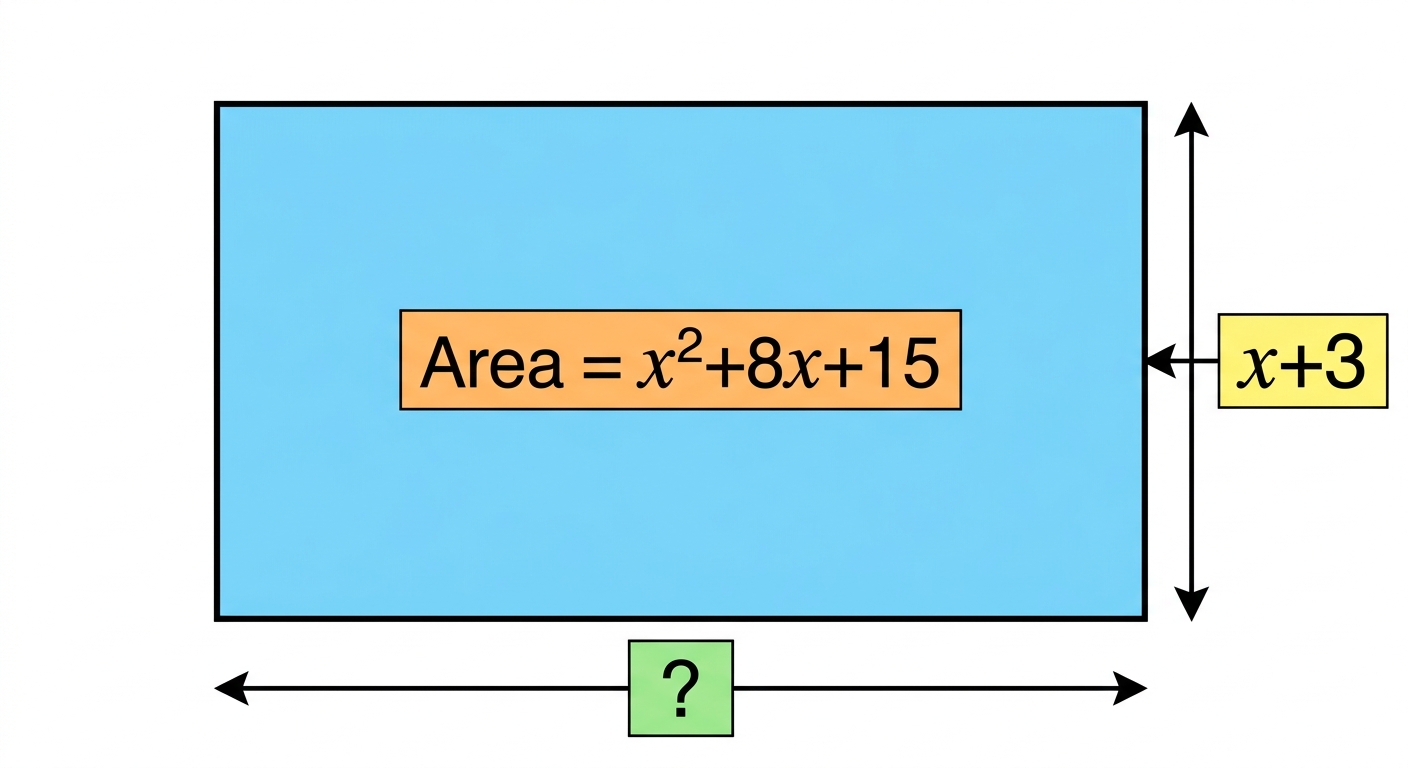
The rectangle in the diagram has area (x2+8x+15)(x^2 + 8x + 15) m2^2 and one side of length (x+3)(x + 3) m.
Question diagram
(a)
Factorise x2+8x+15x^2 + 8x + 15. [2]Criterion A (i), A (ii) · Level 1-2
(b)
Hence write down an expression for the missing side. [1]Criterion A (iii) · Level 1-2
(c)
The perimeter of the rectangle is 2626 m. Find xx and the area of the rectangle. [3]Criterion A (i), A (iii) · Level 3-4

revisionprep.com

Summary Answer

Not available for this question.

Model Answer

Not available for this question.

Marking Scheme

Not available for this question.

Examiner Insights

Not available for this question.

Question 3Criterion A · Band 3-6 · Medium · 6 marksrevisionprep.com

Factorising Out the Greatest Common Factor

(a)
Factorise fully 6x(2x−5)+3y(2x−5)6x(2x - 5) + 3y(2x - 5). [2]Criterion A (i), A (ii) · Level 3-4
(b)
Factorise fully a(b−c)−2(c−b)a(b - c) - 2(c - b). [2]Criterion A (i), A (ii) · Level 5-6
(c)
Hence, without a calculator, evaluate 37(19−11)−2(11−19)37(19 - 11) - 2(11 - 19). [2]Criterion A (iii) · Level 3-4

revisionprep.com

Summary Answer

Not available for this question.

Model Answer

Not available for this question.

Marking Scheme

Not available for this question.

Examiner Insights

Not available for this question.

Question 4Criterion D + A · Band 1-6 · Medium · 9 marksrevisionprep.com

Factorising quadratics ax² + bx + c

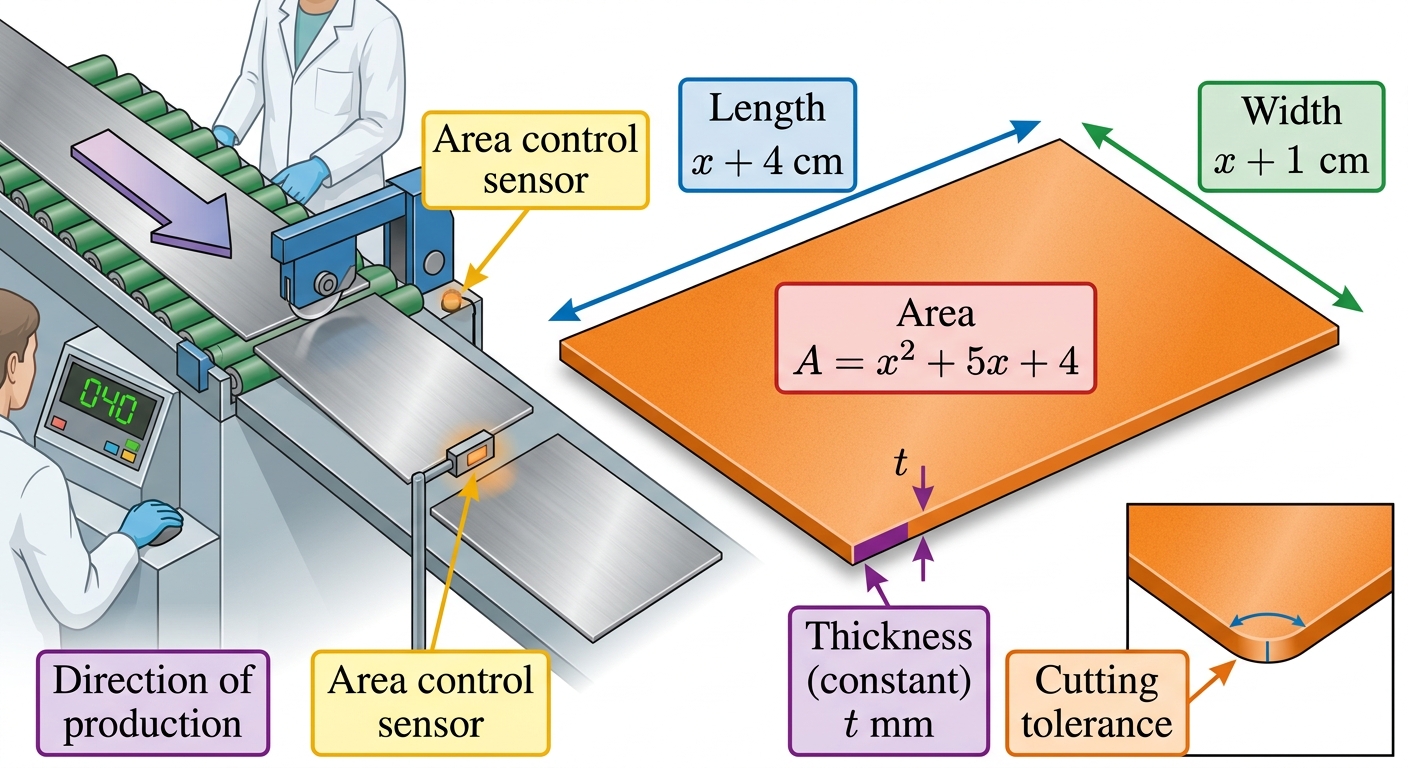
A factory cuts rectangular metal sheets. The diagram shows a sheet, its length and width in terms of xx, and the sensor that checks its area.
Question diagram
(a)
The display on the area sensor reads 4040 cm2^2. Write down an equation for xx using the length and width shown. [1]Criterion D (i) · Level 1-2
(b)
Show that your equation simplifies to x2+5x−36=0x^2 + 5x - 36 = 0. [1]Criterion D (ii) · Level 3-4
(c)
Factorise x2+5x−36x^2 + 5x - 36 and hence find the length and the width of the sheet. [3]Criterion A (ii), A (iii) · Level 3-4
(d)
The cutting tolerance means each side can be up to 0.20.2 cm too long. Find the largest possible area of a sheet and the percentage by which it exceeds 4040 cm2^2. [2]

(e) Another sheet gives a sensor reading of 5454 cm2^2. Determine whether this sheet fits the same model with xx a whole number. [2]
Criterion D (iii), D (iv) · Level 5-6

revisionprep.com

Summary Answer

Not available for this question.

Model Answer

Not available for this question.

Marking Scheme

Not available for this question.

Examiner Insights

Not available for this question.

Question 5Criterion B · Band 1-8 · Challenge · 9 marksrevisionprep.com

Factorising Out the Greatest Common Factor

This question investigates the expression n2+nn^2 + n, where nn is a positive integer.
(a)
Calculate the value of n2+nn^2 + n for n=1,2,3,4,5n = 1, 2, 3, 4, 5. [1]Criterion B (i) · Level 1-2
(b)
Describe two patterns you notice in your results. [2]Criterion B (i) · Level 3-4
(c)
Factorise n2+nn^2 + n and use it to write a general rule describing n2+nn^2 + n in words. [2]Criterion B (ii) · Level 5-6
(d)
Prove that n2+nn^2 + n is even for every positive integer nn. [2]

(e) Hence, or otherwise, prove that n2+3nn^2 + 3n is even for every positive integer nn. [2]
Criterion B (iii) · Level 7-8

revisionprep.com

Summary Answer

Not available for this question.

Model Answer

Not available for this question.

Marking Scheme

Not available for this question.

Examiner Insights

Not available for this question.

Question 6Criterion C + A · Band 3-8 · Challenge · 8 marksrevisionprep.com

Factorising Difference of Squares

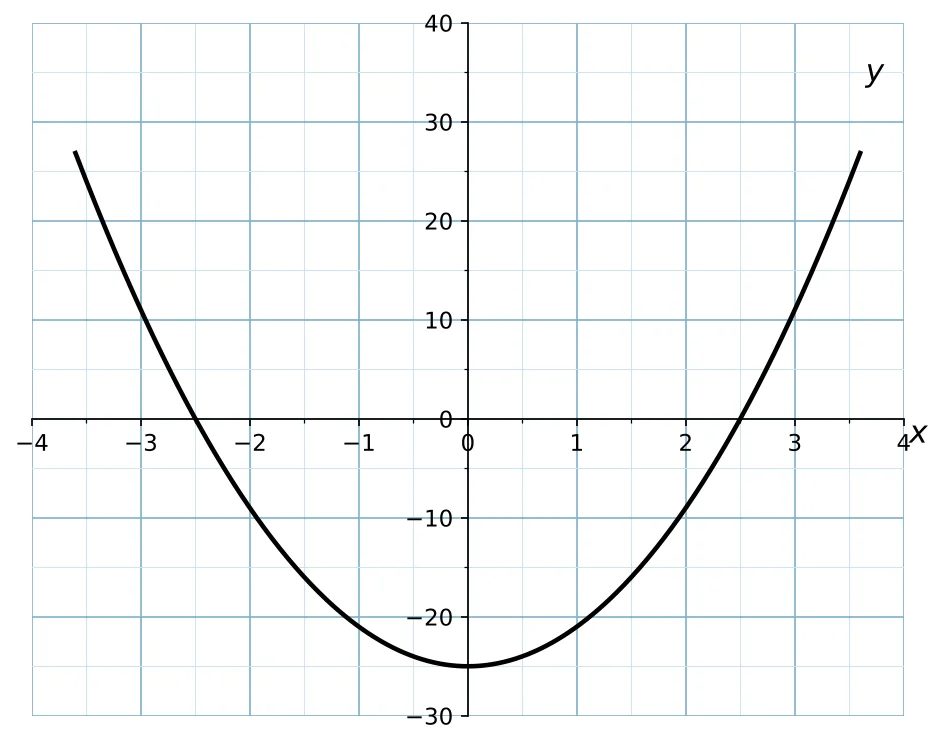
The graph of y=4x2−25y = 4x^2 - 25 is shown.
Question diagram
(a)
Factorise 4x2−254x^2 - 25. [2]Criterion A (ii) · Level 3-4
(b)
Explain how your factorised form gives the xx-intercepts of the graph, and write them down. [2]Criterion C (iii), C (iv) · Level 3-4
(c)
Write down, in factorised form, the equation of a graph of the form y=kx2−25y = kx^2 - 25 that crosses the xx-axis at x=−5x = -5 and x=5x = 5. [2]Criterion C (iii) · Level 5-6
(d)
Explain why no graph of the form y=kx2+25y = kx^2 + 25, with k>0k > 0, can be factorised as a difference of two squares, referring to the shape of its graph. [2]Criterion C (iv), C (v) · Level 7-8

revisionprep.com

Summary Answer

Not available for this question.

Model Answer

Not available for this question.

Marking Scheme

Not available for this question.

Examiner Insights

Not available for this question.

That's every free question here — 6 of 76.

+70 more questions, plus Mock Papers & Worksheets, are waiting in Premium.

Upgrade