You're viewing free preview questions — 4 questions previewing here — subscribe to unlock 56 more, plus the Full Question Bank, Mock Papers & Worksheets.Upgrade
Factorization Techniques — Free MYP5 Mathematics (Standard) Practice Questions

1QuestionChoosing Appropriate Factorization MethodsConcept Practice
2 marks~3 minCriterion A
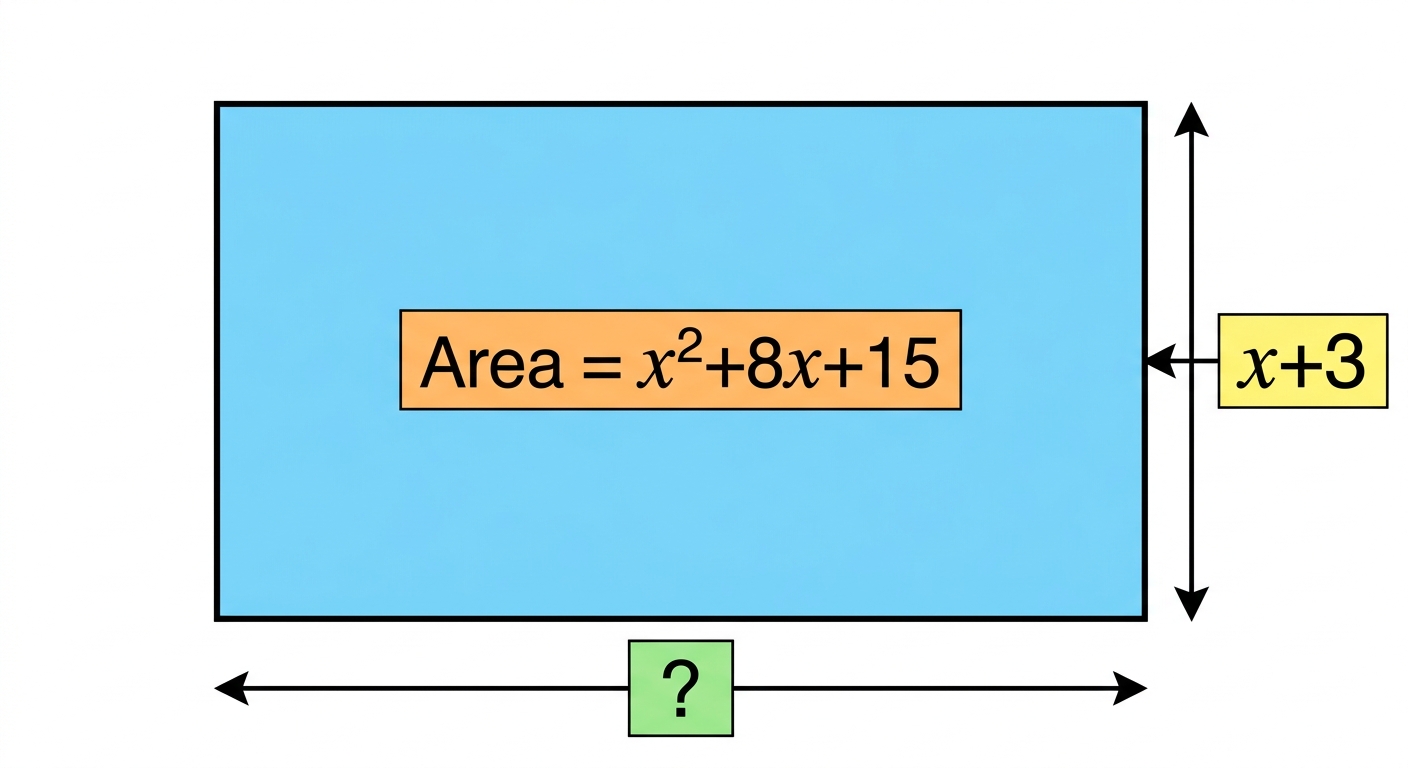
A landscape architect is designing a rectangular garden bed. The area of the bed is given by square metres, where . One side of the bed measures metres.
a
Factorise . [1]
b
The architect needs the missing side to be longer than 7 metres when . Justify whether this condition is met. [1]

Solutions
2QuestionChoosing Appropriate Factorization MethodsAssessment Practice
2 marks~3 minCriterion D
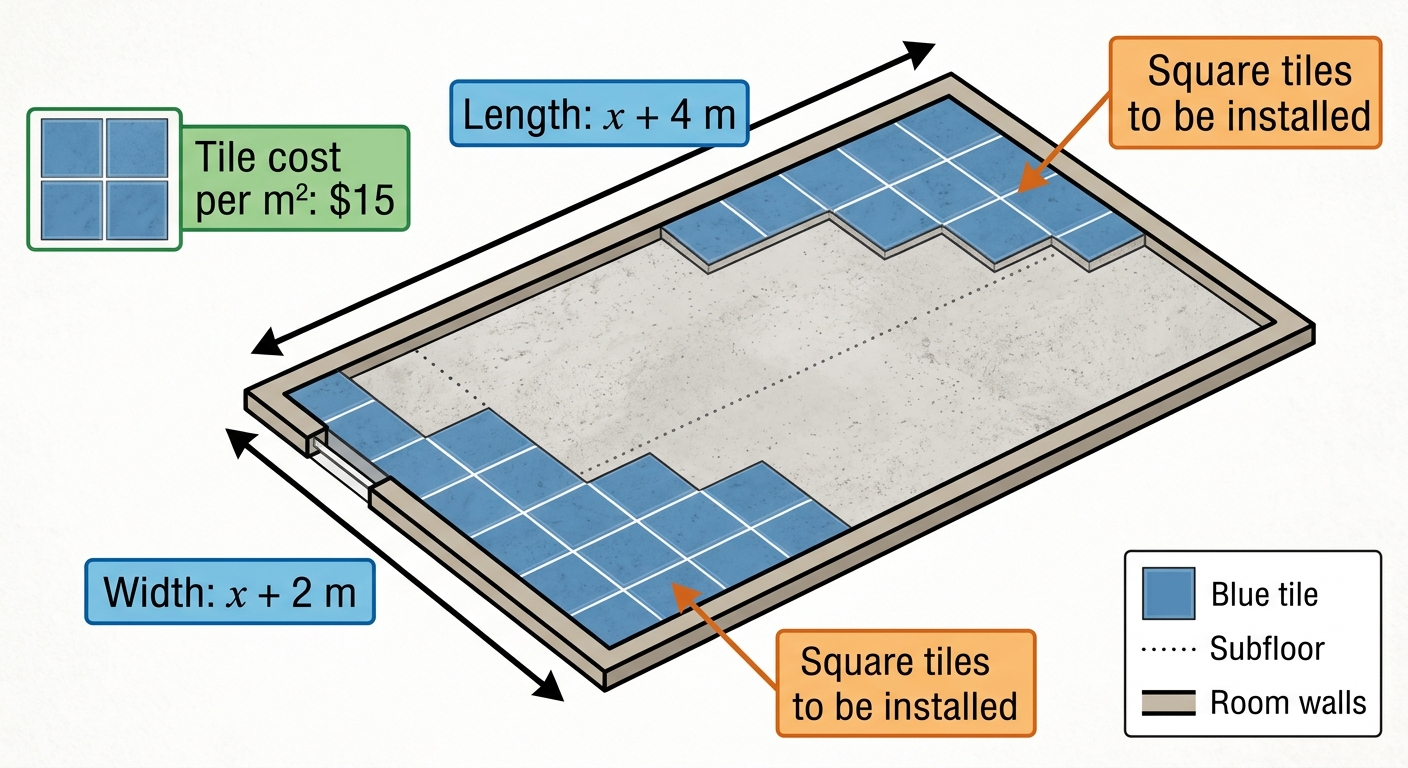
A homeowner plans to tile a rectangular floor with length metres and width metres. Tiles cost 15 dollars per square metre.
a
Show that the total tiling cost, in dollars, is . [1]
b
The homeowner has a budget of 300 dollars and estimates . Advise the homeowner whether to proceed with the purchase, giving one mathematical reason why the actual cost could differ from this estimate. [1]
Solutions
3QuestionGrouping and Advanced PatternsAssessment Practice
2 marks~3 minCriterion C
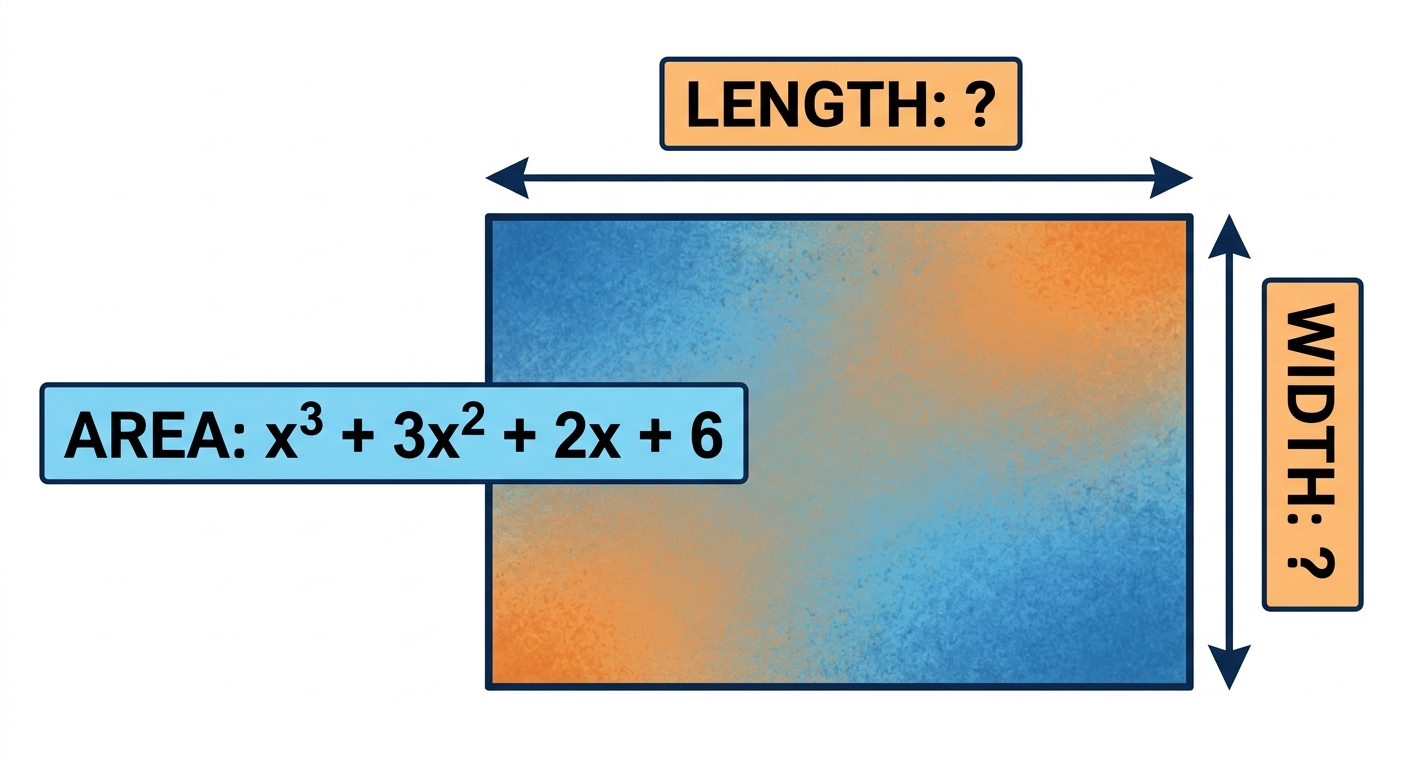
A landscape architect models a rectangular garden plot with area given by square metres, where .
a
Show that using the grouping method. [1]
b
Given that , the architect claims one side length exceeds 11 m. Justify whether this claim is correct. [1]
Solutions
4QuestionFactoring Difference of SquaresAssessment Practice
5 marks~8 minCriterion B
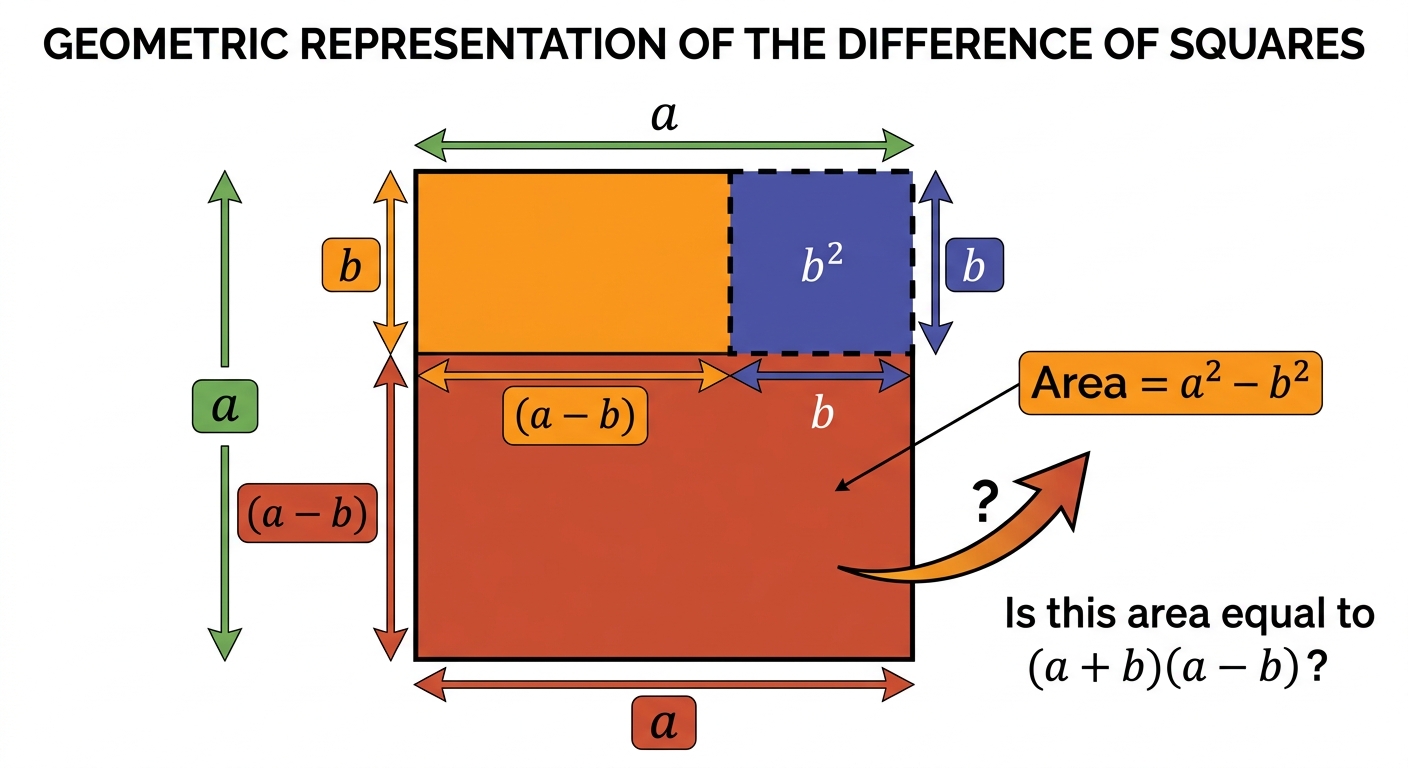
A tile manufacturer cuts square ceramic tiles of side length cm, then removes a smaller square of side length cm from one corner to create an L-shaped tile for border edging.
a
Show that by expanding the left-hand side algebraically. State the property used at each step. [2]
b
Construct an area model for the L-shaped tile. Show that the remaining area can be expressed both as and as . [2]
c
A tile is described as "large" if its L-shaped area exceeds . Given and , justify whether this tile qualifies as large. [1]
Solutions
That's every free question here — 4 of 60.
+56 more questions, plus Mock Papers & Worksheets, are waiting in Premium.