You're viewing free preview questions — 4 questions previewing here — subscribe to unlock 86 more, plus the Full Question Bank, Mock Papers & Worksheets.Upgrade
Quadratic Equations — Free MYP5 Mathematics (Standard) Practice Questions

1QuestionSolving by FactorizationConcept Practice
2 marks~3 minCriterion A
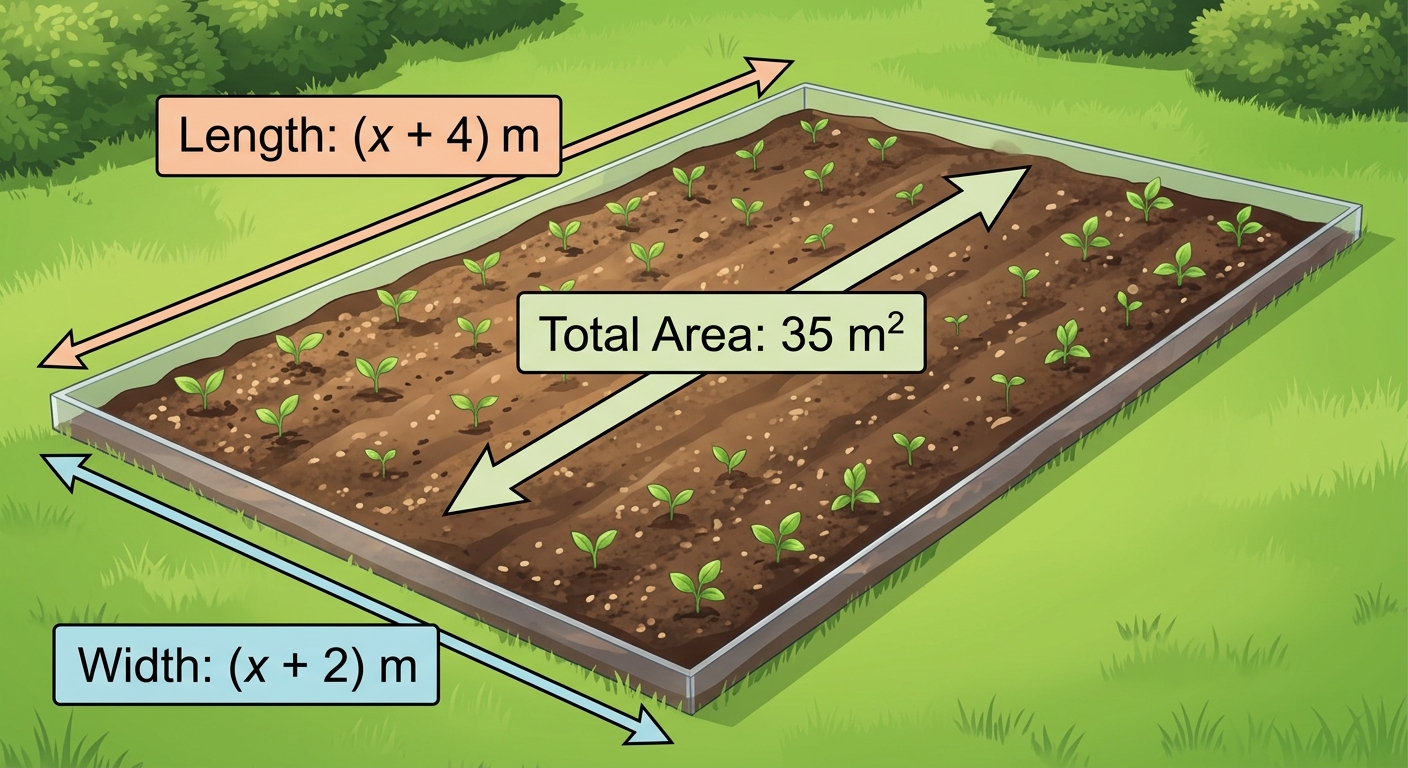
A landscape architect is designing a rectangular garden with a length of m and a width of m. The total area of the garden must be exactly .
a
Show that the area condition gives the equation . [1]
b
Solve by factorization. Hence, deduce the actual dimensions of the garden and justify which solution is valid in this context. [1]

Solutions
2QuestionSolving by FactorizationAssessment Practice
2 marks~3 minCriterion D
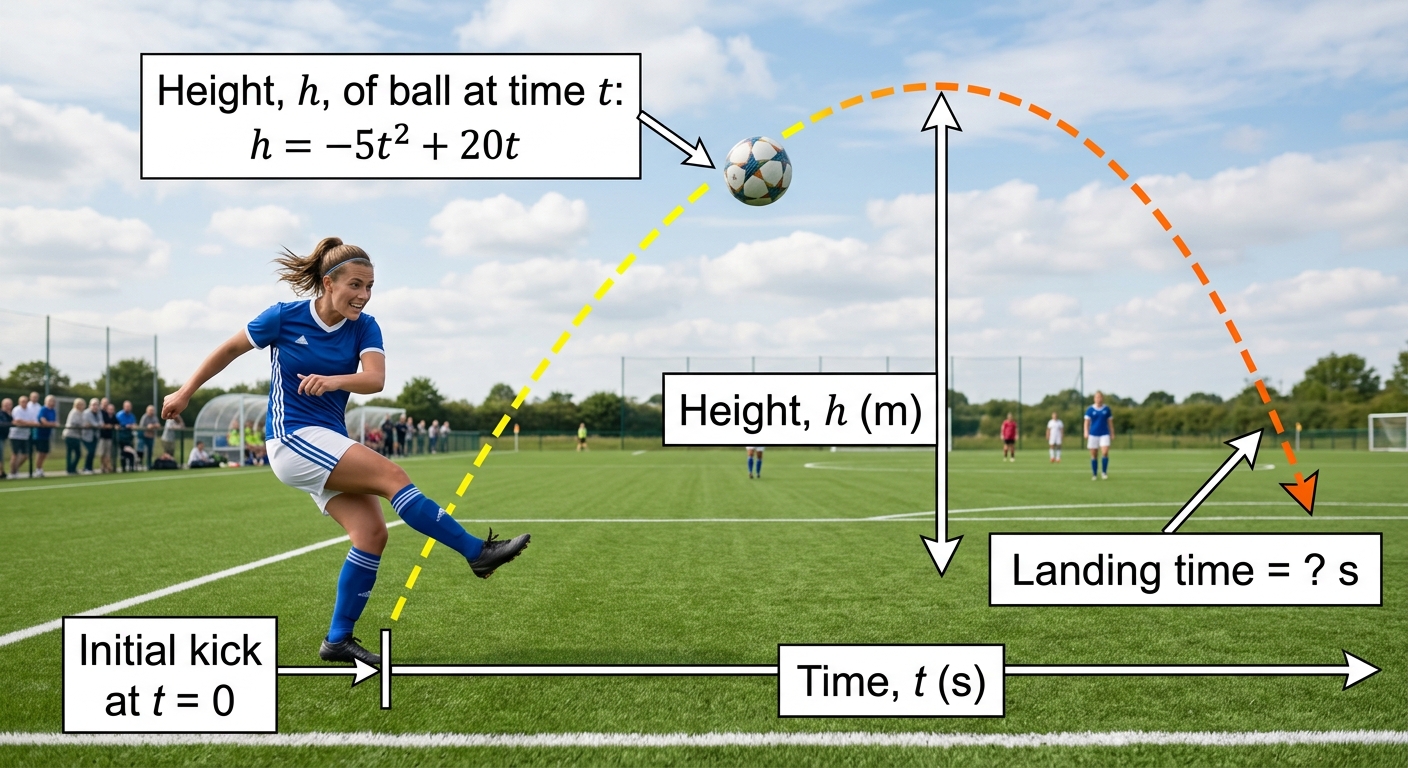
In a soccer match, a player kicks a ball from ground level. Its height, metres, after seconds is modelled by
a
Factorise and hence deduce the time at which the ball returns to the ground. [1]
b
The referee rules the ball "out of play" if it lands beyond seconds. Using your result from part (a), advise the referee whether the ball should be ruled out of play, and state one limitation of the quadratic model that could affect this judgement in a real match. [1]
Solutions
3QuestionSolving by FactorizationAssessment Practice
4 marks~6 minCriterion C
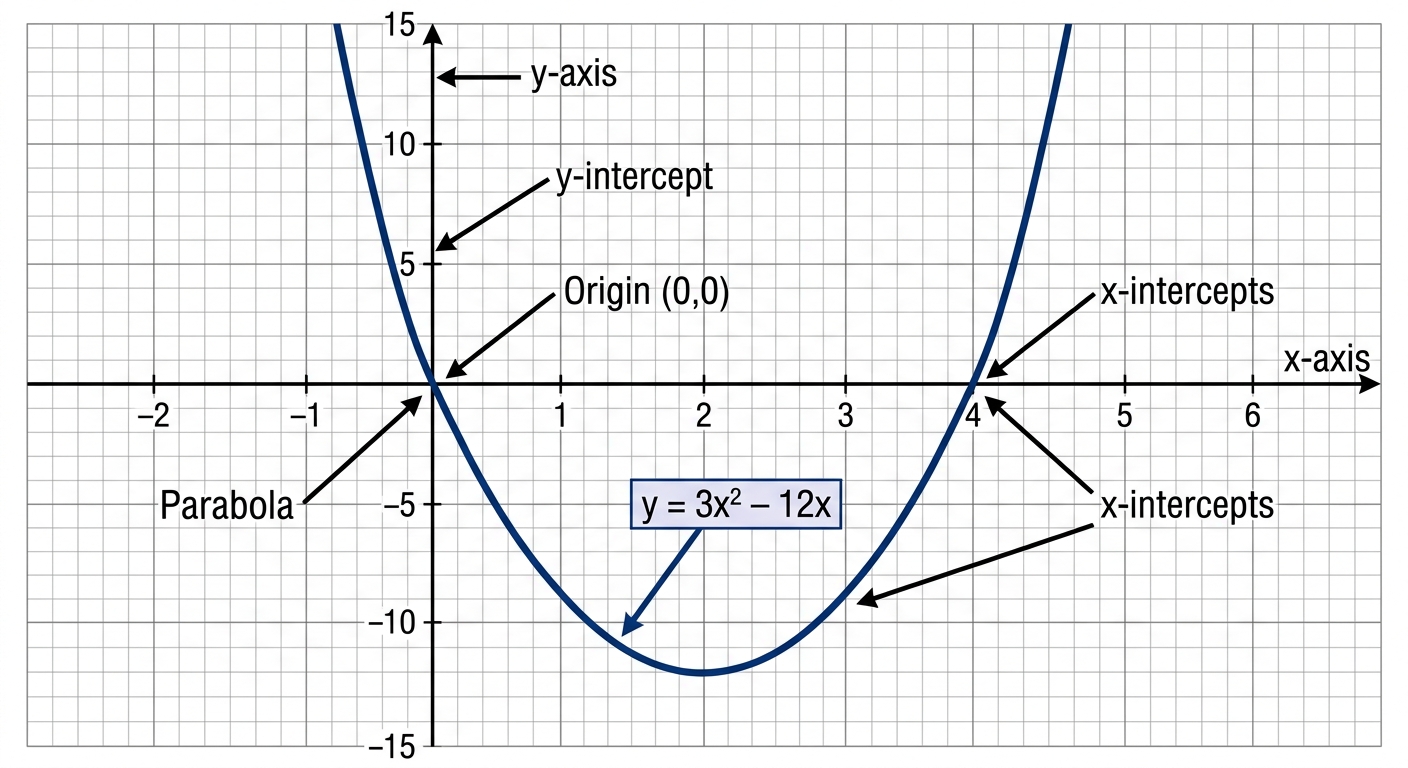
A landscape architect models the edge of a curved garden bed using the equation , where is the horizontal distance in metres from a reference post. The graph of this function is shown below.
a
Determine the highest common factor (HCF) of and . [1]
b
Deduce the roots of by factorization. [1]
c
The architect's assistant proposes dividing both sides of by to solve it. Critique this method, and interpret what the missing root represents in the context of the garden bed. [2]
Solutions
4QuestionSolving by FactorizationAssessment Practice
2 marks~3 minCriterion B
Examine the following factorized quadratics:
Analyse the relationship between the constant term, the coefficient of , and the integers in the brackets across all four expressions.
Deduce the factorized form of , clearly stating your conjecture in written form. [2]
Analyse the relationship between the constant term, the coefficient of , and the integers in the brackets across all four expressions.
Deduce the factorized form of , clearly stating your conjecture in written form. [2]
Solutions
That's every free question here — 4 of 90.
+86 more questions, plus Mock Papers & Worksheets, are waiting in Premium.