You're viewing free preview questions — 4 questions previewing here — subscribe to unlock 82 more, plus the Full Question Bank, Mock Papers & Worksheets.Upgrade
Graphs of Functions — Free MYP5 Mathematics (Standard) Practice Questions

1QuestionInterpret graphsConcept Practice
4 marks~6 minCriterion A
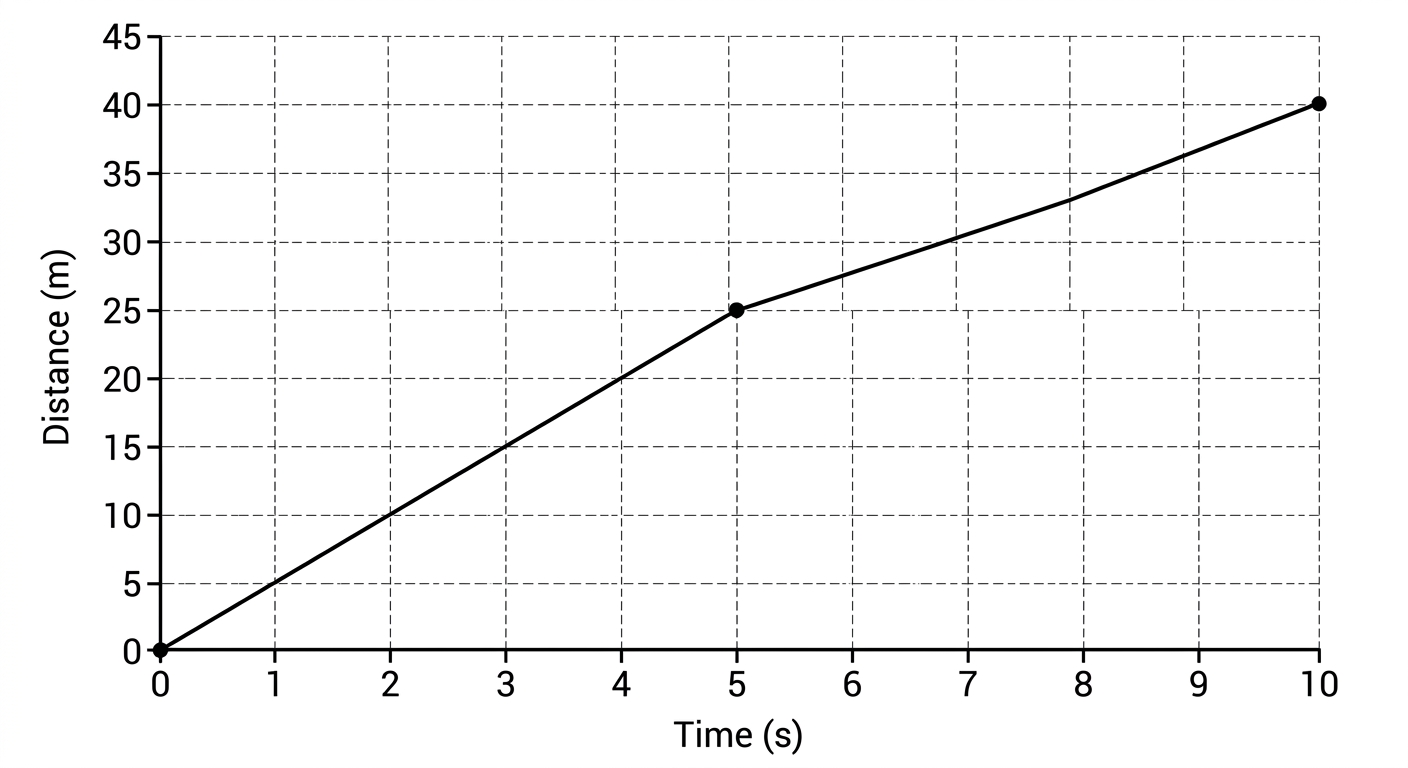
A car travels along a straight road. Its motion is shown on the distance–time graph below.
The graph passes through the points , , and , where time is in seconds and distance is in metres.
The graph passes through the points , , and , where time is in seconds and distance is in metres.
a
Calculate the speed of the car during the first 5 seconds. [1]
b
Calculate the speed of the car during the final 5 seconds. [1]
c
The road has a posted average-speed limit of 3.5 m/s for the full 10-second stretch. Calculate the car's average speed for the entire journey and justify whether the speed limit is exceeded. [2]

Solutions
2QuestionRecognize shapesAssessment Practice
4 marks~6 minCriterion C
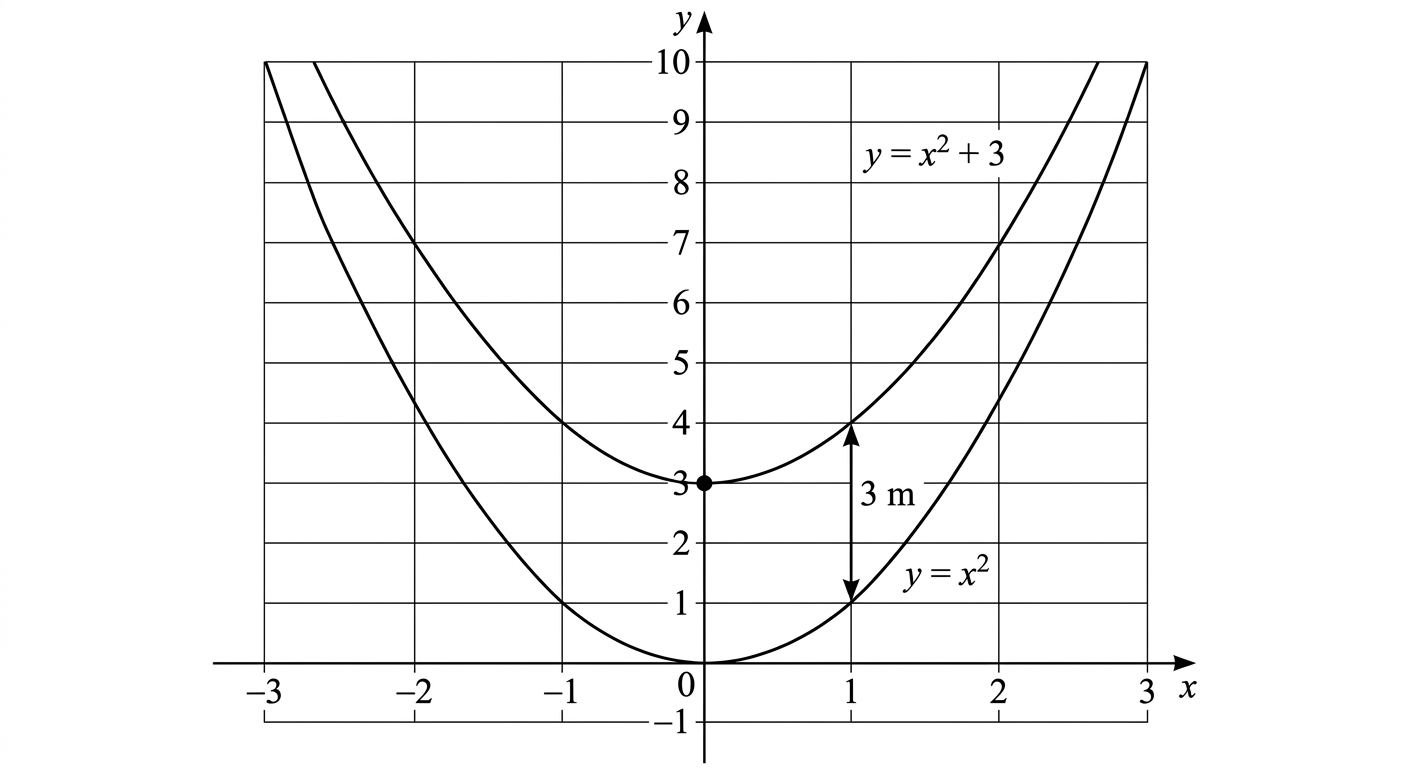
A landscape architect models two fountain jets as parabolas. The first jet follows the path , where is horizontal distance (metres) and is height (metres). The second jet follows a path that is a vertical translation of the first jet upward by 3 metres.
a
Explain how a vertical translation upward by 3 metres affects the equation of . [1]
b
Deduce the equation of the second jet and calculate its -intercept. [2]
c
The architect states: "The second jet always stays at least 3 metres above the first jet." Justify whether this statement is correct. [1]
Solutions
3QuestionPlot quadratic functionsAssessment Practice
4 marks~6 minCriterion D
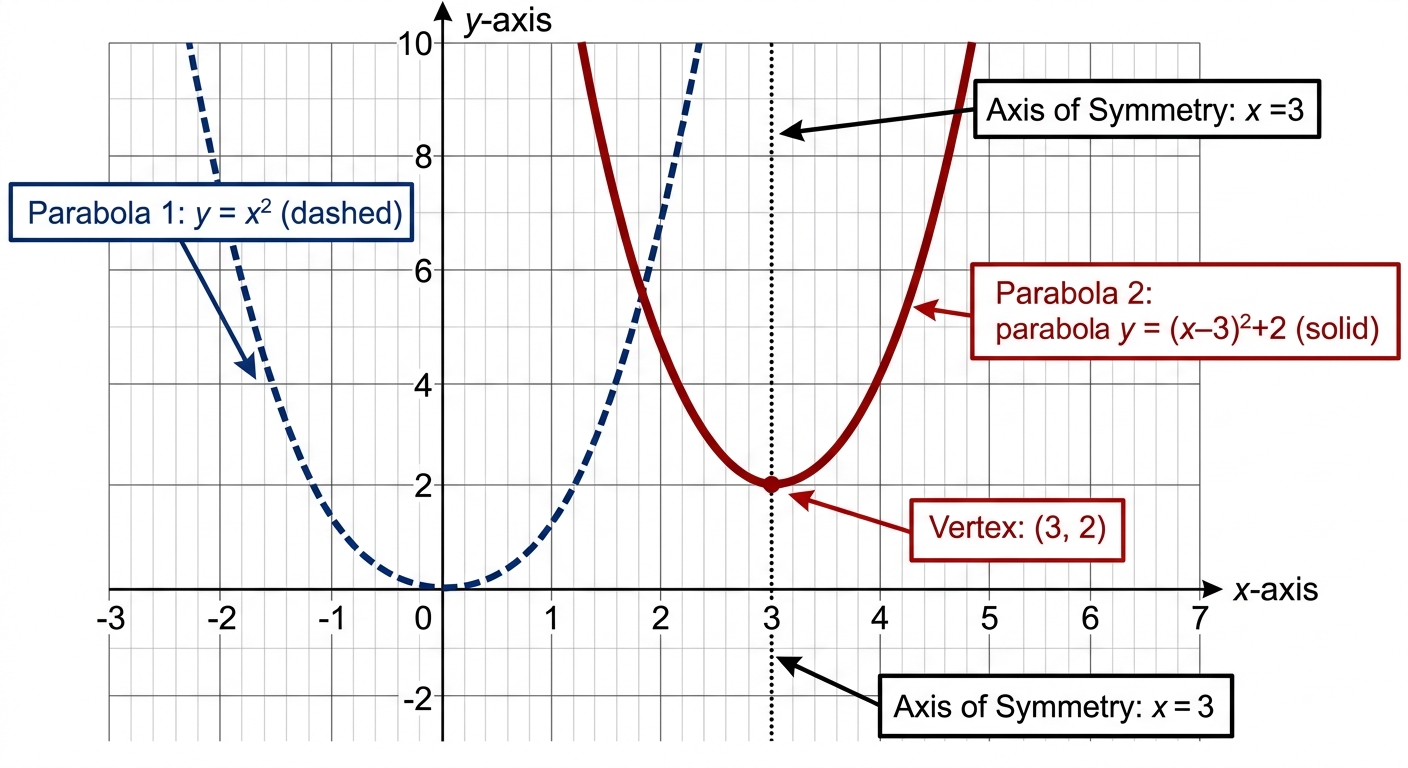
A landscape architect models the cross-section of a decorative arch using the function , where and are measured in metres. The parent function is .
a
State the coordinates of the vertex of and write down the equation of its axis of symmetry. [2]
b
Explain the two transformations that map the graph of onto the graph of . [1]
c
The arch must clear a pathway centred at that is 4 metres wide and 2.5 metres tall. Advise the architect whether the arch satisfies both clearance requirements, supporting your advice with calculations. [1]
Solutions
4QuestionPlot quadratic functionsAssessment Practice
6 marks~9 minCriterion B
A structural engineer models the vertical cross-section of a concrete arch using the quadratic function , where is the height (in metres) at horizontal position (in metres). Measurements taken at five positions are recorded below.
(m):
(m):
(m):
(m):
a
Calculate the first differences and second differences of the -values. [2]
b
Deduce the value of , given that the second difference of a quadratic with unit steps equals . Hence state the equation of the arch. [1]
c
The arch must clear a minimum height of m at m to allow vehicles to pass beneath it. Substituting into your equation from part (b), advise the engineer whether the arch is safe for vehicles at that position. [3]
Solutions
That's every free question here — 4 of 86.
+82 more questions, plus Mock Papers & Worksheets, are waiting in Premium.