You're viewing free preview questions — 4 questions previewing here — subscribe to unlock 138 more, plus the Full Question Bank, Mock Papers & Worksheets.Upgrade
Types of Functions — Free MYP5 Mathematics (Standard) Practice Questions

1QuestionQuadratic functionsConcept Practice
4 marks~6 minCriterion A
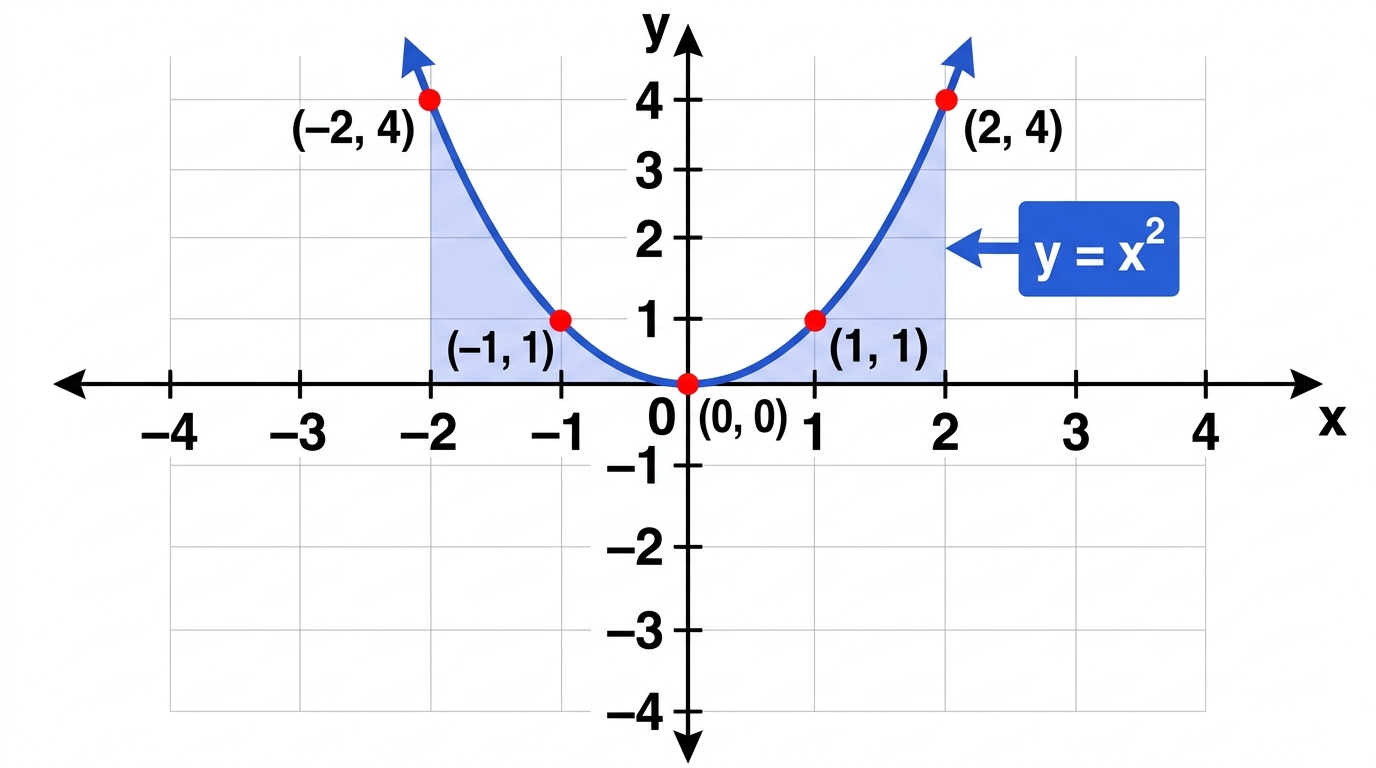
A landscape architect models the cross-section of a decorative arch using the function . The design is adjusted for a new location, giving the function , where and are measured in metres.
a
Describe the transformations applied to the graph of to obtain the graph of . [2]
b
Deduce the coordinates of the vertex and the equation of the axis of symmetry of . [1]
c
The arch must have its lowest point at least 1.5 m above ground level and no more than 4 m horizontally from . Justify whether the adjusted design satisfies both conditions. [1]

Solutions
2QuestionIdentify from graphsAssessment Practice
2 marks~3 minCriterion C
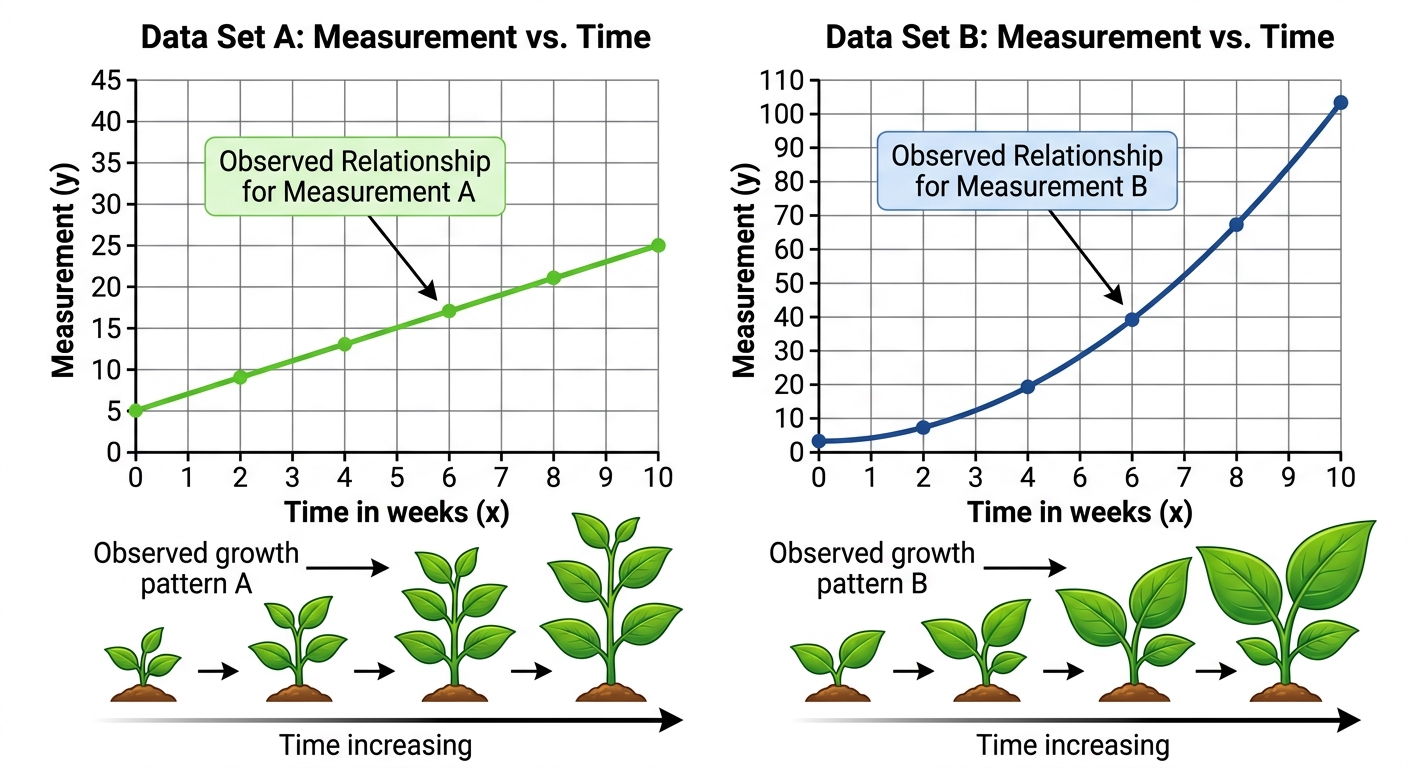
A biologist records two measurements of a growing plant over weeks:
- Plant height (cm), modelled by
- Leaf area (cm²), modelled by
- Plant height (cm), modelled by
- Leaf area (cm²), modelled by
a
Identify which equation models plant height and which models leaf area, giving a reason for each. [1]
b
A classmate claims both measurements could equally well be modelled by a linear function for the first four weeks. Justify whether this claim is valid, and explain what this means for the biologist's conclusions about long-term growth. [1]
Solutions
3QuestionRational functionsAssessment Practice
5 marks~8 minCriterion D
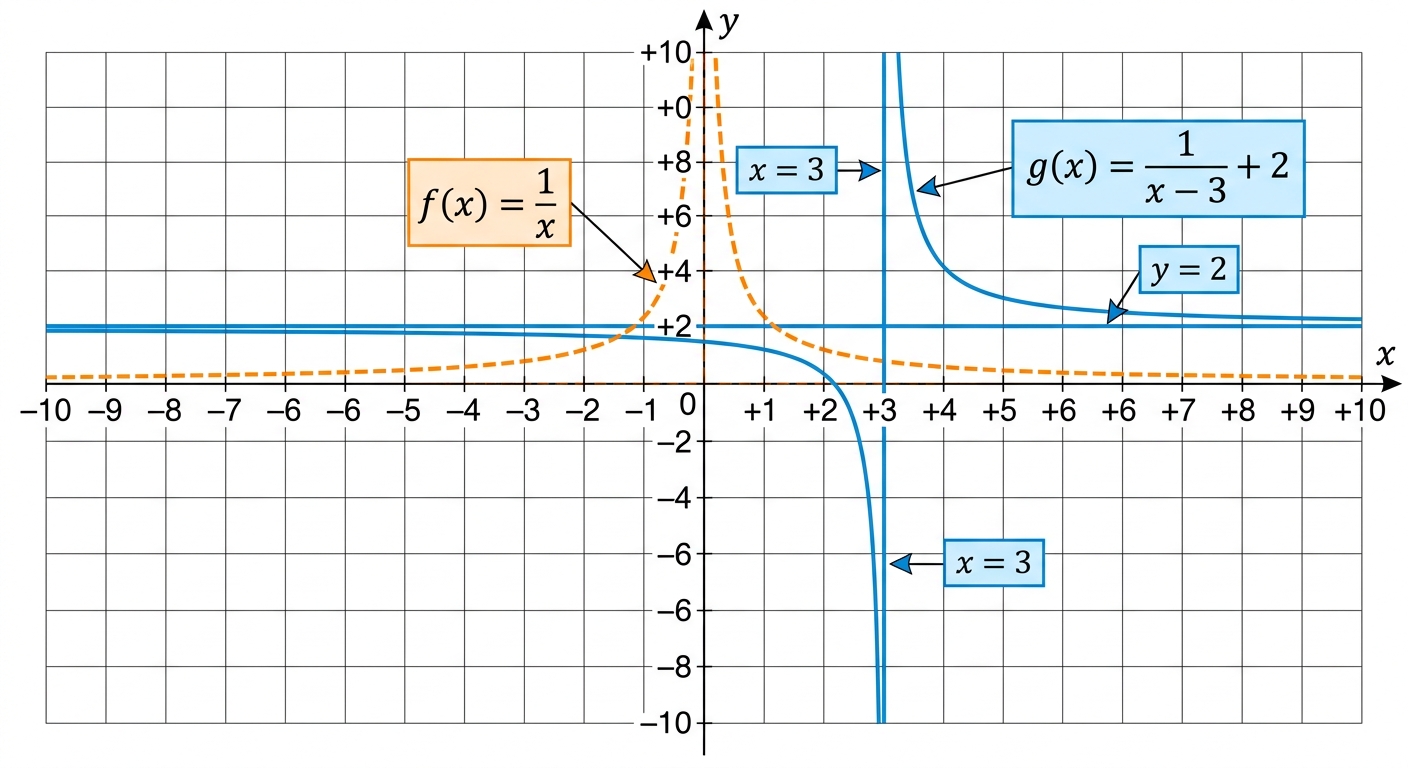
A hospital monitoring system tracks a patient's drug concentration using the model , where is time in hours after administration () and is concentration in mg/L. The parent function is .
a
State the equations of the vertical and horizontal asymptotes of . [1]
b
Explain how each transformation applied to shifts the asymptotes to produce those of , stating the equation of each asymptote of . [2]
c
The system triggers a safety alert when concentration remains above 2 mg/L. Justify whether the safety alert ever automatically clears for , using the horizontal asymptote of as the basis for your reasoning. [2]
Solutions
4QuestionQuadratic functionsAssessment Practice
6 marks~9 minCriterion B
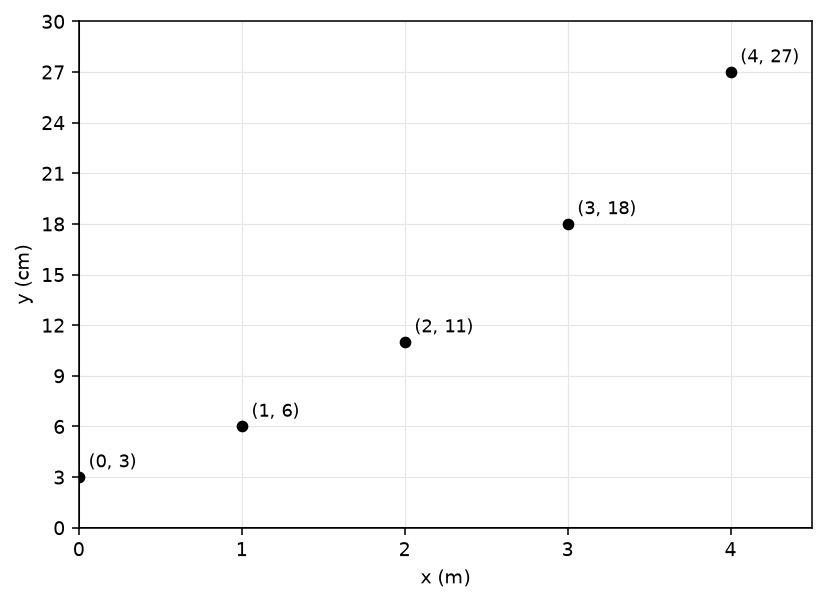
A landscape architect models the cross-section of a curved garden bed using a quadratic function , where represents the height (cm) of the bed at horizontal position (m).
Measurements taken at equal intervals give:
(m):
(cm):
Measurements taken at equal intervals give:
(m):
(cm):
a
Calculate the first differences and second differences of the values. [2]
b
Deduce the values of , , and , and state the equation of the quadratic function. [2]
c
The architect requires the garden bed to reach a height of at least 40 cm. Justify whether this condition is met within the measured interval . [2]
Solutions
That's every free question here — 4 of 142.
+138 more questions, plus Mock Papers & Worksheets, are waiting in Premium.