You're viewing free preview questions — 4 questions previewing here — subscribe to unlock 78 more, plus the Full Question Bank, Mock Papers & Worksheets.Upgrade
Experimental vs Theoretical Probability — Free MYP5 Mathematics (Standard) Practice Questions

1QuestionFairness Bias and RandomnessConcept Practice
4 marks~6 minCriterion A
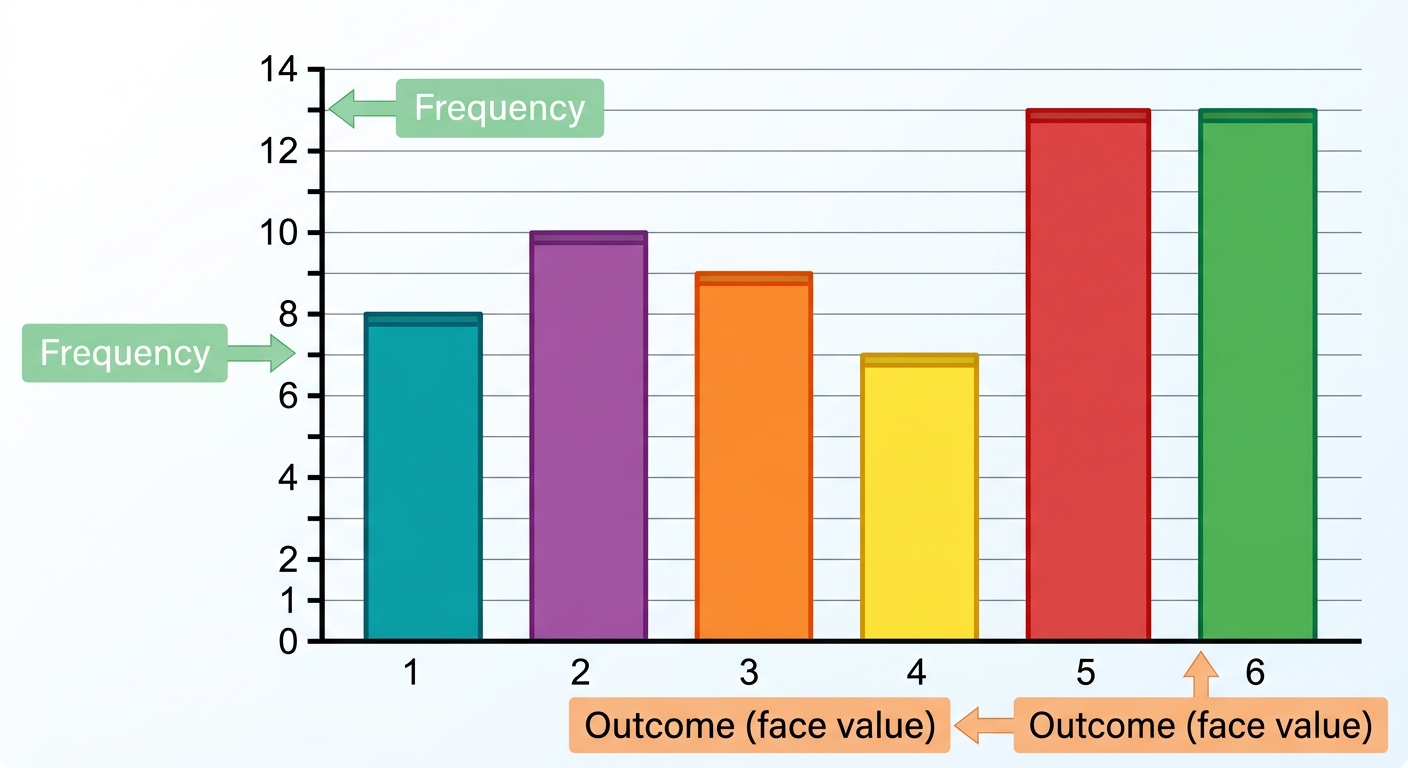
A quality-control technician suspects a six-sided die used in a board-game factory may be biased. The die is rolled 60 times with the following results:
| Outcome | 1 | 2 | 3 | 4 | 5 | 6 |
|---|---|---|---|---|---|---|
| Frequency | 8 | 10 | 9 | 7 | 13 | 13 |
a
Calculate the relative frequency of rolling a 4. [1]
b
Calculate the absolute difference between the relative frequency of rolling a 4 and its theoretical probability. [2]
c
The factory rejects any die for which the absolute difference between the relative frequency and theoretical probability of any outcome exceeds 0.08 after 60 trials. Advise the technician whether this die should be rejected, justifying your answer with a numerical comparison. [1]

Solutions
2QuestionApplications in Real-World Risk AssessmentAssessment Practice
2 marks~3 minCriterion D
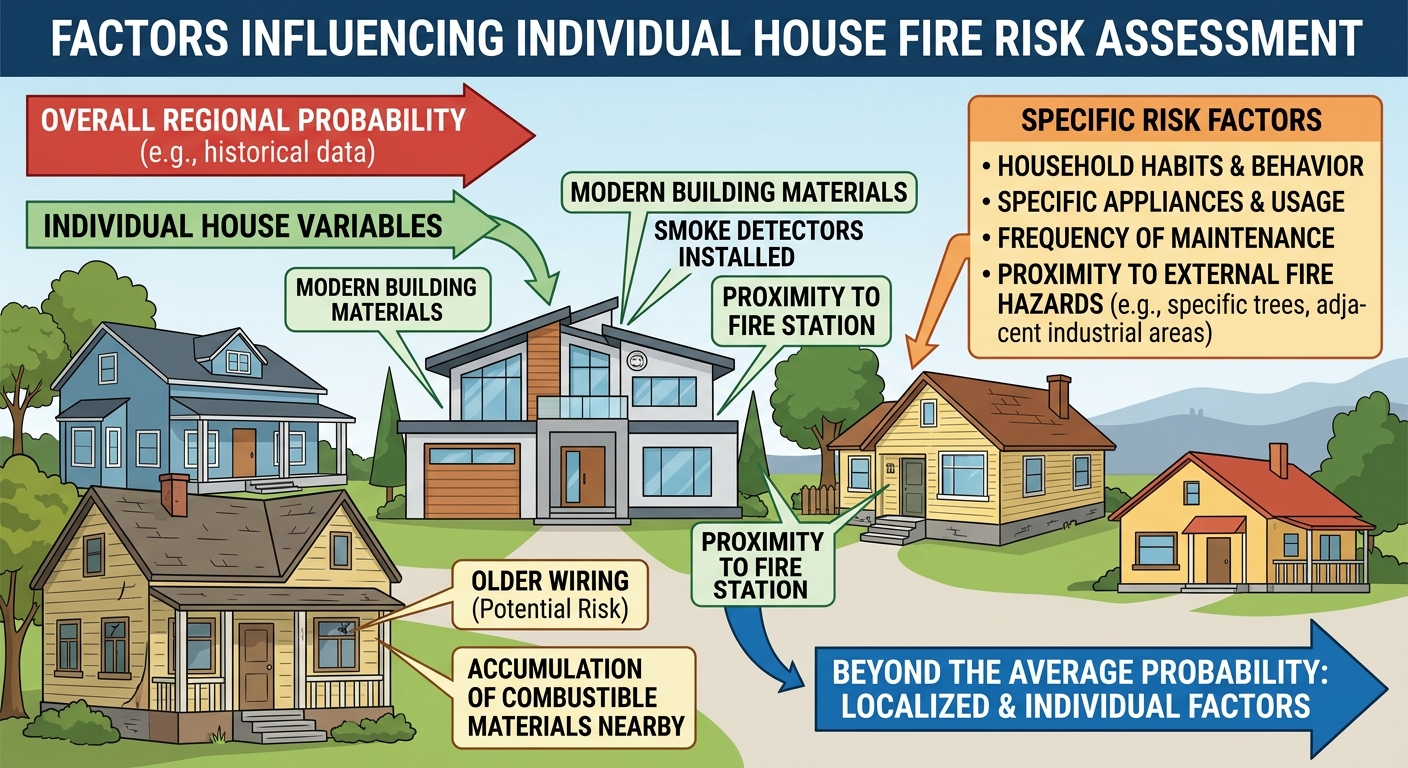
An insurance company estimates that the probability of a house fire in a given region is , based on historical data across thousands of properties. They apply this figure to assess the fire risk for an individual house valued at dollars.
Explain one limitation of using this regional probability to assess the fire risk for a specific house, and identify one individual factor that could cause the actual risk to differ from . [2]
Explain one limitation of using this regional probability to assess the fire risk for a specific house, and identify one individual factor that could cause the actual risk to differ from . [2]
Solutions
3QuestionApplications in Real-World Risk AssessmentAssessment Practice
4 marks~6 minCriterion D
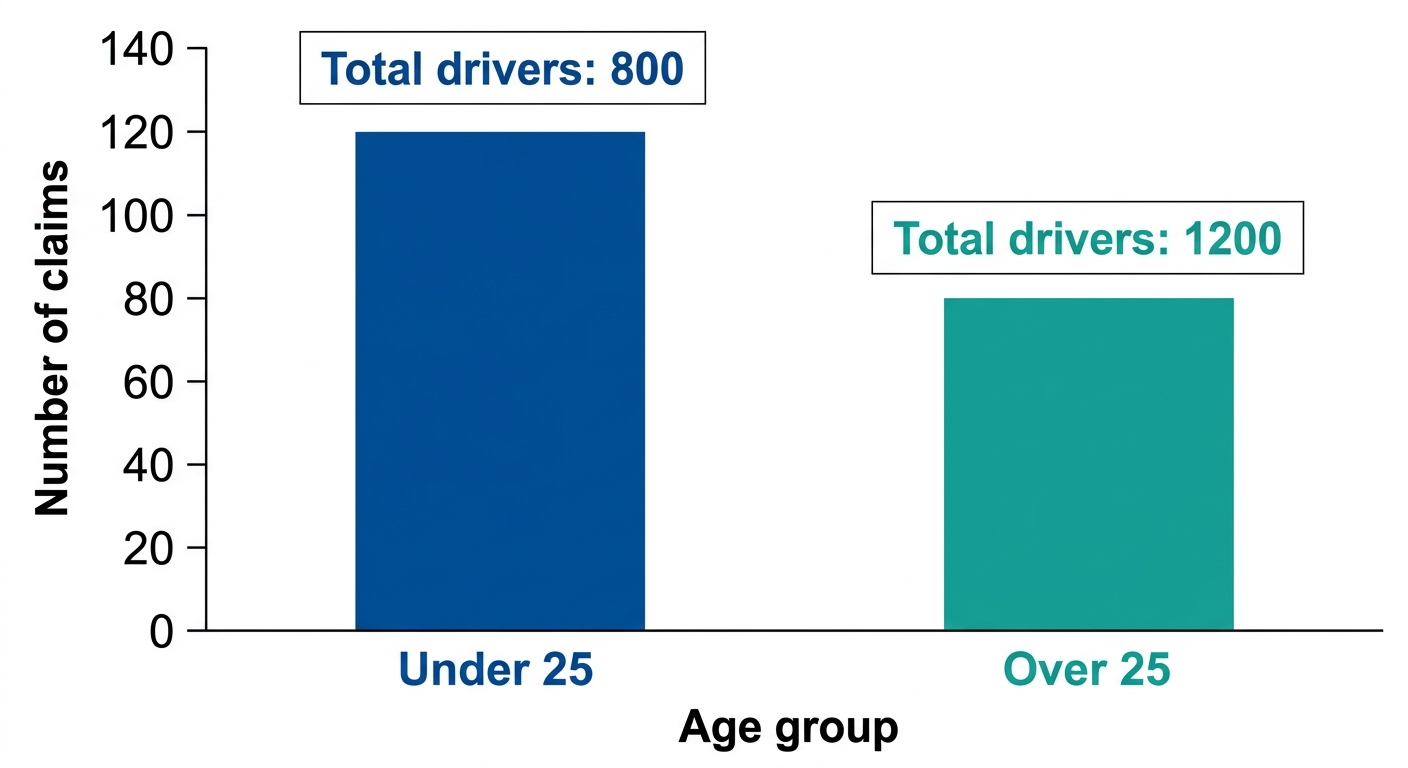
An insurance company records the following data for two groups of drivers over one year.
The relative risk of making a claim is defined as
| Age group | Under 25 — claims: 120 | total drivers: 800 |
|---|---|---|
| Age group | Over 25 — claims: 80 | total drivers: 1200 |
The relative risk of making a claim is defined as
a
Calculate and . [2]
b
Calculate the relative risk of making a claim for drivers under 25 compared to drivers over 25. [1]
c
The insurance company charges drivers under 25 a premium 2.5 times higher than drivers over 25. Justify whether this premium multiplier is supported by the claim data. [1]
Solutions
4QuestionComparing Experimental and Expected ResultsAssessment Practice
3 marks~5 minCriterion C
A fair coin is flipped 50 times, producing 28 heads and 22 tails.
a
Calculate the experimental relative frequency of heads. [1]
b
Deduce how many heads must occur in the next 50 flips so that the overall relative frequency across all 100 flips equals the theoretical probability of 0.5. [1]
c
Justify whether achieving exactly this number of heads in the next 50 flips would confirm that the coin is fair. [1]
Solutions
That's every free question here — 4 of 82.
+78 more questions, plus Mock Papers & Worksheets, are waiting in Premium.